Compact music commentary about artifacts new and old: I enthuse, I don't accuse, but I do refuse–to review anything lukewarm or colder!
Author: philovereem
Music monomaniac, retired English teacher, resident of Columbia, Missouri, former correspondent for ANOREXIC TEENAGE SEX GODS, READY TO SNAP, HITLIST, SUGARBUZZ, THE WAYBACK MACHINE, ROCK THERAPY, and THE FIRST CHURCH OF HOLY ROCK AND ROLL, co-lead singer of the non-legendary Wayne Coomers and the Original Sins of Fayetteville, Arkansas.
Jimi Hendrix: Both Sides of the Sky–Despite a blazing “Hear My Train a-Comin'” and an interesting “Cherokee Mist,” this is flat-out barrel-scraping. Stephen Stills, anyone? I didn’t think so.
Hamad Kalkaba and the Golden Sounds–I can’t get enough of these rough and ready tracks from mid-Seventies Cameroon. Aside from the rhythmic propulsion, which one might expect…oh the horns ‘n’ guitars! And I love Analog Africa’s album cover.
Etta Jones: Lonely and Blue–Have you met Miss Jones? If you love Dinah Washington (and why shouldn’t you), you must make her acquaintance. She lacks Dinah’s power, humor, and intensity, but like Washington she can sing the blues. Also, Etta’s edges are mellower, which can make this particular album addictive.
Gang Starr: Daily Operation–I always found Guru and Premier’s enterprise underrated (at least here in the Midwest), and here in 2018 I find it has aged very, very well. A uniquely perpetual flow (delivered with equally unique warmth) atop expert beats and jazz-tinged samples and instrumentation.
The Kinks: Face to Face–Hey, if you just know the hits, Something Else, and Village Green, you might be missing their most underrated album. Quirky, funny, rowdy, thieving, eccentric, gender-ambiguous (in a moment), very English: all the things they were, entertainingly performed, in one place. Ok, maybe no power chording. Thank you, Kenny Wright, for enthusing about it all those years ago.
You’re sitting in a restaurant having lunch, staring into space, trying to organize your mundane day. The restaurant has a satellite radio subscription, and oldies–comfortable, rockin’ oldies–are blasting out into the space. The other diners are working on their taxes, fiddling with phones and laptops, complaining about their days so far, asking a server why mustard’s on their hamburger when they clearly didn’t ask for it. The cooks pick up the tension and nervously, clandestinely, dart glances at that table. There’s a silence as a song (Stevie Ray Vaughan’s “Pride and Joy”?) ends. That silence dovetails with the coincidental sudden pause in patron chatter.
Then, a lurching, threatening, familiar guitar figure, and:
And:
What if you knew her And found her dead on the ground? How can you run when you know?
Tin soldiers and Nixon coming, We’re finally on our own.
The anguish that rolls out across the melody behind those first three lines would have seemed impossible for us to tune out. The anguish–and the awful familiarity–shot through the words would have seemed to command our attention. The truth of that fifth line? A confirmation we could surely recognize.
From the first note, I’d been sitting bolt-upright. In Macbeth, a knocking at the palace gate and an ensuing comic hellscape imagined by a commoner snaps us out of murder-induced shock. In this tableau, the horror should have snapped us out of a routine-induced trance. I looked around, into every nook and cranny of that restaurant, and nothing had changed. So I resumed eating.
But those lines echoes all day, and all night, and this morning, and assuredly, horribly, tomorrow.
On the brighter side, in honor of International Women’s Day, I put together the following YouTube playlist. Enjoy, if you’re curious, but beware a couple of full albums I mischievously dropped in, and be vigilant for an appearance by Diamanda Galas.
Short-shrift Division:
The Clash: Sandinista!–I can still remember, as a college freshman at the University of Arkansas, and already-avid Clashaholic, snapping this triple-LP up the day it showed up at White Dog Records some 37 years ago. I, um, liked it, but–Clash fans will understand. On impulse, I slapped it on, and–as it has been doing to me for the past two decades–it rendered up new favorites I hemmed and hawed through as a young man. I wasn’t ready. Thankfully, not only do we never step in the same river twice, but we also should stop stepping into the river, period. Tracks I repeat-played yesterday: “Something About England,”“Somebody Got Murdered,”“Crooked Beat.”
The Kinks: The Kinks’ Greatest Hits, Face to Face, disc one of The Kinks Kronikles–Mick Jones’ fragile, plaintive singing on “Something About England” flipped my Kinks switch, and based on past experience I will be in their England for the entire coming weekend.
Since I began integrating pop music discussions and writing assignments into the freshman comp class I teach at Stephens College, a private women’s liberal arts school here in Columbia, I have tried to convince working music critics to visit the classroom, dollop out their wisdom, and talk about their philosophy, process, struggles, victories, and obsessions. Wednesday, Hyperallergic and SPIN reviewer Lucas Fagen valiantly Skyped into class (it was 6 a.m. his time) and, after some annoying technical delays, engaged us in a very interesting and wide-ranging discussion.
Only seven of my already small class of 11 appeared (it’s midterm week), of those who did, only two had read any of the selected Fagen essays I’d assigned–and only one of those read all the essays I’d assigned. In addition, I was flustered from the tech delays and slightly off-balance when Lucas wasn’t sure what I wanted him to tell them about his life. I switched quickly into moderator mode, and posed the first couple of questions while prompting the class to think of some of their own (we’d spent 20 class minutes last week brainstorming a long list of those, which were apparently bound away in the ether). They owe me a record review rough draft Tuesday, and the whole point of Lucas’ visit was for him to share tips.
Fortunately, by the time Lucas had clicked away back to Portland, we’d discussed preparation, record review non-negotiables, writer’s block, negative reviews, ideal writing environments, audience relations, striving to suggest (rather than state) judgments, the relevance of private lives, a bad Randy Newman record (I’d wanted to discuss Lucas’ Lil’ Uzi Vert review, but my students’ abstention from homework rendered that direction null and void), cultural context, other young writers we should read, and the impossibility of objectivity (on the part of the reviewer, but also where songwriters are concerned). I judged that be evidence of fair success, and students affirmed to me they had gained some confidence in their upcoming task. I really wish, though, that one of them hadn’t asked if Lucas were single.
Once question I was hoping some student would ask was, “Hey, what reviews are you currently working on?” As time was winding down, I wedged it in myself, and Lucas responded quickly, in a burst of enthusiasm: “I’m reviewing Jonghyun’s new album! The title isn’t great–Poet / Artist–but it’s my album of the year so far for 2018.” I expected to see uncontrollable twitching overcome the class, as K-Pop has been a frequent topic of very animated student discussion since 2015, but apparently this lot is immune to its charms.
As had I been; students having subjected me to several K-Pop videos in past classes, the genre seemed a frenetic blur of hyper-ramped, blindingly colorful, rap-n-r&b-influenced tween-tunes…ummm, do you remember that scene in High Anxiety?
That has been K-Pop’s effect on me. However, Mr. Fagen’s impassioned defense of the artist’s and the record’s merits, plus my ever-creeping suspicion that I have become a calcified old fart, forced me to promise him I would listen to the album carefully once I could cloister myself properly. I must admit, too, that the artist’s suicide late last year, apparently simultaneous with his having reached a creative pinnacle, saddened and intrigued me.
If you’d like to take some time, you can simulate listening to the album with me:
Now. If this is where K-Pop might be going, I’ll hitch a ride there. I found the young man’s singing marvelously flexible; he shifts effortlessly in and out of a wide range of moods: jubilant (“Shinin'”), desperate (“Only One You Need”), chilled-out (“#Hashtag,” tinged with Steely Dan cool), seductive (“Take the Dive”), and desolated (“Before Our Spring,” the deeply poignant closer). Admittedly, I’m guessing at some of these since I hear in English only, but it’s further proof of the young man’s skill that his singing’s consistently affecting beyond vocabulary’s reach. Also commendable is that the young man doesn’t over-sing. He’s in full control, floating, dropping in and out, modulating, easefully riding the album’s varied tempos and rhythms.
Poet / Artist‘s musical settings, pop/r&b-flavored, are clean, percolating, and unobtrusive, staying out of Jonghyun’s way and providing him just the right walls off of which to bounce. I’m a bit of a gestaltist–as much as I love classic singles, I’m rather helplessly an album guy, a listener after a vaster artistic whole–and, by those lights, Poet / Artist is stellar. Only what I hear as a holding-pattern filler cut (“Rewind”) would keep it from my own early-2018 Top Three; it’s certainly a Top Five for me now. At 27–not again! have they started up yet?–Jonghyun left us far too soon, but nonetheless I’m eager to explore his back catalogue, and maybe hunt down some translations (YouTube seems a good resource).
Now…if each of my seven students who were present had at least one similar breakthrough moment as a result of Mr. Fagen’s talk, I’ll forgive them that unprofessional proposition (after all, what if the parties’ genders had been reversed?).
I spent half my day with a group of my favorite jazz pianists. This was set in motion by the unexpected arrival from Strut Records of Sun Ra’s In Some Far Place: Roma 1977(Earth’s water supply may run out before Mister Ra’s vault does). I’d subscribed to the label’s Original Masters series in February of ’17, mostly out of interest in some curated international dance records but also because the cost of my purchase was being donated to a great social justice organization. Four records were to come my way, but the label couldn’t secure rights to the fourth, so in its stead I received this double-disc sans-Arkestra show. Hearing Sun Ra alone or with drums only (as one does here) can be a revelation: his sense of humor comes more to the fore, the path of his thinking’s a little easier to trace, and, while I prefer to hear him leading the Arkestra, it’s a fun and trippy ride across styles and eras, with the pianist occasionally switching from acoustic to electronic keyboards as the mood suits him and toggling between his own catalog and beloved standards.
As Nicole and I settled in to read in the evening, I loaded three study-friendly discs into the changer. The first was Memphis pianist Phineas Newborn Jr.’s 1956 outing, Here is Phineas. As the Ellington interpretation linked above demonstrates, the man could fly across the 88s–perhaps, as this early album occasionally reveals, too speedily for his own good. But his light, precise touch and feeling for the blues tempers that tendency; the album’s a decent way in for the beginner. (According to the expert Memphis sources I’ve consulted, his name’s pronounced FEE-nuss.)
Next up was 1959’s Thelonious Alone in San Francisco. Every night’s a great night for Monk’s music in the Overeem home, and, after the pleasantly wandering experimentalism of Sun Ra and the full-bore momentum of Newborn, this solo recording, featuring both familiar and relatively obscure originals as well as some very mischievous interpretations (like the above), was the perfect shift. Listen to this ’53 version of “There’s Danger in Your Eyes, Cherie,” from Rich, Young, and Pretty (!), then try Thelonious’ adventure navigating it, and ask yourself, “What did he hear in this tune that attracted him to it? Without the assistance of words, what does he transmute it into?”
We closed out the night with Bud Powell’s 1956 recording, Bud Plays Bird, which is one of the few releases I’ve owned in which the notes significantly enhance the music. They’re penned by old hand Ira Gitler, who examines the complicated musical and personal relationships between the titular two, shares his experience having witnesses the men play, and leads us through some very close and adept listening. Powell, while not in his earlier, frighteningly skilled and intense turn-of-the-decade form, plays exceptionally well, and is fluently augmented by George Duvivier on bass (that man’s invaded my house!) and Art Taylor on drums. A great addition to any be-bop enthusiast’s collection.
Note: The post title refers to the respective birth years of Ra, Monk, Bud, and Newborn. The earliest-born outlived them all. With the exception of Bud, whose career was damaged by the brutality of racist law enforcement in the North, these men were Southerners who came of age and worked in the shadow of Jim Crow–how might their work have shone more brilliantly without the obstacles of systematic oppression?
Short-shrift Division:
Oh, and before all that I listened to the expanded edition of Joy Division’s Unknown Pleasures, learning to appreciate the production ideas of Martin Hannett (I hadn’t realized that the effects didn’t also emanate from Ian Curtis’ tortured soul) and the raw-and-daily-growing attack of the band on stage in ’79.
Tomorrow:
Influenced by the man pictured below, who spoke to my comp / pop music class this morning about writing record reviews, I am going to interface at length with K-Pop–specifically, Jonghyun’s POET | ARTIST. Wish me luck! Dive in with me and we can compare notes tomorrow.
Sara and Maybelle Carter: An Historic Meeting–Something about the Carters’ stoicism hypnotizes me, as does their hard-earned authority. You do wonder if the hand that rocks the cradle can change the world (again), and do they have some kind words for immigrants (in a song that’s a sister to their stunning “Hello Stranger”). And: Maybelle’s autoharp is up in the mix, a wise choice.
Wu-Tang: The Saga Continues–And I almost wish it didn’t. While for a new group this might raise eyebrows, the multiple absences lead me to a regrettable conclusion: those who never thought the group had soul in the first place will have to acknowledge its presence then as a result of its absence here. If that makes sense.
Bettye LaVette: “Things Have Changed”–After nailing my ass to the wall with I’ve Got My Own Hell to Raise and a Memphis show I saw on the subsequent tour, LaVette’s raw magic has quit working on me. She often sounds so in love with the effects she used in just the right places on that album that she’s just used them as much as possible since, though if the material is just right, it just doesn’t matter. This lead cut from her coming album, a set of Dylan covers? I love the song so much I can’t really tell, but the world-weary fabric-rip in her exhortations suits the lyric.
Young Fathers: “In My View”–“In my view / Nothing’s ever given away / I believe / To advance, then you must pay / … When I leave / You’ll be dancing on my grave / … I wanna be king / Until I am.” Pretty intriguing, until the video (above) ruins it, if you’re watching it. Or does it? The thing (that last line, the video’s close) takes a weird, telling turn.
Janelle Monàe: “Make Me Feel”–I’m right about next to nothing without hindsight, but I once told a classroom of students (six years ago) that Janelle was going to be a big star, and even if that didn’t happen, she’d never be boring. I seldom need confirmation–but I’ll take it!
When I was a seventh grader, nothing more propelled me more immediately into bump-doin’ action–even if I didn’t have a partner–than a KC and the Sunshine Band hit. In true teen fashion, I was deeply, often instinctively attracted to any phenomenon I knew would drive adult nuts, but also: I LOVED THIS BAND’S MUSIC. The band’s songs were insanely repetitious, at that, repetitious of hormonally relevant but vacuous lyrics, and repeated by a singer and band of no special gifts other than unquenchable party cheer and simple funkiness–was a band, though, ever more perfectly named? But the instant “That’s the Way I Like It” (or “Get Down Tonight,” with its squiggly guitar opening that scratched every adolescent’s deep itch) exploded from the radio speaker, I (and pretty much every kid within earshot) would twitch into our hip-bone-bruising version of boogie–and adolescents do have them some hip-bone. I can still remember a junior high dance that left me and my good friend Laurie with massive bruises that I was perversely proud of. And, though I was way into black radio pop at the time, I was certainly delighted upon seeing KC (Harry Wayne Casey to his mom) on TV for the first time: he was a white guy, and he had my haircut!
It’s no surprise that, when I finally settled on a partner for life (twenty-eight years ago this coming May 8th), she’d have the mark of the Sunshine Beast stamped on her sacroiliac. She’s not been a teen for a long ol’ time, but I know if I stealthily load KC and The Sunshine Band’s Greatest Hits into the CD changer, no matter where she is in the house, she will bump into action. Yesterday, noticing that she was industriously occupied somewhere else in the house, I knew it was time for a KC Sunshine Energy Surge. I pushed play, waited about five minutes–and, as if on cue, here she came, bopping into the living room and giving me a mischievously frustrated look that said, “You know I can’t help it when this stuff is in the air!” We’re too old to be bruising each other on purpose, but–unquenchable party cheer? BRING IT ON!
Also, a word for this new item from the indefatigable Christopher Kirkley at Sahel Sounds. I’ve not heard any music from the label that I didn’t at least like (I have a weakness for the music of Northern Africa, I admit), but this isn’t (just) music. Well, it’s isn’t just music as most people define it: among the most musical ambient noises of this field recording are, as Kirkley describes them “the sound of desert oases, late night radio broadcasts, village calls to prayer, and riverboats drifting down the Niger river.”
One of my favorite new records (it’s actually digital or cassette only) of the year.
Short-shrift Division:
Sharon Jones and The Dap Kings: I Learned the Hard Way–Lordy, she’s missed. But, by God, she left a mark…and her music can inspire you to levels of determination within shouting distance of her own as we came to know them, and that’s considerable.
Junior Kimbrough: Most Things Haven’t Worked Out–Lordy, he’s missed. But, by God, he left a mark…and his music can turn a Sunshiney day into a dark cave corridor.
In order to get away from a big event crowd, Nicole and I had been planning today’s outing to Fulton all week, primarily to see Black Panther again (even better seen twice, folks) but also to explore local cuisine. A friend put us on to what turned out to be a very satisfying restaurant, The Fulton Café.
In anticipation of a good meal…I dorked out, preparing a massive playlist of Cuban music favorites for the 70-minute round-trip drive. Overkill: it is what I am. So, let the overflow, perhaps, serve you. Here was the lineup:
As for The Fulton Café, I had an amazing medianoche sandwich and a café con leche. We shall return. There was no Cuban music playing there, though. In other music news, upon my second experience with Black Panther, I felt some interest growing in the score (I’m still merely whelmed by Mr. Lamar’s curated comp). In other food news, I discovered Jalapeño Fritos at a Kingdom City convenience store.
Short-shrift Division:
Joe King Carrasco and the Crowns: Danceteria Deluxe–I will always love Joe and this band, and this rough and rowdy album livened up our morning.
Yesterday, I mostly played out an intensely pleasant Sonny Rollins hangover and caught up with some music I’d be hearing about but not hearing. And Marvel put some more flava in my ear, though I’d originally tasted it a while back.
Joe McPhee: In Finland (I’m a McPh(r)ee(k), and he’s at his finest–as are Matthew Shipp and Dominic Duval–in this live trio recording, where he engages in some witty inside quotations. Curious? Here’s an Apple Music playlist, since YouTube isn’t helpful.)
Rapsody: Laila’s Wisdom(More engaging than Black Panther–The Album.)
Car Seat Headrest: Twin Fantasy (Starts a mite slowly, finishes awful strong, inspires serious empathy, and extends obvious Richman influence through new vistas.)
JPEGMAFIA: Scalding, slot-mouthed social commentary with Dub Housing-like soundscapes in a hip-hop mode? Yes, please.
Marvel-ous Ideas, from Luke Cage:
I was introducing the Netflix series to Nicole when I was reminded of the great “Harlem’s Paradise” sequences (and forced to mourn some great ones passing again):
Sometimes you take a swallow of something you’ve enjoyed forever but just haven’t knocked back for awhile, and you think, “Jesus H. Roosevelt Christ, this stuff’s not only cask-strength, it’s so rich and full I think I’ll just slosh around the next sip!”
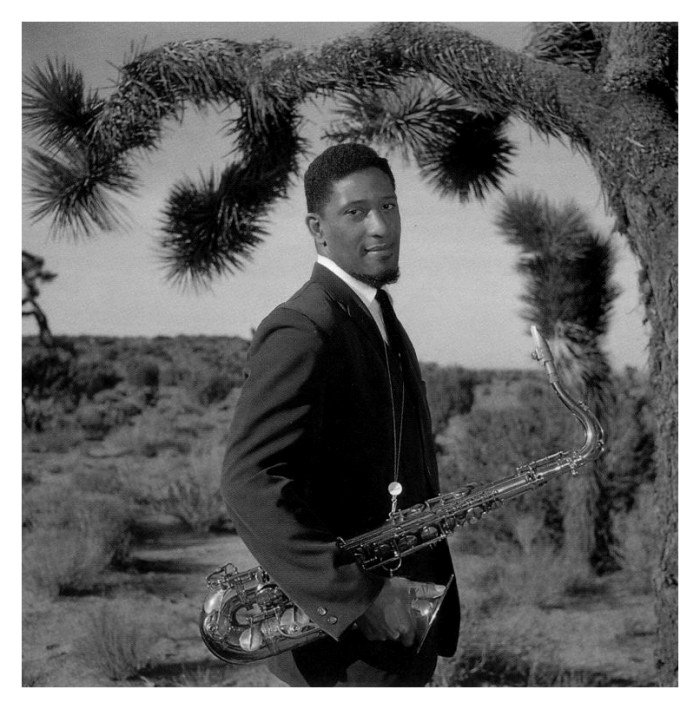
Such was my experience after unwrapping Craft Recordings’ new deluxe edition of Sonny Rollins’ 1957 album Way Out West. The record is justifiably famous for three reasons: it stands as the first jazz studio album recorded in its entirety in a bass-drums-sax format; it’s graced by a hilariously droll cover that seems like a joke but becomes a concept once you look at (and hear) the titles; and it features Rollins, not quite 27, demonstrating a jaw-dropping, self-possessed, jocular mastery of his art. I’d truly be insane to try to say anything profound about Sonny that real writers haven’t already said, but if you are either somewhat or totally unfamiliar with him, consider this: the trio format–free of a piano, guitar, or other horns–leaves a cavernous amount of space for Rollins to create in, and, for some, that responsibility would be perilous, if not disastrous; for this tenor saxophonist, however, that space gives him the opportunity to unfurl his very fecund vocabulary of sounds, all integrated into an unmistakable tone that does indeed reach out and grab one by the throat. Authority. Logic. Wit. Warmth. Audacity. Inventiveness. Grace. Depth. Just stop me–or wait, I’ll stop myself. But I’m not lying about any of those qualities.
So, OK, this is a two-LP reissue that costs a pretty penny. Is it worth it? I think so. The sound, engineered by Roy DuNann, was always stellar; my 1980s pressing is only mediocre by comparison with Craft’s remaster. You’ve heard people say about a record, “It sounds like you’re in the same room with the musicians”? Well, this recording has that same quality, and it is a true giant, on fire with deftly controlled inspiration (yeah: Rollins can be on fire and under control at the same time), whose horn bell you’re leaning into. By the way, drummer Shelly Manne and bassist Ray Brown: definitely no slouches.
The second disk is only relatively less fluent and exciting alternate takes–very nice for Craft to put them together there–three of which are previously unreleased. The truly irresistible bait, however, are two telling snippets of dialogue, including one in which Sonny confirms what most already suspected was one of his improvisational by singing some of “I’m an Old Cowhand”‘s most piquant lines to his fellow musicians and emphasizing their importance. The cover art (photographs by the great William Claxton, also responsible for the photo at the top of my scrawl) is beautifully reproduced, and both the original liner notes and revealing new ones by Neil Tesser helpfully supplement the set. Honestly, I bought it as a birthday present to myself, and I think you can tell I am not the least disappointed.
Below is a YouTube playlist for Rollins newbies. Thing is, with Way Out West, couched between his equally great Saxophone Colossus (’56) and his daunting live trio record from the Village Vanguard (recorded later in ’57), Sonny was just getting started; his next near-sixty years would be studded with masterpieces. He is one of the last living jazz artists with a totally distinctive, instantly recognizable instrumental voice, and I emphasize the word “is”: give the man props while he’s living.
I had to straaaaain a bit to make twenty albums (the problem with doing a best-of list in a year’s second month), and I can see a couple that will not make the 2018 Top 40 cut, but…I can stand by these.
Among the obsessives who make these kinds of lists, quibbling abounds regarding what belongs to a “year,” arbitrary as that concept is on its own. I give myself the right to count anything from November and December 2017, since a) it often takes time to find these slabs, then b) when you find them, you need time to absorb them, and c) many such items don’t make the big shots’ 2017 list for that very reason, so…it ain’t effin’ fair. I am designating those below with an asterisk. Also, we have the issue of new releases of old material that are significantly different from the original package; my top item is a long-recognized masterpiece, but its 2018 incarnation has enhanced sound, a second LP of alternate takes and chatter that matter, and both original and new notes. Finally–believe it or not–we have releases that might be a bit old, or might not, but that are hard as hell to get a hold of, to the extent that you might have to write the artist to get one (I’ve marked those with a #, but the case in point is really my #13, which was “released,” apparently only to the jazz press, in spring of 2017). So there, I’ve covered my ass.
Also, I haven’t listened to everything, so don’t yell if your favorite is missing (examples: new Migos, Fever Ray, Amy Rigby and so many things I don’t even know about).
Sonny Rollins: Way Out West—Deluxe Edition
Nona Hendryx and Gary Lucas: The World of Captain Beefheart*
Princess Nokia: 1992*
Joe McPhee: Imaginary Numbers
Berry: Everything, Compromised
CupcaKe: Ephora
No Age: Snares Like a Haircut
Superchunk: What A Time to Be Alive
Halu Mergia: Lalu Balu
Various Artists/Sahel Sounds: Field Recordings from the Sahel
Camarao: The Imaginary Soundtrack to a Brzailian Western Movie
The Revelators: “In which The Revelators play live versions of selections from the Billy Childish songbook”
Ernest Dawkins: Transient Takes#
Kris Davis and Craig Taborn: Octopus
Tal National: Tantabara
Ty Segall: Freedom’s Goblin
David Murray (featuring Saul Williams): Blues for Memo
Rich Krueger: Life Ain’t That Long#
Various Artists: Black Panther–The Album
Gorbza: Ain’t That The Way
A playlist of the above, with some albums not represented because there ain’t nothing with which to do it and some albums strangely represented because either there was barely anything to do it with or I was feeling mischievous or piqued:


 Living To Listen