Cuban Dork-Out (March 3rd, 2018, Fulton, Missouri)

In order to get away from a big event crowd, Nicole and I had been planning today’s outing to Fulton all week, primarily to see Black Panther again (even better seen twice, folks) but also to explore local cuisine. A friend put us on to what turned out to be a very satisfying restaurant, The Fulton Café.

In anticipation of a good meal…I dorked out, preparing a massive playlist of Cuban music favorites for the 70-minute round-trip drive. Overkill: it is what I am. So, let the overflow, perhaps, serve you. Here was the lineup:

Armando Garzon

Celia Cruz

Pedrito Martinez

Cachao

Irakere

Fania All-Stars

Ibrahim Ferrer

As for The Fulton Café, I had an amazing medianoche sandwich and a café con leche. We shall return. There was no Cuban music playing there, though. In other music news, upon my second experience with Black Panther, I felt some interest growing in the score (I’m still merely whelmed by Mr. Lamar’s curated comp). In other food news, I discovered Jalapeño Fritos at a Kingdom City convenience store.

Short-shrift Division:

Joe King Carrasco and the Crowns: Danceteria Deluxe–I will always love Joe and this band, and this rough and rowdy album livened up our morning.

Mount Eerie: A Crow Looked at Me–This sublimely titled and heartbreaking meditation on freshly-suffered loss arrived on our doorstep in the afternoon and was not placed on the turntable. It should only be played after careful consideration and in a state of relative emotional stability–it is a magnificent, unique, painful, and disturbing creation.

Hangovers and Catch-Up (March 2nd, 2018, Columbia, Missouri)

Yesterday, I mostly played out an intensely pleasant Sonny Rollins hangover and caught up with some music I’d be hearing about but not hearing. And Marvel put some more flava in my ear, though I’d originally tasted it a while back.

Rollins Hangover:

“G-Man” (Ride the wild, folks!)

Night Music: “Who By Fire” (w/Leonard Cohen–is Rollins undermining the song’s grimness with that coda? Certainly possible.)

Tattoo You cameos (“Waiting on a Friend,” “Neighbors“) (The last time the Stones were charming?)

Playing Catch-Up:

Joe McPhee: In Finland (I’m a McPh(r)ee(k), and he’s at his finest–as are Matthew Shipp and Dominic Duval–in this live trio recording, where he engages in some witty inside quotations. Curious? Here’s an Apple Music playlist, since YouTube isn’t helpful.)

Rapsody: Laila’s Wisdom(More engaging than Black Panther–The Album.)

Car Seat Headrest: Twin Fantasy (Starts a mite slowly, finishes awful strong, inspires serious empathy, and extends obvious Richman influence through new vistas.)

JPEGMAFIA: Scalding, slot-mouthed social commentary with Dub Housing-like soundscapes in a hip-hop mode? Yes, please.

Marvel-ous Ideas, from Luke Cage:

I was introducing the Netflix series to Nicole when I was reminded of the great “Harlem’s Paradise” sequences (and forced to mourn some great ones passing again):

Raphael Saadiq

Charles Bradley

Sharon Jones

Also: Luke raisin’ some muhfukkin’ ruckus!

The series lost its musical thread somewhat as it went along, I think.

ROLLINS (March 1st, 2018, Columbia, Missouri)

SONNY

Sometimes you take a swallow of something you’ve enjoyed forever but just haven’t knocked back for awhile, and you think, “Jesus H. Roosevelt Christ, this stuff’s not only cask-strength, it’s so rich and full I think I’ll just slosh around the next sip!”

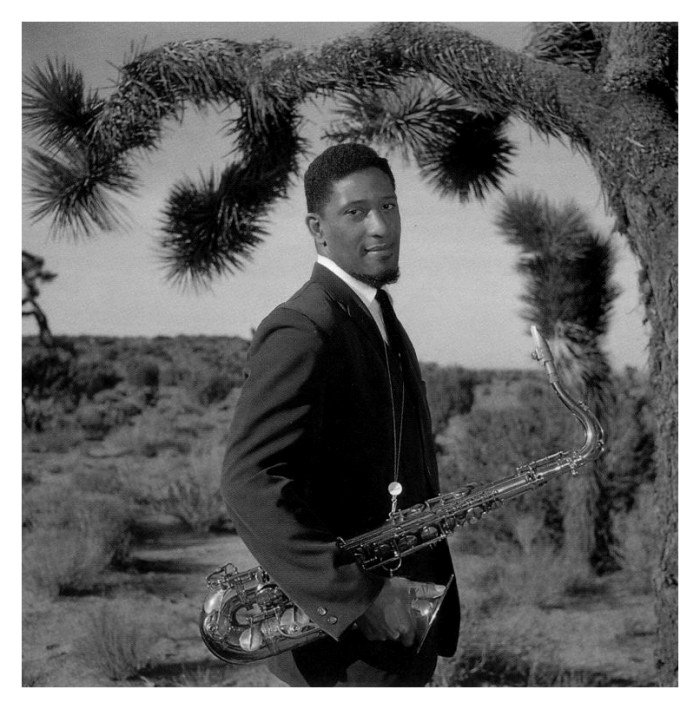
Such was my experience after unwrapping Craft Recordings’ new deluxe edition of Sonny Rollins’ 1957 album Way Out West. The record is justifiably famous for three reasons: it stands as the first jazz studio album recorded in its entirety in a bass-drums-sax format; it’s graced by a hilariously droll cover that seems like a joke but becomes a concept once you look at (and hear) the titles; and it features Rollins, not quite 27, demonstrating a jaw-dropping, self-possessed, jocular mastery of his art. I’d truly be insane to try to say anything profound about Sonny that real writers haven’t already said, but if you are either somewhat or totally unfamiliar with him, consider this: the trio format–free of a piano, guitar, or other horns–leaves a cavernous amount of space for Rollins to create in, and, for some, that responsibility would be perilous, if not disastrous; for this tenor saxophonist, however, that space gives him the opportunity to unfurl his very fecund vocabulary of sounds, all integrated into an unmistakable tone that does indeed reach out and grab one by the throat. Authority. Logic. Wit. Warmth. Audacity. Inventiveness. Grace. Depth. Just stop me–or wait, I’ll stop myself. But I’m not lying about any of those qualities.

So, OK, this is a two-LP reissue that costs a pretty penny. Is it worth it? I think so. The sound, engineered by Roy DuNann, was always stellar; my 1980s pressing is only mediocre by comparison with Craft’s remaster. You’ve heard people say about a record, “It sounds like you’re in the same room with the musicians”? Well, this recording has that same quality, and it is a true giant, on fire with deftly controlled inspiration (yeah: Rollins can be on fire and under control at the same time), whose horn bell you’re leaning into. By the way, drummer Shelly Manne and bassist Ray Brown:  definitely no slouches.

The second disk is only relatively less fluent and exciting alternate takes–very nice for Craft to put them together there–three of which are previously unreleased. The truly irresistible bait, however, are two telling snippets of dialogue, including one in which Sonny confirms what most already suspected was one of his improvisational by singing some of “I’m an Old Cowhand”‘s most piquant lines to his fellow musicians and emphasizing their importance. The cover art (photographs by the great William Claxton, also responsible for the photo at the top of my scrawl) is beautifully reproduced, and both the original liner notes and revealing new ones by Neil Tesser helpfully supplement the set. Honestly, I bought it as a birthday present to myself, and I think you can tell I am not the least disappointed.

Below is a YouTube playlist for Rollins newbies. Thing is, with Way Out West, couched between his equally great Saxophone Colossus (’56) and his daunting live trio record from the Village Vanguard (recorded later in ’57), Sonny was just getting started; his next near-sixty years would be studded with masterpieces. He is one of the last living jazz artists with a totally distinctive, instantly recognizable instrumental voice, and I emphasize the word “is”: give the man props while he’s living.

UPDATE: My Favorite Releases of 2018 and the End of ’17

This slideshow requires JavaScript.

I had to straaaaain a bit to make twenty albums (the problem with doing a best-of list in a year’s second month), and I can see a couple that will not make the 2018 Top 40 cut, but…I can stand by these.

Among the obsessives who make these kinds of lists, quibbling abounds regarding what belongs to a “year,” arbitrary as that concept is on its own. I give myself the right to count anything from November and December 2017, since a) it often takes time to find these slabs, then b) when you find them, you need time to absorb them, and c) many such items don’t make the big shots’ 2017 list for that very reason, so…it ain’t effin’ fair. I am designating those below with an asterisk. Also, we have the issue of new releases of old material that are significantly different from the original package; my top item is a long-recognized masterpiece, but its 2018 incarnation has enhanced sound, a second LP of alternate takes and chatter that matter, and both original and new notes. Finally–believe it or not–we have releases that might be a bit old, or might not, but that are hard as hell to get a hold of, to the extent that you might have to write the artist to get one (I’ve marked those with a #, but the case in point is really my #13, which was “released,” apparently only to the jazz press, in spring of 2017). So there, I’ve covered my ass.

Also, I haven’t listened to everything, so don’t yell if your favorite is missing (examples: new Migos, Fever Ray, Amy Rigby and so many things I don’t even know about).

  1. Sonny Rollins: Way Out West—Deluxe Edition
  2. Nona Hendryx and Gary Lucas: The World of Captain Beefheart*
  3. Princess Nokia: 1992*
  4. Joe McPhee: Imaginary Numbers
  5. Berry: Everything, Compromised
  6. CupcaKe: Ephora
  7. No Age: Snares Like a Haircut
  8. Superchunk: What A Time to Be Alive
  9. Halu Mergia: Lalu Balu
  10. Various Artists/Sahel Sounds: Field Recordings from the Sahel
  11. Camarao: The Imaginary Soundtrack to a Brzailian Western Movie
  12. The Revelators: “In which The Revelators play live versions of selections from the Billy Childish songbook”
  13. Ernest Dawkins: Transient Takes#
  14. Kris Davis and Craig Taborn: Octopus
  15. Tal National: Tantabara
  16. Ty Segall: Freedom’s Goblin
  17. David Murray (featuring Saul Williams): Blues for Memo
  18. Rich Krueger: Life Ain’t That Long#
  19. Various Artists: Black Panther–The Album
  20. Gorbza: Ain’t That The Way

A playlist of the above, with some albums not represented because there ain’t nothing with which to do it and some albums strangely represented because either there was barely anything to do it with or I was feeling mischievous or piqued:

Pianistics (February 28th, 2018, Columbia, Missouri)

Two months into this listening diary project, I have finally realized what my friends and wife have known for quite awhile: these days, I’m spinning jazz more than any other genre.

Why? I’m not entirely sure, but I’d guess its variety of movement and rhythms and its continual struggle to balance freedom and order suit my bodily needs (nothing else feels as good and surprising) and mental habits (jazz’s musical struggle is my teaching struggle). Also, as much as I also read, maybe words get in my way–though I have been known to mow down hundreds of pages with ’65-’66 Dylan cranked to “7.” Also, as a listener, I have gradually evolved to meet the challenge of jazz that’s more (or totally) freely improvised. I’ve always been interested in it, but now I can listen to more daunting works (say, Cecil Taylor’s Winged Serpent / Sliding Quadrants) with as much ease as I would a Flamingos comp. I’m not bragging, but it’s brought me quite a bit of unexpected pleasure, and more and more it matches my better understanding of the world as I age. But…yo…I am not abandoning other music worlds, not by a long-shot. It’s just that I don’t think this is a phase.

Anyway, I was bewitched yesterday by two great recordings of jazz piano that I’d never heard before, picked up in trade for about 30 used CDs–a bargain. Sonny Clark’s The 1960 Time Sessions with George Duvivier and Max Roach is a dancing, blues-soaked look into some of the ill-fated pianist’s lesser-known non-Blue Note work, with interesting, more considered versions of Clark classics like “Nica”–and all the alternate takes on a separate disc (thanks, Tompkins Square!). Also, his supporting musicians could hardly be in better form, or better equipped to propel his compositions.

John Lewis I have known mostly through Modern Jazz Quartet records, but his two valedictory Evolution records are so powerful I couldn’t pass up a crate-dug used copy that ended up being in mint condition. Lewis’ playing on Improvised Meditations and Excursions (a more concise and eloquent description than I can muster) is quite a bit different than Clark’s–I don’t really have the pianistic vocabulary other than to say the former’s European interests seem to add a stateliness to his sound–but, in particular, his recasting of Bird’s “Now’s the Time,” which leads off, is very inventive. Side A features Lewis originals, Side B’s Tin Pan Alley takes. Duvivier’s on bass on this album, too, beside MJQ drummer Connie Kay.

Short-shrift Division:

Charles Mingus: The Black Saint and the Sinner Lady–One of my all-time favorite records, I found a vinyl copy of it, too (a 2015 reissue), and was knocked out by its swirling, vaguely threatening (why? hmmmm) power. I always hear something different that reaches out and grabs me; last night, it was Quentin Jackson’s trombone explosions that most certainly must have pleased Bubber Miley’s soul. Every American home should have this record.

Teachers: Write Your Own Model Essays! (A Sample Review of Jinx Lennon’s PAST PUPIL STAY SANE)

One of the most effective strategies I’ve used in teaching across four decades is writing models of the kind of essays I’m assigning students to do. This practice has so many advantages, and demonstrates so many essential ideas:

  1. That you are not above the task you’ve asked them to do.
  2. That you can actually complete the task you’ve asked them to complete.
  3. That the work can be fun.
  4. That you’re not afraid to open yourself up to critique.
  5. That, being a teacher, you can do and do do.
  6. That there is a way to do the task correctly.
  7. That thievery is an essential action in creation (“Take from me, my child!”)
  8. That communication between writers about writing is hugely advantageous.
  9. That teaching, in case you or your students have any doubt, is about leadership.
  10. That, being a teacher, you are not above Trojan-horsing into the classroom material you’re enthusiastic about!

Why am I going on about this? Well, my freshman comp/pop music students are taking their first steps toward writing their first record reviews, and of course I am preparing a model for them to look at and possibly follow. I will lead them to believe I just wrote it, when, in actuality, I’ve been tinkering with it for almost exactly a year. Of the many I’ve written, this one is the best. It’s clean, focused, true to my actual voice, specific, and–here’s the tough part–as well-angled to my 18-and-19-year-old audience as I can get it. That last is what I’ve mostly been tinkering with. If you’re curious, take a look!

Phillip M. Overeem

English 107

February 28, 2018

Every Day Above Ground: Jinx Lennon’s Past Pupil Stay Sane (Septic Tiger Records)

            Though the 21st century’s first seventeen years have not exactly been an easy ride, 2017 proved so turbulent in its first two months that the name “Woody Guthrie” crossed many a music fan’s mind. Guthrie, the Oklahoma-born songwriter, poet, and memoirist, though an intricately flawed human being, was a master of speaking truth to power during the first half of the last century, in songs like “This Land is Your Land” (the uncensored version, of course), “Deportee,” and “Jesus Christ.” He even wrote a distinctly unflattering song about our president’s dad. Where is our Guthrie now, you can hear crusty old musical and political history buffs (like me) asking.

            Only I am not asking it, because we have a Guthrie. Sort of. He isn’t an American; he’s from Dundalk, County Louth, Ireland. He isn’t a star; in fact, he’s only played across the pond on scant occasions, and he isn’t even well-known in his home country. However, the ideas he sings about, and how he sings about them, are what we desperately need right now, and that his songs are about the struggles of the people of Dundalk (“I Know My Town,” he titles one of the songs here—and he does) should be no barrier for us. We have the same struggles.

            Mr. Lennon’s musical attack is basic. Though he is sometimes described as a rapper, he is more accurately a yeller, a concept familiar to any rock and roll fan, except Jinx sings like he’s yelling over Saturday night pub noise, sometimes inserting a “YEAH!” to make sure we’re paying attention and getting his point. His accompaniment is spare: a guitar (usually acoustic, but sometimes amplified), a drum machine, occasional alien instruments (like a trumpet), and back-up singing (from his wife Sophie). This basic attack adds up to something important: a sound anyone can make, uncluttered but unpolished, that is direct. That is a compliment one cannot extend to so many of the sounds we’re hearing stateside right now.

            The album title also communicates something important. Mr. Lennon’s songs are indeed about staying sane amidst the welter of bellicose social and political messages that sting our ears and unsettle our guts on a daily basis. One reason to buy this album is that we can feel less alone in the knowledge that U. S. citizens aren’t the only ones grappling with their mental stability in times of upheaval. From health care crises (“Bed Blocka,”in which Jinx sides with ailing working-class patients against fast-processing hospitals: “Why you shoutin’ at them like that?/Who do you t’ink you are?/These people built the country around ya!”) to amped-up consumerism (“Shop Thy Neighbor”) to money worries (“70,000 New Jobs”—in this song, not a number over which to rejoice) to immigration (“Not Bad People”), the subjects of Lennon’s songs about post-Celtic Tiger Ireland suggest he might as well be American.

However, the beauty of the man’s art is that he doesn’t leave you wallowing in despair over these ills; countering every song that gives one a reason to be anxious is another illuminating a reason to be cheerful. In “Chinaman in Dundalk Town,” the song’s persona rejoices in a simple moment experienced with an immigrant: “He spoke to me!” He reminds us that “Every Day Above Ground is a Good Day.” He commiserates with us in “Don’t Let the Phone Calls Annoy You.” He proves quite gallant and empathizes with women (worthy of lauding always, but especially lately) as he chides a fellow pubgoer to “Learn How to Talk to Girls.” He recommends the liberating quality of playing music in “God is In My Guitar.” He even lionizes the humble “Water Meter Man.” Perhaps most striking, though, in Lennon’s efforts are his urgings—the first step toward our recovery—that we not retreat to a state of denial:

            Yeah, there’s good t’ings, and there’s bad t’ings ‘ere.

            Yes! WE CAN LOOK AT IT!

            We can do it! Let’s do it—YEAH!

            I will walk the railway line out the countryside

            Where my grandparents used to live:

            They built a big motorway right t’rough the center of it. (“I Know My Town”)

It isn’t easy to deny denial—but it’s necessary. Lest you think Jinx’s relentless focus on the travails of real life might be hard to take over the course of a 24-song album, the man is also very (and very frequently) funny: Future and Lil’ Wayne might get a laugh themselves from Lennon’s song “Cough Medicine,” and, as for “Fireman Meets Samurai Sword” and “45 Degree Angle Phone Face”? Let those be a comic Siren call to the uninitiated!

            What’s not to like about this record? First-time samplers may require time to get used to Lennon’s in-your-face delivery, as well as his reliance on repetition in order to make sure his messages stay gotten. No doubt the hour-long-plus running time and 24-song playlist could stand some pruning; with an artist as ebullient, energized, and boisterous as Lennon, the listener must be game if she does not want to be worn down.

            On the other hand, though, the same listener might just enjoy a good, long drink of something clean, clear, powerful, and empowering after many months of having to force-guzzle dirty water. During the Great Depression, Woody Guthrie inspired many citizens to endure—to not give up on their fellow men and women. Jinx Lennon is capable of the same, if we can reach across the water (via Bandcamp) and pull him across. As critic Robert Christgau pungently writes: “All he wants is to keep us out of the circle of shit and help make a better world….”

Works Cited

Christgau, Robert. “Jinx Lennon: Know Your Station Gouger Nation!!!” Robert

Christgau: Dean of American Rock Critics. http://www.robertchristgau.com

          /get_artist.php?name=Jinx+Lennon. 2015. Accessed 8 March 2017.

Lennon, Jinx. Past Pupil Stay Sane. Septic Tiger Records, 2016.

          https://jinxlennon1.bandcamp.com/album/past-pupil-stay-sane        


Psst! If you’re intrigued? BUY THE RECORD!

This post is dedicated to Liam Smith, my Irish friend who is directly responsible for me knowing about Jinx!

Q: Who is Your Buddha? A: My Buddha is Punk! (February 27th, 2018, Columbia, Missouri)

It wasn’t a rekkid but a documentary that I “listened to” and was struck by. Andreas Hartmann’s My Buddha is Punk (2015) delighted me for many reasons. Most important, the film captured in specific and moving detail how difficult it must be to be a committed punk and Buddhist, particularly in war-torn, atrocity-scarred Myanmar (where some “Buddhists” initiate the atrocities). The central figure, 25-year-old Kyaw Kyaw, is indefatigable, driving his ragtag band Rebel Riot through rehearsals, debating with a drunken, slipping peer about punk’s meaning while knocking out a fanzine, attending regularly to his Buddhist rituals, confronting an anti-Muslim Buddhist about his stance, traveling miles and miles by train to sell gear, play music, and promote the band (trying to talk a fellow traveler out of joining the military along the way). This is no cinematic masterpiece; artifice would probably get in the way. If you’ve ever been holed up in a dank cellar, trading sweat with other humans while you listen to raw, rough raging songs of freedom and resistance–or if you have struggled to stick to your principles–you’ll want to check out My Buddha is Punk. We watched it through Nicole’s subscription to tricycle, but I know you all have your ways.

Short-shrift Division:

Still on a Dennis Gonzalez roll. It is criminal that this Texan is not more widely known as a master player and composer in jazz: his achievements in balancing freedom and order, making improvised music accessible, and designing dynamic opportunities for and inspiring his fellow musicians are awe-inspiring. Yesterday’s nutritious, euphonious helpings were Gonzalez’s New York Quartet records Midnight Suite and Dance of the Soothsayer’s Tongue. If you love Mingus’ classic work, folks, you have no excuse not to track these down. They don’t sound like Mingus; they simply share that laudable drive bring structured but emotionally unrestrained music to life. (Note: Mike Thompson, on drums, is a wonder.)

Brothers’ Goodbye: “Upon Reflection—The Music of Thad Jones” (February 26th, 2018, Columbia, Missouri)

Who doesn’t appreciate an album with a story behind it? In this case, the story couldn’t be much more poignant: pianist Hank Jones and drummer Elvin Jones saying a musical so long to their late brother, trumpeter, composer and bandleader extraordinaire Thad by playing his work. Anyone with any familiarity with the surviving brothers’ own style and work should be imagine the level and skill, depth of feeling, and sureness of touch they bring to the occasion, but a bit of a surprise is the serenely joyous tone of the album: a warm send-off, with smiling hearts. Another delight is the performance of George Mraz, who is so inspired that at times his lines threaten to steal the show–but don’t.

It’s that the record is devoid of somber moments. In fact, maybe the most powerful is also the most inevitable: when the trio close with Thad’s most famous composition, the delicate, pensive “A Child is Born.” I love what the much-missed Penguin Jazz Guide claims about the performance–that if hearing it doesn’t at least mist the listener’s eyes, he may want to check the composition (the substance!) of his ticker. Test yourself:

Short-shrift Division:

Eric Revis: City of Asylum–What I feel like, at least metaphorically, so many of us are seeking. A marvelous free recording from Clean Feed, led by Revis on very exoressive bass, with Kris Davis on piano and Andrew Cyrille on drums, it seems to aurally build that kind of structure. The only cut that beats their disassembling of Monk’s “Gallop’s Gallop” is the leader’s haunting “Sot Avast.”

James P. Johnson: 1921-1928–Stride piano being effervescently born.

Three Spaced Masterpieces by “The Hillbilly Dalai Lama” (February 25th, 2018, Columbia, Missouri)

PhasesSpiritDecember Day

My Sunday afternoon was graced by these three magical records recorded across forty years by Willie Nelson, the man accurately dubbed “The Hillbilly Dalai Lama” by Kinky Friedman. If Nelson had left nothing but these albums, he’d be in the pantheon; it’s truly awe-inspiring to consider that outside of these masterworks lay hundreds and hundreds of diamonds. I have often casually said to friends and students that Hank Williams wrote 50 of the 100 greatest country songs of all-time and he only lived to 29. In tranquility, and hypnotized by the man’s stunningly eloquent and accurate way into our moments of darkness and light, I think that Willie just picked up that mantle and extended it, as if to rebuke an unjust universe.

All three of these albums are humbly conceptual, the first two linked by the lyrical thread of Johnny Gimble’s fiddle, the last two by big sister Bobbie Nelson’s piano, all three by crack bands and Willie’s unmistakable acoustic guitar. Phases and Stages (1974) plumbs the heartbreak, humor, and illumination of both a woman’s and a man’s side of a break-up–taken outside the context of the concept, each of the songs is a classic, either major (“Bloody Mary Morning”) or minor (“Sister’s Coming Home” / “Down at the Corner Beer Joint”). Spirit (1996), sparer, drumless, linked mostly by the instrumental passages titled “Matador” and “Mariachi,” meditates on loss and perseverance, and its songs, perhaps, rely on each other for their eternal air. December Day (2014) is one of the most startling road-band studio recordings I’ve ever heard. The concept’s pretty simple, and seems to have come from Bobbie: as she’s quoted as asking in the studio, “Why not record our favorite songs like we play them for ourselves?” It works–the listener does feel like he’s eavesdropping on a little corps of musicians (on a family of musicians) laying back and sharing what’s always made them happiest. In that way, December Day might be the most successful of the three, and its song list may well have been assembled much more casually than the others’: three Irving Berlins, a Reinhardt, a Jolson, “Mona Lisa,” and “Ou-es tu, mon amour” surrounding several old Nelson copyrights (for example, “Permanently Lonely,” ’63) and a couple of very poignant–and dryly funny–new ones  (“I Don’t Know Where I Am Today,” “Amnesia,” and “Laws of Nature,” of which the Dalai Lama himself would surely approve). The effect is confidently valedictory: “This is the stuff I’ve loved all my life, and, by the way, do you notice how my stuff stands up in the American pop canon?” Not too valedictory, as it turns out, as Willie’s released several albums since then, and probably has more in the chute. I don’t doubt that he might also have another masterpiece in him, and that it’ll be 2028 before we know it.

Dig in:

Short-shrift Division:

Otis Redding: Otis Blue/Otis Redding Sings Soul–Willie got me hankering for more mastery, and when I called this up on Apple Music I was stunned by what sounds like an expert aural restoration.

Swamp Dogg: Gag A Maggot–“Just call me wife-sitter / I’m a mighty happy critter! / Don’t be bitter / ‘Cause I’m wit’ her….”

Pan Afrikan People’s Arkestra (Horace Tapscott, conductor–and pianist): Flight 17–I have yet to hear a Tapscott-associated album I didn’t love, and this is no exception. It’s wayyyy out of print, so I had to throw my bobber out on Discogs Lake and wait for twitch…and wait…and wait. But was it worth it! Recorded at Los Angeles’ Immanuel United Church of Christ, it’s a large group recording of power and delicacy, with no Tapscott compositions but two strong ones by the departed honoree (pianist Herbert Baker), one by saxophonist Sabir Mateen (who’s on board, and how), and a winning foray through a Coltrane medley.


In Walked Budd (February 24th, 2018, Columbia, Missouri)

Budd Johnson, that is! From the opening notes (just click above, podnah) you know you’re going on a deep tenor sax dive, which is what I did yesterday with Johnson on his Swingsville album, Let’s Swing, and indirectly on Etta Jones’ luxuriously blue Lonely & Blue, where Budd, with assistance from the equally great tenor man Gene Ammons, wraps the singer in thick, slow-swinging swaths of indigo.

Both LPs are simply classic. Both are rendered in Rudy Van Gelder’s stunning sound. Both feature a richness and depth of feeling you’ll have some difficulty finding in a new set today.

Funny: I just read an article on meditation written by Repa Dorje Odzer and published in tricycle, and I’d advise you to listen these in much the way the article advised me to sit:

1) Don’t think about past records you’ve heard.

2) Don’t judge what you’re hearing now (hear it arise and unfold).

3) Don’t imagine where the music will go.

4) Don’t try to figure the music out.

5) Don’t try think about how the music could be/should be different (resist controlling thoughts).

6) “Rest, like a bee stuck in honey,” and let the music wash over you.

Easier typed out than done, but Johnson’s and Jones’ (and Ammons’ and Van Gelder’s) work provides a perfect opportunity to try and merge meditation and fully present listening. I’m trying it in a bit.

Short-shrift Division

Hailu Mergia: Tche Belew(Wow! Truly a master Ethiopian jazz-funk composer–I get the funk now.)

Harlem River Drive (all hail the Palmieri Brothers!)

Dennis Gonzalez’ Yells at Eels: In Quiet Waters (Wow! Truly a master free jazz composer!)

Jason Marsalis and the 21st Century Trad Band: Melody Reimagined, Book 1 (Doesn’t quite live up to the ambitions of the band name or album title, but it’s swinging and lilting and lively nonetheless. The leader’s on form.