Compact music commentary about artifacts new and old: I enthuse, I don't accuse, but I do refuse–to review anything lukewarm or colder!
Author: philovereem
Music monomaniac, retired English teacher, resident of Columbia, Missouri, former correspondent for ANOREXIC TEENAGE SEX GODS, READY TO SNAP, HITLIST, SUGARBUZZ, THE WAYBACK MACHINE, ROCK THERAPY, and THE FIRST CHURCH OF HOLY ROCK AND ROLL, co-lead singer of the non-legendary Wayne Coomers and the Original Sins of Fayetteville, Arkansas.
I realize that many of the choices below are actually releases from 2017, but they are fresh enough and so hard to have gotten one’s hands on that I’m-a have to count them. Happy hunting, and enjoy the above playlist of highlight tracks (excluding the Dawkins album, as no video was available.
Nona Hendryx and Gary Lucas: The World of Captain Beefheart
‘Twas a busy day tutoring students, observing student teachers, and socializing with friends, but I did slip in some tunage. I was in Nicole’s car, for which I’ve prepared not one but TWO eight-gig mp3 players (I’m a sick man). Her old standby is packed with New Orleans and Memphis music, plus the purt-near complete recordings of Dead Moon and Pierced Arrows; the other I rotate new acquisitions in and out of to try to keep her up to date, and it happened to be plugged into the system yesterday. I rather casually whipped through the playlists and landed first on a neat compilation of recordings made for the Celluloid label. The highlights:
Lightnin’ Rod’s (really, Last Poet Jalal Nuriddin’s) jive tribute to the wiles of Miss “Doriella du Fontaine.” His rap is strong, but there’s somebody baaaaad compin’ and fillin’ on guitar…
A classic team-up of two individualists who’ve had sone questionable moments lately but were apocalyptically on-point on “World Destruction,” under the guise of Time Zone. Afrika Bambaataa: “Who wants to be a president or a king?” John Lydon: “Me!”
A stone jam by Material, featuring honorary Rolling Stone Bernard Fowler on vocals and another baaaad man riffin’ on guitar. Funny how all three of these recordings mask a legend or two!
I also squeezed in this terrific recent release from Analog Africa, with sharp guitar, great percussion and powerful vocals–one of my favorite records of 2017.
I achieved my goal: to write about what I listened to every day in January, and thereby get my writing in better shape. I hope that, at times, I’ve been interesting, pleasurable, and–especially–useful to read. I’m going to shoot for keeping it up until December 31.
As I reported earlier in this space, I teach a freshman composition / pop music class at Stephens College, and I’d assigned my students the task of not only highlighting every record they’d heard in this year’s Village Voice Pazz & Jop poll (so I could inventory their listening experiences and tailor my instruction to them), but also choosing an album or two they hadn’t heard, listening to it in full, then posting a reaction / assessment of it. This assignment has ended up being one of the best I’ve ever given. We’ve been taking about it avidly ever since they began working on it, and they took their explorations seriously. So seriously, in fact, that they began assigning me homework! One of my sharpest and most consistently surprising students chose to test-drive Power Trip’s Nightmare Logic, loved it, and insisted in her commentary that I check it out myself. I am not much of a metal fan, I’ll admit, but, especially on the above song, they have a punk power that pulled me in–and, hey, I could understand the lyrics (hmmm–a sign I am getting old)! I wrote the student about my reaction, and made a commitment to keep following the group; her typical interests are Latin music, EDM, and old school rhythm and blues!
Another student, who’d earlier this semester laughed at me because I had not heard of Cardi B, recommended not that I listen to something I’d asked her to explore from the list, but that I listen to something she’d picked out on her own: in this case, some “early” Cardi B, my objective being “hearing” the difference between her explosive current work and where she started. Specifically, she asked me to listen to (and watch, since I’d made a big deal about Cardi’s videos) “Foreva.” Actually, I had to admit that, while she hadn’t come into her own, really, that she started off a pretty effective MC. Here’s what I turned in, via email, on time:
Cardi B: “Foreva”
I hate to see women at each other’s throats, but they have to pay for that kind of back-stabbing! (Her teeth look fine!) All in all, her flow’s pretty good, but, you’re right, the lyrics are kind of standard. However, the chorus and music are pretty catchy, and I like the video. I swear, that woman looks different in every single video–facially different! My grade: A-
The student also asked that, since I frequently belabor students with my current passions (lately, Princess Nokia, Amodou and Mariam, P-Funk), I be “forced” to deal with one of hers: the Chicago MC Lil’ Durk. Again, she assigned me a specific song:
Don’t get the impression I was interested in any apple-polishing:
Lil’ Durk & Tee Grizzley: “What Yo City Like?”
Now, see, this reminds me why I didn’t get all enthusiastic about Durk: he rushes too much, and I don’t hear that much character in his delivery. The song’s subject matter is sad, but that’s how it is, and I like reports from the front. The detail is pretty good, but it could be more specific. Tee Grizzley didn’t make much of an impression on me, either.(actually they sound a little too alike to be teaming up). My grade: B
We all had a blast–I got some smart and entertaining feedback on my reaction, and, most important, the students seemed very excited about future explorations and exchanges. It must certainly seem a no-brainer, but these kind of exchanges are among the most effective tricks in the teaching book. I was happy to realize I hadn’t forgotten them, though, honestly, their application wasn’t pre-planned. Spontaneity has its place in the classroom, too, and not one in the darkest cobwebbed corner.
While we’re on the subject of teaching, during my time as a high school British literature teacher, I used to teach mini-lessons under the heading “Brit Lit Songwriter Series,” during which we’d explore the stylistic and thematic traits of some of the U.K. and Irish greats: Richard Thompson, Ray Davies, Shane MacGowan, Leonard Cohen, Joni Mitchell, Van Morrison, Strummer-Jones, and even Lemmy! The sneaky purpose of such units was to loosen students up for literary analysis; they tended not to realize they were doing what I wanted them to when music is involved. To my great regret, I never got to fashion one of these side-trips around the great Ian Dury.
Yesterday, in The Lab, I listened to a recent Dury acquisition. Have you ever had the realization you’ve relied to heavily on a particular artist’s greatest hits or best-of package, to the neglect of great album tracks? It became clear that I’d done so with Dury, as I was repeatedly delighted by tracks from New Boots ‘n’ Panties, the CD in question, that I’d never heard before:
(A great Father’s Day track!)
(A guaranteed public school smash!)
(A quite timely skewering of a misogynist!)
(A riotous character study!)
Talk about some opportunities for analysis, thematic investigation, and literary term application (by the way, a dollop of naughtiness always helps, and, in such cases as these when they actually arose in class, I always kept in mind the old Raymond Chandler idea about Shakespeare, and I’m paraphrasing and tweaking out a gendered noun: “Without vulgarity, there is no complete human.”):
Good evening, I’m from Essex In case you couldn’t tell My given name is Dickie I come from Billericay And I’m doing very well
Had a love affair with Nina In the back of my cortina A seasoned-up hyena Could not have been more obscener She took me to the cleaners And other misdemeanours But I got right up between her Rum and her Ribena
Well, you ask Joyce and Vicky If candy-floss is sticky I’m not a blinking thicky I’m Billericay Dickie And I’m doing very well
I bought a lot of Brandy When I was courting Sandy Took eight to make her randy And all I had was shandy Another thing with Sandy What often came in handy Was passing her a mandy She didn’t half go bandy
So, you ask Joyce and Vicky If I ever took the mickey I’m not a flipping thicky I’m Billericay Dickie And I’m doing very well
I’d rendez-vous with Janet Quite near the Isle of Thanet She looked more like a gannet She wasn’t half a prannet Her mother tried to ban it Her father helped me plan it And when I captured Janet She bruised her pomegranate
Oh, you ask Joyce and Vicky If I ever shaped up tricky I’m not a blooming thicky I’m Billericay Dickie And I’m doing very well
You should never hold a candle If you don’t know where it’s been The jackpot is in the handle On a normal fruit machine
So, you ask Joyce and Vicky Who’s their favourite brickie I’m not a common thicky I’m Billericay Dickie And I’m doing very well
I know a lovely old toe-rag Obliging and noblesse Kindly, charming shag from Shoeburyness My given name is Dickie I come from Billericay I thought you’d never guess
So, you ask Joyce and Vicky A pair of squeaky chickies I’m not a flaming thicky I’m Billericay Dicky And I’m doing very well
Oh golly, oh gosh Come and lie on the couch With a nice bit of posh From Burnham-on-Crouch My given name is Dickie I come from Billericay And I ain’t a slouch
So, you ask Joyce and Vicky About Billericay Dickie I ain’t an effing thicky You ask Joyce and Vicky I’m doing very well
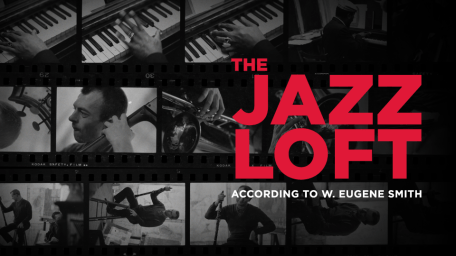
I realize I can’t let go of the W. Eugene Smith story, but that’s how fixations are. As I reported Sunday, I was knocked out by The Jazz Loft According to W. Eugene Smith, a stellar documentary illuminating Smith’s life and work, but especially his years quartered in a Manhattan loft churning out photos, hosting marathon after-hours jazz sessions, and making audio recordings of purt-near every sound made in the building. One of the many great moments in the documentary (and in Sam Stephenson’s recent Smith bio, Gene Smith’s Sink) comes when surviving participants–including the great alto saxophonist Phil Woods–recall the loft rehearsal sessions for Thelonious Monk’s first-ever big band performance at Town Hall. The arrangements, the difficulty of which one familiar with Monk’s music can well imagine, were written by the great Hall Overton–who just happened to live and work in the space on the other side of Smith’s wall. After creating arrangements to Monk’s satisfaction, a process fascinating in itself, the two men contacted the musicians and called the rehearsal. At two in the morning. And, Monk being who he was, everyone showed. Suffice it to say that I found it impossible after watching this sequence to avoid listening to Thelonious Monk at Town Hall last night (and I’m doing it again right now) (and you should, too), the full recording captured via YouTube above. Nothing short of amazing, folks.
I’ve also previously written about my attempt to whittle my CD collection down to a sane size. Since early January, I’ve traded in 200-300 of ’em, and they’d already been honed about a year ago, so at times I’ve felt like I was trading chunks of flesh. When my wife observed me taking a couple of late Aylers (Love Call and New Grass) downstairs to box up, she said with great alarm, “Wait, you can’t trade in those!” Yes, I am lucky; Nicole is as much an Albert Ayler nut as I. She even eagerly accompanied me to visit his grave outside of Cleveland! However, I told her, “Well, these are late experiments where he was trying to make accessible music, and they’re more than a shade uneven…we’ll never miss ’em.” She looked askance at me, and I went on downstairs with them.
I put them in a box, then stared at them for the next five days.
Have you ever felt guilt-pangs at getting rid of music by one of your favorite artists, even if it isn’t their best work, even if you could just digitize it? As if you’re betraying them, even if they happen to be dead (in Ayler’s case, for almost 50 years)? As if you’ve just discovered you’re a cold-ass bastard?
I took them out of the box, and out to The Lab, to give them one last listen in the compressed space of my Ranger’s cab and make absolutely sure I wasn’t fucking up.
I was. Well, I’m only halfway through New Grass, but, though it features very lame “spiritual” lyrics and singing, and some awkward arrangements (“Ayler goes R&B!”), Albert actually plays pretty well, and at least suggests what a successful merging of his wild wails and seriously soulful backing might have sounded like. Also, one gets to hear Ayler talking; that might not seem like much, but we hardly knew him before he was gone, and I treasure any moment that makes him seem more real. One track that exemplifies the worthy struggle of engaging with New Grass is “New Ghosts”: it’s seriously marred by some very-sub-Leon Thomas ululations, apparently emitted by Ayler himself, and Bill Folwell’s bass playing seems out of sync, but once the leader starts playing his tenor, some sparks fly–he brings out the calypso melody that was always embedded in the earlier recordings of “Ghosts” and anticipates Sonny Rollins’ ideas of the mid-to-late ’70s (think Sunny Days, Starry Nights). Goofy and wonderful: I suspect that combo was another Ayler’s human elements.
So, I’m keeping them. Try New Grass yourself–another full-album link’s there for your pleasure.
Speaking of Ayler–and this mysteriously happened after my Lab session–an archival release by the great Hat Hut free jazz label finally showed up in my mailbox: Ayler, Sunny Murray (drums), Gary Peacock (bass), and Don Cherry (trumpet), live in 1964, in fantastic fettle and fidelity, from the Café Montmarte in Copenhagen. The performance is one of the greatest of Ayler’s life, and Cherry is in amazing form, dancing lightly in and out of the eye of the saxophonist’s hurricane and illuminating the link between Ayler’s work and Coleman’s: an exciting contrast between free styles, earthiness v. elegance (and, yes, I’m calling Coleman’s work elegant in a relative kind of way, but even if I weren’t, his work still was). This release is a must for any serious Ayler fan. A must. Don’t make me repeat it again. (I will die with this CD still on my shelves, I assure you).
Two masters of jazz piano, dueting live, balancing compositions with improvisation. A key question in such circumstances: will the performance be a dialogue of the deaf? Here, the answer is a resounding “no”; Davis and Taborn have been playing together for quite awhile, and this record is a bit of a tour de force. They play in harmony, in unison, trailing each other, in response to each other’s calls, and, on “Chatterbox,” in dialogue. Quite surprisingly, at least to me, the dominant tone is meditative, especially on Davis’ “Ossining” and segments of Taborn’s three “Interruptions.” Best in show are interpretations of Carla Bley’s “Sing Me Softly of the Blues, and–especially–Sun Ra’s “Love in Outer Space,” a wry and touching closer. I didn’t know they were interpretations until after I’d listened to the record twice and done my homework.
Ty Segall: Freedom’s Goblin
You gotta hand it to the guy: few musicians on the planet work harder, and for an open spigot of creativity, his quality control valve’s gasket is pretty tight. However, after one listen, this double-record set is too much a melange for me to truly appreciate–from horns to funk covers to ladyfriend’s vocals to jams, he crams in just about everything–and even the “better” production does not hold from beginning to end. Still, as one would expect, Segall unleashes several ravers, and he goes out streaking through guitar heaven with “I’m Free” / “5 Ft. Tall” / “And, Goodnight.”
Brian Eno: Music for White Cube
Composed for an art installation, Eno’s simulations of quiet, late-night-early-morning environments–ships coming into port, street life heard around an alley corner, industry creeping into life–are mesmerizing. I never know when the old wizard is gonna put the hook in; I wasn’t expecting it here, but he definitely understands how to energize any old sound when its context is silence.
Maria Alyokhina: Riot Days
Here, Pussy Riot co-founder Alyokhina recalls the planning, execution, and aftermath of the group’s “Punk Prayer” action at Moscow’s Christ the Savior Cathedral and, in disarmingly direct narrative, with undimmed defiance and power, details her three-year stint in several Russian prisons. I think the book’s a worthy addition to the world’s prison-lit canon, but what do I know? One thing’s for sure: it’ll raise your hackles if you give it a chance.
Sara Fishko, director: The Jazz Loft According to W. Eugene Smith
I’ve already documented my devout enthusiasm for Sam Stephenson’s Gene Smith’s Sink this month, but if the reader desires the most powerful Smith experience, she might pair her reading of that book with this superb documentary. Somehow, its release slipped past me (thanks, Barrett!), but, hard as it would seem to have been to accomplish, visually, structurally, and emotionally, Fishko’s movie does justice to Smith’s genius. She picks and frames the right talking heads astutely, integrates wonderful segments of Smith’s massive Loft tape archives (I am quite sure with Stephenson’s aid), whets your artistic appetite with glimpses of Smith’s most famous photographs, and boils the burgeoning, chaotic doings of the Loft’s years into a coherent, fascinating, and moving string of stories. I already want to watch it again. Here’s the trailer:
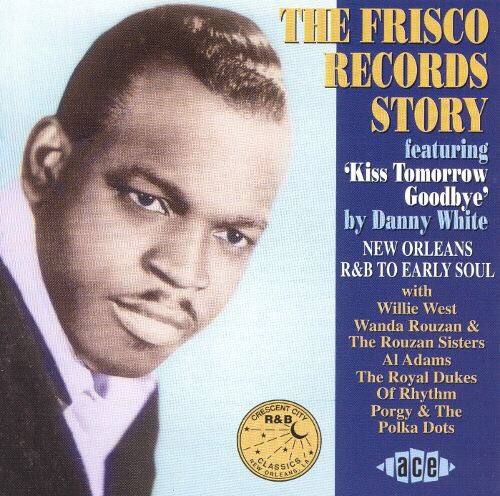
I will not be able to fully shake New Orleans music until after Mardi Gras (even then it’s doubtful), and yesterday was a case in point. The above record collects the highlights of New Orleans’ Frisco Records. While not really a match for Ron, Ric, Instant, AFO, and other local r&b/soul labels of the Sixties, it did produce at least one undeniably classic single: Danny White’s pull-out-the-stops weeper, “Kiss Tomorrow Goodbye.” Listening to that track yesterday led to two mysteries. One: there is no available YouTube video for it (nor for another arguably classic Frisco hit, The Rouzan Sisters’ always-relevant “Men of War”–though if you’re patient, you can hear Wanda sing it here). Is there some lawsuit in play? Every time something like this happens, I hear my students claiming, “Mr. O, everything streams, man!” and recall Roger Price’s axiom: “If everyone doesn’t want it, nobody gets it.” Which leads us to Mystery Two. Why would you “want this”? That’s not the mystery: White fucking sells the song in a very, very convincing soulful plea, sounding like he’s sweating in a lone spotlight on an otherwise darkened stage, in front of an utterly silenced audience. It will remind you of a time when someone kissed your tomorrow goodbye. The mystery is, who the hell is Irving Bannister, the guitar player who strings barbed wire around White’s corpus to keep him from trying to stop the unfolding tragedy? I’ve seldom heard more majestic, lacerating playing on a soul ballad.
Anyone who can solve those mysteries for me, please get in touch. In the meantime, as a teaser, here’s White other local hit on Frisco, which is a far cry from “Kiss Tomorrow Goodbye, but strangely we have a video for it:
Short-shrift Division:
This album should be in every American home. Absolutely classic and infectious NOLA jazz from right after WWII, featuring master musicians (Dodds, Danny Barker, Albert Nicholas, Don Ewell, James P. Johnson) and unforgettable songs still played and chanted today: “Buddy Bolden’s Blues,” “Wolverine Blues,” a passel of creamy Creole confections, and four Mardi Gras Indian anthems, the first time any had appeared on a commercial release (see my entry from earlier this month). This slab, like Tootie Ma, is a big fine thing!
Have you ever wondered what it would have sounded if Professor Longhair had backed some Mardi Gras Indians? Wonder no more. I direct you to Track 12 here (you guessed it–no YouTube video available), a raucous version of “Saints.” Also of note: the first jukebox single recorded and released by Mardi Gras Indians:
When I was young and easy in the mercy of life’s means (and my privilege), a friend of mine and I, if we were hanging out with women and having a great time, would occasionally and quite perversely test them by throwing some Captain Beefheart on the turntable, hoping they would stay but doubting it seriously. If memory serves, that test was passed only once, and we were so deliriously happy about it we were in no shape to pass our test when the needle floated out of “Veteran’s Day Poppy” and into the outgroove.
I was moved to recall this after listening to The World of Captain Beefheart Featuring Nona Hendryx and Gary Lucas. I’d bought it with some trepidation; more than a few times, producers have forced great singers (usually women) into misbegotten, undignified musical straitjackets, and I was having a hard time imagining Ms. Hendryx, of “Lady Marmalade” fame and more, comfortable with a Van Vlietian setlist. Yes, her partner in crime in this enterprise is one of the most passionate and skilled adherents of the Captain’s Way, but, I thought, why would a black singer even have an interest in wrestling with such wracking rhythms? Well, shame on me for having that thought; I’m just being honest. And, in fact, Nona sounds not only completely at home and familiar with the material (just play the opener, linked above), but like she’s having a blast. As she does live, having the choice and choosing “Tropical Hot Dog Night”!
But, to the point, it finally occurred to me that, perhaps, it was much more accurately surprising that a woman was digging, and digging into, the Beefheartian repertoire. Shame on me, again, for underestimating folks when I’m old enough to know better, but I sure hope there is more of this to come! Especially with Lucas’ guitar propelling her forward, backwards, and side to side (and grabbing this listener by the throat, as he usually does), this woman passes the test!
Short-shrift Division:
The Fall: I am Kurious Orange (Check the guy’s track record!)
The Fleshtones: It’s Super Rock Time! The IRS Years (and it is!)
Today was one of those rare days where I didn’t have the room for much music. I did teach a very successful class to my freshman comp/pop music students at Stephens: I’d assigned them to read their choice of four (out of nine) professional “personal” essays about music, identify the writers’ arguments and stylistic traits, then establish their own positions. In addition, they had to select an album they enjoyed from The Village Voice‘s year-end music poll and briefly defend it. They spent the hour reporting their thoughts, and it went splendidly. I heard from them on essays about Loretta Lynn (“It doesn’t matter that she’s a Trump supporter), Chris Brown v. Rihanna (“Some women can kick a man’s ass!” v. “Domestic violence shouldn’t be normalized!”), Lana Del Rey v. Radiohead (“She put enough of her brand on it that the similarities are irrelevant!”), and one on Lady Gaga that they thought was most notable due to writer Mary Gaitskill’s esoteric approach. The makers of the albums from 2017 that they loved? Kendrick (no surprise), Harry Styles (no surprise), SZA (not really a surprise), Lee Ann Womack (cool!), Jason Isbell (hey!). Next class they have to listen to and post commentary on a record from the poll they’ve never heard before. That should be pretty exciting. I’ve assigned myself The War on Drugs–just kidding.
Otherwise, I had essays to grade, an injured dog to attend to (corneal ulcer, freshly removed cyst), and a spouse to nurse (bad stomach and headache) and chill watching Broadchurch with. Plus, I had to change out the straw in our outdoor cats’ huts. Worked up a sweat!
Aside from continuing to mourn Mark E. Smith (heavy dose of The Fall before work, no pints later as I am practicing “Dry January”–I can hear Mark laughing from beyond the grave), I was able to revisit Raekwon’s Only Built for Cuban Linx II. A worthy sequel? Yeah. I mean, there are multiple producers (including Dr. Dre and J Dilla) but it still sounds Wu-ish; the subject matter certainly conforms, including one very heinous oral sex scenario that I cannot unhear; and, though Raekwon is in fine form, Ghost and Meth pretty much steal the show. The one track the sticks with me is a Dilla-produced tribute to ODB, “Ason Jones,” which is genuinely moving. So, maybe no, if only one track is still sticking this morning. I am a sucker for Wu atmospherics, Ghost’s “crying” delivery, and the flying daggers of flow, accent, and vocab that result from a Clan collab.
Mark E. Smith, who stepped on a rainbow yesterday, once said about his sui generis group that “if it’s me and your granny playin’ bongos, it’s The Fall.” That quote’s been endlessly repeated, if you read pop music media you’ll have it memorized by the end of this day if you didn’t have it already, and it is damned witty.
BUT–the thing is, it’s very true. For 40 years, and all the way up to the very end, Smith produced records with a wide variety of musicians, featuring a wide variety of augmentations and methods of attack, presented with production ranging from cruddy to crystalline, and, should you care, for example, to listen across a Fall compilation (like 50,000 Fall Fans Can’t Be Wrong or, especially, Castle Music’s two Fall box sets, one of five and of six discs), you will hear that, to tweak John Peel, the more different they sound, the more they sound the same.
And not just that. Across 40 years, they sound good. Consistently good. Funny, caustic, cranky, irritating, repetitive, baffling, rabble-rousing, poetic…but catchy. And catchy ain’t easy, especially when one is shooting for and hitting those other goals. Or maybe, paradoxically, not shooting for anything at all other expressing one’s unique self.
Mark E. Smith: He was a man. Take him for all in all. We shall not look upon his like again. Enough with the quotes and allusions; click on the above playlist and get hooked, or simply revisit some wonderful shots across the bow of pop music. I listened to him all afternoon yesterday, and I’ll be listening to him most of the day today.




 Living To Listen