Strapping On Her Dinosaur Shoes (January 26, 2018, Columbia, Missouri)

When I was young and easy in the mercy of life’s means (and my privilege), a friend of mine and I, if we were hanging out with women and having a great time, would occasionally and quite perversely test them by throwing some Captain Beefheart on the turntable, hoping they would stay but doubting it seriously. If memory serves, that test was passed only once, and we were so deliriously happy about it we were in no shape to pass our test when the needle floated out of “Veteran’s Day Poppy” and into the outgroove.

I was moved to recall this after listening to The World of Captain Beefheart Featuring Nona Hendryx and Gary Lucas. I’d bought it with some trepidation; more than a few times, producers have forced great singers (usually women) into misbegotten, undignified musical straitjackets, and I was having a hard time imagining Ms. Hendryx, of “Lady Marmalade” fame and more, comfortable with a Van Vlietian setlist. Yes, her partner in crime in this enterprise is one of the most passionate and skilled adherents of the Captain’s Way, but, I thought, why would a black singer even have an interest in wrestling with such wracking rhythms? Well, shame on me for having that thought; I’m just being honest. And, in fact, Nona sounds not only completely at home and familiar with the material (just play the opener, linked above), but like she’s having a blast. As she does live, having the choice and choosing “Tropical Hot Dog Night”!

But, to the point, it finally occurred to me that, perhaps, it was much more accurately surprising that a woman was digging, and digging into, the Beefheartian repertoire. Shame on me, again, for underestimating folks when I’m old enough to know better, but I sure hope there is more of this to come! Especially with Lucas’ guitar propelling her forward, backwards, and side to side (and grabbing this listener by the throat, as he usually does), this woman passes the test!

Short-shrift Division:

The Fall: I am Kurious Orange (Check the guy’s track record!)

The Fleshtones: It’s Super Rock Time! The IRS Years (and it is!)

Jean Grae: The Orchestral Tapes

Flying Daggers Style (January 25th, Columbia, Missouri)

Today was one of those rare days where I didn’t have the room for much music. I did teach a very successful class to my freshman comp/pop music students at Stephens: I’d assigned them to read their choice of four (out of nine) professional “personal” essays about music, identify the writers’ arguments and stylistic traits, then establish their own positions. In addition, they had to select an album they enjoyed from The Village Voice‘s year-end music poll and briefly defend it. They spent the hour reporting their thoughts, and it went splendidly. I heard from them on essays about Loretta Lynn (“It doesn’t matter that she’s a Trump supporter), Chris Brown v. Rihanna (“Some women can kick a man’s ass!” v. “Domestic violence shouldn’t be normalized!”), Lana Del Rey v. Radiohead (“She put enough of her brand on it that the similarities are irrelevant!”), and one on Lady Gaga that they thought was most notable due to writer Mary Gaitskill’s esoteric approach. The makers of the albums from 2017 that they loved? Kendrick (no surprise), Harry Styles (no surprise), SZA (not really a surprise), Lee Ann Womack (cool!), Jason Isbell (hey!). Next class they have to listen to and post commentary on a record from the poll they’ve never heard before. That should be pretty exciting. I’ve assigned myself The War on Drugs–just kidding.

Otherwise, I had essays to grade, an injured dog to attend to (corneal ulcer, freshly removed cyst), and a spouse to nurse (bad stomach and headache) and chill watching Broadchurch with. Plus, I had to change out the straw in our outdoor cats’ huts. Worked up a sweat!

Aside from continuing to mourn Mark E. Smith (heavy dose of The Fall before work, no pints later as I am practicing “Dry January”–I can hear Mark laughing from beyond the grave), I was able to revisit Raekwon’s Only Built for Cuban Linx II. A worthy sequel? Yeah. I mean, there are multiple producers (including Dr. Dre and J Dilla) but it still sounds Wu-ish; the subject matter certainly conforms, including one very heinous oral sex scenario that I cannot unhear; and, though Raekwon is in fine form, Ghost and Meth pretty much steal the show. The one track the sticks with me is a Dilla-produced tribute to ODB, “Ason Jones,” which is genuinely moving. So, maybe no, if only one track is still sticking this morning. I am a sucker for Wu atmospherics, Ghost’s “crying” delivery, and the flying daggers of flow, accent, and vocab that result from a Clan collab.

G’Bye to Mark E. (January 24th, Columbia, Missouri)

Mark E. Smith, who stepped on a rainbow yesterday, once said about his sui generis group that “if it’s me and your granny playin’ bongos, it’s The Fall.” That quote’s been endlessly repeated, if you read pop music media you’ll have it memorized by the end of this day if you didn’t have it already, and it is damned witty.

BUT–the thing is, it’s very true. For 40 years, and all the way up to the very end, Smith produced records with a wide variety of musicians, featuring a wide variety of augmentations and methods of attack, presented with production ranging from cruddy to crystalline, and, should you care, for example, to listen across a Fall compilation (like 50,000 Fall Fans Can’t Be Wrong or, especially, Castle Music’s two Fall box sets, one of five and of six discs), you will hear that, to tweak John Peel, the more different they sound, the more they sound the same.

And not just that. Across 40 years, they sound good. Consistently good. Funny, caustic, cranky, irritating, repetitive, baffling, rabble-rousing, poetic…but catchy. And catchy ain’t easy, especially when one is shooting for and hitting those other goals. Or maybe, paradoxically, not shooting for anything at all other expressing one’s unique self.

Mark E. Smith: He was a man. Take him for all in all. We shall not look upon his like again. Enough with the quotes and allusions; click on the above playlist and get hooked, or simply revisit some wonderful shots across the bow of pop music. I listened to him all afternoon yesterday, and I’ll be listening to him most of the day today.

Made in Chicago / Made in a Mad Mind (January 23, 2018, Columbia, Missouri)

At the end of 2015, I listed Jack DeJohnette’s Made in Chicago as the album I considered the very best of that year. I believed it, yet at times I have wondered if my biases toward older artists, toward free jazz, and toward historic occasions had too much to do with my choice. Yesterday, I broke out the album for some deep listening in The Lab (my truck’s cab), and can confirm that the music therein was easily worthy of that top ranking. I’ve listened to it several times in the past two years, but it had been awhile, and distance has a way of clearing away the fog of prejudice.

Made in Chicago is more a celebration of the 50th anniversary of the Windy City’s legendary Association for the Advancement of Creative Musicians (AACM) than it is a DeJohnette album, though the on-stage drummer’s leadership is clear throughout: on piano, the late Muhal Richard Abrams (ship’s captain and co-founder of AACM); on alto saxophone, bass flute, bass recorder, Henry Threadgill (playing more horn, and playing more scintillatingly, than he has in years); on soprano and alto saxophones, wooden flute, Roscoe Mitchell); and on double bass, violoncello, Larry Gray.  Those jazz fans who have a passing knowledge of the work produced by the AACM over the past half-century might expect this live show, part composed and part improvised, to be difficult, cacophonous, and/or cerebral (at the cost of its emotional impact). To the contrary: the five performances–especially the opening three–are a treat for the ears, directly evoking a wide range of conscious states (meditation, serenity, trance, wakefulness, joy), progressing–thanks to these wise septuagenarians’ expert ears and quick minds–with exceptional coherence and logic, and communicating great depth of feeling. Abrams and Threadgill in particular are in great form, the former often playing hypnotic, repetitive figures that bring to mind birdcalls or early morning rain-patter, the latter letting loose a dazzling variety of breath-length vocalizations. Maybe my favorite music of the entire set is the laughter and delight the men share at the end of each piece: considering they have proven to be musicians with exceptionally high artistic and intellectual standards, their happiness with their work confirms for me that I am hearing something grand. Also, you’ll seldom hear such an impassioned reaction to this kind of music by a live audience.

Verdict: yes, this is a great record. If you’ve heard of the AACM and want to dip a toe in its broad and deep expanse, this is a wonderful point of entry.

Recently, I admitted that, if forced into a choice, I’d take Dion over Elvis. Perhaps this declaration is a bit less controversial, but I’d also argue that the greatest non-melanated American rock and roll singer of all-freakin’-time is none other than Austin, Texas’ own Roky Erickson. I don’t have to be nudged too firmly on any day of the week to put on an Erickson platter, from the ground-breaking psychedelic garage rock of his mid-Sixties units The Spades and The 13th Floor Elevators to his post-acid / schizophrenic-breakdown, post-prison-stint solo work in the early Eighties, a period I chose to visit yesterday. The Evil One, originally issued in 1981 on 415 Records and nicely reissued by Light in the Attic in 2013, is, simply put, a landmark of the decade, with at least 10 of its 15 songs being among the best 20 Erickson ever wrote (present are “Two Headed Dog,” “Stand for the Fire Demon,” “The Night of the Vampire,” “Creature with The Atom Brain,” “Don’t Shake Me Lucifer,” and one of his rare Buddy Holly-styled yearners “If You Have Ghosts”), and featuring some of the most transported yowling ever recorded. In the best Roky howls, you can hear a whirring bandsaw blade’s edge, as well as an aching vulnerability hidden deep in his keening Texas twang, and his guitar could and did rhyme with all of that. The lyrics? Best not thought about too deeply, but in today’s political and social environment, Erickson two-headed dogs, demons, zombies, vampires, ghosts, and atom-brained creatures might just take on new meaning for folks just getting their feet wet. The thing is, as late-night sci-fi-corny as his scenarios can be, the best of them can’t conceal and don’t distract from the excitement, inspiration, and depth of feeling Roky invests in his singing. If you love Little Richard, I don’t see any reason why you won’t, don’t, or shouldn’t like Erickson. They’re both uniquely mad, they’re both still breathing, and, while Richard may have gotten his fair share of acclaim, we need to break Roky out of the cult ghetto before it’s too late. Recommendations: very obviously this record, Don’t Slander Me (from 1985), and the career-summing two-disc comp I Have Always Been Here Before, released by Shout! Factory, now out of print but certainly worth the hunt and obtainable at a reasonable price.

Dedicated to my friend Dave Gatliff: An YouTube playlist that should serve as a decent introduction to Roky’s work!

Short-shrift Division  (courtesy The Marvelous Mrs. Maisel):

Ricky Nelson, “Be-Bop Baby”

The Coasters, “Yakety Yak”

Blossom Dearie, “The Gentleman is a Dope”

Charlie Parker, “Bird of Paradise”


Apples and Oranges (January 22, 2018, Columbia, Missouri)

ErnestDawkins

As I do with my reading, I follow my nose when I explore music. I read, I chat with folks, I read some more; what I don’t tend to do is put myself in an algorithmic cage, which isn’t that different from radio other than the cage has broader dimensions. In the case of the most explosive and deeply felt music I listened to yesterday, neither YouTube nor Spotify nor Pandora (nor most certainly radio) would have helped me, as I only happened to learn about this particular recording through a perusal of jazz critics’ best-of-’17 lists in Jazz Iz (a publication I seldom see but happened to notice in the rack shadows in a local grocery store). You could say I sniffed it out. You might also carp about critics being gatekeepers, but, look–their job is to listen, and they have the time to do more of it than we do because of that. And lists are very important: right now I know I am not alone in hoping that the Village Voice eventually provides all voter ballots for the 2018 Pazz and Jop Poll, which are almost always a better resource than the list itself and its accompanying lists.

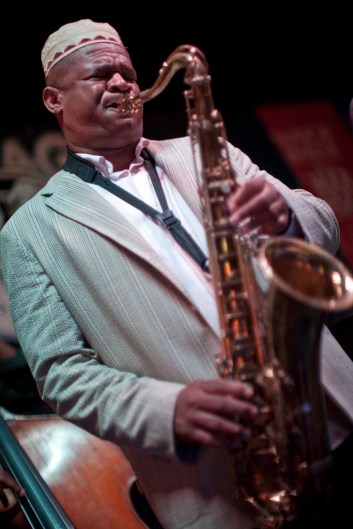
Cutting to the chase: the album I am speaking of is Transient Takes, Chicago saxophonist and AACM member Ernest Dawkins‘ 16th as a leader. Dawkins, 64, is in magisterial form on alto and tenor, shifting easefully between woolly blues, passionate ballads, and no-holds-barred free scrums that unsurprisingly landed the record on two Jazz Iz correspondents’ lists–and at the very top of one of those. Reinforcing Dawkins’ powerful, emotionally complex, and witty playing is Vijay Iyer, one of jazz’s most preeminent  pianists, but also one who is frequently accused of being too cerebral and cold (a stereotypical assessment, perhaps). Frankly, Dawkins (if not such observers) seems to inspire Iyer to some of the earthiest playing I’ve ever heard from him–and I’m a big fan. Isaiah Spencer on drums and Junius Paul also provide solid, rousing, and sensitive support, and the crisp live recording makes a very present group performance even more immediate. Transient Takes is one of the best American releases of any kind from 2017; it would have been on my year-end list had I known about it in time, but I’ll vote for it next year anyway!

The catch: Should you like a copy of Transient Takes–and if you are a fan of Dawkins, post-Trane jazz in general, the AACM, the Chicago tradition, saxophone, or Iyer, I believe you should like one–you’ll need to a) trust me re: the above take (or dig David Whiteis’ review in Jazz Times), because there’s not much commentary out there; b) write Mr. Dawkins directly at the following address for a copy ($20 if shipped in the U. S., I think)–because you’ll not find it streaming, or for sale anywhere but from him.

Ernest Dawkins, P. O. Box 7154, Chicago, Illinois, 60680

You might think it’s perverse for an artist not to “get his work out there,” but in this world of free and instant access, I found it refreshing. The process of obtaining Transient Takes took me back to the days when, hunkered down in my college dormitory, I mail-ordered punk albums from Trouser Press.

Note: According to his website, Dawkins is working on two very interesting commissioned projects that might be reason to stay informed.

OK, those were the apples. Now for the oranges….

I will freely admit to being slow to the dinner table when it comes to pop music. I don’t club, I don’t listen to the radio at all, I don’t follow the charts (my nose can’t smell them for some reason), I feel creepy listening to Taylor Swift, I’ve perhaps become too temperamentally and philosophically aligned with the world of underground, experimental, and otherwise marginal music, I don’t trust megasmashes–the list goes on and on. Though when I read Neil Postman many years ago he annoyed me, for some reason when I think of contemporary pop music, I detect him whispering in my ear, “This is what I was talking about.” However, I like to think that, particularly after friends and fellow writers wear me down and I make an effort, I do eventually bow at the feet of the Undeniable Pop Smash.

Cardi B is undeniable. Migos are undeniable. I am warming back up to Ms. Minaj. And–I am feeling my forehead here–I am even interested in Bruno Mars, thank to this:

My Stephens students laughed out loud at me this morning when I told them I had just listened to a Cardi B song for the first time yesterday (true statement). I had distributed to each of them the above Pazz & Jop poll results, and assigned them to highlight every album and song they’d heard, star each one of those they could defend in public, and otherwise notate records they hadn’t heard but were curious about, which filled them with immediate enthusiasm, but also some reticence, especially when I mentioned I’d voted in the poll. I could see on their faces a look that anticipated my stern judgment of their choices, but in response I said, “How smart can I be if I just listened to Cardi B yesterday?”


Gene Smith’s Sink (January 21st, Columbia, Missouri)

Sink

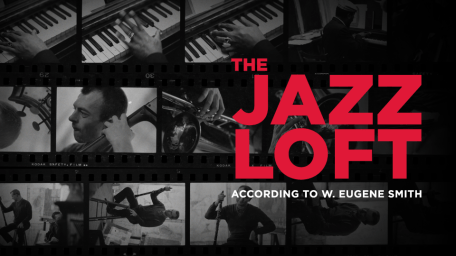
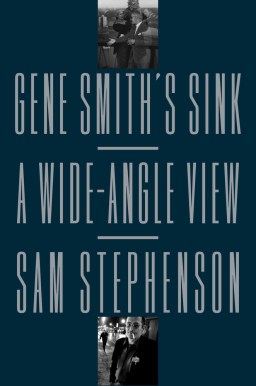
My criteria for a great non-fiction read are, of course, that the author illuminates his subject, but, on a more personal level, that his book sends me off in new reading and listening directions. Sam Stephenson, in a culmination of his more than two decades of study the photographer W. Eugene Smith, easily meets both in Gene Smith’s Sink: A Wide-Angle View, applying a Citizen Kane-style strategy to get to the tortured core of Smith’s genius and, perhaps coincidentally (Stephenson would argue not necessarily), tapping into both areas I’ve very recently explored (Japanese culture and disaster, Tennessee Williams’ complicated vision) and opening new doors for me: to the work of Robert Frank, Ronnie Free, and the deeper depths of Sonny Clark’s discography, beyond Cool Struttin’.

Perhaps the best of many brilliant chapters in the book involve, first, one that examines the source of and reason for the call of a Chuck-Will’s Widow that turns up on one of Smith’s many loft recordings, and, following right on its heels, an examination of Clark’s tragic life. How all these things connect I’ll leave it to the reader to discover–I couldn’t recommend this book more highly–but they rocketed me to a four-hour listening session that incorporated the whole of Clark’s recordings with the St. Louis-born guitarist Grant Green and two albums Clark made as a leader, Leapin’ and Lopin’ and The Sonny Clark Trio. My goal? Well, in that latter chapter, Stephenson’s driving to understand why Japanese jazz fans seem to revere Clark even more than Coltrane, and he breaks down two symbols frequently used by Japanese jazz writers to describe Clark’s music; I simply set out to test their description myself. It’s not this simple, but the symbols, used together, indicate both a muffling of deep feeling and the expression of deep feeling through the contraction of the heart. Interesting, huh? I found that description holds up.

Just prior to being set on this listening path, and just prior to having read the two chapters that lit me on fire, I’d read an interview with Philip Roth in the current New York Times Book Review. You’ll soon understand why, shortly after reading it, I was shaking my head in wonder; check out this response of Roth’s:

I seem to have veered off course lately and read a heterogeneous collection of books. I’ve read three books by Ta-Nehisi Coates, the most telling from a literary point of view, “The Beautiful Struggle,” his memoir of the boyhood challenge from his father. From reading Coates I learned about Nell Irvin Painter’s provocatively titled compendium “The History of White People.” Painter sent me back to American history, to Edmund Morgan’s “American Slavery, American Freedom,” a big scholarly history of what Morgan calls “the marriage of slavery and freedom” as it existed in early Virginia. Reading Morgan led me circuitously to reading the essays of Teju Cole, though not before my making a major swerve by reading Stephen Greenblatt’s “The Swerve,” about the circumstances of the 15th-century discovery of the manuscript of Lucretius’ subversive “On the Nature of Things.” This led to my tackling some of Lucretius’ long poem, written sometime in the first century B.C.E., in a prose translation by A. E. Stallings. From there I went on to read Greenblatt’s book about “how Shakespeare became Shakespeare,” “Will in the World.” How in the midst of all this I came to read and enjoy Bruce Springsteen’s autobiography, “Born to Run,” I can’t explain other than to say that part of the pleasure of now having so much time at my disposal to read whatever comes my way invites unpremeditated surprises.

Why read? How can you not, if you’re able?

Short-shrift Division:

Del McCoury Band: The Cold Hard Facts

Lester Flatt and Earl Scruggs and The Foggy Mountain Boys: The Complete Mercury Sessions

The Essential Bill Monroe and His Bluegrass Boys (on Columbia)

STAND! (January 20, Streets of Columbia, Missouri)

Nicole and I hit the streets today (as we did exactly a year ago) to show solidarity with those people and institutions under egregious attack by our own government. The turnout was again in the thousands, compared to around a hundred at a rally in Jefferson City in support of the current administration. When we returned home, I wanted to keep the vibe high, so I put on one of the most instantly encouraging, politically and socially encouraging albums I know of, Sly and The Family Stone’s Greatest Hits. It’s another of those collections every American should own. I have to be honest about a couple of things, though: I’m skeptical anything serious is going to happen anytime soon to address the disgrace that’s happening in front of our eyes, and I’m more than well aware that the problems I care most about have been by-products of this country’s design from the beginning. Thus, I programmed, after the whole of Greatest Hits, the more pessimistic moments of its predecessors, …there’s a riot goin’ on and Fresh. Just for balance, you understand.

32E46881-6722-4765-8287-ACCB2A9734D9

Seeking some hands-across-the-border sounds, needing more guaranteed pure delight, and inspire by having seen Joe Nick Patoski’s neat Doug Sahm documentary Sir Doug and the Genuine Texas Cosmic Groove earlier this week on Amazon Prime, I put on another house favorite, Texas Tornados. Along with the Traveling Wilburys and Lil’ Band of Gold, the Tornados were one of the best (and few artistically successful) supergroups in our music’s history, and their debut album is almost perfect; my only quibble is that their cover of Butch Hancock’s “She Never Spoke Spanish to Me” should have been a grand slam but sounds a bit soggy. Maybe it’s just the context. The record’s an unbeatable mix of driving and droll Tex-Mex rock and roll and soulful, romantic conjunto. And though Sahm, Freddy Fender (listen for his neat guitar solo on “(Hey Baby) Que Paso”!), and accordian master Flaco Jimenez would seem to be the main attractions, it’s Augie Meyers (on Vox organ, of course, but also wailing on accordian himself and singing the hell out of his two infectious compositions) who purt-near steals the show. If somehow you’ve never heard this record, change that, please.

Son of Rough Mix, on the Fly (January 18-19, Columbia, Missouri)

Still wrestling with wedging writing time in between returning to work, compulsively striving to keep up with my reading goals, catching up with Call the Midwife, and simply living. But I’m gonna by-God post every day of January if it kills me….

Thursday:

Like 15-20 other people in this world, I buy and read jazz mags. After scanning about the 50th Smoke Sessions label ad I’ve flipped to in two months, I broke down and downloaded Heads of State’s Four in One, like many Smoke releases a gathering of old pros (two of my old faves here, Gary Bartz and Al Foster) crisply and skillfully playing mostly jazz rep with a sprinkling of originals, and new-to-me Detroit pianist / vocalist Johnny O’Neal’s In the Moment. O’Neal, too, is an old pro who can make the 88s speak several jazz dialects, and he sings a bit, too. I’d love to see him in a little bar. For the record, though neither release breaks any new ground…so what? These players feel the music, the production is smart and clean, and the performances have an immediacy that’s stirring.

Friday:

Morning: due to Nicole’s enthusiasm for the Carter Family biography Will You Miss Me When I’m Gone, I sneakily bought her (read: me) (no, really, I got it for us) JSP’s endlessly wonderful The Carter Family 1927-1932 5-disc box. We broke it out at 5:15 and listened raptly to the first two discs. Few foolish moves therein, and YES Maybelle plays driving guitar. Also, that Guthrie stole their “When the World’s on Fire” melody for “This Land is Your Land”just gives the latter even more subtext.

Later in the day, driving from job to job in “The Lab” (the ’92 red-orange Ford Ranger that serves as my high-volume listening center), I revisited two old rap faves, Dizzee Rascal and Busdriver. Rascal: I love that early grime sound and I’m a sucker for an MC with a British accent. Bus: I found myself thinking, “This is prog-rap!” an association that would normally force me to separate myself from the music but which in this MC’s case, thanks to wit and humor, passes muster, barely. I was proud of myself for coming up with that label, then remembered that Robert Christgau had, hilariously and quite accurately, compared Busdriver’s delivery to Sparks and Conlon Nancarrow, so I’d probably My-Sweet-Lorded ol’ Bob.

Speaking of, Xgau recommended the new Joey Badass release in his Expert Witness column today, so I dipped my toe in that musical pond. Badass has never moved me much, but his social commentary on All-Amerikkkan Badass was just what the doctor ordered for this dude, who today finished the highly-recommended anthology Tale of Two Americas. Here, listen to the whole thing free!

The weekend has presented itself, so I hope to leave something more coherent tomorrow.

“Rock and roll is about attitude. You don’t have to play the best guitar.”

Johnny Thunders

Rough Mix on the Fly (January 17, 2018, Columbia, Missouri)

CupcakKe

Yesterday, I was back to work tutoring and trying to catch up on my reading (I shoot for 100 books a year, and as of yesterday morning I had not finished one). I listened to much music out of the corner of my ear, but I am too harried at present to connect it, so on days like these–to meet my goal of posting once a day, I am just going to list-and-one-liner.

CupcaKke (pictured above): Ephora – Featuring the first song I’ve heard in awhile that’s made me blush.

Lil’ Band of GoldCajun supergroup fronted by ebullient driving accordianist Steve Riley, with avant garde saxophonist (Dickie Landry) as secret weapon, calls out to benighted Texas Tornados fans.

Moor Mother: Fetish the Bones – Radical poet riding rap rhythms redolent in attack of, um, The Pop Group.

Pink Floyd: Relics – Out of the blue I’ve found a Pink Floyd album I really, really like, and it’s (glorious) patchwork.

Roswell Rudd: Embrace – What a nice album to leave us with before he stepped on a rainbow (here, sample a song)!

Archie Shepp: Attica Blues – Legendary–at least much-discussed–jazz (though often not jazZY) concept album not as angry and far more romantic than the title would suggest.


“You got your radio turned down too low–TURN IT UP!”

Bo Diddley