Never Forgetting / Doin’ The Peanut Duck–wait WHAT? (April 4th, 2018, Columbia, MO)

wk14_king

Perkins

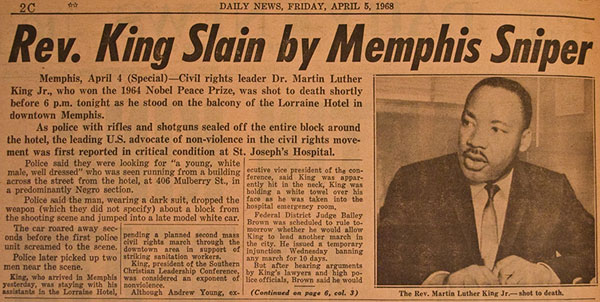
Today marked 50 years from the day that one of the world’s greatest advocates for social justice, economic equality, and peace–a man who quite literally, in that advocacy, courted assault and death for at least a third of his life–was shot dead in Memphis. Say what you will about the range of theories: his assassination was a further iteration of this country’s power structure’s willingness to commit spectacle murder in order to protect itself. I’d like to think that since 1968 we’ve evolved; I’m far from sure.

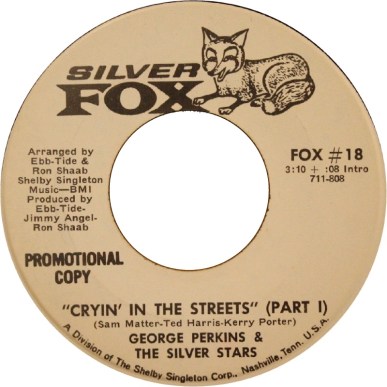
In the Overeem house, we like to remember King and his impact on people across the American spectrum, and remind ourselves about the dangers inherent in public truth-telling, by playing George Perkins and The Silver Stars’ heartbreaking “Cryin’ in the Streets.” Perkins, though not credited, claimed and is generally believed to have written the lyrics about King’s funeral; the song, unsurprisingly, became a big regional hit and rose to #12 on the Billboard r&b chart. Few songs in the American canon penetrate as deeply into the country’s historic sorrow, and testify as eloquently to its original sin:

Also, it’s stayed relevant over the last half-century and, considering current social unrest and the lack of urgency our elected leaders have in addressing it, is bound to remain that way. Here is Buckwheat Zydeco’s differently heartbreaking rendition, recorded following the Katrina disaster–neither version would sound out of place being played, sung, or sung chanted for Stephon Clark and Saheed Vassell, just to name the most recent in the litany of black bodies robbed of lifeflow by those charged with protecting them:


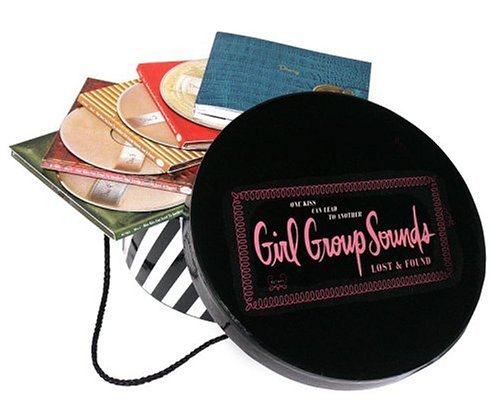
I did reach for something later in the day to break angry, frustrated, and sorrowful thoughts: Rhino’s kaboodle-kontained girl group compilation One Kiss Leads to Another–Girl Grou Sounds Lost & Found. It’s most definitely one of the most prized presents my parents ever got me for Christmas, one I’m sure they thought was also one of the weirdest.

One Kiss.jpg

It’s four fabulous, and very consistent, discs of mostly unsung highlights from the girl group era. Though it does contain some acknowledged and not-so-obscure classics–The Exciters’ “He’s Got the Power,” The Shirelles’ Beatle-adored “Boys,” Brenda Holloway’s (Del-Fi version of) “Every Little Bit Hurts,” just to name a few–it very much justifies its existence by unearthing some unforgettable gems. My favorites from yesterday (they tend to change every time I break this set out):

Carole King: “He’s a Bad Boy”

Donna Lynn: “I’d Much Rather Be with the Girls” (written by two guys named Keith and Loog…)

Dee Dee Warwick: “You’re No Good” (it may be a certified masterpiece, but it’s not easy to locate, at least physically)

The Shangri-Las: “The Train from Kansas City”

Earl-Jean: “I’m Into Something Good”

P. P. Arnold: “The First Cut is the Deepest”

Dolly Parton: “Don’t Drop Out” (did she beat JB to that?)

The Egyptians: “Egyptian Shumba”

The Goodees: “Condition Red”

The Whyte Boots: “Nightmare”

Wanda Jackson: “Funnel of Love” (a bit of a ringer, but what the heck!)

The What Four: “I’m Gonna Destroy That Boy”

Marsha Gee: “Peanut Duck” (one of the great pop music mysteries–see below!*)

Hollywood Jills: “He Makes Me So Mad” (Not Hollywood–NOLA!)

Lesley Gore: “Brink of Disaster”

Gayle Harris: “They Never Taught Us That in School” (amazingly, non-existent on YouTube!)

The Ribbons: “Ain’t Gonna Kiss Ya”

The Pussycats: “Dressed in Black”

Here’s a convenient playlist containing (most of) the above:

About the only thing keeping this package from being perfect is the absence of the Pleasure Seekers’ “What a Way to Die”–if they could wedge in Wanda and Dolly and the Whyte Boots, they could make way for proto-punk Suzi Q.! Also: where’s Little Ann’s “Deep Shadows”! (I added them to the above playlist, FYI.)

*For about five minutes, I shut my office door and practiced “The Peanut Duck.” I recommend you take some time today to do so yourself, but I’ll warn you that “Marsha”‘s instructions are, um, esoteric to say the least. I mentioned a mystery, and straight from the set’s eye-popping and brain-expanding booklet, authored by Sheila Burgel, here it is, yet to be solved:

“At Virtue Sound Studio in Philadelphia, a mystery girl singer cut “Peanut Duck,” a feverish soul stomper that trailed the Loco-Motion, Mashed Potato, Twist trend. But the track was never released, and Marsha Gee was not the actual singer. The only proof of “Peanut Duck” lay in an acetate discovered by a British Northern Soul DJ who took the disc back to England and released it as a bootleg on Joker Records in the ‘80s. Not wanting his rival DJs to infringe upon his precious find, he christened the unknown singer Marsha Gee (who incidentally had a single out on Uptown Records in 1965). The true voice behind “Peanut Duck” has yet to be revealed. Anyone?”


Dearth Leads to Bounty! (April 3, 2018, Columbia, MO)

The afternoon didn’t bode well. I felt compelled, as a result of lobbed cocktail of Molotov Lite on the streets of a music forum I frequently walk, to listen again to a new record (Kasey Musgraves’ very-much-instantly-vauntedGolden Hour) that I was sure I didn’t like. But, dammit, because my philosophy of life is that it’s too short to do less than two things at once, I feared I hadn’t concentrated enough on the lass’ work. So I abjured my usual practice of consuming (in the open air) music and (at the very least light) literature simultaneously, and donned headphones for an ultra-close listen.

Turned out I was right to begin with: while emitting a quite pleasant glow, Golden Hour‘s songs are unremittingly sappy and cliched, which would be worse, I suppose, if Musgraves weren’t a borderline erotic singer–but she mostly strives to achieve that eros by intoning in too codeined a style for me to buy. There you have it.

At that point I should have gone about my business, with three excellent tomes going and some new releases calling. However, though the effort didn’t bring much return, I dug the dedicated listening experience enough to hold off on the page-turning, keep the earbuds in, and really concentrate. Good thing I did: all three of the records I sampled (I’m really starting to love Apple Music) were splendid to be alone in a room with.

This one’s in my Top 5 for 2018–no need to make sure I’m right–though I am going to be playing the heck out of it. Ms. Grae, one of my very favorite MCs, has been a bit lost in the wilderness over the last near-decade, exploring other mediums (web TV, for example) where she just hasn’t hit it. Her exploits, by my lights at least, have been honorable duds. Quelle Chris, on the other hand, has never quite held my attention at all. Together, however, they’ve created a concept album that can hang with Prince Paul’s A Prince Among Thieves; if their comments on the album’s Bandcamp site can be trusted, Paul was an influence on their work. To be honest, I might actually like Everything’s Fine better. As we know, everything ain’t fine, and one thing the album explores, through funky, burbling tracks, inventive rhyming and phrasing, and comic bits that work without distraction, how we tell ourselves daily that it is, that it’s gonna be. Clearly, the duo don’t think so, and the sustained balance between satirical humor and clearly articulated horror here make the album one of the best statements hip hop has made about Orange45World and our unfortunate commitment to racism. Aside from that, which is a lot, the best thing about Everything’s Fine is Grae’s return to form; among several great turns of phrase, my favorite is“Amarosa? Vámonos–goddam!”

Surfing the music sites, I’d just glanced at the cover of Chloe x Halle’s The Kids are Alright and it called to me. Thanks to the sage argumentation and advice of a few writers to whom I’m lucky to have regular access (Humanizing the Vacuum‘s and Spin‘s Alfred Soto I single out as particularly persuasive–you should read him, he’s got style), my taste for rhythm and blues has been awakened after lying fairly dormant since Womack and Womack’s 1983 Love Wars. I’m not sure what my problem has been…well, gloss, excessive use of melisma, lack of differentiation for a few decades, pop prejudice, but those are arguments I probably couldn’t back up well in a firefight. I’d kept an eye on Mary J., but that was it–until Mr. Soto enthused alluringly about King’s We Are King. As can happen when we’re made sheepish, I thought to myself, “I haven’t heard of that–it can’t be that good.” Almost on the sly from myself, and months and months after I’d read Alfred’s take, I listened to it myself, and it not only bewitched me (I have since played it regularly–it seriously casts a spell), but it thawed me out to the point that I suddenly couldn’t get enough of Rihanna’s Anti, Beyonce’s Lemonade, anything by D’Angelo, SZA’s CTRL–my portal seems permanently open. Clearly, this isn’t just a phase.

All this is to explain why my attraction to the mere album covers of The Kids are Alright, then, an hour later, Toni Braxton’s Sex & Cigarettes, required me to listen to the records: I didn’t want to wait for Mr. Soto or someone else to have to hip me. Chloe x Halle’s offering is, end to end, really, really good, but the main thing that knocked me out was the song “Grown,” which just tore me up. A better song for the moment I’ve yet to hear, and, as someone who’s taught across the last four decades, I instantly flashed back across the faces and voices of so many students who’ve come through my classroom:

As for Ms. Braxton, I’d never listened to more than a single song of hers at a sitting, and never, ever an album. Confession: I’d already noted Mr. Soto’s approval, but chose not to read his take in-depth so I could try it solely with my own mind and ears (I told you, he’s quite a writer).  Plus, like I said, I liked the cover, and the title. Well, I may have to do some catching up with Toni’s oeuvre: Sex & Cigarettes is going into my Top–hmmmm–15 of 2018. The relatively spare settings, the wrapped wires of toughness and vulnerability that connect most of its songs, and Braxton’s unique deep and lightly husky delivery–signifying things very hard won–are a winning combination.

So, bomb-thrower: maybe you were right after all, just not about Golden Hour.

Short-shrift Division:

Another reason I was not on the r&b tip during the ’90s and ’00s: I was too focused on noise like this, which is both new and old, Japanese and American.

Random Rekkids Day (April 2, 2018, Columbia, Missouri)

zzlordhavemercythesou_101b

Today was a Random Rekkids Day–these happen when my other foci are unbreakable. I was back to work after a spring break staycation; I had a bit of planning to do for my students’ research unit; I had students and peers wandering in and out of my office for conversation; we had to hustle to get our walk on before rain hit; we were an episode behind in Jessica Jones (a little goofy in Season Two with its amateur–and professional–sleuthing ridiculousness). As Nicole offered, if Jessica farted once it might smack the series upside the head. A wet bourbon fart.

Anyway, I did listen to some stuff. I have Rhino’s nice two-disc Love Story, ’95 vintage, loaded out in The Lab, which documents the rise and fall of that unique Los Angeles band. I’m quite a fan, but I hadn’t broken them out for awhile, and I deeply enjoyed their progress from the faintly menacing Bacharach-David cover (it’s the bass line, and something about Lee’s way of ending the last word of the chorus) “My Little Red Book” to “Stephanie Knows Who,” which peers over the ridge into the valley of Forever Changes. It was like starting a night with cheap beer, taking someone up on some mescaline, grumbling “Nothing’s happening!” then feeling the green fuses that drive the flowers sprout from your pores. In a purely music-metaphorical sense…

I also finally got to a wondrous gospel compilation my garrulous yet curmudgeonly friend Clifford passed along to me, Lord Have Mercy: The Gospel Soul of Checker Records. Consistently spot-on through 27 cuts, my current favorites are “Soon I Will Be Done,” by the East St. Louis Gospelettes, the political gospel blues “I’m Fighting for My Rights,” by Lucy Rodgers,” the true gospel-soul “Lend Me a Hand,” by The Kindly Shepherds,” and the street-stalking “Crying Pity and a Shame,” by the intense Salem Travelers. Please note: the post-Cooke Soul Stirrers and Detroit’s fabulous Violinaires are also on this comp, and they don’t match the obscurities, not quite. Essential.

Finally, I got home from work to find a used copy of Charlie Feathers: Get With It–Essential Recordings 1954-1969. I knew most of the material, and I had some of the songs already either on CD or in digital form. Honestly, I bought it because I have long admired Revenant’s reissue program and packaging: the art’s gonna be neat, the notes are gonna be eye-opening. The Feathers set, in one way, prophesied our current reissue boom, which labors mightily to make giants out of merely admirable (and/or quirky) (and definitely obscure) strivers, baiting shoppers with 180 gram vinyl editions, archival photos, and admirable and indefatigable scholarship, then crosses its fingers, hoping that (as is true in too many cases) they don’t notice the artists may have been obscure for a reason. The 42 cuts on the Feathers set include (to my ear) 10 indubitable classics, a couple worthy curiosities (including a strange vocal group stab), and a borderline historic but very, very loose pair of mess-arounds with North Mississippi hill country legend Junior Kimbrough (this is ’69). That’s about a third of the set; the rest (Feathers enthusiasts–and they are serious people–may shit here) are…meh. Still, the notes are courtesy of folks like Tosches, Guralnick, and (big kicker for me) Jim Dickinson.

Moptops in the Offing (April 1st, 2018, Columbia, MO)

Midwife

“There’s such a lot of slang in [American] songs, and their diction leaves a lot to be desired!”

So Shelagh Turner prissily scolds, as The Chiffons’ “He’s So Fine” wafts from the family’s car radio; meanwhile, back at Nonnatus House, Trixie, Barbara, and Cynthia are twistin’ and boppin’ along happily as the song beams its aural sunlight there. It’s the winter of ’62 and ’63 on Call the Midwife (Season 7, Episode 1, to be exact), and it’s so cold that great girl group tune is like a space heater.

I love pretty much everything about Call the Midwife: the cast, the unspooling of a particularly interesting time, the eye cast where no show has tread before, the centrality of working class lives, the camaraderie between the nurses, Sister Monica Joan’s savvy lit-quoting–its virtues are abundant. I particularly love the show’s soundtrack, of course, which functions in many ways, one of which is to reveal how the sound of English radio often reflected changes in social mores; up until the last season, we’d heard few people of color, but that’s gradually changing. A new midwife hailing from Jamaica may have an influence on the house tastes, as well.

As far back as Season 5, I’ve been waiting for the inevitable moment when The Beatles will enter the nuns’, nurses’ and other East Enders’ lives and shake it up. As Season 7 opens, the Liverpudlians have hit the charts; however, their first official Record Retailer #1, “From Me to You,” will be springing with Spring on May 2, 1963–four short months away. If The Chiffons are a threat to the very language the characters speak, and tingle-instigators in presently unspeakable places–well, unspeakable in this context, what havoc will The Fab Four wreak?

It’s funny–I just realized I’m behind. We have had to wait for the shows to become free for streaming on PBS, so the reader may know the answer already.

Don’t spoil it for me!

Short-shrift Division:

I am not a religious man, but I’d go so far as to claim my wife and I claim a feeling for the spirit of life. Easter was on Nicole’s mind, Dr. King was on mine (thanks to terrific pieces by in Sunday’s New York Times by Michael Eric Dyson and Wendi C. Thomas), and we chose corresponding music for our meditation.

Various Artists: Jesus Rocked the Jukebox–a grrrrrreat starter for someone interested in ’50s small-group gospel that lit the fuse for the rock and roll explosion and is still extremely exciting.

Aretha’s Gold–You know, she did what she could with her vocal limitations…

Al Green: Call Me–The greatest soul singer of the Seventies greatest album. Straight soul, gospel, country covers, some mild politics, all sung with electrifying delicacy.

The Essential Ann Peebles–Give her some credit: she’s only one of the most exciting singers St. Louis ever produced!


Two Divergent Listening Tips (March 31st, 2018, Columbia, MO)

My favorite listening experience of March ’18’s final weekend was Zhang Jian’s Golden Horse Award-nominated score for Chinese director Zhang Chang’s “Yak Butter Western” Soul on a String. I loved the film, which is a metaphysical epic stretched across the Tibetan landscape. It’s so good it can be trance-inducing, which is where Jian comes in, fusing area folk music instrumention with Morricone-like stabs that jolt the viewer back to the concrete realities of the story. If there were a physical copy of the score, I’d buy it; however, to partake, you’ll need to watch the movie, an experience you’ll be better for having.

Some readers may be most familiar with Bukka White from his pre-WWII blues recordings for Victor and Columbia, where he established himself as a great hollering singer and stinging bottleneck player. My favorite White record, which I’ve been cranking in the truck for days, is Arhoolie’s Sky Songs (1963). Numbering seven songs that range in duration from 5:43 to 14:41, the session captures White in a very entertaining discursive mood, dipping into subjects like trains, cards, the single life, Jesus, sex, Harlem and Selma. He plays plenty of guitar as well as rough but lovable piano, and is accompanied by washboard on a couple songs. In many ways, it’s a weird blues album–weird and wooly, and I love it.

UPDATE: My Favorite New Records of 2018–Three Months In

Enjoy this playlist, composed of mostly new additions to my 2018 fave-rave list. See my February and January YouTube playlists for a deeper dive.

  1. Sonny Rollins: Way Out West—Deluxe Edition
  2. Nona Hendryx and Gary Lucas: The World of Captain Beefheart
  3. Princess Nokia: 1992
  4. Joe McPhee: Imaginary Numbers
  5. Berry: Everything, Compromised
  6. CupcaKe: Ephora
  7. Mary Gauthier and Songwriting with Soldiers: Rifles and Rosary Beads
  8. JPEGMAFIA: Veteran
  9. Superchunk: What A Time to Be Alive
  10. Evan Parker, Barry Guy, and Paul Lytton: Music for David Mossman
  11. Rapsody: Laila’s Wisdom
  12. Alice Bag: Blue Print
  13. Young Fathers: Cocoa Sugar
  14. Jonghyun: Poet / Artist
  15. Halu Mergia: Lalu Balu
  16. Various Artists/Sahel Sounds: Field Recordings
  17. Car Seat Headrest: Twin Fantasy
  18. ZU & Mats Gustafsson: How to Raise an Ox
  19. Various Artists: Girls Just Wanna Have Fun…and Rights!!!
  20. No Age: Snares Like a Haircut
  21. Camarao: The Imaginary Soundtrack to a Brazilian Western Movie
  22. Tracy Thorn: Record
  23. The Revelators: “In which The Revelators play live versions of selections from the Billy Childish songbook”
  24. Kris Davis and Craig Taborn: Octopus
  25. Tal National: Tantabara
  26. Shame: Songs of Praise
  27. David Murray (featuring Saul Williams): Blues for Memo
  28. Rich Krueger: Life Ain’t That Long
  29. Bettye LaVette: Things Have Changed
  30. MAST: Thelonious Sphere Monk
  31. Tallawit Timbouctou: Takamba WhatsApp 2018
  32. Amy Rigby: The Old Guys
  33. Meshell Ndegeocello: Ventriloquism
  34. Kendrick Lamar, et al: Black Panther—Music from and Inspired by the Film
  35. Yo La Tengo: There’s a Riot Goin’ On

Anita: The Most (March 30, 2018, Columbia, MO)

One album I will always, always listen to is Anita Sings the Most, starring the scintillating Ms. O’Day and Oscar Peterson, who both supports her winningly and constantly challenges her (she’s more than equal–the proof’s in the pudding) throughout the 33:59 of the 1957 recording. It’s brief, but packed with radiant music.

Anita is at her sassy, mischievous, inventive, joyous best here–it’s the LP I’d recommend first to listeners dark to her genius–and it’s telling that she’s listed as co-producer with Norman Granz. She’s in control, from the song selection, tempos, and drummer, her longtime telepath, codependent, and partner in rhythm John Poole. The band is essential Peterson’s group, with Ray Brown on bass and Herb Ellis, frequently sounding teleported, on guitar, but Anita could always count on Poole to turn the sharp corners she made in her interpretations.

Where to start? Where else but the beginning! Anita Sings the Most explodes out of the gate with two minutes and fifty seconds of quicksilver Gershwin: “‘S Wonderful / They Can’t Take That Away from Me.” There’s something about the heart-quickening pace and instrumental magic that makes her delivery of “You can’t blame / For feelin’ amorous” even more irresistibly fetching:

And it’s not just the sheer speed that’s exciting here. You can hear Anita ache, wince, and steel herself as she feels her way through “Love Me or Leave Me” and (especially) “Bewitched, Bothered, and Bewildered”:

If you jazz diva channel only features Billie, Ella, Sarah, and Dinah, consider adding Anita to your programming. Anita Sings the Most is a sure convincer.

Short-shrift Division:

Bettye LaVette: Things Have Changed–Bettye sounds forced into some selections of this all-Dylan program, and her voice at times sounds on the verge of shredding, but she nails the title song, wears “Ain’t Talkin'” like she’s Alida Valli at the end of The Third Man, and wrests “Do Right to Me, Baby” out of Dylan’s grip, and Christendom’s.

What Was I Thinkin’? (March 29th, 2018, Fulton & Columbia, MO)

Fellow music enthusiasts: have you ever just been wrong about, been deaf to, a great album? It’s happened to me many times, as I suspect it has to you. On this day, I received a comeuppance.

Nicole and I and our dear friends Janet and David spent a day in Fulton, a town we’ve been frequenting and growing very fond of. We introduced them to The Fulton Café, an establishment specializing in Cuban cuisine already written about glowingly on this blog. We visited the National Churchill Museum on the campus of Westminster, where Churchill delivered his “Iron Curtain” speech and where stands proudly and appropriately a colorful extant segment of the Berlin Wall:

The museum’s been wonderfully revamped and, peeking into a room behind the chapel’s pulpit I spied…bongos? Yes, bongos!

Finally, we landed at Milton’s Cocktails, which featured the following:

$7 cocktails in pint glasses and $5 cans of beer + a shot

Free chicken chili

Pool table and pinball

A ebullient bartender and owner, Verrell

TWO JUKEBOXES stocked with goodies and free for the button-punching!

We enjoyed several dranks as I played all of the several Ronnie Self selections and sat gobsmacked and stumped at the garage/rockabilly covers of Jessie Hill’s “Whip It on Me” and Bobby Hendricks’ “Itchy Twitchy Feelings.” Verrell himself couldn’t help because he hadn’t written the performers’ names on the list, and we forgot to ask Fulton Café impresario and Milton’s staff member Jimmy, who mesmerized us with stories from his past in Kansas City. We’re going back to Milton’s, ’nuff said.

So…about this record I’d snubbed? We landed at Janet and David’s upon returning from Fulton, and apropos of nothing, and without announcing the selection, David put Kenny Burrell’s Guitar Forms on the box. My defenses were down, I was in a wild rockin’ mood after my jukebox jolt–when Burrell’s guitar leaped out of the speakers and began slashing me exquisitely with 1,000 elegant cuts. On top of that, Gil Evans’ settings immediately forced me to consider that the album was a perfect companion for Miles’ and Evans’ Sketches of Spain. I just flat-out luxuriated in a record I’d a decade ago dispensed with because it sounded too tasty, too guitar-nerdish! SAY WHAT???? Had I been out of my goddam mind? And I’d played it multiple times back then, trying to shake the greatness out of it and failing miserably. Sometimes, I’m not just deaf, I’m dumb–and it makes me wonder what other masterpieces I’ve been numb to. If you’d like to be spellbound, wait til it gets a bit late, pour a glass, mute all distractions, and apply Guitar Forms liberally.

Short-shrift Division:

After the last track of Guitar Forms ended, we hit the stacks and pulled out some work by another great arranger, Bill Holman’s Brilliant Corners: The Bill Holman Band Plays Thelonious Monk, which I’ve always loved. Here’s a taste:

Now, as I said, I’d always loved that. But I turned to David and muttered, a tad unfairly perhaps, “Monk and bombast…not that great a combo.”

One never steps into the same record twice, do one?

A Brand New Bag (March 28th, 2018, Columbia, Missouri)

I am pleased as punch to see the inspiring Alice Bag back on the scene with her new album, Blueprint. It’s her second solo album in three years (with a rare 45 squeezed in between), after beginning her trouble-making career with The Bags’ “Survive” 45 in 1979 and spending most of the ensuing four decades advocating for women, children (she’s a fellow teacher) and Latinx culture. She wrote a memoir I’ve heard from reliable sources is captivating, Violence Girl, that I just moved up on my massive stack after sampling her new record last night. I can’t write about Alice’s new record in great detail, as I was reading, but “77” (see above) and “Turn It Up” kicked my ass–I was needing a hardcore punk rock injection, and I have a soft spot for the West Coast variety. The rest of the album sounded fine–I’m going back to the well soon, and I suggest you drink from it yourself. A brave Chicana feminist school teacher and activist who’s about to turn 60 and hasn’t slowed down a millisecond is one of the many things we need right now.

Short-shrift Division:

Julien Baker came to my attention vaunted by humans far smarter than I, but my first impression was that she was hitting me squarely in one of my deafest spots: I am quite immune to heart-on-the sleeve outpourings, especially those sparely accompanied. I’m a bit stoic myself, and I don’t trust self-indulgence of any kind very much. However, I’d snagged Baker’s recent Turn Out the Lights in a moment of weakness (I was dying to burn up some trade credit, and someone had begged me to give her a listen), then I found it she was from Memphis (an entirely different weak spot I can never resist scratching), then my favorite writer of the moment, Hanif Abdurraqib, singled her out for powerful praise recently in The New York Times. So I listened–and she shook me by the lapels. Her writing and singing go uncomfortable places, and I don’t mean gushing emotionalism–I mean universally human struggle and pain. Reminded me of another Memphis thang: Big Star’s Third. It doesn’t sound like that dark musical night of the soul, though it often feels like it.

So…hmmm…not so short shrift. Take that as a recommendation.

An Appreciation of “Wild and Blue” (March 27th, 2018, Columbia, Missouri)

“…someone is trying to satisfy you / He don’t know you’re wild and you’re blue.”

“Wild and Blue,” written by John Scott Sherrill and performed most indelibly by John Anderson in 1982, is one of my very favorite songs. It’s a wicked Cajun-styled waltz, easily memorized and yelled along with, and Anderson, a singer of immense warmth, makes it extremely real. It’s a sad tale of honky-tonk heartbreak, but it’s also a masterpiece of compressed meaning.

“Wild and blue”: simple, it seems, but as one listens beneath the phrase, it signifies several possibilities about the song’s subject. Her wildness, explicitly tied to sexual adventurousness, seems the by-product of rejection-triggered desperation and self-loathing so profound “satisfying” her is out of the question. It’s a sad–and scary–situation. Her blueness? So deep-hued the song’s persona imagines it won’t lift until she dies.

And that persona: is he the lover she needed all along, suffering in silence as he watches her campaign of romantic wreckage, knowing there’s no stopping her, in exquisite unrequited pain visualizing her with her mind made up and someone’s shades pulled down–and extending her compassion and understanding? Despite being a witness, heart ripped to shreds by her downward spiral, offering her shelter? Wow. Just wow.

The persona just as easily could be the woman’s mother, or her best friend; imagine it sung by Loretta, or Dolly, or Rosie Ledet. “If you know he ain’t home / Why do you keep callin’?” A sisterly life-rope, thrown out, even if likely in vain.

Thinking about The Mekons’ very nice cover version, sure, Sally Timms and Jon Langford have long loved honky tonk, and maybe that’s all their run at it amounts to: it’s too great not to sing yourself (do I understand that!). But considering the band’s political outlook, the wildness and the deep blue mood of the protagonist might just as well be existential. Hard to argue, right? How much of the deep desire in living is futile to hope to satisfy?

Also, when you hear this song, do you remember anyone you’ve known who was this wild and this blue? I do. Several.

One closing thought: as I was preparing this in my head on a neighborhood walk, I was thinking it had been written by Sanger Shafer, the man behind many a Lefty Frizzell classic. As much as Anderson’s masterful singing and stylistic similarity to Frizzell would make such a dream unnecessary, I’d love to have heard Lefty sing it. It’s his meat ‘n’ taters.

Short-shrift Division:

It’s a remakes album is all it is, but on Side 1, The Possum, plumbing uncharted depths of pain and finding new vocal nooks and crannies after almost 25 years, renders all previous versions mere trifles.