Compact music commentary about artifacts new and old: I enthuse, I don't accuse, but I do refuse–to review anything lukewarm or colder!
Author: philovereem
Music monomaniac, retired English teacher, resident of Columbia, Missouri, former correspondent for ANOREXIC TEENAGE SEX GODS, READY TO SNAP, HITLIST, SUGARBUZZ, THE WAYBACK MACHINE, ROCK THERAPY, and THE FIRST CHURCH OF HOLY ROCK AND ROLL, co-lead singer of the non-legendary Wayne Coomers and the Original Sins of Fayetteville, Arkansas.
Have you heard of the Mexican psych-metal band Apolo? Well, neither had I, until I received my most recent installment in Joyful Noise Recordings‘ so far very fruitful White Label Series. Each month, a different established artist, in April’s case Teri Gender Bender, of Le Butcherettes and Bosnian Rainbows fame, selects a recording they personally endorse. I am someone who’s very selective about where I send my music money–even though it may seem like I must go broke–but I felt this series was a great gamble. In a fantasy sense, I almost feel like an A&R rep is reporting to me with a fabulous find about which I know absolutely nothing, and that the rep’s expertise guarantees that at least I’m going to be interested. I’ve enjoyed the first three entries in the series–February’s release, Berry’s Everything, Compromised is even in my top 10 for the year–and Apolo’s Live in Stockholm is no exception. If you’re in the mood for some heavy but movin’-movin’-movin’ music, I’d give this album I try. What little psych-metal / -rock / -punk I’ve heard has tended to get mired in rather dated trippy-dippiness, bald-faced derivitiveness, and corny posing; if you consider the original inspirations for such bands, they themselves were the cream skimmed off the top of a mostly sour batch. Apolo plays with a difference. With a bite and intensity. Perhaps I should let Teri’s liner notes refine my own commentary (especially since the singing’s en Español, and she’s fluent and I’m not):
“Their music and lyricism is a representation of Mexico’s fiery youth, of an unsettled fight against corruption imposed by the brutal government that forever tries to attenuate hopelessness as a normality. The eerie, indigenous, mythical storytelling captured in the native tongue of our historically rich country expresses the various forms that light and love can morph into. Their growth has become undeniable because they persisted and turned their surroundings into metaphorical bullets loaded within their music”
Here’s a track from 2011 that might hammer the argument all the way home (note: they’ve gotten tougher in seven years):
The Joyful Noise Series is supposed to be subscription-only, but looks like you can buy it here. If you need some heaviness to make you happy, I’d prescribe it, because it worked for me.
In more heavy developments, Apolo’s assault led me to crave more riffage and fury, so I reached back into my past. There’s nothing like teaching middle school and discovering you have a musical jones in common with your kids, and in those days, the jones was Local H. “Bound for the Floor” and “Copacetic” had lit our fuses, but unlike me, they didn’t seem to obsessively follow folks’ careers–singles kids, pretty strictly. When Here Comes the Zoo came out in ’02, they were none the wiser, so I brought it with me one morning, and before long, we were all chanting, “We’re all defanged and declawed! / Creature-comforted!” We even had a running joke about Chinese pugs, and were a whisker away from being official arms of the band’s street team (Midwest rock and roller unity) before policy interfered. Anyway…those were the days, and I always thought this record was underrated:
At my age, I can only handle so much heavy, so after those two burners, I turned to another new recording I was tipped to by the mercurial jazz and metal scribe Phil Freemah of Burning Ambulance. After an hour of listening trumpeter Nils Petter Molvaer improvising impressionistically over the grooves of none other than Sly & Robbie, I was not only in a perfect contemplative state for reading, but also I’d moved a new slab into my pantheon for this trip around the sun. Dig:
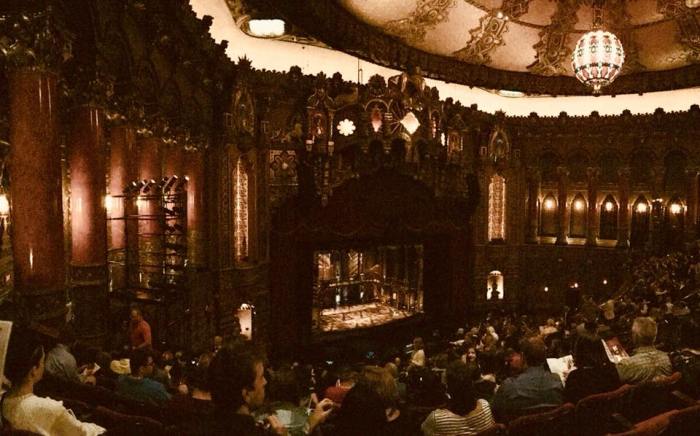
Nicole, our great friend Janet, and I journeyed to St. Louis’ Fabulous Fox Theater (our view pictured above) to take in the musical Hamilton. I’d gotten tickets for us in August–by a slim margin–and at times we’d forgotten, however temporarily, that we were even going.
We have a history with the Fox. Nicole and I had seen Bob Dylan, Merle Haggard and The Strangers, and Tom Waits there; Nicole, her late mother Lynda, and I had seen The Book of Mormon there; and Nicole, Janet, and I had previously witnessed an incandescent Leonard Cohen show there (part of his first “comeback from financial disaster” tour). It’s a magnificent venue that you can stare at fruitfully for almost as long as you can the acts that play there.
We have a history with oblivious fellow showgoers. The closest I have come to getting into fights as an adult have been at “big shows.” I once challenged a blaring chatterbox to step outside during a sit-down Robert Cray show in the ’90s. I once almost had to back up my best friend when he threatened to kick the ass of a couple of obnoxious frat boys at a Chuck Berry show, same decade. In New Orleans recently, we once had an entire, intimate, mostly acoustic John Boutte performance blotted out by two morons discussing their cars while standing a foot in front of us. We have even had two-count-’em-two jazz performances nearly ruined for us by local school district brass who a) clearly had been comped their tickets; b) clearly didn’t give a shit about jazz; and c) thought they were the show (in the words of Albert Ayler: “They thought it was about them.”) We are asshole magnets.
I have a history with musicals. Across four decades, almost every student I’ve ever taught who’s been involved in theater has been a delightful student of English and citizen of the classroom. In return, I have treated them to my less-than-complimentary view of musical theater. I just don’t like it. The general view of humanity it traffics in is in great conflict with my own. Though I am very white, I am not a fan of whitebread, and there is considerable whitebread in this world. Indeed, I love music–that doesn’t need to be proved–but I like grit with my grease, and, though it may be through lack of deep exposure, I have found grit sorely lacking in the musicals I have forced myself to attend (usually to support my students). I will admit to enjoying Mary Poppins when I saw it in New York City as the New Amsterdam Theater, but I was mostly impressed by the theater technology that was in play, and I often found my mind wandering to the space’s past on 42nd Street. I deeply enjoyed The Book of Mormon, but nine-tenths of that enjoyment was the humor, and the other tenth the audacity of the show’s very existence.
Well, The Fox delivered the goods on this day. I’ll get to that in a minute, but suffice it to say that historical trend continues unabated. I/we sat next to a friendly older lady and her fellow older ladies who unfortunately proceeded to hum the tail end of most of the songs’ lines very loudly, cluck and sigh during “powerful moments,” take forever unwrapping snacks during the few hushed scenes (why must one EAT during a performance like this?), and engage in living-room-volume discussions with her cronies. We tolerated it during the first half of the show, Nicole, who’d been so friendly to her prior to its beginning, sitting next to her; I swapped seats with Nicole, and, at Janet’s urging and after one lady dove right in with the clatter three minutes into the second half’s resumption, I tersely said between gritted teeth, “Do you mind not talking during the show?” That fixed that; however, she was also marinated in a foul perfume, and I was distracted by the whole episode, so I took me awhile to regain my focus. Consider that history however coincidentally continued.
The musical? Well, obviously, I had good reason to believe that this musical would hold my attention. I’ve been retired from public school teaching for a bit, but I was talking to students about the potential of this production from the day I read about it–which was while I was still teaching public school. It’s been awhile, long enough for the furor to die down (somewhat), but I’ve not heard a jaundiced take on Hamilton yet. I’d also bought the recording of the show’s songs and listened to it in its entirety three absorbing and enjoyable times–that was enough, until I actually saw it, if I were ever able. So, again, I had very good reason to be thinking positively, but–it was a musical.
However–you do not need me to explain this to you–it wasn’t whitebread in the least (the closest it came was satirically, during King George’s songs–which had bite, too–and formally, during a few of Eliza Hamilton’s songs). It mostly vibrated with funk and rhythm and spine-straightening beats, and you probably already know Biggie and Mobb Deep get sampled (very meaningfully). The density of the lyrics (in their delivery and in their meaning) brought, ahem, Shakespeare to mind; they were challenging, and worth it, and probably what was forcing those older ladies into racket. And the worldview? Well, was it Varese or someone like that who said that pure pleasure was counterrevolutionary? I have always, in my darkest moments of thought, believed that, but Hamilton is as close as I have ever come to experiencing purely pleasurably art that could be argued to be pro-revolution. Yeah, maybe, if being forced to scope back to our beginnings from where we are now, consider the genius and flaws of this currently shaky experiment, and begin re-shaping it somehow can be called a kind of revolt. Maybe, maybe not. I was a little too stunned by the show to be thinking clearly.
Though the ensemble cast was very fine, Chris De’Sean Lee’s strutting, incorrigible, and scabrously brilliant Thomas Jefferson struck me as the standout performance; he was also delightful playing Lafayette in the first half. Lee was magnetic, exciting, unpredictable, and I’d love to see more of his work; in the Playbill, he “gives every bit of glory to his Lord and Savior, Jesus Christ,” but his inspiration seemed to be coming from darker, more mischievous places. I suppose 2018 is too late to be listing my favorite songs. I don’t follow the flow of Hamiltonology, so I don’t know if these are incredibly obvious choices are not, but I was thrilled to hear “Ten Duel Commandments Twice,” I loved the layers of “My Shot,” I admired the way the idea of “Wait for It” was threaded through the entirety of the musical, and who doesn’t want to in “The Room Where It Happens”? The soundtrack CD is in my truck for the coming week.
I also was surprised to connect very personally to Hamilton. The conflict between contemplation and action, between hanging back and jumping in, has been an urgent one all my life–maybe it is for everyone. Also, the persistent questions Hamilton faces about why he writes like there’s no tomorrow? I am of the opinion that of that we are not guaranteed, and though I am no genius polymath like Hamilton was, I approach each day in much the same way. Most important, Miranda’s view of Hamilton as being much less calculating than his fellow revolutionaries and operators was very attractive to me. I’ll need to read Chernow’s book to confirm that that matches his reality, but that’s also, for various reasons, how I’ve chosen to roll, for better or worse. I received a bit of validation from this work of art.
Thus, my mottled history with musicals (if you consider my fairly recent experience with The Book of Mormon) seems to be clearing up, if you will. Hamilton will be back to the Gateway City in 2019, and I might just pony up again. I might be back, and so well might you.
Short-shrift Division:
Of course, we listened to music on the way over to St. Louis and back.
Tracey Thorn: big surprise, that. “Sister,” it was.
Jinx Lennon: another big surprise, that. “Grow A Pair,” it was.
Hustlin’ and bustlin’ for my baby today, I was in both vehicles doing errands today.
Had a chance run-in with the sister of one of our state senators; she noticed the blazing orange #NeverAgain shirt I was wearing while having coffee in a local shop (national student rallies on the Columbine anniversary), sat down across from me and introduced herself. I’d have preferred to talk about rock and roll, but we chatted for a half hour about politics and I learned why I should want our oily governor Eric Greitens to go down (he’s put himself under serious fire) later than sooner.
After Nicole got off work, we had Friday comfort food and drink–pints and cheeseburgers–at Booche’s, a fantastic local tavern, where we listened to Springsteen, Skynyrd, and The New York Dolls on the sound system, then crossed the street to hear Zadie Smith open the controversy ridden Unbound Book Festival with a keynote address; she opened by reading her essay “Speaking in Tongues.” Among the many things of interest she said, she acclaimed Kendrick Lamar a genius. I would have liked to, but didn’t get a chance to, ask her about the genesis and development of her stunning piece on Billie Holiday, “Crazy They Call Me.” We left a bit early for last beers at another bar we ended up getting kicked out of. (Fortunately, Smith talks about the piece here, I just discovered.) In Little Rock, some friends were at a Charles Portis festival (!) where they heard the bands Wussy and The Paranoid Style, but I still think Nicole and I won.
All this is to say that I did my serious listening, mostly to aural comfort food, on the fly:
Grace Jones–can’t wait for the doc!
John Prine–had to hear the hilarious “The Accident,” and more, from Sweet Revenge!
Gary Stewart–the prime Record Store Day jewel is a 45 from much-rumored demo session where he cut Motown songs; the simple knowledge of this (I’ve got an eBay bid down on it–I go to record stores regularly) was enough for me to bring along The Essential Gary Stewart for the ride!
The “comfort food” to beat all comfort food, though I suppose it can still make some listeners uncomfortable!
And…well…I told you I listen to Joe McPhee a lot!
All those exclamation points are very deliberate. It was a good day–musically and otherwise.
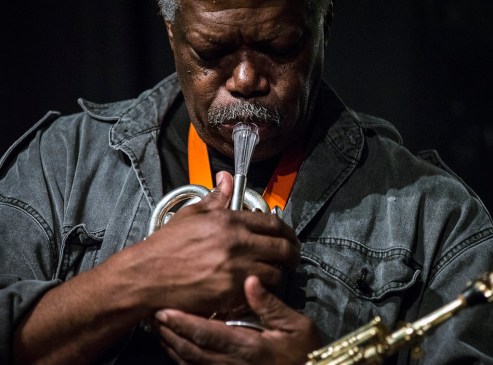
Poughkeepsie, NY, legend Joe McPhee will turn 79 in November. I already have a predilection for musicians whose work continues to astound beyond their fifties–it’s probably partially because I require hope as I age myself–and I am not sure I know of one who’s work is more astounding, more prolific, and more consistently satisfying to me than Joe’s. His late-’17/early-’18 album Imaginary Numbers, in a responsive trio setting and featuring a scintillating Coltrane nod, is one of my recent favorites (I’ve probably played it seven times in four months), and I learned yesterday that he has a new one in the chamber, access to which follows, should I seduce you into partaking of the man’s magic:
McPhee plays tenor, alto, and soprano saxophone, the trumpet, flugelhorn and valve trombone–at least. I suspect that’s a partial list. Also, “plays” is a reductive verb in Joe’s case; from caresses and whispers to jolts and hollers, he knows how to speak multiple musical, emotional, and intellectual languages through his instruments. Yes, he’s a jazz player, and he can play inside, outside, and in between, sometimes all in the same song–try “Never Again,” from In Finland, with Matthew Shipp, if you can find it.
But he also defies that categorization. He can play, and has played (damn near) with everyone: the example I’m listening to as I hunt and peck is one of his recordings with Two Bands And A Legend (that’s also the title), which features Norwegian garage rockers the Cato Salsa Experience and Scandinavian wailers The Thing. By his partners’ acclaim, McPhee is the legend, and you’ll be hard-pressed to find another album that includes covers of “Louie Louie,” The Sonics (taken into free jazzland and dragged screaming back), Ornette Coleman, and The Cramps.
In additional, he’s comfortable in every numerical combination I can think of. He’s heart-piercing on the solo Tenor, endlessly interesting across seven discs with only his drummer (and frequent partner) Paal Nilssen-Love on Candy(yes, I’ve listened to it in its entirety twice, holding his own and then some with a free jazz big band (Peter Brotzmann’s Chicago Octet / Tentet).
Yesterday, I listened to McPhee’s Hat Hut label release Oleo, which is built around an at times very straightforward cover of Sonny Rollins’ title composition. At times, because another of McPhee’s frequent partners, guitarist Raymond Boni sproings into the fray with a spree of spastic-intergalactic wah-wah, which leads the rest of the unit into a strategy of deconstruction of which Rollins himself would probably approve. I feel like I shouldn’t need to say it, but I will: one who puts merely a skimming ear to work like McPhee’s might come to the conclusion that the players are just making noise, that that’s easy, that if they really had to play conventionally, they’d find it rougher going. Therefore, one reasons, one doesn’t need to respect McPhee’s kind of music. Au contrair. Joe’s work far exceeds in imagination, diligence, close listening, physical energy, and challenge 90% of the music you’d read about in Downbeat or Jazz Times. And. And. McPhee does play tight and inside when he feels like it, and when it fits his chosen design, and when he does, on conventional terms, he’s a skilled and even easily recognizable player.
Joe McPhee is one of my biggest heroes. I hope he makes it past 100, and I hope I make it to his current age of 78 with a fraction of the vigor, curiosity, dedication, and imagination he puts into his work. If you’ve been curious about free music, his oeuvre ain’t a bad place to dip in. If you like folks who enjoy getting out of their lanes on a regular basis, or who aspire to get to know and work with as many people as they can, you’ll like him for sure. You can even start at his own beginning, with the legendary recordings Underground Railroad and Nation Time, the vintage of which you can likely guess from the titles and the quality of which is even more exciting when you consider he grew by leaps and bounds from those starting points.
A narrative-free day, but it was stuffed with very, very good music.
Meshell Ndegeocello: Ventriloquist–I’ve loved Meshell since her shy and smoldering live rendition of “You’ve Really Got a Hold on Me” in the film Standing in the Shadows of Motown, but haven’t been held fast by any of her albums. That just changed. Cool and smart.
Jeffrey Lewis: Works by Tuli Kupferberg–A labor of love for Lewis, who’s certainly a kind of son of the sorely-missed Fugs legend. I’m a Tuli nut myself, but the interpreter does some expert excavation here; the Beatles’ tweak “I Wanna Hold Your Foot” is new to me, and perfect. I will have to dream of what wonders he could’ve worked on “Nothing,” a classic begging to be updated, but I’ll settle. A great introduction to a genius who loved language, liberation, laughter–and (especially) fucking. Kupferbergian advice: “Try to be joyful.”
Shopping: The Official Body–Bratty offspring of a knee-trembler engaged in by Pylon and Gang of Four.
Princess Nokia: A Girl Cried Red–Complaints about her singing are nitpicking, and claims that this is “emo” (whatever that really is) are bogus. I hear someone’s even convened a panel to test it’s emo-ness. Such efforts strike me as artistic policing, which is exactly what this fascinating young artist doesn’t need. Me? I dig it. It’s definitely her, lane change be damned.
Ebo Taylor: Love and Death–I cannot get enough of this diligent, multitalented Ghanaian’s music, but I have struggled to helpfully describe it. It’s brighter, busier Afrobeat–imagine a very happy Fela.
One afternoon several years ago, I converted Nicole to The Grateful Dead (circa ’68-’73, just like me). She jammed on ’em today on the way home from work, mentioned how much she liked this song when she walked in the door, and it played on a loop in my head the rest of the day.
Until about a week ago, I had never listened to or even read about the British act Everything But the Girl. Regarding the singer Tracey Thorn, I know Massive Attack’s “Protection,” but that is all. I just found out minutes ago that she’s written a highly regarded music memoir, a genre I am addicted to. So…what’s the deal? Seems like a theme this week, but why am I so benighted with regard to certain pop icons? I mean, honestly: most people are. And, truly: one can’t listen to everything. I do indeed listen to more music–and more kinds of music–than most human beings, but I have blind spots.
With Thorn, I think my ignorance is traceable to my preference as a twenty-something for punk rock, the ’50s and ’60s rock and roll pantheon, classic jazz and hardcore honkytonk–that’s a lot of ground to cover and make up, considering I was a twenty-something in the ’80s–and my distrust, fair or not, of anything pop and dancefloor-designed, and especially of the British variety. An unsupportable prejudice, I know, but it was my prejudice, and sadly it’s lasted through the years. Why? I am pretty curious, but it’s been a long, long time since I clubbed, and even when I did, I was uncomfortable in the environment. I explode into extroversion when I am suddenly surrounded by people, because I feel I am obligated to interact, but I almost always prefer a smaller, quieter place. Also, I had serious issues with the Eighties. The clubs I clubbed in, it was gaudiness, crassness, and sharkiness for miles; I felt like an alien sent to observe, because I was definitely not of that scene. An aggressive shallowness: that’s what I remember, and that’s why I retreated/ran screaming back to my room or, occasionally, a rathole punk rock venue. I hope I’m making sense here, but I was (without deep enough study) associating a vast ocean of impressively differentiated dance music with a social scene that disgusted me and that I couldn’t comfortably negotiate, and maybe I still do.
There are signs, as I told a friend yesterday, that this old, cold part of me is melting. Facebook’s taking some well-deserved blows about the face and neck right now, but I will say this and you will likely agree: some of the communities it makes possible are very sustaining. I am part of a few Facebook groups that help keep me sane, and one of them is made up of serious pop (and semi-pop) music writers and other aficionados. While the group is very predominately white, male, heterosexual, and middle-class, the range of musical interests are not only quite diverse but also have considerable overlap. As far as the overlap goes, if, for example, you happen to one of the few participants who outlie that overlap, you may be called upon to defend your position. OR…you may respect the opinions of the overlappers so much you may feel compelled to defend your position. OR…you may reason that the majority is often, due to certain other social pressures, wrong. OR…you may have held the position so long you’re scared to re-examine it. OR…you may come to suspect you are, in fact, flawed in your judgment regarding the majority-approved music in question. And that last has been where I’ve landed a few times recently. I’ve written about it on this blog before. This group’s encouraged me to take more chances, and a few individuals have reminded me that dance, style, and desperate good times are fun.
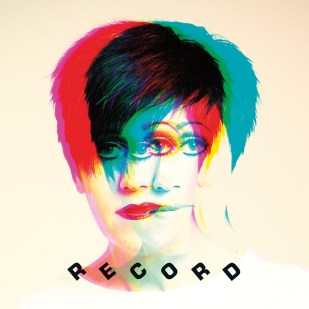
Thus, my decision to try Tracey Thorn’s Record when ordinarily I wouldn’t have thought twice about ignoring it. It came up in my Apple Music “For You” feed–a sign I’m making some progress–and I tried it only for that reason. I could hear that Thorn’s music was dancefloor-designed, wrought-for-the weekend, but also that it didn’t have to be just that; it felt pretty good as it simply washed over me while I was kicked back on the couch on a Wednesday afternoon. I found her dark-timbred singing, which again I’d only heard almost thirty years ago when she’d guested with Massive Attack, strangely intoxicating, excitingly unique, Annie Lennox with a bit more burnish, agreeably human as opposed to virtuosic, which can be thrilling but also, I don’t know, distancing (it’s why I’ve always argued that Ernest Tubb and Tommy Duncan are among country music’s greatest singers, when some folks argue that they can’t even). Then, key lines began to slip over and around the corners of the book I was reading (first listens: I get used to the musical impression the whole album makes):
“Put up your fists / Nobody ever loved / Someone they were afraid of….”
“[Y]ou taught me my first song…/ The song was ‘Teenager in Love’ / Oh God, you couldn’t make it up!”
“I didn’t want my babies / Until I wanted babies /And when I wanted babies / Nothing else would do but babies.”
“Oh, but where I’d like to be / Is on a dancefloor with my friends [or, with a drink in me] / All pissed at me / Someone singing and I realise it’s me / I realise it’s me.”
Shit, I thought, music, singing, lyrics–CHECK! What’s not to love? But I had let it float over me; I hadn’t fully engaged. A few days later, a kerfuffle had developed regarding a peculiarly ill-advised comment a critic had made about Record while trying to praise it (connecting an artist’s autobiography too confidently and not too fairly to her art–Wilde would wince), we were discussing the role politics has to play in assessing someone’s music, and I realized that a) I didn’t know beans about Thorn’s life to begin with, and b) strangely, given the times, political commentary wasn’t anything I was even listening for first time around in Thorn’s music. It was a winner then, and after the kerfuffle and conversation, it is even more so–especially after I listened to it on headphones yesterday. I also had an epiphany as a result of the critical comment in question: Thorn and I are essentially the same age (I’m half a year older), and it was clear to me in so many ways that Record was speaking to me on that level, that it’s been awhile since that’s happened. The maturing of not just your body and mind, but your work. The threat of an increasingly aggressive, retrograde power structure to you, your family, and friends. The search for good times as your life becomes more complex and your time is of a thinner, ever more ethereal essence. The heartbreaks and joys brought by memories that are proving indelible. Posterity. Change of life. When carried along by energetic, effervescent, and pulsating sound, these themes take on even more depth.
I’m not saying this music is just for the fifty-year-old set; in fact, in some ways it just as powerfully speaks to millennials, I’m sure. I’m saying that when an album can straddle that expanse, that particular way, that wisely, you might be dealing with something special. More and more, I think it’s my favorite of the year. You try it–it is only by the interference of a few chance outcomes that I even deigned to, and I’d be much the lesser if I hadn’t:
You know, I can be a massive idiot at times–even incurious, which is the kiss of death for other people, as far as I’m concerned. As far as my being a massive idiot, for example, my initial response to Beyonce’s apparently titanic show at Coachella–barring a tinge of awe when I saw my first clip–was, “Y’know, I’m just distrustful of any show that costs that much to stage and attend, and that has that much stimulation outside of the featured performer.” What a starched shirt! Talk about not seeing the forest for the trees when you’re not seeing the trees for the forest!
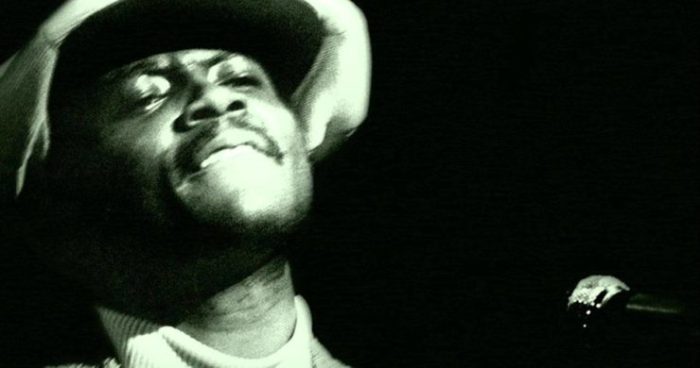
I’ve tried to make amends with myself and others re: Beyonce’s achievement, because I was just wrong (I am buying that damn BluRay when it comes out), but elsewhere in the day, I also tried to make amends with my conscience, which believes I need to have heard every single great album of the past up to the present day. Sunday, while perusing the index of Rachel Rubin’s very enlightening 33 1/3 book on Merle Haggard’s Okie from Muskogee, I noticed not only that one had been written about Donny Hathaway: Live, but that that particular item was one of the most highly rated in the series. I for damn sure wanted to read it, then, but also that would require listening to it, which I had never done, because I occasionally put too much faith in certain critics’ judgment (we obsessives need someone to help us separate the cyberjukebox wheat from the chaff). Case in point: Robert Christgau’s take. He is not on record that I know of about Hathaway’s live album, but his opinion, which had evolved somewhat as of his last reference to the man’s work, was not mellow: “Bourgeoisification at its genteel worst….” Bob’s word is not as from a god to me (any guy who snubs the Oblivians has problems in my book), but he’s generally reliable, there’s soooooo much stuff out there, and, as Lou Reed once sang, there is no time. Well, I ordered the book, and noticed that the live album had been repackaged with another live set for a reasonable price, so I figured, why not practice what you preach and take a plunge?
WOW. Even with the presence of a few things that would ordinarily put me off, critical guidance or no (an electric piano, covers of Marvin Gaye–ill-advised at best–and “A Song for You”), I was enraptured for purt-near the duration of the two discs. The live vibe is excitingly intimate, with the crucial critical commentary being the crowd’s en masse eruption into off-beat clapping during “The Ghetto,” one of the many high points in the set. Willie Weeks on bass is like rolling ocean waves beneath Hathaway’s lines; as one Amazon reviewer pointed out, even though the whole performance is great, you can simply be hypnotized and mesmerized and satisfied by laser-focus on Weeks’ playing. And Hathaway himself? I literally had never heard a track of his before. That’s right: in, oh, 46 years of listening to music. He sounded a lot like Stevie Wonder to me at first, without that peculiar warbling effect Stevie’s got; not saying Hathaway’s a better singer, just different. And I quit thinking about Stevie the more deeply Hathaway became engaged in the material, a requirement when you’re trying to get away with “What’s Goin’ On,” which, surprise surprise, he does. He plays the keys with soul but restraint–just surfing nonchalantly atop Weeks’ waves–and keeps the groove going. And if bourgeoisification means, I guess, translating an Al Kooper composition for BS&T to the modern black supper club, hell, I’ll take his “More Than You Know” with my steak Delmonico any damn day. He gets into the nooks and crannies of that ol’ thing–just listen for yourself:
I’m returning to the thing today–it might just be one of the Top 10 live soul albums ever recorded. I haven’t started reading the 33 1/3 tome yet, but I’m licking my chops. My advice to you today: quit complacently accepting that you’re a massive idiot about some things, activate your curiosity, and sample something you’ve heard people raving about but which you’ve been rejecting because you and your sources know better. Now, if it’s Neutral Milk Hotel, I understand, but….
I spent yesterday getting acquainted with new albums by two of the house’s favorite songwriters, American John Prine, acquitting himself warmly in the twilight of his career, and Irishman Jinx Lennon, approaching–if not enjoying–the zenith of his. I strongly recommend that the reader, if she’s feeling as hollowed out and anxious as these times often make me, do likewise. The warmth, compassion, humanity and humor of these men is a tonic. I am still absorbing these works, but I’ll do my best to report their virtues accurately.
Prine’s The Tree of Forgiveness is his first album of original songs in over a decade. He’s battled through two rounds of cancer to return as a regular performer on this county’s stages, but most of the big fans I know (including myself) wondered whether he’d write any more tunes. Certainly it wouldn’t matter if he ever had: he’s done pretty well for himself in his life, with a repertoire that can stand with his fellow guitar-bangers Dylan and Young. I’m happy to report that there’s really not a bummer in the new batch: as with most excellent Prine LPs, there’s a balanced dose of off-the-wall whimsy (“Egg & Daughter Night, Lincoln Nebraska, 1967 (Crazy Bone)”), convincing heart–and heartbreak–songs (“Boundless Love,” “Summer’s End,” respectively), and unadorned commentary (“Caravan of Fools”). Also, ol’ John knows how to end a disc, and while “When I Get To Heaven” has given some observers to worry after his health, the vigorousness of his performance and spirit here convince me it may take more than death to kill him. One thing I always listen for with Prine are smiles and laughs pouched barely discernibly in his delivery–like he’s about to break up–and The Tree of Forgiveness has many such moments. They’re a reminder to acknowledge the absurdity of earthly strivings, from a man who I wager has no regrets.
As far as songwriting goes, few smiths are as fecund as Jinx Lennon of Dundalk, Country Louth, Republic of Ireland. I haven’t heard every single album Jinx has released, but I’ve heard most of them, and none of those are less than very good. His last two, Magic Bullets of Madness to Uplift Grief Magnetsand Past Pupil Stay Sane, both arrived in 2016, and, to my ear at least, were among the very best singer-songwriter records of the year.His strengths? Where to start? He has a compassion for working people that goes straight past theorizing to observed feet-on-the-street-detail. He has a gift for lyrical and vocal directness that can bring a listener more conditioned to irony, artifice, and obscurantism up short. His energy and delivery remind me more all of the time of Joe Strummer; his boundless bravery in standing up for the oppressed of Woody Guthrie. And? He’s one funny futhermucker for sure. His new release, helpfully titled Grow A Pair, embodies all of those qualities, plus dabs of two new ones: gentleness and relaxation. At 54, he’s still growing (of course!), and, as such, this is as good a place as any for a newcomer to jump in. While Grow A Pair begins oddly, with the darkly amusing “Now I Am in Singapore”–the next song, “Top of the Bleedin’ Morning,” is a perfect Lennon album-opener–it soon settles into Jinx’s familiar (forgive me, please) Stephen Dedalus-like stroll through the insults, obstacles, blessings, and inspirations of a day in our life–there’s even getting drunk, making love, and making plans at the end of the stroll. Along the way, prepare to be imprecated out of your sloth and hesitance (“Top of the Bleedin’ Morning,” “Grow A Pair,” “Stop Your Bummin'”), observe both battles and a dance of the sexes (“Newry Bird,” “Afraid to Open My Mouth,” “Wine Glass Goggles”), thrill to a lullabye (“You’ll Be Kept”), mourn the landscape (“300 Pianos,” “Black and White Scan,” “One Day I Awoke [to too much STUFF!]”), and ignore the landscape (“We Don’t See Anything”–observation is a key to Lennon’s music and to his advice to the listener). There’s prophecy, too, in “The Wheel Will Turn Again,” and while in the past Jinx has written succinctly about styrofoam cups, here he rhapsodizes from the subject of aluminum cans. That’s right: I used that word fecund for a reason.
As the Mekons once sang, it’s hard to be human again. But Prine and Lennon are voices that will give you support, so bend your ear, if you please.