The Phuncky Feel One (May 11th, 2018, Columbia, MO)

Anytime I get out Cypress Hill’s debut album, I can’t get beyond the first four tracks. Why? Because I just repeat-play those for about a week. I’m sure you will think of others, but no rap album I know opens so strong and so deep. Absolutely classic early Muggs production, unfortunately still spot-on bloody-slice-of-hood-life lyrics (“Being the hunted one is no fun!”), defiant MCing courtesy of B-Real–plus the “Pigs” / “How I Could Just Kill a Man” / “Hand on the Pump” / “Hole in Your Head” sequence is ridiculously catchy and pithy. The rest of the album is fine, but in contrast it might as well be filler. I’m still re-running them this morning–third time, after five times yesterday!

But, what I’m writing to report are two personal memories the record conjures. As a 30-year-old teacher in Missouri, I had few friends who were hip hop fiends. Really, two: my wife Nicole and my buddy and groomsman Mark, who out of the blue could bust multiple bars from Cypress Hill with pinpoint accuracy and attitude. At the time, immediately after he’d explode into MC mode and expostulate, I wasn’t sure what I was supposed to do. I think he probably wanted me to kick in a few bars myself, but a) my memory and articulation weren’t as precise, and b) where Mark had command and rhythm (by the way, did I mention how addictive the accents are on this album?), I “rapped” the way you would imagine a Kansas-farm-rooted white boy might–um, uncertainly. What I did feel like doing was clapping and nodding my approval at Mark’s performance, which seemed a paltry thing in the face of his enthusiasm, commitment, and interpretive skills. Bottom line: 26 years later, I remember his eruptions very fondly.

The other memory is of a moment in the classroom. The school I taught at housed students even a fan like me would have a hard time scooping when it came to the freshest hip hop. Actually, most of the time, I was the student: Spice-1, Brother Lynch Hung, X-Clan, and MC Eiht are just a few acts about whom I specifically remember receiving wisdom. However, shortly after Cypress Hill was released and had become heavily-rotated in our home, I found myself teaching a young man who is still in my pantheon of most enjoyable, intelligent and enriching students I ever shared space with for 180 50-minute classes (that’s 1/6th of a teacher year). “Dice” was damn-near a man at 15: over six feet tall, with an athlete’s build, both an easy, good-humored manner that made him friends and a subtle edge that probably gave most strangers pause, and a mature sense of humor and world view. These gifts were not enough to keep him out of trouble–in fact, they (and the fact he was black, more than occasionally) could land him there. In my class, however, he was a star. He was always on top of our class reading, and he had a talent for being able to voice controversial opinions passionately without creating an apoplectic state among his less-enlightened peers. He was also incredibly receptive; when we read Shane (yeah, it was a novel first!), I figured he might tune out, since he had no obvious ways in. Quite to the contrary: he was engaged in the book beginning to end and simply adapted it to the truths of his world. A damn pleasure to teach–and he knew his hip hop!

One day, just wanting to give something back to him, I cautiously asked him if he’d heard Cypress Hill, expecting to be gently ridiculed.

“Naw! Who’s that?”

The next day, I slipped him a dub of it on cassette, and he returned the following day with this report:

“Mr. O, that shit is wild! They’re on the real, and they’re bilingual! Thanks!”

As much an obsessive as I am, you’d think I’d have had many moments like this in my educator guise, but no, not really–especially where rap is concerned. I will always treasure that moment when I enlightened the student who was consistently enlightening the teacher.

When my Cypress Hill jones kicks in, it always brings memories of Mark and Dice, two of the most impressive men I’ve known. I just hope one day I play it and the problems at the center of “Pigs” and “How I Could Just Kill a Man” are things of the past.

Short-shrift Division:

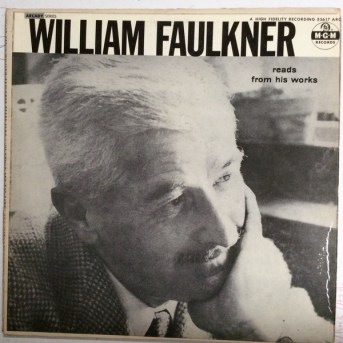
William Faulkner Reads from His Works (The Sound and The Fury and Light in August)–I always thought he’d sound taller and deeper-chested! Still, I always wondered how you’d read this stuff aloud, and he delivers it with, what else, “an inexhaustible voice.”

Charles Mingus: The Black Saint and the Sinner Lady–Swirling, turbulent jazz on the cusp of madness. Plus, ain’t this the second time I’ve written about it in ’18?

Peter Brotzmann and Fred Lonberg-Holm: Ouroboros–Another second-time subject, and…it’s confirmed…a 21st century free jazz masterpiece.

Jamila Woods: HEAVN–If you missed this poignant poet and gentle singer’s 2016 classic, hey, plenty of American recorded music isn’t disposable. There’s still time for you to be enlightened, inspired, and bewitched by one of Chicago’s finest.

Kirk Works! (May 10th, 2018, Columbia, MO)

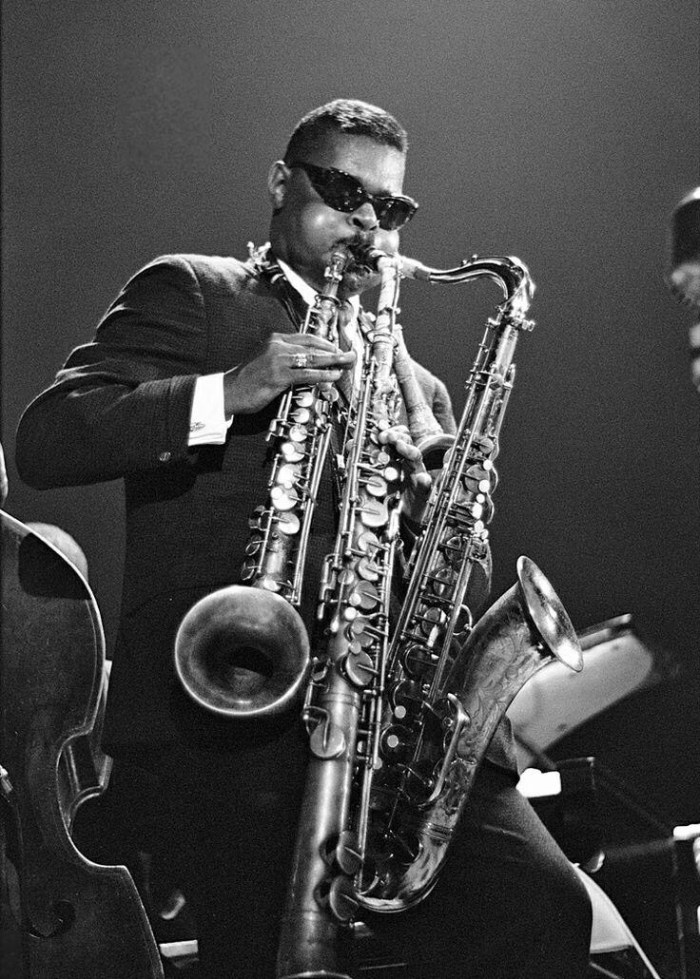
When I seek joy, I often turn to the work of Rahsaan Roland Kirk. Columbus, Ohio’s multi-instrumentalized jazz genius seemed to have direct and immediate access to the full range of human emotions (often, when he was at his best, on display on a single recording), and be reliably alive in the moment whether on stage in the studio. When an old friend who’s just getting into jazz inquired after something new (he’s been cutting his teach on Blue Note hard bop), I knew just where to turn. We were meeting for coffee, he still listens to CDs, so I decided to begin a “Great Albums Series” for him with two-on-one Kirk mix disc.

It’s not that easy to pick the best two Kirk records to start someone on his aural learning journey. Certainly, few would argue with such stellar and unique recordings as Rip, Rig, and Panic or The Inflated Tear; one could even make a fan for life from the man’s sideman sessions, like The Jaki Byard Experience (its versions of “Evidence” and “Memories of You” alone vault both leader and accompanist to jazz Valhalla) or Charles Mingus’ Oh Yeah. However, I chose the two records I turn two most: 1961’s audacious We Free Kings (Kirk a mere 26) and 1964’s sui generis flute tour de force, I Talk with the Spirits–on which he does, if spirits really do exist.

We Free Kings is both the ultimate proof Kirk’s playing of tenor sax, flute, stritch, manzello, and siren (just those on this record, and up to three at once) was mastery and sound attack, not gimmickry, and a complete display of his many strengths. To wit? A fondness for and deep knowledge of both old and new styles (here, demonstrated on the title cut, which takes the old holiday chestnut into Traneland as if that were the most logical idea in the world). A knack for catchy, penetrating, soulful original compositions (the eternal “Three for The Festival”) and daring explorations of the jazz repertoire (Bird’s “Blues for Alice”). That previously-stated ability to tap into the deepest (see the aptly named “The Haunted Melody) and the most buoyant (see “Some Kind of Love) human emotions. The ability to consistently surprise: the sudden, virtuosic shifts from one instrument to the next (check the stop-time flute passage on “Three for the Festival”!); the astonishing ability to wring profound blues out of a flute; the spirited vocal interjections at key inspired moments. That should be enough to convince, but his backing combo, especially the underrated Charlie Persip on drums, sticks with Kirk through every hairpin turn.

You may have noticed I used the word “flute” three times in the last ‘graph. I am no fan of that instrument, but in Kirk’s hands it is a magic wand–on I Talk to the Spirits, it’s all the famed multi-instrumentalist plays. You may have noticed that I called We Free Kings audacious, and it is: Kirk’s confidence, at 26, in going there in numerous ways, in JazzWorld 1961 (think about it), is astounding. However, the word might be better applied to this album. Kirk dares to keep us locked in, surprised, moved, and even rocked for the full duration of a record with only the most notoriously light of instruments. Not only that, but he bets he can make Barbara Streisand (“People,” from Funny Face) and Joyce Kilmer (“Trees”? Yes, “Trees”!) stand firm and tall next to not only his own indelible originals (try playing “Serenade to a Cuckoo” only once, then avoid a week-long earworming–I double-fuckin’-DARE ya!) but also canonical offerings from Clifford Brown, John Lewis, and Brecht-Weill. And he cleans out the house on that. Again, the backup is superb. Drummers? Rah could pick ’em: Walter Perkins is all ’bout it on a very eccentrically accented session. The piano’s manned by the estimable Horace Parlan, whose elegance anchors Kirk’s wonderfully wild ideas. There is no album like this is the annals of jazz, my friend needs it, and so do you.

Just gotta say, I love Rahsaan so much primarily because he has serious fun–he’s soulful and mischievous–and he loves both the old and new, the disposable and the essential. I strive for the same, though I don’t really have to work at it. It seems the nature of our time here, and I’ve always heard Kirk as–in a nod to my fellow jazz fiend Charles–a sensei. I’m confident you will, too.

Note: if you are able, please check out the great young filmmaker Adam Kahan’s insightful Kirk documentary, The Case of the Three-Sides Dream.

Me vs. Migos (May 9th, 2018, Columbia, MO)

I am not easily drawn into popular music explosions. I’m stubborn-minded, distrustful of the taste of the masses when they are manipulated by market forces (snobby though that may be), a bit of a punk at heart, ignorant of the charts, and absent from the clubs. For example, for better or worse, I couldn’t care less about Taylor Swift; I know she’s talented, but I’m skeptical what she’d have to offer me, and I’m still not sure what business a 56-year-old man without kids has listening to her on the regz–a shade creepy, seems to me.

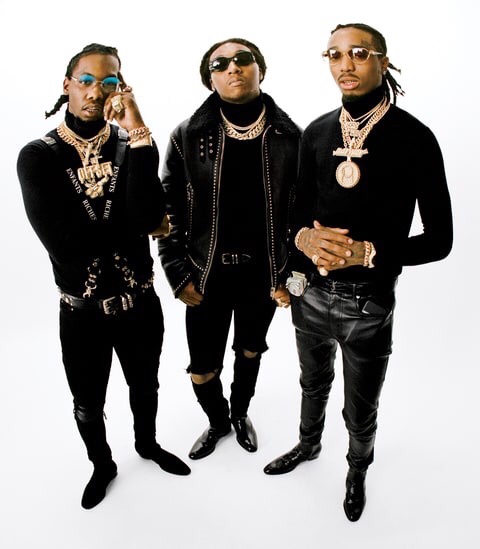
But Migos. So many reasons exist to steer me clear. Hugely popular (correct?). A bit susceptible to the wiles of materialism, and strip joints. A bit susceptible to embodying stereotypes. A bit too comfortable with the “n” and “b” words (am I an old fogey? or justly tired of hearing them trafficked?). Not exactly skilled rhymers or bar-constructers. Plus, there’s this. I participate in two Facebook groups that focus on hip-hop music and culture. As a white person, I’m in the distinct minority in both, and grateful that I’m free to comment, though I keep my head down to a great degree. However, as I learned early on when I admitted in one forum that I liked Young Thug and Bloody Jay’s Black Portland, the members are in near-unanimity in their distaste for and ridicule of trap rap in general and Migos in particular. Boiled down to the general, they scoff at what they perceive as an epidemic lack of MC skills, a paucity of compelling production, and a wackness of the soul. The preferred paradigm is often seems to be rap’s Golden Age acts (’88-’96), and I guess that resonates with me, as does the high standards set by the group (themselves in the minority where popular hip hop taste is concerned). Viewed through their rubric, Migos is trash.

However, they have me hooked. They are damned catchy; after my first time playing Culture (I listened to it today for about the twentieth time), “T-Shirt” and “Bad and Bougee” earwormed me pleasurably for days. They are very fucking funny, from their ad-libbed squawking to their outrageous scenarios to their often impenetrable exchanges (you know when you’re complaining that you can’t understand the words that you’re being coded out, a grand pop tradition). Folks do complain about the repetitive devices of trap production, but upon repeat listening I can distinguish songs within two-three beats every bit as well as I can with The Ramones or Hank Williams. Plus, such a pleasurable vibe results–a weird ethereality, a narco-state, a rhythm of relaxation–that, well, if this is trash, I’ll have another helping. Perhaps, to twist a Raymond Chandler phrase, without some trash a pop partaker cannot consider himself complete.

So, what about the vs. above? With some of the best pop music, things are never settled, and that just makes it more interesting. Seems to me that embedded in Childish Gambino’s now-viral “This is America” video is a clear critique of mass-consumed materialist culture as it dilutes the urgency with which we need to confront our violence. There’s even a representation of the minstrelsy that’s haunted us from the beginning of our music; there’s no question to me Donald Glover’s thought plenty about that complicated and destructive tradition. His proximity to Migos and the kingdom of trap music make the video even more fascinating–and make me wonder if the denizens of Audioblerds and Artists Lounge are right after all. “This is America” has unsettled me every time I’ve watched it.

Enough to wean me off Migos’ music? Maybe “wean” is too long a process under the circumstances. Glover’s participation in Saturday Night Live’s recent “Friendos” sketch only ups the speculative ante further.

I’m torn by this trio of kids from Atlanta. Could be by indulging in their art I’m culpable in my encouragement. Could be these are just foolish things never meant to be taken seriously. Too bad Oscar Wilde and Neil Postman aren’t around to help us parse it. But that doesn’t mean I’m going to quit trying. Or listening.

Songwriters’ Special (May 8th, 2018, Columbia, MO)

Nothing special on this day–other than the songs. I experienced a sudden craving for pithy, 2-to-3-minute country songs, which sometimes get crowded out by my striving to hear everything, stay on top of new releases, and the ascension of jazz as my musical respite of choice. Used to be, around here, that every weekend, especially Saturdays and Sundays, country was always on the box; the friends we saw regularly were also dedicated to the stuff, as well as drinking beer and yelling along with songs. We’re older, busier, and many of our boon companions are raising kids. As well, though there’s plenty of good country songwriting, the singers seem safer–better for them, not so much for the music, and us.

I guess I experienced a flash of reminiscence and had to go back to the well. And in the well was some golden elixir: tales told by a gravedigger suddenly $40 poorer, a daughter realizing that time’s snatched her mourning, a Stetson-less Texan who’s just as big as you are, a heartbroken lover demanding the taverns close so his baby can’t get in, a rounder whose eighth-grade education doesn’t mean he was born yesterday, a leather-clad redhead whom Death gifts a motorcycle, a murderous cuckold lost in the cave of his crime, a scared greenhorn who can’t find the Memphis-Arkansas Bridge…that’s just scratching the surface, but how can one resist their stories.

I’ve prepared a playlist with some highlights. The singers aren’t always the songwriters, but in those cases the songwriters show up as singers later in the playlist. I recommend this to readers who think they don’t like country, or who are startin’ to hate country (but still love cowboy songs).

Short-shrift Division:

Free jazz I find hard to shake. I listened to the whole of David S. Ware’s Live in The World: three discs of sweeping, dramatic music within which Ware and his pianist Matthew Shipp vie to snatch your heart out of your chest. You haven’t lived until you’ve heard this band take “The Way We Were” into the cosmos; they also push Sonny Rollins’ “Freedom Suite” off the edge of the planet, and Ware’s own “Aquarian Sound” and “Mikuro’s Blues” hold their own with both. A terrific intro to a tenor saxophonist who was gone too soon (the artistic offspring of Ben Webster and Pharoah Sanders!) and a classic quartet that was fairly inarguably the turn of the century version of Trane’s. No shit.

Literary/Photographic Note:

Billie Holiday fans are directed to check out Jerry Dantzic: Billie Holiday at Sugar Hill, a collection of Dantzic’s 1957 photographs of Holiday assembled by Dantzic’s son Grayson. The book opens with a blazing Zadie Smith story in which she inhabits Holiday’s gone soul and looks back on its final days; I advise listening to Smith read it–the inhabitation reaches beyond the written word. Half of Dantzic’s photos capture the singer so incandescently that it’s unfathomable that she’d be dead within the next year; the other half suggest that a termite loneliness is eating her from within. A haunting collection.

Skulldoggery (May 7th, 2018, Columbia, MO)p

Under the weather and confined somewhat to bed, I needed musical medicine. As happens more and more as I age, I turn to free music, and more and more as I turn to free music, I turn to the work of Joe McPhee. This time, it was his Skullduggery album, recorded with Amsterdam’s Universal Indians (named very appropriately after an Albert Ayler composition) and American saxophonist John Dikeman. I find that McPhee’s performances, where he employs multiple instruments in playing reactively to his fellows but also creates , sustains, and deconstructs themes, often mirror the hops, skips, jumps, and stretches of straight travel by which my mind works. Whether I am listening in dedicated fashion or reading, his work (quite frequently without regard to with whom he’s working–and he has many playmates) calms me. I’ve grown deeply familiar with and fond of his sound, whether he’s wielding sax, pocket trumpet, or something else; I feel confident I could pick him out of any free lineup in a blindfold test. Here–try the title track, and listen for what I mean when I say he doesn’t just react in a free context, but creates and sustains (bass player Jon Rune Strok is great here, too):

McPhee’s music may relax me, but my dog? He became disturbed, as this sequence demonstrates (you can see my little Bluetooth speaker on the window’s ledge):

Enjoy more of McPhee, Dikeman, and Universal Indians live, right here, from a year ago:

Early in the Morning (May 6th, 2018, Columbia, MO)

Recently, I began plotting a scheme by which we could get music into the air earlier in the morning. We keep farmer’s hours–up usually at 4:45ish–and come into consciousness by reading the news or whatever books we have going. It’s not the hour for Captain Beefheart or Charles Gayle, and I prefer not to get up, start picking through the crates and shelves, and fuss with the turntable or changer until after about 8–but some music would be nice. My brother’d given me a neat little Bluetooth speaker for Christmas, I’d snagged a cheap 16g mp3 player after an iPod died, so why not load some dawn-appropriate tunes onto the dang thing? I asked Nicole what she might like to hear, and with stunning quickness and specificity she replied, “Blues-oriented stuff, nothin’ past ’45.” Well, OK then!

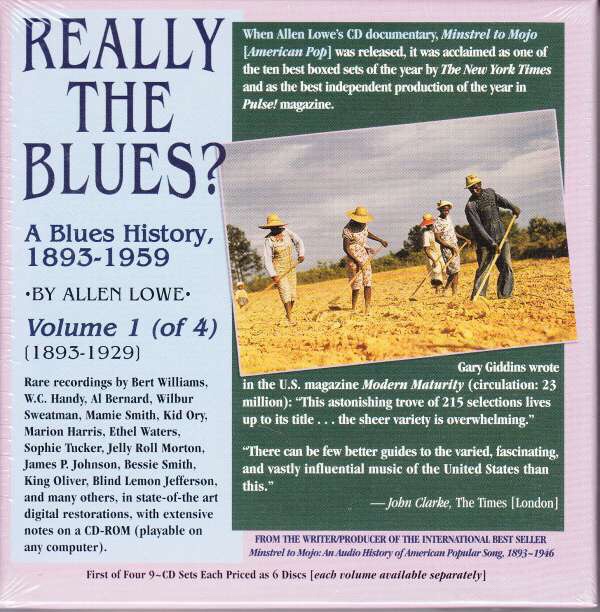
It occurred to me instantly what to do. Do you know Allen Lowe? Besides being a terrific saxophonist, guitarist, and composer, Mr. Lowe is a tireless thinker about American music, a man averse to easy truths about its history and determined to constantly revise his own understanding, which is considerable. His book American Pop: From Minstrels to Mojos (1893-1946) is required (and cantankerous) reading for music buffs, and after its publication, Lowe released an equally essential nine-CD companion volume to the book in 1998. The set begins with 1893’s “Mama’s Black Baby Boy” by the Unique Quartette and closes 214 tracks later with Lennie Tristano’s 1946 take on “What is This Thing Called Love?” It’s a great way to hear our music’s beginnings, with blues, pop, jazz, gospel, country, and their variants and hybrids proceeding chronologically but lying side by side. The juxtapositions can be revelatory.

14 years later, Lowe released another musical companion to one of his publications, the perfectly-titled “Really The Blues? (1893-1959); this time, the set stretched across 36 CDs, with little overlap of the previous set and many inclusions that took even aficionados by surprise. Upon having received this treasure chest in the mail, I played all the 36 discs consecutively, across several days, with consistent delight. I remember Nicole hollering from the living room, “Hey, this stuff is fantastic–I haven’t heard very much of it! What is it?”

Wait, you are saying, did you do what I think you did?

Yeah.

I transferred all 45 discs to the mp3 player, set the fucker on “shuffle”…and that oughtta get us to 2019, doncha think? This morning brought us, oh, Charles Ives, Eddie Cleanhead Vinson, Stan Kenton, Jelly Roll Morton, Mary Ann McCall, Maynard Ferguson (yeah, that’s right!), James P. Johnson, Eddie Jefferson, and Mel Brown. A great start to the day, one must admit. Lowe’s curatorial imagination and dedication deserves a channel into all our homes.

Short-shrift Division:

Return road-trip selections.

The Long Way Home: Diary Playlist 4 (April 29 – May)

The week’s listening. I was ending my tenth semester at Stephens College with students doin’ the final exam wig-out all around me, and the chaos was catching. I also road-tripped. This playlist catches that:

Faulkner

Plucked from History’s Dustbin (best recent purchase of an old record): William Faulkner Reads from his Works (featuring selections from The Sound and The Fury and Light In August; procured for me by the gents at Hitt Records!).

Grower, Not a Shower (old record I already owned that’s risen significantly in my esteem): Rhiannon Giddens’ Freedom Highway; The Rolling Stones’ Some Girls (I already loved it–I just fell even more in love with it, by learning to more fully accept and appreciate “Some Girls,” “Faraway Eyes,” and “Shattered.” Um, it was already showin’ — plenty.

Encore, Encore! (album I played at least twice this week): The Go-Betweens’ 1978-1980; The Rolling Stones’ Some Girls.

Through the Cracks (sweet record I forgot to write about): Sleep, The Sciences; Van Morrison and Joey DeFrancesco, You’re Driving Me Crazy; Salim Washington, Dogon Revisited.

Coming Attractions (Sunday’s Children): Aretha Franklin, Young, Gifted, and Black; Professor Longhair, Crawfish Fiesta; Z.Z. Hill, Greatest Hits.

“I Need Fuel!” (May 4th, 2018, MO 63, 54, 5, 44)

I road-tripped to my parents’ home in Monett, Missouri, to celebrate my brother’s birthday–he was home from Dickinson, Texas. Unfortunately, my ace-boon pavement podnah Nicole was under the weather, so I was driving solo.

Also, my vehicle is a ’93 Ford Splash with 88,000 miles on it–I don’t entirely trust it, but it does have a nice stereo that masks those worrisome noises. So I selected some special, time-tested records to keep me fully engaged, and to “study” in “The Lab”–my nickname for the truck cab.

Neckbones: Souls on Fire

If the Rolling Stones were from Oxford, Mississippi, fronted by Richard Hell, and drunk on LAMF. Oh yeah: and cut loose with a week’s pay in a casino. But let me pull your coat on lead singer Tyler Keith. I hate to keep making comparisons, but this is true: if you, like me, are a fan of Jeffrey Lee Pierce and The Gun Club, there’s no reason for you to miss Tyler’s work with The Neckbones, The Preacher’s Kids, and The Apostles. It’s got the same fire, the same sense of spiritual hauntedness, the same immersion in the blues-based rock roll verities with a cerrated edge. What it doesn’t have, I think, is Pierce’s doomed aura–and that’s a good thing. Not something you wanna root for, you know?

I’m getting off topic, but proceed thusly through Mr. Keith’s oeuvre:

1) The Neckbones: Souls on Fire

2) Tyler Keith & The Preachers’ Kids: Romeo Hood

3) Tyler Keith & The Preachers ‘ Kids: Wild Emotions

4) The Neckbones: The Lights are Getting Dim

5) Tyler Keith & The Apostles: Do It for Johnny

6) Tyler Keith & The Apostles: Black Highway

7) The Neckbones: Gentlemen

To prove I’m somewhat objective, I’ve never warmed up to The Preachers’ Kids’ The Devil’s Hitlist or Keith’s kinda-solo Alias Kid Twist, though the cassette-only The Apostle is worth the search. To recap, and I will not have stuttered:  Tyler Keith and his projects equal to, if not better, than Jeffrey Lee Pierce’s.

The Rolling Stones: Some Girls and Tattoo You

A few weeks ago, I was having fun making fun of Mick Jagger’s garb and minstrelsy as modeled in videos from these records. Since then, I’ve come back to the videos, then to the records, to just joy in Charlie’s cracking drumming and Keith’s lewd, thick, buzzing guitar lines–sounds of the gods! Played both albums all the way through, loud, with nothing but a smile–and re-re-replays of “Lies,” “Respectable,” “Hang Fire,” “Start Me Up,” and “Neighbors.”

The Go-Betweens: 1978-1990

Yeah, I only listened to this comp THREE TIMES this week. Simply, the cats from Brisbane are my uncontested favorite romantic pop group–the music can rock or be sensuous and luxurious, with constant surprises: spring rain, pool draining, men o’ sand v. girls o’ sea, white witchery + poetry that’s Irish and so black, getting back up on the pony, period blood, cattle and cane. If this album ended after its first 11 tracks, it’d be an A+; as it is, it’s a solid A. Note: I love Grant, but I’m a Robert guy.

Oh, yes, I did. I needed to feel the breeze blowin’ up me, and be reminded what a moon can do (though I was driving into Monett in broad daylight). I also needed to get in touch with the real me before coming all the way home, and the china pig snuffles? They center me.

Short-shrift Division:

I am strange. I grade research papers at midnight to these sounds.

Dennis Gonzales and his New Dallas Sextet: Namesake–Fabulous, passionate, energetic, long-form jazz, from the genre’s most underrated living composer (and one hell of a trumpeter). Secret weapon: on horns and flute, Douglas Ewart!

Roscoe Mitchell: Discussions–The septuagenarian jazz sensei shows no signs of slowing. Playing puts me in a focused, contemplative, unsentimental mood–perfect for scoring freshman essays.

Radicals (May 3rd, 2018, Columbia, MO)

Scrambling today, but I found time to bend an ear to two brave music-makers.

I first saw Janelle Monae on a late-night show and was a bit gobsmacked: clearly, she was deriving her shit from obvious sources, but equally clearly she was her own thang. I remember thinking, “If she can master singing and writing, wowzers!” The next morning I reported to the 12th grade class I was teaching that she was a future star and showed ’em a video; two weeks later, Nicole and I were watching her open scintillatingly for Erykah Badu at the Orpheum in Memphis. I believe this was 2012.

In the interim, I’ve tried everything she’s had to offer, but come away feeling her ideas surpass her actual execution of such: didn’t figure I’d return to the tracks and I haven’t.

Word of mouth on Dirty Computer was hot, so I put it on. Gotta say, musically and lyrically, she’s coming on, and she communicates her wisdom and charisma far more clearly than ever in her singing. “Pink” (the song and video) is the best thing she’s ever done, and the most daring, and the most right–if it were the last thing she ever produced it’d be enough. As for the rest of the record…it’s solid, but, again, its ambitions aren’t quite met by her productions, but she’s a heroine for sure, and I’m proud we both have Kansas roots.


On a tip from my main man Isaac, one of a few observant, sharp-eared friends who keep me seeming smart, I also sampled a newly released recording (made in 2011) by the volatile, leonine, but pretty danged long in the tooth saxophonist Peter Brotzmann. Brotzmann can be a room-clearer, but Ouroboros, where he’s partnered with Fred Longberg-Holm on strings and electronics, is truly one of his most imaginative, varied, and (relatively) accessible albums. It’s still challenging, but not withering to the newcomer; the soundscapes shift and morph surprisingly, with no sacrifice to Brotzmann’s power, and the dynamic settings created by Longberg-Holm put the reedman’s experience to the test. It’s hard to write about this music, but I’m not wrong–it’s one of the best records of any kind that’s been released in 2018.

Here’s a live clip of Brotzmann and Longberg-Holm from approximately the same time as Ouroboros‘ recording.

Yester-you, Yester-me, Yesterday (May 2, 2018, Columbia, MO)

Just when it seems you’ve reached the age and quantity of musical acquisitions (ethereal or physical) where you can just kick back and wait for great new music, an unearthing comes along to remind you the past isn’t even past. I speak here of a 2018 Record Store Day release that confirmed the existence of something I’d just recently written off as hearsay or deteriorated tape: hardcore honky-tonkin’, ill-fated and underrated Floridian Gary Stewart’s legendary Motown-gone-smoke-filled-bar 1970 demo sessions. Worth the wait? Fuck yeah. Worth the price? I don’t do Record Store Day because I have been going to record stores regularly for 42 years, I hate crowds, and 80% of the offerings (at least) are straight-up junk, but I do wait like a fisherman with his bobber the morning after, and I snagged it for $30 off eBay–the same about Gary got paid for the 90-minute session! That’s $15 a song on this 45, and I will die happily with it in my possession.

The “A” is a cover of The Four Tops’ “Baby, I Need Your Loving” (“I Can’t Help Myself” is also listed on the session log reprinted on the 45’s back cover, but it remains vaulted). Gary’s in typically intense voice; his characteristic line-punctuating quaver hasn’t entirely come to the fore, but the desperation for which he would become famous in such singles as “Out of Hand” and “Your Place or Mine” is well-audible. The performance fades out after a half-improv/half-recitative that’s a little awkward, but Stewart’s singing, his churning rhythm guitar (I assume it’s him from the energy but there are no personnel notes available) and the punchy demo mix make the track very stimulating.

Stevie Wonder’s “Yester-You, Yester-Me, Yesterday” is more like it! Titularly, you’d suspect an ill-fitting wince-inducer, but…history shows when Stewart was matched with material in which the persona was reflecting on the past from a point where he was neck deep in ashes, Sally bar the fuckin’ door. On this song, you’re hearing transmissions from the room in the Tower of Song right between Hank’s and Jerry Lee’s.

I also received the Cincinnati band Wussy’s new EP, also a 45, in the mail. They are, with Yo La Tengo, the epitome of a critic’s band, but in spite of that, the group’s so very human writing and singing, plus their tendency to rock on out, places them in my pantheon. Unfortunately, the lead Beatles cover here sucks left hind tit, and their run on Jennie Mae Old’s “Runaway” only a shade better. Taste only gets a critic’s band so far.

Fortunately, the B is, weirdly, one of my favorite rock and roll responses to Trumpism so date, even if it wasn’t designed that way. It leads with an old recording, of The Seedy Seeds’ “Nomenclature,” one of the greatest songs ever about identity, and leaps and bounds better than the original–only now it seems to get at something defiant and real about gender fluidity that’s under attack. And the cover of The Afghan Whig’s “Retarded”? Well, I probably won’t willingly listen to the original again, but I can just repeat-play this one by virtue of Lisa Walker’s delivery of the line, “Who’s retarded now?”

As far as other burning questions go, do you need Neil Young’s newly-available 1973 live recording of Tonight’s the Night, performed at The Roxy in Hollywood? No. It’s really good, don’t get me wrong: after a month of recording the studio release, Neil and band showed up to play it for folks (prophetic of a current and tiresome tour gambit), and they’re sharp. The stage banter’s a bit cynical; I’ll leave it to you to decide whether you need to pay for “Roll Out the Barrel,” ironically positioned though it may have been. Personally, I really miss “Come On Baby Let’s Go Downtown,” which would have blazed live–Nils was right there, man!–and “Walk On”‘s presence doesn’t quite make up for its absence. You’re fine if you simply have the studio release, which is live’er than this could possibly be.

Short-shrift Division:

I know The Kinks are The Village Green Preservation Society is legendary, but it’s also a quarter marred by insipidity. Just sayin’.