Definitely Not the Same Old Shit (April 17th, 2018, Columbia, MO)

Tracey Thorn

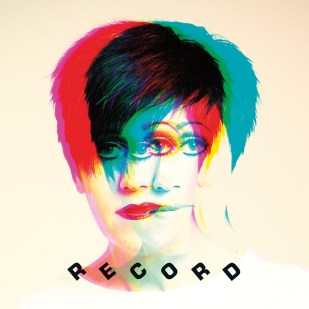
Until about a week ago, I had never listened to or even read about the British act Everything But the Girl. Regarding the singer Tracey Thorn, I know Massive Attack’s “Protection,” but that is all. I just found out minutes ago that she’s written a highly regarded music memoir, a genre I am addicted to. So…what’s the deal? Seems like a theme this week, but why am I so benighted with regard to certain pop icons? I mean, honestly: most people are. And, truly: one can’t listen to everything. I do indeed listen to more music–and more kinds of music–than most human beings, but I have blind spots.

With Thorn, I think my ignorance is traceable to my preference as a twenty-something for punk rock, the ’50s and ’60s rock and roll pantheon, classic jazz and hardcore honkytonk–that’s a lot of ground to cover and make up, considering I was a twenty-something in the ’80s–and my distrust, fair or not, of anything pop and dancefloor-designed, and especially of the British variety. An unsupportable prejudice, I know, but it was my prejudice, and sadly it’s lasted through the years. Why? I am pretty curious, but it’s been a long, long time since I clubbed, and even when I did, I was uncomfortable in the environment. I explode into extroversion when I am suddenly surrounded by people, because I feel I am obligated to interact, but I almost always prefer a smaller, quieter place. Also, I had serious issues with the Eighties. The clubs I clubbed in, it was gaudiness, crassness, and sharkiness for miles; I felt like an alien sent to observe, because I was definitely not of that scene. An aggressive shallowness:  that’s what I remember, and that’s why I retreated/ran screaming back to my room or, occasionally, a rathole punk rock venue. I hope I’m making sense here, but I was (without deep enough study) associating a vast ocean of impressively differentiated dance music with a social scene that disgusted me and that I couldn’t comfortably negotiate, and maybe I still do.

There are signs, as I told a friend yesterday, that this old, cold part of me is melting. Facebook’s taking some well-deserved blows about the face and neck right now, but I will say this and you will likely agree: some of the communities it makes possible are very sustaining. I am part of a few Facebook groups that help keep me sane, and one of them is made up of serious pop (and semi-pop) music writers and other aficionados. While the group is very predominately white, male, heterosexual, and middle-class, the range of musical interests are not only quite diverse but also have considerable overlap. As far as the overlap goes, if, for example, you happen to one of the few participants who outlie that overlap, you may be called upon to defend your position. OR…you may respect the opinions of the overlappers so much you may feel compelled to defend your position. OR…you may reason that the majority is often, due to certain other social pressures, wrong. OR…you may have held the position so long you’re scared to re-examine it. OR…you may come to suspect you are, in fact, flawed in your judgment regarding the majority-approved music in question. And that last has been where I’ve landed a few times recently. I’ve written about it on this blog before. This group’s encouraged me to take more chances, and a few individuals have reminded me that dance, style, and desperate good times are fun.

Thus, my decision to try Tracey Thorn’s Record when ordinarily I wouldn’t have thought twice about ignoring it. It came up in my Apple Music “For You” feed–a sign I’m making some progress–and I tried it only for that reason. I could hear that Thorn’s music was dancefloor-designed, wrought-for-the weekend, but also that it didn’t have to be just that; it felt pretty good as it simply washed over me while I was kicked back on the couch on a Wednesday afternoon. I found her dark-timbred singing, which again I’d only heard almost thirty years ago when she’d guested with Massive Attack, strangely intoxicating, excitingly unique, Annie Lennox with a bit more burnish, agreeably human as opposed to virtuosic, which can be thrilling but also, I don’t know, distancing (it’s why I’ve always argued that Ernest Tubb and Tommy Duncan are among country music’s greatest singers, when some folks argue that they can’t even). Then, key lines began to slip over and around the corners of the book I was reading (first listens: I get used to the musical impression the whole album makes):

“Put up your fists / Nobody ever loved / Someone they were afraid of….”

“[Y]ou taught me my first song…/ The song was ‘Teenager in Love’ / Oh God, you couldn’t make it up!”

“I didn’t want my babies / Until I wanted babies /And when I wanted babies / Nothing else would do but babies.”

“Oh, but where I’d like to be / Is on a dancefloor with my friends [or, with a drink in me] / All pissed at me / Someone singing and I realise it’s me / I realise it’s me.”

Shit, I thought, music, singing, lyrics–CHECK! What’s not to love? But I had let it float over me; I hadn’t fully engaged. A few days later, a kerfuffle had developed regarding a peculiarly ill-advised comment a critic had made about Record while trying to praise it (connecting an artist’s autobiography too confidently and not too fairly to her art–Wilde would wince), we were discussing the role politics has to play in assessing someone’s music, and I realized that a) I didn’t know beans about Thorn’s life to begin with, and b) strangely, given the times, political commentary wasn’t anything I was even listening for first time around in Thorn’s music. It was a winner then, and after the kerfuffle and conversation, it is even more so–especially after I listened to it on headphones yesterday. I also had an epiphany as a result of the critical comment in question: Thorn and I are essentially the same age (I’m half a year older), and it was clear to me in so many ways that Record was speaking to me on that level, that it’s been awhile since that’s happened. The maturing of not just your body and mind, but your work. The threat of an increasingly aggressive, retrograde power structure to you, your family, and friends. The search for good times as your life becomes more complex and your time is of a thinner, ever more ethereal essence. The heartbreaks and joys brought by memories that are proving indelible. Posterity. Change of life. When carried along by energetic, effervescent, and pulsating sound, these themes take on even more depth.

I’m not saying this music is just for the fifty-year-old set; in fact, in some ways it just as powerfully speaks to millennials, I’m sure. I’m saying that when an album can straddle that expanse, that particular way, that wisely, you might be dealing with something special. More and more, I think it’s my favorite of the year. You try it–it is only by the interference of a few chance outcomes that I even deigned to, and I’d be much the lesser if I hadn’t:
 

Donny Hathaway: More Than I Ever Would Have Known (April 16th, 2018, Columbia, MO)

DonnyHathaway-740x390

You know, I can be a massive idiot at times–even incurious, which is the kiss of death for other people, as far as I’m concerned. As far as my being a massive idiot, for example, my initial response to Beyonce’s apparently titanic show at Coachella–barring a tinge of awe when I saw my first clip–was, “Y’know, I’m just distrustful of any show that costs that much to stage and attend, and that has that much stimulation outside of the featured performer.” What a starched shirt! Talk about not seeing the forest for the trees when you’re not seeing the trees for the forest!

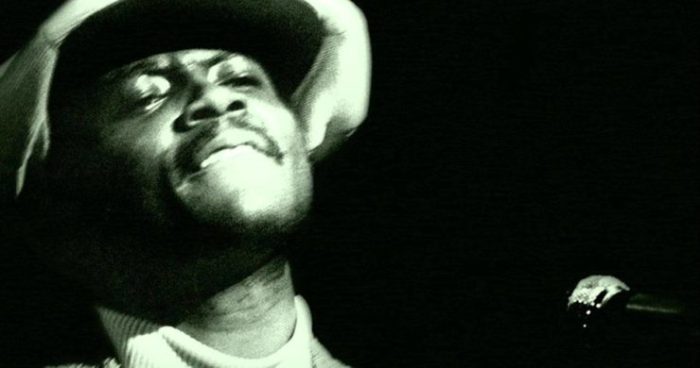
I’ve tried to make amends with myself and others re: Beyonce’s achievement, because I was just wrong (I am buying that damn BluRay when it comes out), but elsewhere in the day, I also tried to make amends with my conscience, which believes I need to have heard every single great album of the past up to the present day. Sunday, while perusing the index of Rachel Rubin’s very enlightening 33 1/3 book on Merle Haggard’s Okie from Muskogee, I noticed not only that one had been written about Donny Hathaway: Live, but that that particular item was one of the most highly rated in the series. I for damn sure wanted to read it, then, but also that would require listening to it, which I had never done, because I occasionally put too much faith in certain critics’ judgment (we obsessives need someone to help us separate the cyberjukebox wheat from the chaff). Case in point: Robert Christgau’s take. He is not on record that I know of about Hathaway’s live album, but his opinion, which had evolved somewhat as of his last reference to the man’s work, was not mellow: “Bourgeoisification at its genteel worst….” Bob’s word is not as from a god to me (any guy who snubs the Oblivians has problems in my book), but he’s generally reliable, there’s soooooo much stuff out there, and, as Lou Reed once sang, there is no time. Well, I ordered the book, and noticed that the live album had been repackaged with another live set for a reasonable price, so I figured, why not practice what you preach and take a plunge?

WOW.  Even with the presence of a few things that would ordinarily put me off, critical guidance or no (an electric piano, covers of Marvin Gaye–ill-advised at best–and “A Song for You”), I was enraptured for purt-near the duration of the two discs. The live vibe is excitingly intimate, with the crucial critical commentary being the crowd’s en masse eruption into off-beat clapping during “The Ghetto,” one of the many high points in the set. Willie Weeks on bass is like rolling ocean waves beneath Hathaway’s lines; as one Amazon reviewer pointed out, even though the whole performance is great, you can simply be hypnotized and mesmerized and satisfied by laser-focus on Weeks’ playing. And Hathaway himself? I literally had never heard a track of his before. That’s right: in, oh, 46 years of listening to music. He sounded a lot like Stevie Wonder to me at first, without that peculiar warbling effect Stevie’s got; not saying Hathaway’s a better singer, just different. And I quit thinking about Stevie the more deeply Hathaway became engaged in the material, a requirement when you’re trying to get away with “What’s Goin’ On,” which, surprise surprise, he does. He plays the keys with soul but restraint–just surfing nonchalantly atop Weeks’ waves–and keeps the groove going. And if bourgeoisification means, I guess, translating an Al Kooper composition for BS&T to the modern black supper club, hell, I’ll take his “More Than You Know” with my steak Delmonico any damn day. He gets into the nooks and crannies of that ol’ thing–just listen for yourself:

I’m returning to the thing today–it might just be one of the Top 10 live soul albums ever recorded. I haven’t started reading the 33 1/3 tome yet, but I’m licking my chops. My advice to you today: quit complacently accepting that you’re a massive idiot about some things, activate your curiosity, and sample something you’ve heard people raving about but which you’ve been rejecting because you and your sources know better. Now, if it’s Neutral Milk Hotel, I understand, but….


Some Humans ARE Human! (April 15th, 2018)

I spent yesterday getting acquainted with new albums by two of the house’s favorite songwriters, American John Prine, acquitting himself warmly in the twilight of his career, and Irishman Jinx Lennon, approaching–if not enjoying–the zenith of his. I strongly recommend that the reader, if she’s feeling as hollowed out and anxious as these times often make me, do likewise. The warmth, compassion, humanity and humor of these men is a tonic. I am still absorbing these works, but I’ll do my best to report their virtues accurately.

Prine’s The Tree of Forgiveness is his first album of original songs in over a decade. He’s battled through two rounds of cancer to return as a regular performer on this county’s stages, but most of the big fans I know (including myself) wondered whether he’d write any more tunes. Certainly it wouldn’t matter if he ever had: he’s done pretty well for himself in his life, with a repertoire that can stand with his fellow guitar-bangers Dylan and Young. I’m happy to report that there’s really not a bummer in the new batch: as with most excellent Prine LPs, there’s a balanced dose of off-the-wall whimsy (“Egg & Daughter Night, Lincoln Nebraska, 1967 (Crazy Bone)”), convincing heart–and heartbreak–songs (“Boundless Love,” “Summer’s End,” respectively), and unadorned commentary (“Caravan of Fools”). Also, ol’ John knows how to end a disc, and while “When I Get To Heaven” has given some observers to worry after his health, the vigorousness of his performance and spirit here convince me it may take more than death to kill him. One thing I always listen for with Prine are smiles and laughs pouched barely discernibly in his delivery–like he’s about to break up–and The Tree of Forgiveness has many such moments. They’re a reminder to acknowledge the absurdity of earthly strivings, from a man who I wager has no regrets.

As far as songwriting goes, few smiths are as fecund as Jinx Lennon of Dundalk, Country Louth, Republic of Ireland. I haven’t heard every single album Jinx has released, but I’ve heard most of them, and none of those are less than very good. His last two, Magic Bullets of Madness to Uplift Grief Magnets and Past Pupil Stay Sane, both arrived in 2016, and, to my ear at least, were among the very best singer-songwriter records of the year.His strengths? Where to start? He has a compassion for working people that goes straight past theorizing to observed feet-on-the-street-detail. He has a gift for lyrical and vocal directness that can bring a listener more conditioned to irony, artifice, and obscurantism up short. His energy and delivery remind me more all of the time of Joe Strummer; his boundless bravery in standing up for the oppressed of Woody Guthrie. And? He’s one funny futhermucker for sure. His new release, helpfully titled Grow A Pair, embodies all of those qualities, plus dabs of two new ones: gentleness and relaxation. At 54, he’s still growing (of course!), and, as such, this is as good a place as any for a newcomer to jump in. While Grow A Pair begins oddly, with the darkly amusing “Now I Am in Singapore”–the next song, “Top of the Bleedin’ Morning,” is a perfect Lennon album-opener–it soon settles into Jinx’s familiar (forgive me, please) Stephen Dedalus-like stroll through the insults, obstacles, blessings, and inspirations of a day in our life–there’s even getting drunk, making love, and making plans at the end of the stroll. Along the way, prepare to be imprecated out of your sloth and hesitance (“Top of the Bleedin’ Morning,” “Grow A Pair,” “Stop Your Bummin'”), observe both battles and a dance of the sexes (“Newry Bird,” “Afraid to Open My Mouth,” “Wine Glass Goggles”), thrill to a lullabye (“You’ll Be Kept”), mourn the landscape (“300 Pianos,” “Black and White Scan,” “One Day I Awoke [to too much STUFF!]”), and ignore the landscape (“We Don’t See Anything”–observation is a key to Lennon’s music and to his advice to the listener). There’s prophecy, too, in “The Wheel Will Turn Again,” and while in the past Jinx has written succinctly about styrofoam cups, here he rhapsodizes from the subject of aluminum cans. That’s right: I used that word fecund for a reason.

As the Mekons once sang, it’s hard to be human again. But Prine and Lennon are voices that will give you support, so bend your ear, if you please.

The Way Up The Hill: Diary Playlist April 8-14

I’m launching a new feature on Sundays: a Spotify Playlist containing favorite tracks of the week. If in the case Spotify isn’t streaming the track or album in question, I’ll try to find excellent tracks from the artist’s other work to sub in. Such was the case this week with Tapper Zukie, JD Allen, and Sonny Criss. Also, weekly “awards”:

Plucked from History’s Dustbin (best recent purchase of an old record): Mississippi Blues Festival 86 

Grower, Not a Shower (old record I already owned that’s risen significantly in my esteem): Billy Bang and Frank Lowe–Above and Beyond

Encore, Encore (album I played at least twice this week): Fela–Best of Black President Volume 2

Through the Cracks (sweet record I forgot to write about): Tracey Thorn–Record

Coming Attractions (Sunday’s Children): John Prine–Tree of Forgiveness and Jinx Lennon–Grow a Pair

Four in One (Afternoon) (April 13th, 2018, Columbia, MO)


I had an afternoon free at the end of a hectic week, and I needed just the right sounds to put me straight for the weekend. That’s a harder task than it seems: I have a massive library from which to choose (well–so do you, if you’re reading this), and sometimes that can be paralyzing to the point of opting for…silence. Also, I often get caught between choosing things I need to listen and things I want to listen to, and things I need to understand better and things I know so well they will unquestionably deliver pleasure and enlightenment. Obligation–phooey!

On this day, I lucked out. I pulled four records, one I hadn’t listened to for so long I didn’t remember it well, one that was a sure shot of delight, one I hadn’t yet removed from the shrink wrap, and one that I’d in recent years ranked very highly on a poll but wanted to hear whether I was off the beam or not. Every single one was a wonderful experience. And it was a perfect celebration of Jazz Appreciation Month.

Billy Bang and Frank Lowe (top left and top right above): Above and Beyond–A Night in Grand RapidsNot a particularly auspicious album title, plus considering the men in play and the title, it might be a free scrum. Actually, this is a beautiful and moving record. Bang and Lowe could indeed go out, with serious fire, and here they occasionally do, but the set list is full of tunes, with a long, hypnotic, brooding but catchy masterpiece (“Dark Silhouette”) at its core. On that track, Lowe conjures a quiet series of snuffling, whimpering, muttering, pleading sounds from his horn, which not only fit the mood but, in a sense, are heartbreaking: the saxophonist was dying of lung cancer–in a few months he’d be gone–and operating on a single lung, though his playing is masterful and those noises were obviously quite deliberate. Bang is inspired, and bassist Todd Nicholson is a wonder.

Sonny Criss (with Horace Tapscott) (second from top, left and right): Sonny’s Dream (Birth of the New Cool). That’s an audacious title, but Criss, a great and currently very unsung West Coast alto saxophonist, and Horace Tapscott, the legendary L.A. bandleader and teacher, and pianist, composer, and arranger here, earn it. It’s an answer, I think, nearly two decades later, to Miles’ Birth of the Cool; quite honestly, I prefer this record and have played it three times as much in my life. Criss’ playing is intense but disciplined, Tapscott’s writing is characteristically imaginative and idiosyncratic (try “The Golden Pearl” or “Daughter of Cochise), and the orchestra contains such luminaries Teddy Edwards, Conte Condoli, and Tommy Flanagan. It’s a masterpiece knockin’ on the canon’s door.

Sun Ra and His Arkestra, featuring John Gilmore (second from bottom, right): Of Abstract Dreams. I’ll be the first to admit that there is too much Ra on the market; though the music he created over forty years is amazingly consistent in its quality, he wasn’t foolproof: he (and to a lesser extent the Arkestra) could noodle, tinkle and futz around, and the navigation of / communication from the cosmos does not guarantee excitement or even simple interest. However, this new Strut find, a ’74 Philly radio station performance, has three things I like: Ra on acoustic piano, Gilmore expressing himself on tenor, and three compositions available elsewhere that are actually in significantly different (and more focused form).

JD Allen (bottom): Americana. Guess what, kids? The contemporary album I’d most strongly recommend to music fans who, for jazz, only go to Coltrane…is not available for streaming on any platform! I can dig it! I ranked this album in my Top 10 for the year 2016, and yesterday it forced me stop everything else I was doing and lock in–I actually may have underrated it. Allen and his ace fellows, Rudy Royston on drums and Gregg August on bass, dive DEEPLY into Black America’s past–and into the blues. Americana delivers something contemporary jazz often struggles with: unfettered emotional depth. If you don’t believe me, just listen to it. (Also, you could read David A. Graham’s sharp piece from The Atlantic.)

Short-shrift Division:

The Swan Silvertones: My Rock / Love Lifted Me: I’m still crying holy unto their lord. My second-favorite edition of the Swans, but that’s like saying peanut butter is my second-favorite to chocolate. Rawer, purer maybe, with Reverend Jeter very much on the case.


A Fine Fake French Festival (April 12th, 2018, Columbia, MO)

I stumbled across the above album in mint condition from a French vendor on Discogs last month and immediately ordered it. I knew the label, Black & Blue, was reputable, but beyond that–I’m strange this way –I wanted to be surprised. Jessie Mae Hemphill, a member of the famous fife-and-drumboogieing north Mississippi hill country family of that surname, is one of my very favorite blues artists. Hailing from Senatobia, armed with a trance-inducing vocal and guitar style, she made precious few records, and no live ones that I was aware of. Here’s one of the Tate County She-Wolf’s greatest tracks:

I didn’t really care about the other artists. The prospect of hearing Hemphill play to a familiar audience was enough. Plus, I’d heard other Mississippi festival recordings and they were great.

Yesterday the record arrived. Live it was not. Hemphill’s tracks? Studio recordings I already owned. I’d paid a modestly pretty penny for it, considering the shipping, so I was miffed. But I put it on anyway, of course, and was pleased to hear that the mix of Hemphill’s tracks seemed hotter than the ones I owned. Then came sings from drummer/vocalist Hezekiah Early and his band The House Rockers–if you call guitar and trombone a blues band, and I do. Charming isn’t a commonly used word for blues music, but believe me, it fits here and it’s not pejorative:

Then I flipped the was for four tracks by Son Thomas and another couple by Early’s unit. I was prepared to be underwhelmed by Thomas, accompanying himself on guitar and indulging in two unfamiliar covers, but…never underestimate a Mississippian! Just on tempo, tuning, and phrasing alone, he made the tracks his own, and cast a very haunting shadow across the record’s proceedings:

This album? I think I’ll keep it!

Short-shrift Division:

Baaba Maal and Mansour Seck: Djam Leelii – Played prior to the above record arriving, it seemed to summon it. There are moments when Maal’s and Seck’s picking slowed down so suddenly that I felt as if I’d been hitting the sizzurp. No surprise: House’s and Hemphill’s playing sounded as if they’d all drunk from the same bottle.

Silver Tones (April 11th, 2018, Columbia, MO)

The Swan Silvertones. I’m here to tell you, few gospel groups in that genre’s impressive history can top their Vee-Jay label material. The great Reverend Claude Jeter’s tenor-to-falsetto sweeps point toward Al Green; Louis Johnson’s gravelled gizzard suggests a less refined Bobby Blue Bland; Paul Owens could have been a doo-wop star. In fact, the Swans had no qualms about blending doo-wop and barbershop ingredients into their holy testifying. Case in point?

Those three leads, backed only by a baritone and a bass singer (William Connor, the latter, is so aggressive at times that he reminds me of the instrumental bass passages on the first two Velvet Underground albums), a strummed guitar, and very occasionally some percussion. But they were a band.

Did I mention that they can lay claim to belonging among the first rockers? It’s a wonder this spiritually hungry number wasn’t secularized somehow:

Unfortunately, the Swans’ Vee-Jay recording aren’t that easy to find. For now, here’s a Spotified album I can’t speak to the source of, but…it’s the stuff:

It’s enough to make a committed agnostic like myself cry holy unto some lord.

Can’t Get Enough Division:

Tapper Zukie: Man Ah Warrior


The Best of the Best of Fela Kuti


Got Enough Division:


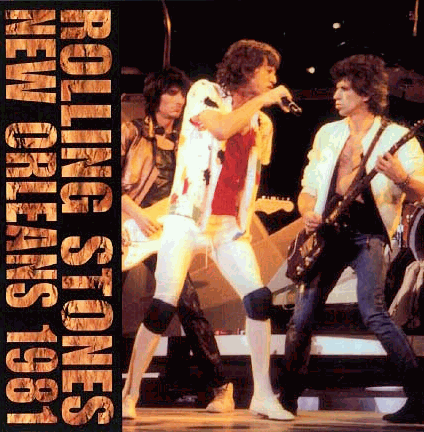
For Stones fans of a certain age (mine), Mick Jagger carries no mystique. As much as I love the old monkey, I came of age watching him dance, mug, and clothe himself as he does herein:

Yes, I was among the 89,000 who saw The Stones rock the Superdome (their openers, The Wild Tchoupitoulas and George Thorogood, slew them). We were thousands of yards back, but I got to peep this on the Enormo-Screen (or was there one?):

Jagger is many things to me, and this is not damning, but he is not cool.

Out of This World (April 10th, 2018, Columbia, Mo)

Elza

Nope, this ain’t about Gino Washington! On one hand…have you ever felt like you just want to get out of this country for awhile? Yeah, me, too, so I did so through musical trips to Agadez, Lagos, and Rio (I also went to Manhattan, but it might as well have been Rio or Sao Paulo).

Also, unlike the night before, I was not about to get distracted by a damn haint (aka Hank Williams, Sr.) while I was trying to read. I am borderline insane when it comes to reading, and I added three new books to my active stack of three. If you’re curious, they were Colin Escott’s update of his solid Williams bio, I Saw the Light (the Hank fire’s done been lit); Gayle Ward’s Rosetta Tharpe book Shout Sister Shout!, which for some odd reason I didn’t read when immediately when it was published; and Patrick Parr’s account of the late-teenage MLK, The Seminarian: Martin Luther King, Jr. Comes of Age, which tells many relatively new stories, including this one. So, anyway, I picked some international groove music, though at least two of my selections were jumpy and angular enough to break my page-gaze.

You cannot go wrong with Bombino, the great guitarist from Niger. The man can work up a serious head of sustained, flowing steam with just six strings and percussion propulsion. His album from 2013, Nomad, is a great introduction to his work, and, if you get the chance to see him live, GO–we witnessed him at Minglewood Hall in Memphis opening for Gogol Bordello, and he made it very tough for the headliners to keep us at the venue:


Despite the man’s sprawling discography, you also cannot stumble randomly selecting works by the great Nigerian bandleader Fela Kuti. I did not choose randomly; I picked my favorite Kuti Komp, The Best of Black President, Volume 2, which features an extended version of the eternal, and eternally sorrowful, and eternally motivating “Sorrow, Tears, and Blood” (“it’s their regular trademark”). It’s where I’d start anyone new to Fela’s Afrobeat wiles.


Have you heard of Elza Soares  (that’s her pic at the top)? That’s OK, neither had I until a couple years ago. Apparently, she’s thought of by some as the Tina Turner of Brazilian music, but what you need to know is that she’s a defiant octogenarian who, in 2016, plunged headlong into an thrilling avant-garde setting and sprung some samba sujo (“dirty samba”–that alone should tempt you to put it on) on our unsuspecting ears. The resulting record, A mulher do fim do mundo (The Woman at the End of the World), intentionally or not, captures the beauty, sensuality, surprise, and madness of modern Brazil. Come to think of it, I think Brazilians have it a good deal worse than we do.


I’m not the first and won’t be the last to say it, but if you go Brazilian on a particular day of listening your ears likely won’t go back to where they were until the next day. I closed out with Arto Lindsay’s Cuidado Madame; Arto’s a New Yorker, but he’s been dedicated to adapting classic Brazilian musical styles–bossa nova, samba, and the wild, wooly, and wonderful variant called Tropicalia–to stateside pop forms, though it’s sometimes been hard to discern much of our traditions in his more recent music. This is his most recent release; it’s quite great, especially after repeated exposure. I love it in particular for two reasons: the opener, which features Mr. Lindsay writing his name on his lover’s naked belly until she forgets her own, and the multiple tracks on which, more often than has been his recent habit, he expresses himself on his inimitably untutored guitar. Also, the critic Robert Christgau once described Lindsay as being James Brown trapped in Don Knotts’ body; I’d update that from the Godfather of Soul to His Purpleness.

Short-shrift Division:

Tapper Zukie: Man Ah Warrior–Spacey early ’70s dub, driven by the bass line from “Papa Was a Rolling Stone.” Here, take a hit:


Are You Sure Ol’ Hank Done It This Way? YES!: Some Thoughts Upon Having Listened to the Hillbilly Shakespeare (April 9th, 2018)

HANK

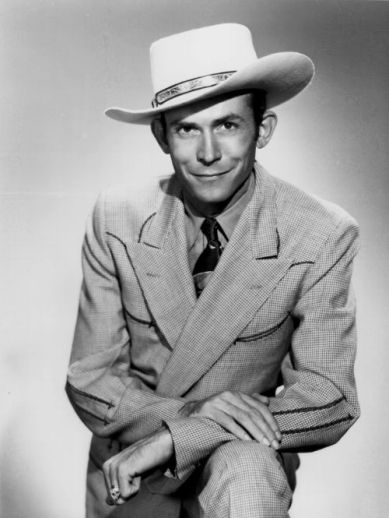
Nicole and I settled in to read last night, and we needed some music we were so familiar with that, while we’d feel pleasure, we wouldn’t be distracted. I chose Polydor’s three-disc Hank Williams: The Original Singles Collection…Plus, programmed just the indubitable classics and undeniable rareties, and stretched out to…try to read. Thoughts swept down on my head, aggressively. Like blue jays after a cat.

I can imagine some folks saying, “Hank’s songs…they all sound the same.” Same as they might say about the Ramones. Nonetheless, I can usually recognize a Hank hit within three notes, or three rhythm-guit chops.

When I dream of playing the guitar, which I occasionally do, I always land on the same realistic strategy: “Just learn the rhythm guitar parts for Hank’s greatest hits and what else will you really need to know.” I feel assured this is wisdom

I think Kinky Friedman dubbed Hank “The Hillbilly Shakespeare.” That is entirely accurate. One classic piece of evidence is “Crazy Heart,” which, if it isn’t a soliloquy, I don’t know what is: You livvvvvvvvvvvvved on promises / I knew would fall apart / Go ownnnnnnn and break / You crazy heart.

I identify with so many of Hank’s songs because they so often deliver a message of fatalism with clarity, directness, and a weirdly positive forward motion. Due primarily to my obsessive reading and listening (they are my religion; they explain the human world to me), I have no illusions about the futility of human strivings across history. Due primarily to white male privilege, but also to my cultural upbringing and personality, I am catapulted out of my bed into forward motion each morning (I could start teaching when my right foot hits the bedroom hardwood) by unstinting optimism. Hank’s my familiar. Listen carefully to what he says in “I’ll Never Get Out of This World Alive”; listen to how he says it. His is no Nick Drake or Ian Curtis trip–he projects aggression in the first syllables he looses, and his grim humor is also determined: These shabby shoes I’m wearing / All the time / Is full of holes and nails / And, brother, if I stepped on a worn-out dime / I bet a nickel I could tell ya / If it was heads or tails! I flat-out love that nickel bet under the circumstances.

The past near-forty years have not been kind to our working class. I’m surprised Hank hasn’t emerged more fully as its patron saint. While he didn’t really write songs that explicitly addressed its state of oppression (though do take a look at that verse I just quoted), its desperation, pain, suffering, uncertainty, intensity, and survival instinct are all wrapped up in his singing, which still and always will cut through any room. And though throughout his greatest performances he asserts a master’s control over his instrument, listen to his last notes on “Settin’ the Woods on Fire.”

Though it’s true that Fred Rose and sometimes others helped shape the songs and snatches Hank brought to recording sessions, the consistent excellence of the huge spool of songs he unrolled before stepping on a rainbow at 29 is the 56-game hitting streak, the 100-point game, and the 215 points in one season (imagine if Gretsky had died at 29) of country music. Catchy, pithy, complex, deep-hued emotionally, and universal in the dilemmas they present, they boggle the mind. Hell, Willie Nelson at damn-near 85 is only just now catching up with Hank on a quantity-of-quality level.

Yes, I was talking shit about Drake and Curtis above. Hank could go there, though, when he wanted to, with twice as chilling effect. “Ramblin’ Man”? “Alone and Forsaken”? “I’m So Lonesome I Could Cry”? “I Can’t Escape from You”? “The Angel of Death”? Dude invented the pop abyss. You might have to overlook “Dark Was the Night, Cold was the Ground” or “Strange Fruit” to accept that argument, though.

I have been very fortunate to have sidestepped sustained romantic heartbreak by finding a good and true-lovin’ mate 28 years ago. But between my 22nd year and 28th year, I took some crushing hits. After one of them, I was in a fetal position crying openly on a dirty, beer-and-cig marinated carpet in a house I shared with two other bachelors. I did not fucking care if I was seen. My heart had been stomped flat. It was my first real step toward becoming a man, but I didn’t know it yet (I didn’t know, too, that I hadn’t really even been in love–it was about lack of worth). Neither logic nor literature nor libations could quell the pain; music was just a hot poker thrust into the wound. I was so far down I was considering monkdom. I recall this because Hank’s music can and does take me right back to those feelings. It’s not pleasant. It’s disturbing.

I didn’t get much reading done. I stared at words and pages for 45 minutes.


Mix Discs are Back! (April 8th, 2018, Columbia, Missouri)

Dead Moon

As I have written before, the evaporation of the need for making physical mix tapes and discs has hurt my heart. I am happy that it’s better for the environment and personal space; I resent that it’s too easy to “gift” someone, for example, a YouTube playlist link.

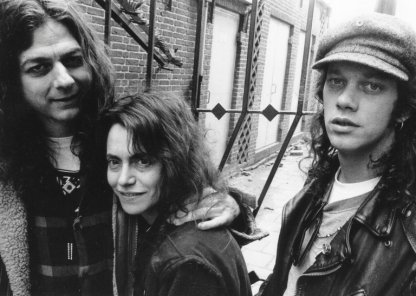
Every once in awhile, though, I am called back into jubilant action, and it happened twice this weekend. First, a Canadian friend to whom I had raved about the Clackamas, Oregon, band Dead Moon (there is no other way to communicate about this band) indicated his interest after hearing them, and commissioned (i. e., was forced by me to ask for) a best-of comp. When he indicated he preferred a CD over a streaming mix, I snapped into action. I successfully restrained myself to a single disc (rare occasion), and chose to give him a taste of “only the best” Dead Moon tracks, a sampling of Fred and Toody’s final group, Pierced Arrows, and three rareties in both bands’ catalogs (by the way, the only differences between the two groups are a different drummer and, regarding the latter, a little heavier approach.

I also got involved in an animated Facebook conversation with one of my all-time favorite former students. She’s the amazing mother of four terrific kids, and I’d recommended a ’50s gospel compilation, Jesus Rocked the Jukebox (previously reported about on this blog) that she decided the family needed to have. Welp, that was like Commissioner Gordon turning on the Bat Signal. She, too, mentioned she’d appreciate a hard copy of the compilation, but, as happens with some of us maniacs, I decided I could beat the official version, and mixed its strongest cuts with lesser known but more powerful tracks for their CD.

2AE10590-16FE-4810-880D-295016F5220B

The most satisfying part of putting together a mixtape or disc is listening back to it and knowing your job was well done. It’s hard for that not to happen when love is involved.

To the post office!