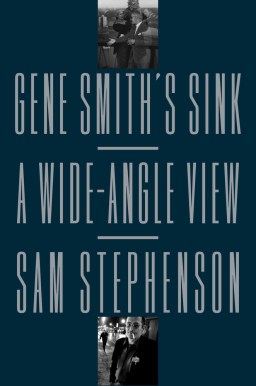
My criteria for a great non-fiction read are, of course, that the author illuminates his subject, but, on a more personal level, that his book sends me off in new reading and listening directions. Sam Stephenson, in a culmination of his more than two decades of study the photographer W. Eugene Smith, easily meets both in Gene Smith’s Sink: A Wide-Angle View, applying a Citizen Kane-style strategy to get to the tortured core of Smith’s genius and, perhaps coincidentally (Stephenson would argue not necessarily), tapping into both areas I’ve very recently explored (Japanese culture and disaster, Tennessee Williams’ complicated vision) and opening new doors for me: to the work of Robert Frank, Ronnie Free, and the deeper depths of Sonny Clark’s discography, beyond Cool Struttin’.
Perhaps the best of many brilliant chapters in the book involve, first, one that examines the source of and reason for the call of a Chuck-Will’s Widow that turns up on one of Smith’s many loft recordings, and, following right on its heels, an examination of Clark’s tragic life. How all these things connect I’ll leave it to the reader to discover–I couldn’t recommend this book more highly–but they rocketed me to a four-hour listening session that incorporated the whole of Clark’s recordings with the St. Louis-born guitarist Grant Green and two albums Clark made as a leader, Leapin’ and Lopin’ and The Sonny Clark Trio. My goal? Well, in that latter chapter, Stephenson’s driving to understand why Japanese jazz fans seem to revere Clark even more than Coltrane, and he breaks down two symbols frequently used by Japanese jazz writers to describe Clark’s music; I simply set out to test their description myself. It’s not this simple, but the symbols, used together, indicate both a muffling of deep feeling and the expression of deep feeling through the contraction of the heart. Interesting, huh? I found that description holds up.
Just prior to being set on this listening path, and just prior to having read the two chapters that lit me on fire, I’d read an interview with Philip Roth in the current New York Times Book Review. You’ll soon understand why, shortly after reading it, I was shaking my head in wonder; check out this response of Roth’s:
I seem to have veered off course lately and read a heterogeneous collection of books. I’ve read three books by Ta-Nehisi Coates, the most telling from a literary point of view, “The Beautiful Struggle,” his memoir of the boyhood challenge from his father. From reading Coates I learned about Nell Irvin Painter’s provocatively titled compendium “The History of White People.” Painter sent me back to American history, to Edmund Morgan’s “American Slavery, American Freedom,” a big scholarly history of what Morgan calls “the marriage of slavery and freedom” as it existed in early Virginia. Reading Morgan led me circuitously to reading the essays of Teju Cole, though not before my making a major swerve by reading Stephen Greenblatt’s “The Swerve,” about the circumstances of the 15th-century discovery of the manuscript of Lucretius’ subversive “On the Nature of Things.” This led to my tackling some of Lucretius’ long poem, written sometime in the first century B.C.E., in a prose translation by A. E. Stallings. From there I went on to read Greenblatt’s book about “how Shakespeare became Shakespeare,” “Will in the World.” How in the midst of all this I came to read and enjoy Bruce Springsteen’s autobiography, “Born to Run,” I can’t explain other than to say that part of the pleasure of now having so much time at my disposal to read whatever comes my way invites unpremeditated surprises.
Why read? How can you not, if you’re able?
Short-shrift Division:
Del McCoury Band: The Cold Hard Facts
Lester Flatt and Earl Scruggs and The Foggy Mountain Boys: The Complete Mercury Sessions
The Essential Bill Monroe and His Bluegrass Boys (on Columbia)
What can I tell you? I’d hoped things (i. e., our American life) would be much better by now, since I last posted a lazy list–for the time being, I cannot write, a kind of impotence I am sure is related to political distraction. However, “fury and fire” are the order of the day, so I guess I’ll be leaning even harder on music to get me from rising from my pillow in the morning to lowering my head back upon it at night. These records keep me believing in a decent future, and in a humanity that continues to evolve. Big ups to St. Louis’ Black Artists Group contingent, my research into which has been exciting; to the Golden Pelicans, who are the Black Oak Arkansas of hard-ass punk rock; to the ebullient Eno Williams, who powers the exultant Ibibio Sound Machine; to Tyshawn Sorey, who is always looking for a way forward; and to the indefatigable musical exploration of John Corbett, who’s damn-near supplanted every other music writer in my esteem. I’ve taken the time to link all the new releases to clips for you to enjoy (that is, except for Jay Z, because, as nice as his old-dude album is technically and artistically, I’m done for now with caring about the lives of the very rich), and I did my best to do the same for the older rekkids I am digging, but…shit, you know how to get to YouTube, correct?
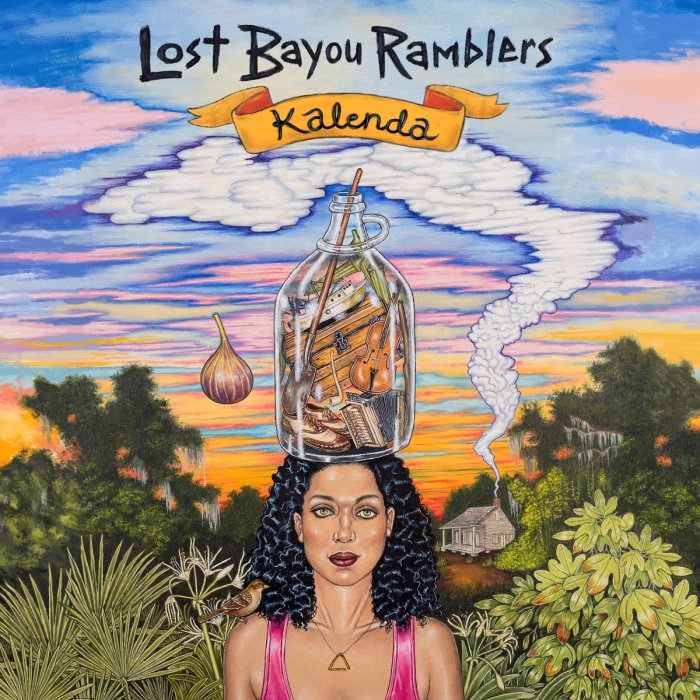
Important Addendum: The Lost Bayou Ramblers crashed the Top 10 out of nowhere with the hardest-rocking, most eccentrically textured Cajun record in years, Kalenda–which is my favorite record right now, but it just dropped today (9/29/17). Also, against all my strongest, well-honed instincts, I’ve been broken by Lana Del Rey. A six-hour immersion in her catalogue justified the hype and more, though I would still opine that a little goes a long (but deep) way.
The first third of this haunted year is over: list time! I’ve got 35 rekkids so far that could conceivably make my year-end best-of (alphabetized, because I don’t have the energy to rank ’em–except my Top 10, asterisked and bolded for your convenience). That’s complicated by one that I was way behind on (even further than I was on Jazmine Sullivan) that might be argued as impacting 2016, a Brazilian record from a few years back that just came into most of our earlines, an addictive Serengeti EP project, and a documentary that I want to count.
*Angry Angles: Angry Angles
Bajakian, Aram: Music Inspired by “The Color of Pomegranates” *Bombino: Azel *Booker, James: Bayou Maharajah (film)
Bowie, David: Blackstar
Bradley, Charles: Changes
Braxton, Anthony: 3 Compositions [EEMHM] 2011
Childbirth: Women’s Rights
Dalek: Asphault for Eden
Del McCoury Band: Del and Woody
Hemphill, Julius: Julius Hemphill Plays the Songs of Allen Lowe *Hogberg, Anna: Anna Hogberg Attack *Kool and Kass: Barter 7 *Iyer, Vijay, and Wadada Leo Smith: A Cosmic Rhythm with Each Stroke
Lamar, Kendrick: Untitled Unmastered
Lewis, Linda Gail: Heartache Highway
Lynn, Loretta: Full Circle
McPhee, Joe, and Paal Nilssen-Love: Candy *Mexrissey: No Manchester
Open Mike Eagle: Hella Personal Film Festival
Parquet Courts: Human Performance
Perfecto: You Can’t Run from The Rhythm
Professor Longhair: Live in Chicago
Pusha T: Darkness Before Dawn
Reed, Blind Alfred: Blind Alfred Reed–Appalachian Visionary
Rihanna: Anti
Rollins, Sonny: Holding Down the Stage—Road Shows, Volume Four
Simpson, Sturgill: A Sailor’s Guide to Earth
Stetson, Colin: Sorrow—A Reimagining of Gorecki’s Third Symphony
Threadgill, Henry: Old Locks and Irregular Verbs *Various Artists: Music of Morocco–Recorded by Paul Bowles, 1959
Various Artists: Original Cast Recording of Hamilton#
Various Artists: Soul Sok Sega–Sega Sounds from Mauritius *Veloso, Caetano, and Gilberto Gil: Dois Amigos, Um Século de Música–Multishow Live *Williams, Saul: Martyr Loser King
Wills, Bob, and the Texas Playboys: Let’s Play, Boys–Rediscovered Songs from Bob Wills’ Personal Transcriptions
Wussy: “Ceremony”/”Days and Nights”
Wussy: Forever Sounds
Ze, Tom: Vira Lata na Via Lactea#
*Top 10 selections—as of now # Complicated by not being 2016 by a long shot.
Highlights from my last five days’ listening, ranked on a 10-point scale approved by former Soviet gymnastics judges:
Vijay Iyer & Wadada Leo Smith/A COSMIC RHYTHM WITH EACH STROKE – 8.9 – Like my fellow enthusiastic and actual serious jazz critic Christopher Monsen, I do like drums with my jazz, generally; like my fellow skeptics, I sometimes wonder how cosmic each stroke really is. But considering the intentions of these two gentleman genuises in composing this–to support an exhibit at the Met of the work of the abstract Indian artist Nasreen Mohamedi–it is a beautiful thing. With just Smith’s trumpet and Iyer’s piano, Fender Rhodes, and electronics for colors, their own strokes match Mohamedi’s in elegance, simplicity, and coherence. If you don’t truck with art talk, and could care less about intentions, it’s extraordinarily calming without anesthetizing you, primarily owing to Smith’s patented (?) balancing art between Milesian moans of desolation and AACM blats and sputters.
Barbara Lynn/The COMPLETE ATLANTIC RECORDINGS – 8.5 – The notes give up no personnel data, but one can guess that from the label, producers, and mid-to-late ’60s vintage–problem is, I don’t hear her neat lefty guitar in the mix. BUT the soulful husk and smoke of her delivery are in pretty high definition and the material shoots over 80% from the line: some bitter copyrights from Ms. Ozen herself (“This is The Thanks I Get,” “Until Then I’ll Suffer”), some offerings from the house (Penn-Oldham’s “He Ain’t Gonna Do Right” and Donnie Fritts’ too-obscure “People Like Me”), a weirdly addictive one apparently penned by a trio of Cajuns from near Barbara’s Beaumont stompin’ grounds (“Ring Telephone Ring”–it’s Swamp Pop Central calling!), and likely the first version of the late Wayne Thompson’s classic “Soul Deep.” If this hooks you? Move backward to her Jamie recordings with Huey Meaux, and the original “You’ll Lose A Good Thing” and “Oh Baby! We Got a Good Thing Goin’,” which the young Stones saw fit to take a run at.
Various Artists/LOUISIANA SATURDAY NIGHT – 9.0 – A terrific compilation of swamp pop classics, which is saying something since licensing tangles have kept all the great ones from ever winding up in one place (to my knowledge, and I’ve been looking). Swamp pop? Shane Bernard, an expert for a reason, says it’s a balance between white Cajun music moving toward rock and roll and black Creole music moving toward r&b, and that sounds exciting, except that (I’d argue) its virtues are addictively mild, like a perfect cafe au lait. Not to say there’s not in-your-face action here: Rusty and Doug Kershaw are eternally uplifting (remember “Diggy Liggy Lo,” anyone?), the fat slide guitar on Cleveland Crochet’s “Sugar Bee” reaches out and gooses you hard, and Rod Bernard and Clifton Chenier’s symbolic summit meeting on “Jolie Blonde” proves Rod’s boy right. But the ones I keep coming back to are cuts like Van Broussard’s “Feed the Flame”: Van’s not the greatest singer in the world, neither the band or the arrangement will knock your hat in the creek, but his sincerity and belief in the lyrics are…fetching. Like you yourself could sing that one–but you can’t. Quite. Like that. Modest mastery.
Various Artists/SOUL SOK SEGA–SEGA SOUNDS FROM MAURITIUS – 8.7 – Mauritius is an island just east of Madagascar, and its proud musical offering is sega, which initially featured a ravanne (a goatskin stretched across a frame–and later over a drum), a maravann (a box of seeds–like maracas), a triangle (reminiscent of jure, an ancestor of zydeco), and singing, in Kreol (or Creole, if you will). This collection is largely the story of how sega because impure–and more interesting. At its best, it evokes the delirious experiments of Brazilian Tropicalia (something I’m always down for), and, um–the guitar is great! Big props to Strut Records, whose releases have gotten me to the rare point of partaking sight-unseen, sound-unheard, and review-unread.
Highlights of my last ten days’ worth of listenin’, rated on an analytically shaky 10-point scale. Doin’ the diggin’ so you don’t haveta….
Various Artists: BOSNIA–ECHOES FROM AN ENDANGERED WORLD – 10 – Don’t you hate it when you buy a world music album highlighting a country that you think has pretty homogeneous traditional music, then you’re forced to eat a LOT of crow? Especially when you’re confronted with amazing vocalized ritual repetition that would make Roscoe Mitchell pull NONAAH from circulation?
Booker Irvin: THE TEX BOOK – 9 – Don’t you hate it when you think your favorite living jazz musician (see above) is unfairly characterized as less than subtle, then a record by your favorite deceased (and rowdily subtle) Texas tenor forces you to eat a little crow?
De Nazaten and James Carter: FOR NOW – 8.7 – Don’t you hate it when you think dark thoughts about your favorite living jazzman’s imagination, and you discover he’s teamed up on the sly with a strange Netherlands world-jazz outfit that, on its website, brags of being “[p]urveyors of Bastard music”? And poses for the cover photo with a sweet ol’ lady?
River City Tan Lines: ALL THE 7 INCHES PLUS 2 MORE – 9 – Don’t you hate it when you love totally raving Memphis rock and roll and you realize you totally missed out on a great band 10 years ago, when you thought you were totally paying attention, and were visiting twice a year?
I BELIEVE I’M GONNA MAKE IT–THE BEST OF JOE TEX – 9.8 – Don’t you hate it when a reissue label has a chance to assemble an A+ compilation on the world’s most underrated soul singer of the classic era, and they forget songs like “You Said a Bad Word,” “Heep See, Few Know,” “If Sugar Was Sweet As You,” “Bad Feet,” and “We Can’t Sit Down” (I could go on, and more would fit onto this CD)?
In response to the strong showing of Kamasi Washington’s The Epic, a three-CD jazz expression of what might be companion sentiments to Kendrick Lamar’s to pimp a butterfly, a bit of controversy has emerged among music wags regarding whether a) Washington’s project deserves the rankings it’s getting, and b) he really ranks as a jazzman. Rather than be a curmudgeonly old fart shooting my mouth off after a listen and a half, I decided to give it two-and-a-half more listens–it takes up an afternoon, folks–sandwiching each disk between past jazz projects that have similarities with the project’s design. Obviously, it’s sprawling; its inclusion of human voices (sometimes in light chorus) and Washington’s touching at the edges of a Pharoah Sanders-like cry signal that it might be about the endless incidents of black men being shot dead in the street; its cast of players (and Washington’s appearance on to pimp a butterfly) (and its ground zero being Central L. A., long an influential cultural nexus of black America and the classroom turf of Horace Tapscott) could indicate that the record is a statement about community. Here are the records I used in my listening experiments, and my thoughts, for what they are worth (scores given from the ear-brain-gut obstacle course out of 10):
The Sonny Criss Orchestra/SONNY’S DREAM – BIRTH OF THE NEW COOL – 10 – Truly, one of the most underrated records of the late ’60s. Great blowing by alto man Criss, driving and inventive arrangements and compositions by Horace Tapscott (see above, and note subtitle), and some interesting nonverbal social commentary, the most striking in solidarity with Native Americans. Should be a part of every jazz aficionado’s collection.
Booker Ervin/BOOKER ‘N’ BRASS – 9.5 – I have been binge-listening to Denison, Texas’ finest tenor saxophonist this week, and, of the six records or so of his I’ve played (a couple multiple times), this has been the shining star. Nuthin’ fancy: Ervin in front of a powerful orchestra, wailing away on pieces like “Harlem Nocturne” and “Do You Know What It Means (To Miss New Orleans)?” Those selections might not fill you with excitement, but if you want to understand the term “Texas tenor” you’ll want to seek it out. Booker stepped on a rainbow far too soon at 39 years.
Dexter Gordon/MORE THAN YOU KNOW – 9.1 – Like THE EPIC, this album not ineffectively bolsters its star with strings, orchestrations, and occasional vocals. Unlike THE EPIC, the star is consistently inventing, in a wry, knowing, allusive flow of notes that could only emanate from Long Tall Dexter. Also, it’s clear HE’S the show, though I suppose Washington may have intended to be more of a team player on his record.
Charles Mingus Sextet with Eric Dolphy/CORNELL ’64 – 10 – If you haven’t heard this amazing but oh-so-short-lived band at length, and you like powerful music, sorry–you may not have fully lived. Tenor isn’t the show, though Clifford Jordan plays fine: it’s Dolphy’s scintillating tripartite inventions on alto, bass clarinet, and flute, Jaki Byard’s shape-shifting piano (which kicks things off with the rollicking “ATFW”–that’s short for “Art Tatum Fats Waller”), the leader’s muscular bass, inspiring, funny, and exciting vocal encouragements–the recording is very intimate, but the playing and exhorting are explosive–and the repertoire, a mix of addictive Mingus compositions the band had become deeply invested in, nods to Ellington/Strayhorn and Waller, and a post-St. Pat’s “When Irish Eyes are Smiling” (a March 18th show). To have been there. This band was ALIVE on stage.
David Murray/SOUTH OF THE BORDER – 9 – Just prior to hitting middle-age, I overdosed so much on Murray’s great run of mid-’80s-to-early-’90s recordings that I eventually had to wean myself off of them and regard them as fine wine for special occasions. Complicating that is his habit–slowed a bit recently–of churning out pretty powerful and often conceptually different records at a dizzying pace. This 1995 recording features the tenor giant surrounded by a large orchestra of the last quarter-century’s greatest players, conducted by the late great Butch Morris to put a Latin/Spanish tinge on covers like Sonny Rollins’ “St Thomas,” future standard repertoire (I’m betting) like Wayne Francis’ “Calle Estrella,” and Murray’s on durable, flexible “Flowers for Albert.” One to turn up. LOUD.
Hannibal Peterson/CHILDREN OF THE FIRE – 10 – Like Washington’s record (in part), Peterson’s suite is a response to violence and an attempt at reconciliation–in this case, the children who became collateral damage of the war in Vietnam. One of jazz’s greatest statements about that time, criminally underrecognized, and really, really, really good. Peterson’s on trumpet, Richard Davis is on bass, David Amram’s the arranger, and poetry and voices deepen rather than distract from the message. For more on Vietnam from jazz musicians, look into the work of Billy Bang and Leroy Jenkins.
Pharoah Sanders/TAUHID – 8.8 – Washington’s playing recalls Sanders, though Kamasi doesn’t quite ever enter the all-out scream zone that is/was (?) Pharoah’s domain. On this late ’60s recording, Sanders had something similar to say, and a secret weapon on guitar named Sonny Sharrock to help me get it across. Sharrock’s wellings and wailings at the record’s opening make it all worth it.
Kamasi Washington/THE EPIC – 8.3 – That’s a high score for three discs’ worth of studio recordings of tenor-driven “Compton jazz” with occasional vocals and chorale. Kamasi needs to figure out a more distinct and consistently inventive way to say what’s on his mind (something damned important), but some hard r&b in the middle of disc two and bassist Thundercat’s submarine pulse have gotten me through three full listenings without pain. I will return to it.
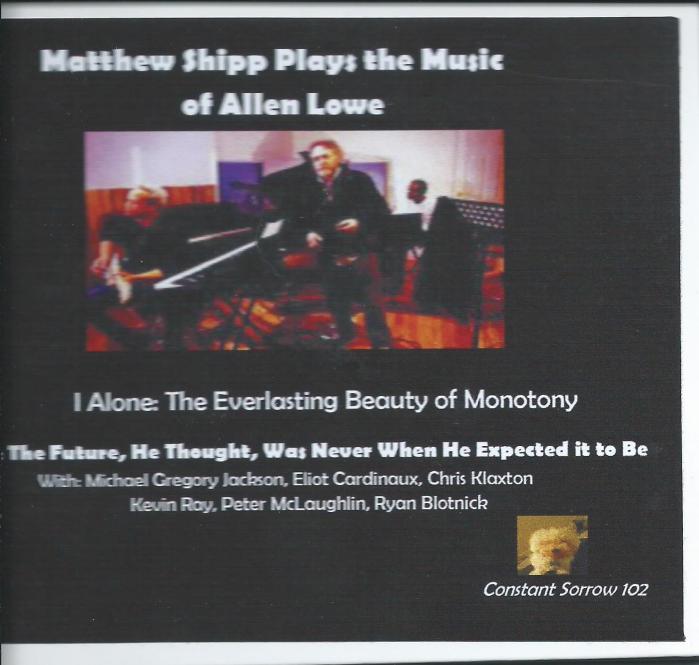
This post is dedicated to the very recent work of Allen Lowe, not only one of the most ambitious, prolific, and interesting jazz composers alive but also a talented saxophonist, an essential author for anyone wanting to deeply understand this country’s music, and a musicologist who can compile a 36-disc about the flexibility and mischievousness of the blues that, at this late date, is full of surprises, no matter how well-versed the listener is. Among musicians, only Swamp Dogg, Charles Mingus, and early Bob Dylan are his peers in piquantly and entertainingly writing one’s own liner notes. He toils away in the state of Maine, pursuing the “everlasting beauty of monotony” (Benjamin Britten) and–successfully, I would argue–pushing his work to speak in new ways about who we are. If that sounds complicated, it is, a little, but it doesn’t violate the law of diminishing returns, I assure you. He has recently released five new records that deserve praise; since, according to Roger Price’s Law, “if everyone doesn’t want it, nobody gets it,” the best way to grab ’em is to contact Allen directly at allenlowe5@gmail.com about the ones you’re interested in, or browse to http://www.allenlowe.com/for-sale/ Keep your eyes peeled for his upcoming Mary Lou Williams Suite, portions of which appear herein. Now, to the reviews, w/accompanying unscientific but deeply-felt ratings out of 10…
MATTHEW SHIPP PLAYS THE MUSIC OF ALLEN LOWE – 8.8 – Shipp, who’s made his pianistic bones in more abstract settings (notably with David S. Ware), is movingly earthbound here, often striking veins of dark, complicated romanticism that are, I think, at the heart of Lowe’s work. The composer’s alto will remind you of Dolphy’s angularity and Parker’s headlong expressionism–a pleasingly drier-toned version–and bassist Kevin Ray, who plays on most of these recordings, is a wonder: I seemed to learned more about Lowe’s writing following Ray on my third and fourth listen than from focusing on any other musician.
____________________________________________________
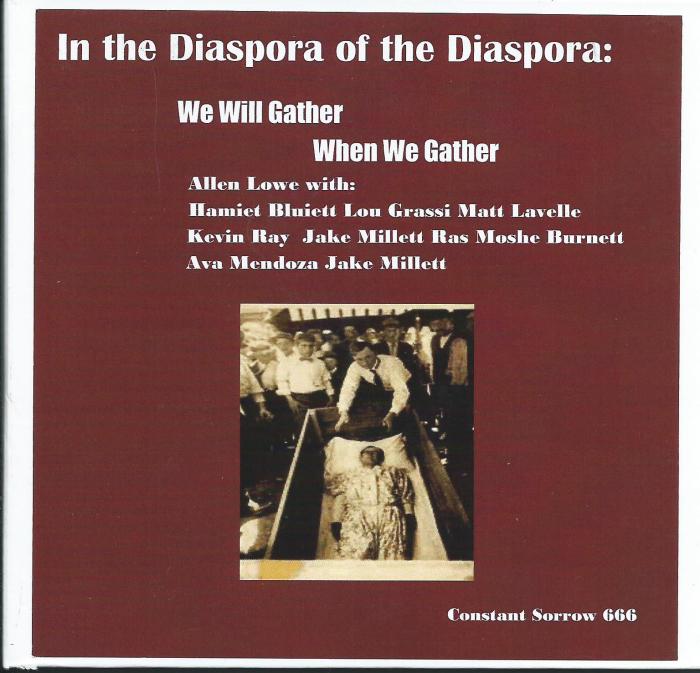
From the IN THE DIASPORA OF THE DIASPORA*series :
WE WILL GATHER WHEN WE GATHER – 10 – One of the very best jazz albums of the year, with the baritone of Master Hamiet Bluiett shooting worship and subversion through Lowe’s blues- and gospel-colored compositions. Ava Mendoza’s guitar-skronks, Matt Lavelle‘s skittery trumpet (makes me miss Don Cherry even more–and you should mos def try his Monk record!), and Jake Millet’s turntable scrubs and scratches combine with Bluiett’s inventions to do the most justice to Lowe’s vision of any in the series. Pick to click: the first serious composition–to my knowledge–to honor and mourn the murdered Charleston churchgoers, “Theme for the Nine,” maybe my favorite and definitely my most-played track so far. I wish I could share a track with the #CharlestonSyllabus project. There is a way….
MAN WITH THE GUITAR: WHERE’S ROBERT JOHNSON? – 9.3 – Electronics and turntables are frequent voices in Lowe’s work, and here DJ Logic and Millett answer the title question: Johnson’s ghost haunts the spaces in our best music, as it certainly does on this record (though you won’t hear Robert sampled, you’ll be excitingly jolted out of your contemplation by flickers of Charley Patton’s rasp). Lowe plays tenor and operates electronics on this recording along with playing alto, and Gary Bartz sounds more alive than he has in years, testifying on alto on “Slave Rebellion,” “Delta Sunset,” and “Blues Forever After.”
WHEN A CIGARETTE IS SMOKED BY TEN MEN – 9 – A showcase for an exciting young clarinetist, Zoe Christiansen, with a nod to Pee Wee Russell, a wry jab at Howard Hunt, and two joyful tracks with desolate titles.
BALLAD FOR ALBERT – 8.5 – This is essentially a trio record, with Millet’s almost-subliminal murmurings of current providing some disruptive texture. I am not sure which Albert the record’s named for (could be Ayler, but, being a longtime fan, I don’t quite hear it), but I am sure that the ballads are lovely and deep–in fact, Lowe’s ballad playing is a shining thread that runs through all five records. Special shout-out to “Maui Shuffle,” which, like many of Allen’s compositions, can make you think the record’s advanced a track if you leave the room, which I adamantly advise you not to do on these records. Hit the WC ahead of time, grab a drink, get comfortable, and lock in–you will be rewarded.
If you are looking to get more deeply into Lowe’s work, advance directly to his masterpiece, MULATTO RADIO: FIELD RECORDINGS1-4, one of my very favorite records of 2014–so good I couldn’t write about it, if that makes sense. And explore his earlier work, which, unsurprisingly–ranges across the diaspora of the diaspora.
*Allen considers all of his work as fitting under this umbrella, which refers to the diaspora cascading out from the original music of the African diaspora–where, in Lowe’s own words (words, I suspect, that have gotten him in Dutch), “tradition becomes both a means of respectful worship and a matter of subversion…”–but these four records are specifically designated as such.
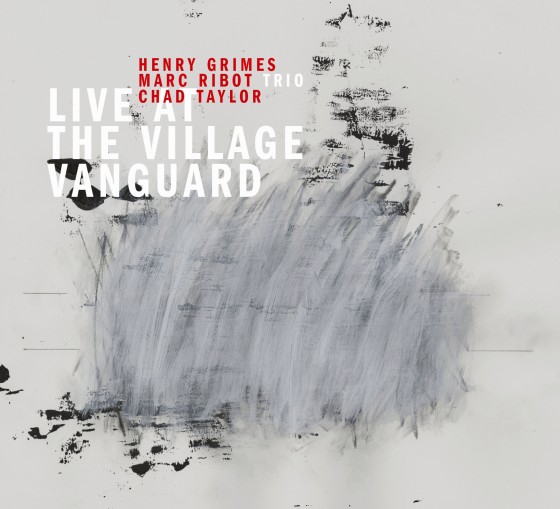
The Marc Ribot Trio: Live at the Village Vanguard (Pi Recordings)
Best known as an accompanist for The Lounge Lizards and Tom Waits, Ribot’s never put out a boring solo record. He plays guitar as if a jagged tin can and ropes of barbed wire are being employed, but, like Jimi Hendrix, he is able to control and channel his sound to produce frequently quite beautiful works. Also, Ribot’s smart and well-versed enough that he can adapt his sound to Cuban rhythm (check out his Los Cubanos Postizos records), rhythm and blues (he used to play in Solomon Burke’s band), punk (he’s the star on the recent and controversial re-recording of Richard Hell’s Destiny Street, filling the shoes and tracks of the legendary Bob Quine), pop (accompanying Marianne Faithfull), and jazz (his Albert Ayler-dedicated Spiritual Unity Trio). Being someone who believes that inventive electric guitar noise–loud electric guitar noise–is receding into our pop music’s background, I am thrilled to recommend to you two very different recent trio recordings Ribot’s made–that only Ribot could have made. Ceramic Dog is his rock project, and 2013’s Your Turn should have been in many, many critics’ year-end Top 10s. Besides offering the listener a truckload of skronky, intense six-string wailing and riffing (including the raging title cut, which sounds like a tribute to chainsaw jazz inventor Sonny Sharrock), it features the greatest lyric yet recorded about illegal downloading (“Masters of the Internet”) and one of the only songs based on materialist philosophy I have ever heard. As well, it takes Dave Brubeck’s “Take Five” five ways from Sunday, and astutely adapts a turn-of-the-twentieth-century poem by James Oppenheim to our modern use. The fact that Ribot can’t sing but only yells matters not a whit. The Vanguard trio has gone under multiple names; because it’s a) largely dedicated to Ayler recordings; and b) lured legendary avant-jazz bassist Henry Grimes (an important Ayler sideman) out of what seemed like permanent retirement, it’s often called Spiritual Unity, after one of Ayler’s greatest albums. Let’s sweep nomenclatural confusion out of the way, though, because the band’s 2012 live performance (Grimes’ first in almost 50 years) is stunning. The set list includes two relatively obscure Coltranes (“Dearly Beloved” and “Sun Ship”), two normally corny standards (“Ol’ Man River” and “I’m Confessin'”) and, of course, two Aylers (“The Wizard” and the ol’ New Thing chestnut “Bells”), and the trio digs into them with great intensity, invention, and interaction. If you haven’t heard Ribot before, but know Trane and Ayler, you might well ask, “How does a guitar deal with the huge noise of those horns?” Well, for the most part, he sidesteps the “bigness” issue and invests in ritual repetition, melody, vocal emulations, and, especially, the questing nature of those great men’s styles. The big triumph, to me, is that Ribot’s audacious decision to mount those corny standards alongside free compositions many jazz experts still wouldn’t think of allowing into the canon pays off in spades: the set sounds unified and the compositions of a piece. If you’ve never thought you’d like free jazz, you might take this one for a spin.
Haiti Direct! (Strut Records)
I know doodly-squat about Haitian music–other than that its traditions have flowed to Cuba, Puerto Rico, Jamaica, Trinidad, Mexico, and, especially, Africa, and that it’s a country where slave-chains were thrown off in a revolution and the river of freedom drunken from deeply (though in some ways the worst was yet to come). If you happen to be in a music store when this is playing, you might very well mistake it for a Congolese release, if you know your Franco and Rochereau. But, if you buy one international release this year, make it this one. Of course, the rhythms are bewitching and various and compelling–most of them are designed to bring the dancer to the point of frenzy. But the tensile guitars cut through the mix like serrated knives, the horns are played as if to wake the dead (which takes on multiple dimensions in Haiti), and the vocals, though not everpresent, range from demented screaming to–yes–meowing. If you’re a scholar, the record surveys multiple styles and is festooned with thorough notes. But if your heart, mind, ass, and feet like to move, you can save the reading for later and slap this on the turntable Saturday night once the drinks start to kick in.
Flying Burrito Brothers: The Gilded Palace of Sin (4 Men w/Beards reissue)
A good friend who I loaned this to as he was recovering from a breakup begged me, “Don’t ever give this to anyone who’s heartbroke again! It’s unbearable.” I’d been aware of that possibility before I loaned it; I’d used it myself for the same purpose, but, personally, I like to be taken to the very bottom before I start heading back up to the surface. Parson’s yearning, soulful, precisely imprecise vocals–the bane of multiple producers trying to get great records out of him during his comet-streak of a career–are at their peak here; even if you’re in a blissfully bounteous relationship, if you can listen to him sing, “He may be/Sweet and nice/But that won’t keep you warm at night/’Cause I’m the one/Who let you in/I was right beside you then….” without feeling the knife twist, you ain’t human. And the songs. The heartbreak songs are extraordinarily painful and indelible, mainly by virtue of splendid dabs of specific detail, but the others, especially “Sin City,” “Christine’s Tune,” “Wheels,” and the International Submarine Band chestnut “Do You Know How It Feels,” pull off that near-impossible trick of wedding the personal with the political, with no sign of strain or pretention. Elsewhere, Gram re-genders and tweaks “Do Right Woman,” matching Aretha (did I stutter?), and closes each side (I’m talking about vinyl here, folks) with marvelous comic relief: the draft-dodging “My Uncle,” trailing echoes of Merle Haggard, on Side A, and the droll Staples Singers/Hank Williams send-up “Hippie Boy” on Side B. The band was ace, especially Sneaky Pete Kleinow on steel, who cranks and fuzzes up his notes, the ultimate instrumental collision of city and country. This release corrects a very crappy remix foisted upon consumers by Edsel’s CD version, which quiets down Kleinow’s contribution slightly and bungles the balance–it’s one of the clearest, cleanest, richest sounding vinyl reissues of the current landslide, and that’s especially relevant since the rights to the album seem in questionable territory, and the last vinyl version I owned (A&M’s) sounded half as bright. Safe at Home (International Submarine Band), Sweetheart of the Rodeo (The Byrds), and Grievous Angel (solo) confirm Parsons’ genius. By now, most of us know he picked up country music second-hand, enjoyed trust-fund status, and treated friends, family, fellow musicians, and the ladies with imperfect consideration. But, in classic artist-as-martyr fashion, he died to capture the end of an era and birth an entire genre on this magnificent album, and I’m almost OK with that.
The Sweet Inspirations (Collectors’ Classics/Atlantic)
Familiar with this go-to group of backup singers from their subtle work on Dusty in Memphis, I stumbled across a reference to their 1967 debut album while plumbing the darkened corners a famous critic’s archives. I hadn’t known they’d recorded albums of their own, and generally backup groups’ records are a little plain. Not so this one. Led by Cissy “Whitney’s Mama” Houston, the ladies deliver a very, very effective and emotionally powerful performance in the heat of the spotlight. The tersely pain-filled opener, Darryl Carter’s “Oh! What A Fool I’ve Been,” should be a Northern Soul classic if it isn’t already; the ace cover of Pop Staples’ “Why Am I Treated So Bad?” opens them out into the real world of the Civil Rights Movement and lends the record gravitas. In between, they’re professionals-plus, especially on the already oft-recorded “Let It Be Me,” the title tune, and the knockout hillbilly-boogie cover “Blues Stay Away from Me” (you’ll never need to listen to the Delmore Brothers’ original again). They can’t quite chase the memory of Eddie Floyd on “Knock On Wood,” and they are too put-together to handle the Ikettes’ lettin’-it-loose “I’m Blue,” but with the studio aces of Memphis’ American Sound Studio shoring them up (especially Reggie Young on guitar) when they (only) occasionally flag, the Sweet Inspirations turn in what I’ll confidently call a minor masterpiece.
Serge Chaloff: Blue Serge (Capitol)
A flat-out beautiful record, one that should be among Kind of Blue, Time Out, and A Love Supreme as “starter” records offered to neophytes wanting to test the unpredictable and varied waters of jazz. The ill-starred Chaloff, a veteran of the great Woody Herman “Thundering Herd” band that also featured Stan Getz and Zoot Sims, plays his baritone with seductive lightness and ease (and a hint of bebop), the tunes, standards and newly-minted soon-to-be classics are unbeatable, and the combo is stunning, especially the fleet, inventive and equally ill-starred Sonny Clark on piano and the unflappable and star-defying Philly Joe Jones and drums. Seductive, engaging, and well-nigh perfect.
Parquet Courts: Sunbathing Animal (What’s Your Rupture?)
Almost every review of I’ve read of this band’s music leans very heavily on comparisons (no surprise there–it’s easier than thinking), but, if you’ll excuse me for being guilty of the same vice, I have been pleasantly surprised that I’ve mostly been reminded of none of the bands referenced therein. What Sunbathing Animals puts me in mind of most is The Libertines’ Up the Bracket: unpredictable explosions, careening forward momentum, drunken shifts, a healthy helping of ‘I don’t give a fuck”–all in all, a great rock and roll rush. I also appreciate that the lyrics don’t seem assembled from a magnetic poetry kit. Only things I haven’t liked is the grating outro of Side A–I love shitty noise, normally–and the ground-out of Side B. Good show, kids, and please stay in love with your guitars.
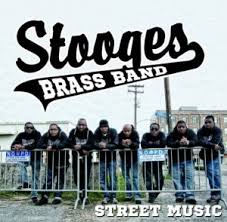
Stooges Brass Band: Street Music (Sinking City)
I like this tiny New Orleans-based vinyl-only label: its first release was the charming and historic compilation of Ricky “Shake Fa Ya Hood” B. singles, B is for Bounce, and though the Stooges’ record is only its third offering in a year in business, it’s a step in the right direction. The Crescent City is full of excellent brass bands, but The Stooges are my favorite because they seem most comfortable stepping out of the tradition. On this six-song record, they play with great exuberance, but they also deliver two powerful lyrics, the opening “Why They Had to Kill Him” and the closing “I Gotta Eat,” that deal unflinchingly and unsentimentally with the problems of 21st century poverty in the USA–a topic few musical acts in the USA go within a ten-foot pole of. Did I mention that they play with great exuberance?
I have been quiet here for a while–but I have been listening diligently, and that diligence has been quite pleasurable. To wit, three aural adventures:
“Mr. O, What’s ‘The Golden Age’ of Rap?'”
This was a question posed to me by a couple of my young Science Olympiad competitors after, as is my year-end ritual, I offered to custom-assemble an MP3 disk of music for each student on the team. Counting graduates who returned for our celebratory banquet, I knocked out 22 disks, but the one that was the most fun to put together was the one that answered that query. My definition of rap’s Golden Age is loose (1988-1994?) and arguable, and I stepped outside of it for a few selections, but I wanted them to taste some stuff that they might well have overlooked in the flood of possible Spotify/YouTube/iTunes choices, and here are my personal favorites of what I fed the kidz:
The Goats: “Typical American”
This Philly trio had one great album in them, and it’s still one of a kind. a) It’s a concept album about the traps of ’90s USA that works; b) the skits are as great as the songs; and c) it delivers an anthem–this song–that still, unfortunately, resonates.
Busta Rhymes with Old Dirty Bastard: “Woo-Hah” (Remix)
The original is just fine, but, to my ear, the remix is outta sight. One might argue that the two MCs’ styles are too close for a great team-up, but the Dirt Dog’s improvs, associations, and even-crazier-than-usual vocal stylizations mean there’s no mistaking who’s who. And ODB just steals the track.
Fu-Schnickens: “Sneakin’ Up On Ya”
Speaking of insane vocal stylizations, what the heck happened to Chip Fu, the only real reason to listen to this group? Yeah, he was fast, but that was far from all: on the Fu-Schnicks’ best tracks, he came closer than anyone to justifying the shaky claim that rap is simply verbal be-bop. That sells be-bop short, but Charlie Parker was grinning in jazz heaven when he heard Chip explode on his mind- and ear-bending verse here.
Ahmad, Ras Kass, and Saafir: “Come Widdit”
My man Alex Fleming from the Windy City tells me this trio was actually a short-lived GROUP called the Golden State Warriors; at the time, I only knew ’em from singles, and Ahmad’s killer debut. Listening to this now, it’s shocking that none of the three ever really blew up: their flows are fresh (especially Saafir’s, lingering just behind the beat), their rhymes and vocab are stunning, their personas as distinct as almost any rapper’s at the time you might want to name. This track’s from the great soundtrack of a horrible movie, Streetfighter. Lend a special ear to Ras Kass’ figurative language!
The Coup: “Dig It”
“Gunned us, gunned us/They raped us and they hung us/I’d like to take a moment to say/’Fuck Columbus!'” Thus The Coup and their mighty-mouthed MC Boots Riley ushered in their career, carried by a killer drums ‘n’ keys track that still sounds freshed. If you had bet on any of the writers featured in this list NOT to make it, you might have put your chips here, not because the skillz aren’t in play, but the confrontational style might have even scared off the hardcore. It’s a tribute to Riley’s commitment, brains, and talent that the best was yet to come, and that they are still in play almost two decades later. Note: if this track appeals to you, please read Ta-nehesi Coates’ recent related piece in The Atlantic.
Diamond D: “Best-Kept Secret”
For a moment, Diamond D was both a rising MC and an assassinatin’ producer. This track from the classic Stunts, Blunts, and Hip Hop demonstrates exactly why.
Showbiz and A.G.: “Fat Pockets”
Another shining Diamond D production moment, but the duo themselves showed every sign of stardom, and this tune was on almost every mix tape I made ’92.
Natural Resource: “Negro League Baseball”
Don’t be fooled by the video image; it’s the uploader’s way around a copyright dispute. However, the group did indeed feature a young woman, here not quite out of her teens, who’s long been my choice for “Queen of Hip Hop”: Ms. Jean Grae. Her verse is the standout, to my ears.
Heavy D and Friends: “Don’t Curse”
My all-time favorite posse cut, a hilarious idea that the gathered MCs actual pull off–barely!!!–and the best use ever of Booker T and the MGs’ classic “Hip Hug Her” outside of the original (and maybe the intro to Barfly). Heavy D, R.I.P.!
Ricky B: “Shake For Ya Hood”
The proof of the brilliance of this NOLA classic is, after a few plays, you’ll adopt it as your own anthem, no matter how pristine your own ‘hood is. And as raw as it is, it’s also innocent in its own special way (as many of the above tracks are): it’s hard to be outraged at a rap track that uses a zylophone (playing a cagey clip from The Staple Singers’ “I’ll Take You There”) for its hook, and, for once, an MC other than Chuck D really does live up to the “Black CNN” label. Ricky scans the scene, describes it in mournful detail, reveals his fear, but claims his turf anyway.
Oh, Anita!
On a recent trip to our old stomping grounds in Springfield, Missouri, my wife and I forced one of our favorite artists down the throats of two of our friends. You ever do that? I thought you had! If you see me on the street and you’re in a hurry to get somewhere, whatever you do, DON’T mention Anita O’Day, or you’ll have to drag me wherever you’re going. Graduate of the school of hard knocks, protofeminist in the manly world of jazz, fashion pioneer, author of an unapologetic memoir that earns it title (High Times, Hard Times), survivor of not only an accidental uvula-ectomy and nearly two decades of heroin abuse but also neglect during her senior years, but–most important–a vocal stylist on par with Billie, Sarah, and Ella, she’s a jazz legend and inspirational icon you’re very unlikely to know. In my mind and ear, she has no other peers. Since we’re not on the street, I’m writing, and I do have places to go, here’s my quick attempt to hook you:
From the superb jazz documentary, Jazz on a Summer’s Day:
From a Sixties appearance in Tokyo:
And the trailer for what we forced down Rex Harris’ and Heather Phipps’ throats (it went down smoothly, they would say–and they will be forcing it down others’ throats all too soon):
OK…you say you’re hooked? I knew you would be. Since YouTube so nicely offers COMPLETE ALBUMS (a development about which I am not sure), here’s my fave Anita album–bend a special ear to her album-long duel with accompanying pianist Oscar Peterson, and ask yourself what other vocalist could keep pace.
Appreciating the latter studio recordings of the Sinatra of Jazz, Sonny Rollins
If you are reading this blog, you no doubt know that Sonny Rollins, one of the last living jazz titans and surely one of three greatest tenor saxophonists ever, has just released the third in a series of live albums, called Road Shows, that document the outstanding playing of his seventh and eighth decade swinging on this mortal coil (I will plug the first as so far the most mind-blowing, but they are all excellent). Also, if you have been reading this blog since its recent inception, you no doubt know it’s mostly dedicated to keeping rekkids that might be destined to be lost in the torrent in your eye- and ear-lines. Well, if you’ve heard or are simply very interested in the Road Shows volumes, I would also encourage you to sample Rollins’ last four studio albums. The proper albums of Rollins’ post-1970 career have often been maligned as 1) too stiff; 2) too clean; 3) too boring; 4) too generous to too-pedestrian sidemen and, perhaps that’s true (Gary Giddins’ Silver City compilation argues very effectively otherwise for 1970-1990), but Sonny Rollins +3 (1995), Global Warming (1998), This Is What I Do (2000), and Sonny, Please (2006), none of which are represented on the Giddins comp, have many, many things to recommend them. Primary is–big surprise!–Rollins’ playing. Though the man’s never been shy of experimenting, and though the complexity and abstration of some of his greatest solos are pretty danged challenging, on these records he lets loose his huge, confident, sly sound on the melodies and just rides them. In a recent NPR, Sonny claimed that it’s impossible for him to think and play at the same time, but you’ll doubt that claim as he bends, twists, savors, exclaims, questions, scolds, and dances with these numbers, many of which are calypsos, which he typically blasts into the upper deck. Another underappreciated aspect of these records are the number of outstanding compositions by Rollins himself. He does have a few pieces of jazz repertory to his credit (“St. Thomas,” “Oleo,” “Doxy,” to name a few), and it seems he’s best known for his miraculous interpretations (“I’m An Old Cowhand,” “There’s No Business Like Show Business,” “Isn’t She Lovely?”), but he has given future jazzmen and jazzwomen plenty to dig their teeth into with “Biji” (from +3), “Island Lady” (from Global), “Salvador” (from This), and “Nishi” (from Please). There’s a great compilation lurking in just the originals alone. Finally, the players? I am not sure Al Foster, Jack DeJohnette, Tommy Flanagan, Idris Muhammad, and Steve Jordan strike you as pedestrian, but I guarantee you they didn’t strike Sonny that way, and, though they mostly stay out of the way and let the man blow, that isn’t all that easy to do well, really. Here’s my main pitch: if you’re familiar with the best of Sinatra’s Capitol and Reprise recordings, what you’ll be getting out of Rollins’ horn is equal to what Ol’ Blue Eyes was intoning into the mic: warm, intelligent, intimate sound, created by a brain that knows its material inside and out. I do not proffer that comparison lightly.
Poor ol’ YouTube has very few tracks from these albums up; Spotify, however will help you out. But here’s a live track of Sonny blowing on “Salvador” that, if it speaks to you, should send you on to the rekkids I’ve rekkamended above.
The huddled sandspeck of humanity who regularly visit this blog no doubt have discerned a certain propensity of the author’s for looking backwards. Always said I never would, now I seem always to be. I’ve made the “dustbins of cyberspace” argument, and I am indeed left slot-mouthed in response to “new music,” but, to be fair, one needs a little perspective (in addition to 42 years’ worth of listening to records) to evaluate art accurately. However, two new albums by established giants came through the mail slot this week, as well as one from a local hero who‘s just sailed from between Scylla and Charibdis scarred but not scared, so I cannot resist taking a shot at ’em.
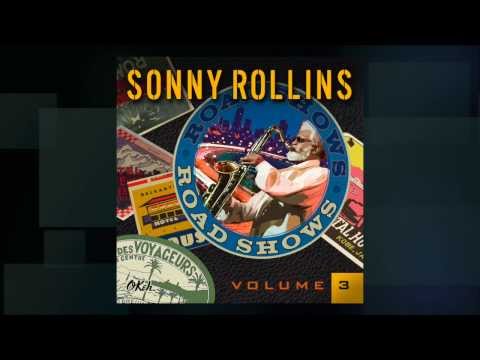
Sonny Rollins: Road Shows, Volume 3 (Doxy) For the 83-year-old Rollins, both the road and the show seem to go on powerfully forever, and together. The third volume in this highly recommended and expertly compiled series mixes three Rollins originals–he is an underrated composer–one solo flight, and two of the American-songbook chestnuts Sonny was seemingly born to explore the contours of for an approximation of an epic performance (the tracks actually date from four different appearances, 2001-2012). Though his solos may not forge and unfurl unbroken like in days of old, his tone, invention (though he claims not to think and play at the same time), sense of humor, and grace are still beyond the reach of mere mortals–aka “the living body of jazz players.” Case in point: the majestic “Why Was I Born.” As my man at The Stash Dauber, Ken Shimamoto, has eloquently suggested, there are worse predicaments on Planet Earth 2014 than having the grammar of world popsong (that is, of the HISTORY of popsong) at your disposal. Give your man props while he’s living. Don’t wait ’til the heartbeat stops.
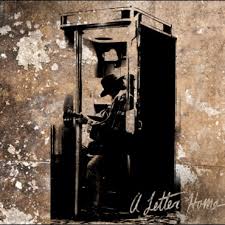
Neil Young: A Letter Home (Third Man) Honestly, I haven’t attended Uncle Neil for awhile, but that doesn’t mean I’ve given up on him. He’s always had one eye on the hands of time, so he’s a sure bet to still have plenty of artistic life in him as he ages. Which brings us to his newest release, one, conveniently, that plays with time by virtue of its recording circumstances. You can go elsewhere for the specific technical details, but Young recorded a set of very thematic O.P.s (“other people’s”) in a contraption that spits out “forest-fire” audio, complete with pops, crackles, lo-fi gauze, and unreliable pitch, that is reminiscent of both a very primitive demo and a much-abused 78 from the ’20s. It’s not a new trick–among major artists, Tom Waits has had it up his sleeve in the past–and I am not sure I like it. At first glance, I thought the song selections were chosen with inconsistent imagination, and would end up being my major complaint; after two listens, I actually like even “On the Road Again” and “My Hometown,” and the concept speaks the way the artist intended it to. It’s even moving. However, I don’t see the point in intentionally make it sound like crap (PRIMITIVE I will take in a minute–not the same thing!); maybe it’s just me, but that would seem to compromise the emotional power of the project: the deliberately “antique” production not only creates an unnecessary barrier for the intimacy of Young’s performance to penetrate, but it also raises my suspicions about Neil’s sincerity, if the record had to be thus fiddled with. And if he’s NOT being sincere–man, gimme my money back to spend on some Pono thing. I confess to being highly sensitive to the taint of Jack White’s hand in matters–he’s screwed up other projects for folks with his gimmickry (most notable past victim: Wanda Jackson) after having largely built his own reputation on gimmicks. It’s something I’d never have thought Neil Young would fall for. So…caveat emptor, if you’re going to spend your hard-earned dough. Try this, which is the highlight, to my ears:
Glen David Andrews: Redemption (Louisiana Red Hot) What would a blog post of mine be without some New Orleans flavor? Unbeknownst to outsiders, Mr. Andrews, a talented trombonist, songwriter, and singer, as well as progeny of a royal music family line, has spent the good part of the last fifteen years putting great music down in the studio, traveling the country testifying to the continued vitality of Crescent City traditions, and putting his feet in the street and squaring up to authorities as an activist for multiple local causes. Unfortunately, he did all of that while wrestling with substance abuse, which finally brought him down during the first years of this decade. Redemption is one of the most musically and emotionally powerful sobriety albums since Stevie Ray Vaughan’s In Step; Andrews himself says, “This is a record about my journey back from the living dead.” Glen is one of the finest brass band and NOLA trad jazz players alive, but the music here is brawny, funky rock and roll. This is not only an accurate projection of Andrews’ personality, but also an expression of spiritual joy buoyed by rebirth and a product of the man’s muscular support: Ivan Neville, Galactic’s Ben Ellman, and local guitar hero Anders Osborne. If you’ve never heard (of) him, time to get on board. Special guest appearance from beyond: Mahalia Jackson.








 Living To Listen