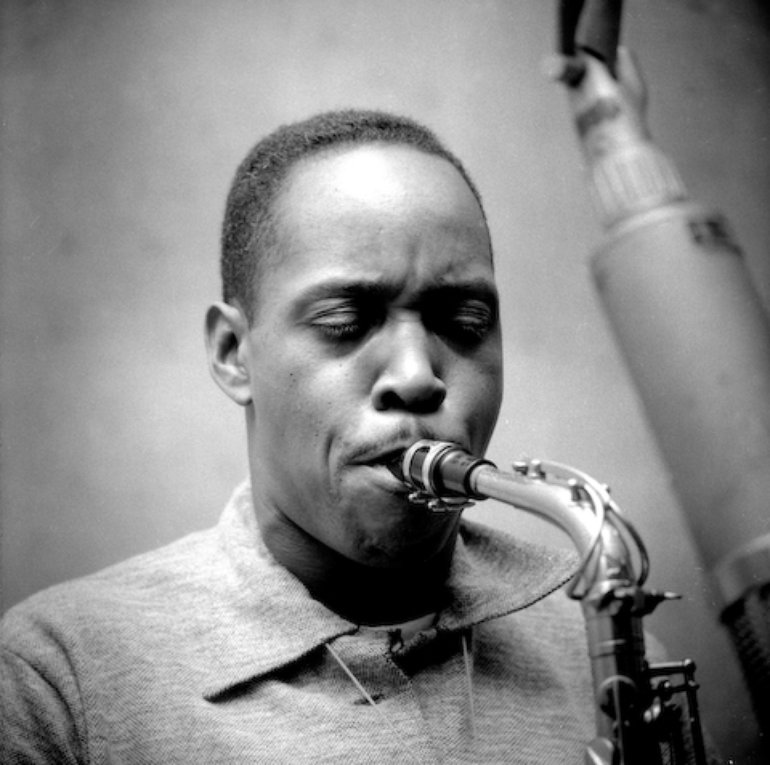
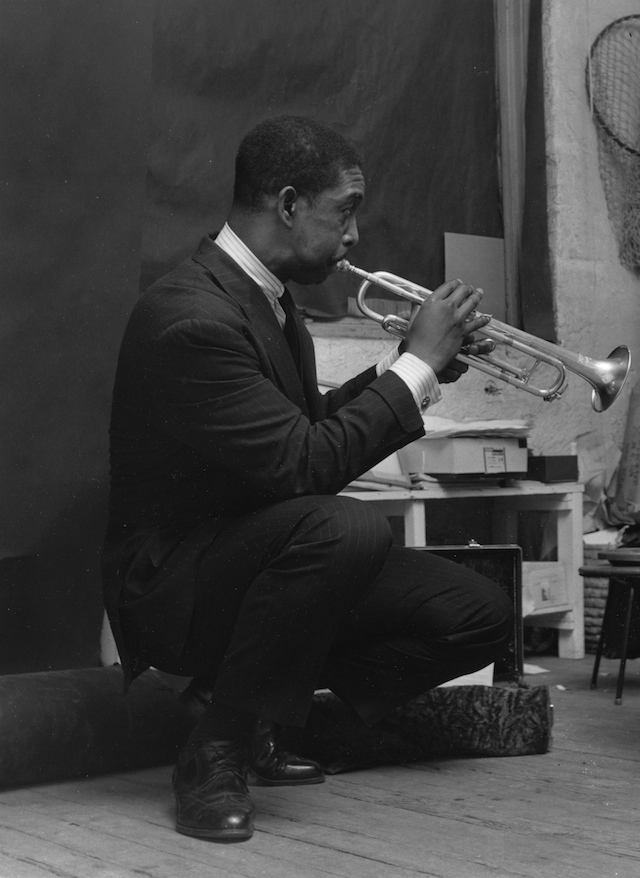
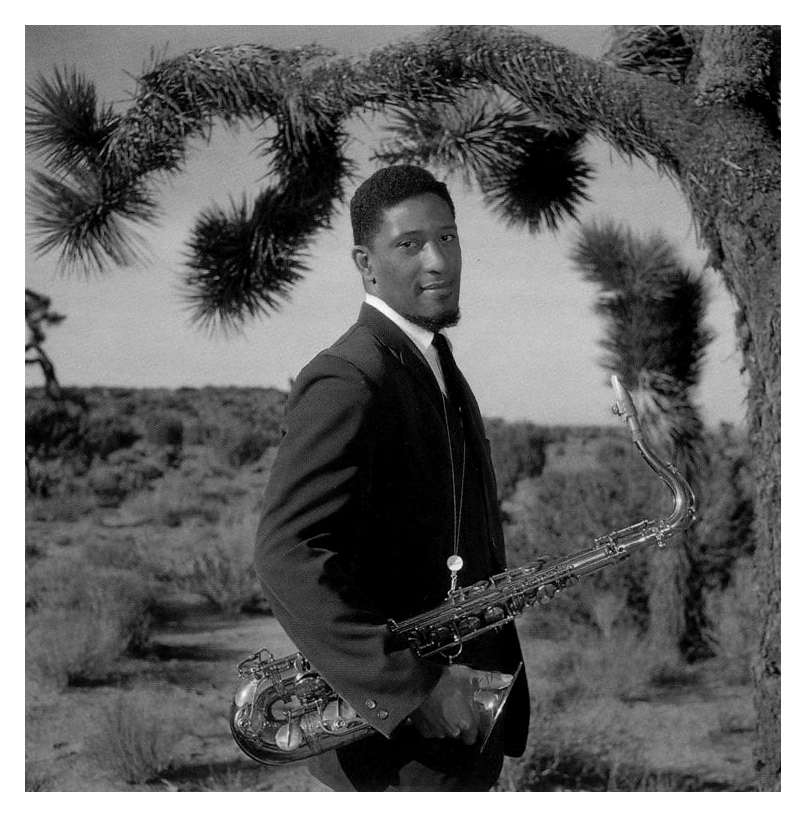
“I Will Not Stop Til They Bury Me”: A Talk with American Music Scholar, Composer, and Musician Allen Lowe

Allen Lowe is certainly one of the most prolific, deep-digging, and insightful scholars of American music ever. His groundbreaking book (and accompanying nine-CD set) American Pop: From Minstrel to Mojo on Record 1893-1956 set the standard for traveling the crooked path of songs that led to the rock and roll revolution, and the works that followed, among them Really The Blues: A Horizontal Chronicle of the Vertical Blues, 1893-1959, That Devilin’ Tune: A Jazz History 1900-1950, God Didn’t Like It: Electric Hillbillies, Singing Preachers, and the Beginning of Rock and Roll, 1950-1970, and “Turn Me Loose White Man”Or: Appropriating Culture: How to Listen to American Music 1900-1960, demonstrated that one journey up the path was not enough to get one’s head around our music (a few of those books reinforcing that belief with 36-CD sets). However, many of those who’ve read or at least heard of the those books are dimly aware, if at all, that Lowe has also been a composer and player of considerable power for nearly 35 years, often playing with some of the most forward-thinking instrumentalists in jazz and regularly navigating in notes and harmonic collaboration the same territory his books did in words. His song titles often “speak” to his scholarship; his compositions often serve as commentary on contemporary (and original) jazz. A struggle with cancer sidelined Lowe for much of the last few years, but recently he exploded back onto the scene with a three-disc set, In the Dark, Volume 1, which seems to lovingly survey, in swinging, grimily funky, and woozily emotional style delivered with a crack band, a range of large-ish group approaches to jazz composition; a single-disc set, America: The Rough Cut, on which Lowe is backed by a smaller group (plus one beauty of a piece from 2014 featuring the late trombonist Roswell Rudd) and which earns its title partly due to the unpredictable, explosive, and inventive guitar of Ray Suhy, as well as Lowe’s most fiery playing (he also plucks guitar plangently on two cuts, including his second wrestling match with Blind Willie Johnson’s “Dark Was the Night, Cold Was the Ground). As the title of one of the album’s songs implies, Lowe’s response to staring mortality in the eyes, at least by virtue of the quality of this new work, is “Eh, Death.” Lowe’s albums are available via his website and Bandcamp, and, unsurprisingly, he’s also just published a collection of his critical observations, Letter To Esperanza: Or: The Goyim Will Not Replace Me – Looking for Tenure in all the Wrong Places.

This interview was conducted through a series of emails. I have edited Mr. Lowe’s answers to my follow-up questions into the original transcript in the most logical possible fashion.

Phil Overeem: The health travails you have been battling have taken you to the wall (and fortunately not through it), and you’ve documented many of them on social media. In the notes to one of your two new releases, you mention that, somehow, those struggles have resulted in music that’s on another level from anything you’ve composed and played before. Having followed your work for quite a few years, I can hear what you’re talking about. Why, and how, do you think that happened?

Allen Lowe: Tough question – desperation, focus, fear, and the help of a lot of incredible musicians who just came to my rescue. It’s hard to know what leads to that kind of inspiration, and material reasons tend to just sound like a rationale for something you cannot explain. But even when I was unable to play I was always playing and composing, in my head. And also, I gotta admit, I was and am motivated by general frustration with the poor state of jazz composition, which led me to write these things as essentially an answer to the industry, about what I think the music can and should be.

PO:  Another social media-related question: I think it’s fair to say that you regularly engage in battle on Facebook with other music aficionados about theories of the development of American popular music. Is this something that’s helped you as a theorist yourself, do you wish you’d never gotten sucked in, or is your experience somewhere in between. I have to say, some of the conversations are as interesting as your books, and those set a high bar. In fact, it seems the job of any writer who is looking at the development of our music should be seeking to complicate rather than simplify the narrative, yet even current young writers seemingly committed to revealing the truth in fiery terms seem to steer clear of or dismiss complication.

AL: I enjoy the give and take, and I take inspiration from the high-level intellectual goals and battles of the old New York intellectuals of the 1930s on: Harold Rosenberg, Irving Howe, Richard Gilman, Theodore Solatoroff, Stanley Kauffmann, Isaac Rosenfeld, Susan Sontag, Diana Trilling, Delmore Schwartz – largely, but not solely, a group of dedicated and intellectually-heightened Jewish intellectuals whose work was probably nurtured by the in-grown alienation of American Jews in general, who were perpetually kept at arm’s length by much of the official world. I have suffered that same kind of otherness, twenty years of complete isolation in Maine, where I was treated like a freak and an outsider. As for public debate, I enjoy the give and take, though I am aware that when one opposes certain kinds of received wisdom it pisses people off, and they regularly take it personally because it questions some of their more sacredly-held opinions and beliefs. I try to avoid the personal stuff, and on my own Facebook timeline I think it stays pretty civilized. And I have to say I have met some of the smartest people I have ever known through social media interactions.

And yes, there are times I get sucked in obsessively to arguments, feel like I have to answer that Midnight comment; and there is one particular guy on Facebook who likes to remind me that I am an old white guy who everybody of color should ignore and avoid, and he does so offensively and with nasty intent. Though the great thing is that he thinks he is a person of color but, as I pointed out to him, his ethnicity is Aryan, which makes him as white as me. Sometimes Google is a good thing.

PO: Something that fascinates me, as someone who reads and listens to your work, is how your compositions (and wry song titles) speak to or from your arguments about American music. Sometimes I think I hear it clearly; sometimes I can’t find it; often, I realize I shouldn’t be expecting your compositions to do that. Are your compositions ever extensions or articulations of your viewpoint, and if so, how often? Not to make this seem like an essay question, but could you talk about a composition of yours you feel most successfully achieves that?

AL: Oh, pretty much everything I write is a form of debate and argument with somebody (sometimes myself). There is a polemical aspect to what I do musically, though at the end of the day it isn’t worth shi* if the music isn’t good, if my playing isn’t good, if it is not well recorded and smartly presented. Too much of the contemporary artistic world of all genres, in my opinion, is better at writing rationales for the work they do than at actually producing the work. Look what wins grants – all sorts of high-falutin’ intellectual presentations on worthy social goals followed by crappy work in every discipline. As I pointed out recently, by these granting standards Samuel Beckett, Charlie Parker, Bud Powell, Jean Genet and maybe even Shakespeare would not have received foundation funding for lack of the kind of social linkage that gets money. And don’t get me started on diversity – the more diverse we get, the more everyone looks and sounds alike, forced as they are to fit into acceptable socially-woke categories. Republicans love this shit, it plays into all the myths about Progressive shortcuts and stereotypes. And then there is age discrimination, which is a constant. For recent compositions: “Elvis Don’t You Weep,” “Castles in the Sand,” “Ralphie’s Theme” – all make my point about the integration of historical knowledge, historical necessity and aesthetics, about the need to face all of old American music head on. Honestly, just about everything on both projects is a point of formal and musical advocacy. Just to add, my compositions are all about triadic harmony, which I feel is the soul of jazz but is really not well understood in the context of jazz history and American standard song form. Almost no one writes anymore with a real understanding of old-line song form except, I say immodestly, for me and a few others. And I think the free-jazz world has gotten lazy and sloppy, painting itself into a musical corner. I admire the concept of open improvising and we use it a lot on those recordings, but we use it structurally and in complicated ways. I am proud of the compliment that the late jazz historian Larry Gushee paid me when hearing some of my prior recordings: “You have re-invented free jazz.”

PO: Just for clarification’s sake, I’m not too familiar with the grant-writing process for arts projects, so could you elaborate on that? And I think I’m following you on the “diversity in the arts” paradox, but could you clarify that, too?

AL: I won’t name names, but they know who they are. But seriously, anyone who has ever written a piece on Climate Change or Minstrelsy (there was one obscenely awful project on minstrelsy that got a grant a few years back, or on diversity (today’s favorite fake buzz word) ought to be removed from the practice of music. We need a Hippocratic oath for music; don’t do any harm, Every socially-linked piece and grant supporting it does irreparable harm to the music, so you can see we are in big trouble. Want an  example? Try the recent thing written by the pianist Chris Smythe called Smoke Gets in Your Eyes which is about….you guessed it – wild fires and the damage they do. Now that is very controversial – I know a lot of people support wild fires, like to set ’em, like to run through them, like to dance in circles around them as their homes burn down.

Ok, the whole diversity bullshit – I favor affirmative action, I favor reparations for African Americans. What I don’t favor is the racialist ideal which, instead of looking for balance and redress of racial grievances by seeking out quality, simply considers every artist of color to be a great artist without critical discernment. Some is good, some is crap, but they are all accepted if they meet gender standards or satisfy a desire to have everyone look different than they used to look, though ironically now they all look all the same. The arts people who most specifically call for diversity don’t really want diversity – they want to be looking into a mirror, where every artist looks like them, and any art or art form that does not conform to their expectations is excluded, often, as well, by age. I have worked too long and too hard to bow to this kind of trendiness, which tends to support forgettable creations and mediocre expression. This is not diversity, it is uniformity and conformity. It is an excuse for artistic inaction, as though by “making a statement” we have already done our job.

PO: Your saxophone playing on America: The Rough Cut and In the Dark is the most eloquent, allusive, and powerful I’ve ever heard from you. Its controlled intensity is very consistent across all four discs. This relates back to my first question in some ways, but what physical frustrations related to your condition did you have to overcome as a horn player, and in any way did the time off give you the time to make mental adjustments to your attack?

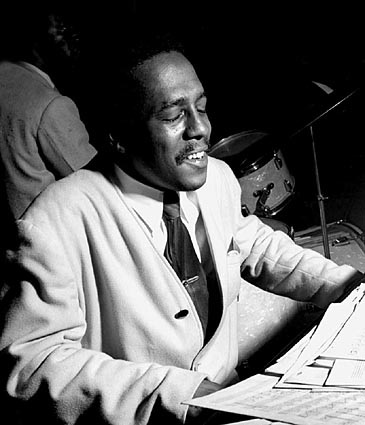
AL: Well, it took me a while to get those recorded takes right, and I confess I did some overdubbing to re-do certain solos because in some of the earlier sessions my embouchure sort of fell apart (which goes back to the 2019 high-intensity radiation which destroyed my jaw muscles and embouchure, which I had to rebuild). I am ok, thanks to a good mouthpiece and a mouthpiece maker who did a lot of amazing work on it. But it is not just that – when I retired in 2016 it was really the first time in a 40-year career I was able to focus on my playing without a difficult day job and raising kids. Things were going extremely well until I first got sick in 2019, which knocked me out of the box for about a year, but then I just said to hell with it, I am going to do this again even if it kills me. But yes, there is an emotional element of desperation in my current playing due to a fear of imminent death, though this is no longer a likelihood (I am cancer free now). But I remember Pee Wee Russell’s admonition to “play every solo like it’s your last,” and that is my working technique. Plus, learning and re-learning harmony, which is at the basis of almost everything I do, and I should mention the constant inspiration of Bud Powell, who occupies a permanent space in my head. I am not a great technician but I think I play with feeling. Add to all this that I am old and regularly a bit dizzy (see below; a post-Chemo effect). But I wrote two books and mastered 30 CDs while I was sick, and I just push on; there is nothing that makes me feel better than composing and playing. And when I play I feel like it is a great flow of consciousness. There is no better reason to do something; it has a purity and sound that cannot be matched by anything else in my life.

PO: Ray Suhy, the primary guitarist on Rough Cut, and Lewis Porter, the keyboard player on In the Dark, have long been major contributors to your music, yet remain very underrated in jazz conversation (as far as I’ve been involved in it). Both musicians are at their best on the two albums, and Porter especially does some amazing things on synthesizer (evoking Augie Meyers’ work with Doug Sahm was not something I was expecting, but should have been)—if you’re the mind and soul of the music, he seems the heart. Could you talk a bit about how they are particularly suited to your musical vision?

AL: I love those guys, personally and musically. They are also the absolute best in the world on their instruments, in my opinion (one thing I have realized while working with these musicians is that the best players now are NOT the ones who regularly appear in clubs, in polls, and in reviews). Yeah, nothing of my work would be half as good without them – but please let us also mention Rob Landis, Aaron Johnson, Brian Simontacchi, Ken Peplowski, Alex Tremblay, Lisa Parrott.

Back to the original question: both Ray and Lewis (and all I mentioned above) understand my method of composing and playing, which is a type of extended harmonic exploration in tandem with a lot of personal freedom to create improvisations at will. I don’t tell them what to play, I just give general guidance, and everything they do works better than anything I would suggest, anyway. They always surprise and delight me – Lewis does some synth things on In the Dark, which are astoundingly inventive, and Ray is a post-blues and rock and roll delight on America: the Rough Cut. I am the luckiest guy in the world to have run into all of these musicians; they saved my life in more ways than one. (And by the way I think Aaron Johnson is the greatest saxophonist alive).

PO: When you described how you ask your fellow musicians to play your compositions with you, that sounded A LOT like Mingus’ method. How could he not be an influence, but I must ask to see to what extent.

AL: Oh, I am sure, yes, Mingus, materially and subliminally. I tend to think I am too dumb musically to competently copy anyone else but myself. Duke Ellington has a way of writing – like it’s one long sentence – which I love, and he is a combination of conventional and quirky, and his voicings are just beyond profound; Monk of course, and Bud Powell is one of the greatest jazz composers, and when I play or compose I hear him in my head. As a composer I am torn between classic triads and extended form, integrating various kinds of improvisation into the form. My biggest difficulty is that I so rarely work, which makes it harder to get a band to perform in an organized way, but these players are so brilliant that they make it sound like that.

PO: I recently read an anthology of Stanley Crouch’s uncollected work—I am among the few music junkies I know who liked the first (and sadly the last) volume of his Parker biography, and I do not admire his vitriol (it dishonors his mind) and forcefully reject his seeming condemnation of what I’ll call “free innovation”—and frequently found parallels in his best moments with contentions I’ve heard you make. You may have addressed this in one of your books I haven’t gotten to yet—and possibly in one of your social media scrums—but where do you stand on Crouch, Murray, and Ellison (not that I mean to conflate their viewpoints into one)?

AL: I admire all of them intellectually (well, I gotta say I don’t find Murray to be that great, which is a very unpopular opinion), and I particularly love Ellison, the one novel and his essays, but really all of them fail when it comes to the entire concept, philosophy, and range of “modernism.” I define modernism, per Richard Gilman and Alain Robbe Grillet, as the need to constantly renew art forms, to reject old gestures and forms in favor of either new gestures and forms; or to alter those gestures and forms into fresh and radically new approaches. Their kind of cultural conservatism – and Murray is the most conservative, followed closely by Crouch and then Ellison – is death to music and jazz in particular. Now some people today think I am too culturally conservative because of my disagreements with the latter-day school of Free Jazz, but I am not. I am just bored, bored with Free Jazz’s self-referential postures, its repeat of the same-old-same-old ways of improvising, the laziness of just getting up and faking it – it is just too damned easy to play that way. I was able to do it when I was a teenager, but I moved away from it because I knew it was too easy (and there is an interview with the great saxophonist Archie Shepp in which he talks about his health problems and how at one point he was playing poorly but people could not tell the difference “because this is Free Jazz.” Yes, he really said that). I am in favor of complete artistic freedom, but that does not mean we can’t make personal artistic judgements. But Albert Murray thought the 1950s Basie band was too radical, and he put down Genet and all of modern expression in a really dumbass way (in his book The Omni Americans) and, honestly, I am tired of his views on The Blues. I love the blues, have written a book on it, but it has become a One-Size-Fits-All aesthetic crutch to describe or criticize too broad a range of music.

And I have to admit I still look to the first and second generation of post-bop modernists – Sonny Rollins, John Coltrane, Paul Bley, Ornette Coleman, Shipp, Eric Dolphy, Sonny Simmons, Gil Evans, Johnny Carisi – for inspiration. I feel like we have not adequately explored the implications and possibilities of their music but at least I have tried, unlike most of my contemporaries – because, really, it takes too much time for most jazz musicians, who just want to play and who lose perspective on the art form itself.

PO: I had a feeling your feelings about the current state of free jazz would come up (“painted itself into a corner”) made think of the limitations of the solely impressionistic approach of many current free players). I have listened to quite a bit of it over the years, and I’m probably a bit more tolerant than you, but mostly agree that SOME form—some composition, even if only in fragments that would probably have to be discussed by the musicians beforehand—has to be present for me to really enjoy it. I haven’t heard too many performances that have “become” compositions as they were played, though I know, just for example, that Ellington and Strayhorn were adept at hearing phrases played by Ellington’s soloists in one composition and later turning them into a wholly different one. Are there other players you know of and listen to today–excluding yourself, because I agree with that wonderful compliment you were given–that ARE composing satisfactorily (to your ears) while allowing a considerable amount of freedom?

AL: Probably: is Anthony Davis still active? Threadgill is great, Roscoe Mitchell when he really writes it out. But I have to admit I tend to turn to the oldies – Speckled Red, Cow Cow Davenport, Clarence Lofton. Their ways of playing inspire me compositionally. The way old insane gospel tunes are performed as in a state of delirium – that inspires me as a composer. I love that kind of anarchy – and I love the way Albert Ayler composed and performed.

PO: Thinking back to that Archie Shepp anecdote, as much as you’ve covered most of the history of American music in your books, you must know of some stories (whether about individual players, bands, periods, etc.) that need to be told in book form. Are there any you hope to write, or hope someone else will write?

AL: I have to say that I am basically done – with this last book, being tired (and retired) in general. I am feeling much better, but I don’t think I will ever really be back to where I was before the cancer. Books take too much energy, and Turn Me Loose White Man feels like my intellectual eulogy. As for others – I don’t know. I find most music books to drone on and on. I still turn back to the old favorites – Francis Davis, Dan Morgenstern, Max Harrison. And for criticism on other fronts, Richard Gilman (who has effected me more profoundly than anyone else), Stanley Kauffman, and Susan Sontag. From now on, my energies will go into the saxophone,composition, performing, and recording.

PO:  Truly, very few music academics of your stature have created even a fraction of the quality music you have—I can barely think of any (Porter, for sure, in his Coltrane book and on-line presence; Crouch—but did he even play enough to prove himself; have you heard Ishmael Reed’s new piano record?) who have played, period. With that in mind, how would you like to be considered, 25-30 years down the line? I don’t mean to bring mortality up at a point where you probably haven’t been thinking about it as much, but there’s nothing like a legacy of writing and recorded music to establish a kind of immortality.

AL: Yeah, I have not heard a lot of academics who impress me musically, though there are probably a lot I haven’t heard at all, and I do think things are improving on that end. I mean, people like Gerald Cleaver are now teaching, and there are more like him. And, of course, Lewis Porter is not only a brilliant historian but my favorite pianist.

I do think about legacy, but in a very concrete way; I honestly tend to think that when I am dead my followers will fold their tents and leave and forget about me. One book described me years ago as having a “cult” following, and I wish this were true, as I would like to experience that kind of slavish and uncritical dedication from people who would wash my feet and serve me grapes if I ask. I actually have more of a following for my book and history projects, I think, which is fine; I actually made a decent amount of cash on Turn Me Loose White Man.

PO: Once in the past, I spoke with you on the phone about the prospects of bringing you to mid-Missouri to speak and/or play as part of a music series here. This is certainly related to a couple of my previous questions, but have you received offers for combined playing and speaking appearances? I would think you’d be irresistible, and you’d be hard to cancel because you’re…complicated. Is that something you’d be interested in doing in the first place?

AL: I would love to do that but have only done it maybe once (a friend of mine hired me); I can print you out a collection of my unanswered emails. Put end to end, they would probably reach from here to the farthest university Jazz Studies program. I may try it again, but I am a bit exhausted these days from constant rejection.

PO: On America: The Rough Cut and In the Dark, I think I am hearing different stylistic allusions from song to song to other horn players. Who are the players who have most influenced your own style? And…whose music in particular helped you through your health struggles? I know you suffered long periods of insomnia; reading about them, I imagined music in the background keeping you company. As well, and if my recollection is right, reading was sometimes complicated if not impossible for you. Were there books that helped you endure?

AL: Oh, that’s a complicated one. Players: Coleman Hawkins, Sonny Rollins, Bird, Dave Schildkraut, Eric Dolphy, Pete Brown, Louis Armstrong, Jabbo Smith, Bud Powell, Bud Powell, Bud Powell –James P. Johnson, Donald Lambert, Aaron Johnson (soloing after he plays is like getting into a barrel to cross Niagara Falls); Wardell Gray, Al Haig – well the list could go on. But truthfully I am a bit of an idiot savant of improvising, I don’t really imitate anyone else because I can’t. I actually did not listen to a lot of music when I was so damned sick, except in my head. I am addicted to 1920s COGIC gospel, which is incredible, insane music; and really early jazz, pre- 1930; those six months I stayed awake I was too delirious to focus, so instead I wandered in circles in the dark and ate a lot of food (gained twenty pounds, which I have since lost). But I heard it, as I said, in my head. I love and am inspired by what are called Songsters, black singers of the old, old days who did not sing the blues but instead sang folk-type ditties, minstrel tunes, and other oddities. That old music is so old it’s new, and the old screaming gospel is where I got a lot of my ideas for America: The Rough Cut; it is blues and pre-blues and parallel to blues, but the damn blues, as I said above, has become a crutch for critics who don’t know anything else. I also love white hillbilly music, like Harmonica Frank and Doc Walsh, the rougher the better. I put a lot of that into Turn Me Loose White Man. But the racially-altering gospel music is the free-est music I know, technically and emotionally, and where I (at least subliminally) developed my ideas on “free” improvisation, which is really a form of emotional liberation put in check by the constant fear – or chill, as Mingus said – of death and hell. Book-wise – I still can only read on my Kindle, as my eyes are still troubled. I like books on the Mafia, but more personal are stories by Bruno Schulz, criticism by Richard Gilman and Stanley Kauffman, poems and prose by Pessoa, Vachel Lindsay. My eyes still hurt, and it’s a struggle. Not much of this was a true comfort, but reading Richard Gilman, who was the smartest guy I ever knew (I studied with him briefly) makes me feel, if only temporarily, that all is right with the world. For a few hours I stop worrying that my cancer will come back and kill me like some kind of stealth-music critic.

PO: I enjoy your sense of humor (in the song titles and in your writing) and feel like I hear it not only in your playing but sometimes in the structure and mode of your compositions. Am I imagining things?

AL: My wife thinks I have the sense of humor of a 12-year-old, though maybe a very mature 12- year-old. You are hearing correctly; I try to take things lightly. What else can I do? When I was certain I was going to die imminently I figured I had better prepare for what seemed like the inevitable, and so I just started to contemplate it all and try to accommodate the certainty of losing consciousness permanently; I got nowhere. I had nothing. I thought nothing, I felt nothing but more fear and uncertainty, so I just gave it up. Better to watch Marx Brothers movies and think of bad-taste things to write. There’s a Mary Lou Williams tune called “Little Joe From Chicago,” so I wrote one called “Little Jew From Connecticut.”

As for humor in my horn, I don’t know. It probably seeps in, though not in any larger-picture sense, at least that I am aware of, but I do like to think that my lack of maturity bleeds through in places.

PO: I cannot imagine you without a project in the offing, though after releasing four discs of music and a kind of memoir, you may be resting. However…are you already working on something new?

AL: Yeah, I got a bunch of stuff in the works. Depends on my health and energy level. I am still feeling post-Chemo effects, and they wear me down. I go through periods like recently when I have little appetite (and I still have that Chemo-metallic taste in my mouth on occasion, and have neuropathic dizziness; don’t believe what they tell you about Chemo leaving your body after 30 days. I am two years on from my last chemo – I had it twice – and it is still in my body and in my head – though it was the radiation that almost killed me, but that’s a whole other story which has led to about 6 surgeries in the last year to reconstruct the damage done to my face).

But back to the question, yes, I have to keep recording. I will not stop until they bury me. I am a bit fed up with jazz’s official complacency, the bad composing, the Free Jazz b.s., and I feel I have to take an aesthetic stand. I feel like I am the only one who does what I do, for better or worse. Right now I want to to do a session that is “about” Bud Powell, another “about” Julius Hemphill. Not tributes, but “inspired by.”

PO: No one has covered the growth of American music, song-by-song, genre-by-genre, decade-by-decade, as you have. What I am very fascinated to learn are the artists who have most moved and intrigued you SINCE, oh, say, 1977, and especially RIGHT NOW. Does your work keep you from getting to more recent developments?

AL: I am hopelessly out of date, but I find the really old music to be more inspired and inspiring than most of the new, in all genres. I prefer the old ways of recording, the old sonic clashes of instruments, the old analog feel of expression (which digital can recapture if you have the will to do it). It is a little bizarre that I cannot name much music after 1970; I almost always go back and further back, to early black music, early white music, jazz of the 1950s, bebop, country and hillbilly music; these are sounds that soothe my soul.

PO: You mentioned raising kids. What are they listening to? Do you talk to them about music, and have you talked them into learning to play? Also, what’s your wife’s taste in music like?

AL: My kids are pop music fans, no jazz really. My wife likes jazz, particularly singers. She tends to think my current work is a little too far out.

PO: This probably qualifies as a nag, since I kind of already asked this in a way, but what’s the most recent record you’ve listened to that you really enjoyed? I remember popping into a social media thread of yours and recommending Ricky Ford’s The Wailing Sounds of Ricky Ford—Paul’s Scene, which I hope you sampled (not that I’m hoping that’s the answer to the question).

AL: I listen to so little current music, except in snippets on bandcamp and youtube. Very little holds my interest; there’s Randy Sandke’s Inside Out, which I love, Jeppe Zeeperg, a Danish pianist who is brilliant. Anything with Lewis Porter and Ray Suhy and Aaron Johnson.

PO: On that note, let’s end on a “historical dig” question—there’s no one better to ask it of. Are you aware of the guitarist, historian and author of a new Merle Travis bio, Deke Dickerson? He wrote some Bear Family liners awhile back. In the new Travis bio, diving into Travis’ influences and touching on Ike Everly and Arnold Schultz, Deke posits one Kennedy Jones as the first thumb-picking guitarist in Muehlenberg County (as opposed to Schultz) and thus an overlooked influence on Travis and many others. Deke mentions that the only known recording Jones made was on King with Texas Ruby and Curly Fox. Thoughts on this?

AL:Is he playing the electric or the acoustic? [PO’s note: According to Dickerson, he’s the one who’s plugged in.] The electric is very interesting, in that kind of playing I always think the lineage is Blind Blake, Ike Everly, Merle Travis and – damn, what’s the name of the other guy? He never made any formal recordings, there’s a bio of him – Mose Rager (there are some clips on youtube, or used to be)! That kind of guitar playing is fascinating to me, it feeds into one side of the rock and roll equation, Elvis and Scotty Moore – as opposed to the more shrill, single line approach of James Burton, Roy Buchanan, etc. A lot of people don’t seem to be able to hear this, especially the Blind Blake origins, but to me it is obvious.

PO: Allen, I know you’ve got projects to attend to, so thank you so much for your time, writing, music, effusiveness, humor—and physical indomitability!

AL: I think I am pretty domitable (as opposed to indomitable). The thing about hitting a certain age, especially when it has been preceded by all the physical problems I have had, is that you have a feeling you are just treading water while your body prepares to self-destruct. I try to imagine the moment at which life finally slips away, and though I’ve got some idea of how it will feel – I’ve been put under 15 times in the last four years  –  I refuse to believe it is going to happen; sometimes delusional thinking is the best defense -so I carry on, as though there are no lasting consequences to the passage of time.

COOL WITH THIS!: Strongest Records of 2021 So Far, By My Lights

Observations:

*The great American music scholar, musician, and composer Allen Lowe, in league with his razor-sharp jazz unit East Axis, knocked out one of his best recordings ever, Cool With That, in the fall of 2020. Ill health proceeded to fall upon him, and though he appears to have survived it, more struggles lay ahead. This is the best free jazz disc yet released in ’21–pay Lowe back and check it out.

*Speaking of jazz players, composers, and freedom, William Parker’s career output is a challenge to explore fully, but do not miss his new release, Mayan Space Station, which features the exciting guitarist Ava Mendoza. Parker’s made a wide variety of records, but never one with six-string this cutting.

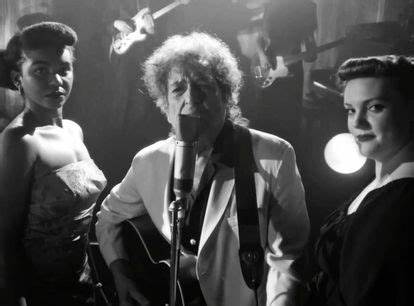
*Inexplicably–well, I have been under a lot of stress for many months, and thus distracted–I dropped the ball on Bob Dylan’s there-and-gone film Shadow Kingdom: The Early Songs of Bob Dylan (early–the old fucker’s still got a hell of a sense of humor). I missed it, flat out. Also, instead of simply admiring the indefatigable energy of my longtime lamplight, I occasionally suspect him of, um, gambits; I’m not sure what exactly that means, but maybe “hustle” is a better word. My own gambit not to get my knickers in a twist over the production, however, proved stupid at least from the aural evidence. This morning I was able to access the commercially unavailable soundtrack (cheating, I list it below), and it kicks mountains of ass. Getting sidelined from constant touring’s cleared out his larynx, but more importantly, via neat new arrangements, subtly altered lyrics, and a lot of vim, he made several of his “old” tunes completely fresh–in fact, “To Be Alone With You” and “The Wicked Messenger” (at least) top the originals, and from his current mortal vantage point, “Forever Young” is forever young. BluRay, please?

*My wife Nicole and I helped crowdfund the Smithsonian’s rap project back in 2014, via Kickstarter. The nine-disc box finally arrived in stores this week; it was also our donors’ gift. Even though the tracks stop at 2014, it’s excellently selected and sequenced, it sounds incredible, the accompanying book and vintage photographs are stunning, and…well…it was about damn time. Among the minor quibbles: no DOOM.

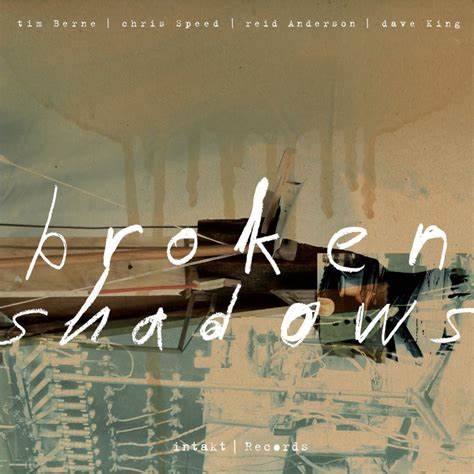
*Alto saxophonist Tim Berne’s intense new tribute to Ornette Coleman’s work is the THIRD of the year to make the list, and they’re all so good it makes you miss Ornette even more deeply. PLEASE sample Miguel Zenon’s and Gimenez Lopez’s as well.

*I don’t know any one in person or in cyberspace who loves the British rapper Dave as much as I do. I suppose hardcore hip hop heads might malign his rhyming and flowing skills, or sniff at his beats, but he is the kind of storyteller we need right now, and from the beginning of his last record to the end of his new one I’ve never been bored. In a way, Florence Shaw of the band Dry Cleaning is his narrative sibling; she mostly talks, but it’s what she talks about, and the settings that surround the stories, that count.

*The Lake of the Ozarks, Missouri–COVID Central once already, and probably heading that way again right now. But HEY–if you’re starving for lounge rockabilly with an edge, slide on over to Sundazed Records and check out their latest excavation: the J Ann C Trio Live at Tan-Tar-A (the site of many Missouri public education retreats and worse). Fans of Wanda Jackson and The Skeletons/Morells should NOT miss it.

*I feel like I may have underrated Low Cut Connie’s “Quarantine Concert” covers comp on this list. They’re a group I admire more than I listen to, BUT…this record can open up your waterworks. Adam Weiner is indeed among the last of our eighty-eight-key rock and rollers, and he puts EVERYTHING into these performances. You can feel it in the choices, in his playing, and particularly in the singing–plus? The tough cookies he was referring to were–are, goddam it, we have to be all over again–us.

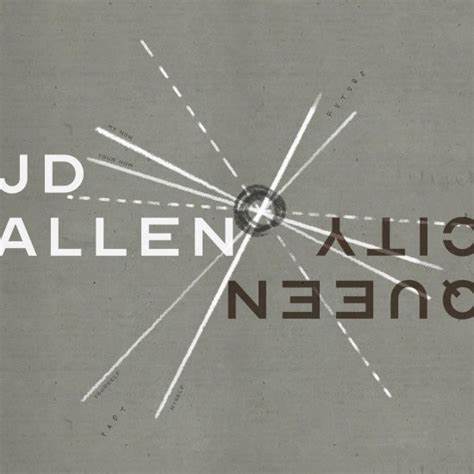
*The pandemic slowed most musicians, but some, like tenor saxophonist extraordinaire JD Allen, took the bull by the horns and just recorded alone. Allen’s record of solo performances is searing.

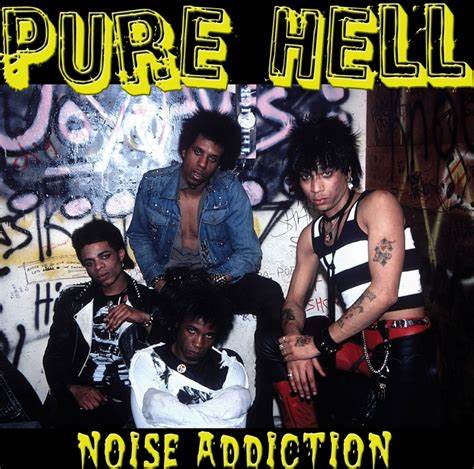
*If you’re reading this, you certainly know Bad Brains. Likely, you know Death (well, we all do, but I’m talking about the band). Probably, you don’t know Pure Hell (at least you don’t know the band by that name). Yep: there were at least THREE punk bands of color in the ’70s.

*I want to thank the longtime record gobbler and music sage Tom Hull for regularly linking me on his absolutely essential blog. He is a giant when it comes to keeping fanatics informed about the best of the wide range of music humans make, and he is quite a sharp political mind and cook as well. I am truly humbled he occasionally checks this spot out, and it’s perhaps out of embarrassment that I’ve started commenting more as well as thinking about and slapping down a damned list. Anyone can do that. (I DO listen to them all, though–just sayin’….LOL….)

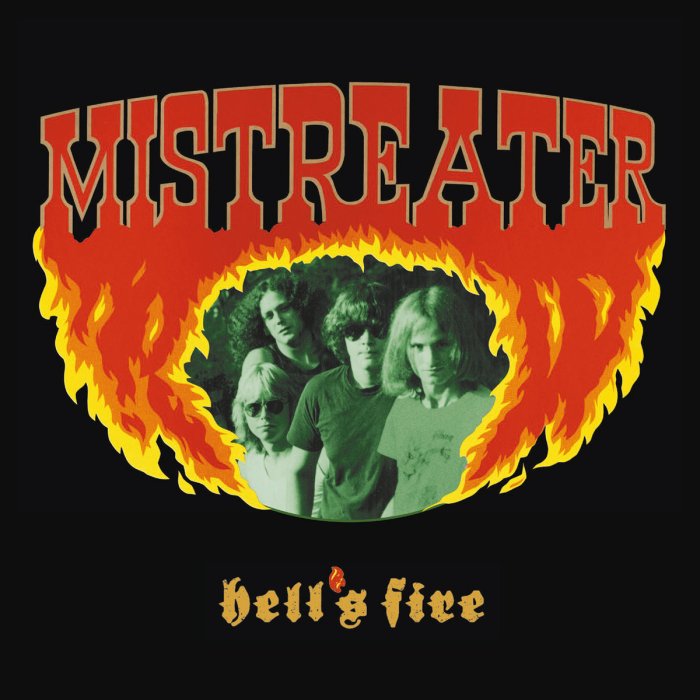
*I totally love what Sweden’s Jobcentre Rejects label has been up to lately: digging up spunky but obscure Rust Belt metal from the early Eighties. Mistreater’s album is on the main list, and Axxe’s killer 45 is down on my teensie singles listing below. Thing is, there was no pomp in these bands; they existed solely to head-bang and lay down the bad-ass sound–the bad-ass non-technophilic sound, I should say.

BOLDED ITEMS are new to the list. #s indicate archival music.

  1. Mdou Moctar: Afrique Victim 
  1. JuJu: Live at 131 Prince Street #
  1. Julius Hemphill: The Boyé Multinational Crusade for Harmony  
  1. James Brandon Lewis: Jesup Wagon 
  1. East Axis: Cool With That 
  1. William Parker: Mayan Space Station 
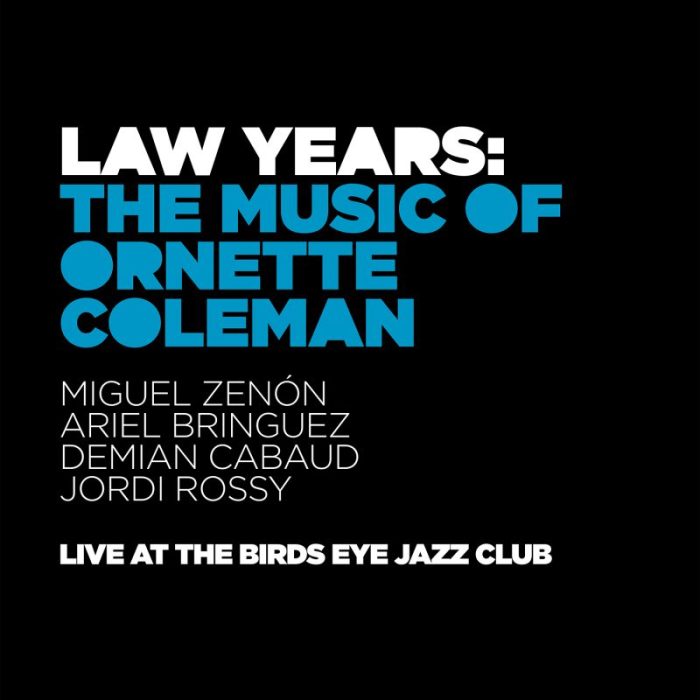
  1. Miguel Zenon: Law Years—The Music of Ornette Coleman 
  1. Various Artists: The Smithsonian Anthology of Rap and Hip Hop #
  1. Khaira Arby: Khaira Arby in New York # 
  1. Tim Berne: Broken Shadows 
  1. Bob Dylan: Soundtrack to the film Shadow Kingdom 
  1. Plastic People of The Universe: Apokalyptickej pták  #
  1. Fire in Little Africa: Fire in Little Africa 
  1. Neil Young and Crazy Horse: Down in the Rust Bucket # 
  1. R.A.P. Ferreira: Bob’s Son  
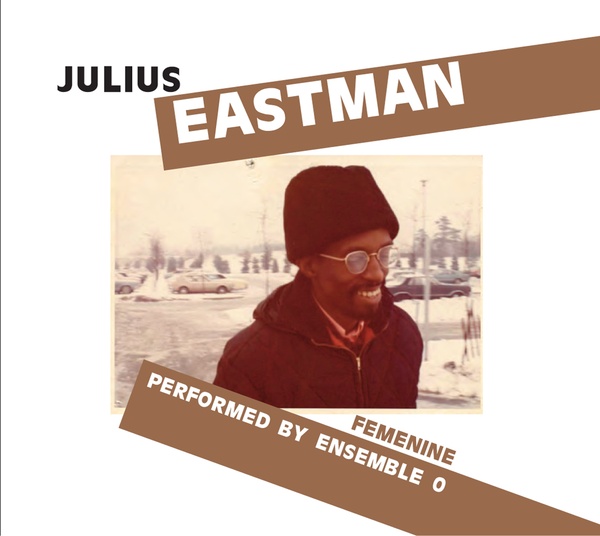
  1. AUM Grand Ensemble x Ensemble 0: Performs Julius Eastman’s Femenine 
  1. Screamers: Demo Hollywood 1977 # 
  1. No-No Boy: 1975 
  1. Robert Finley: Sharecropper’s Son 
  1. Gimenez Lopez: Reunion en la granja 
  1. Penelope Scott: Public Void  
  1. Paris: Safe Space Invader 
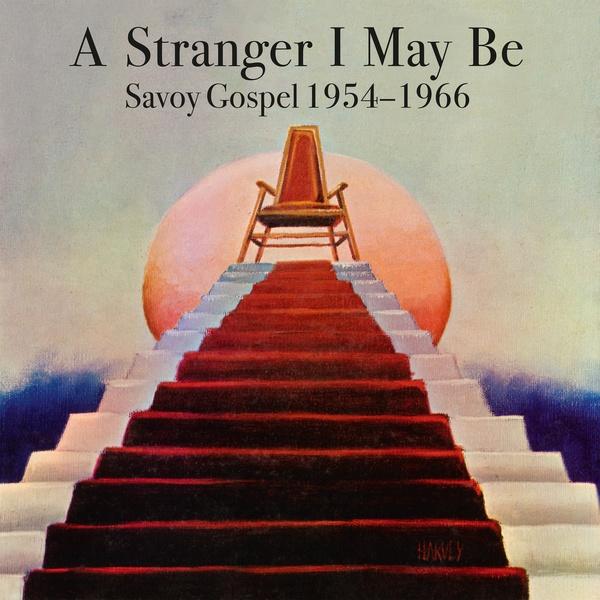
  1. Various Artists: A Stranger I May Be—Savoy Gospel 1954-1966 # 
  1. Dave: We’re All Alone in This Together 
  1. Can: Live in Stuttgart 1975 # 
  1. Hamiet Blueitt: Bearer of the Holy Flame # 
  1. Byard Lancaster: My Pure Joy # 
  1. Ashnikko: Demidevil  
  1. Dax Pierson: Nerve Bumps (A Queer Divine Satisfaction) 
  1. L’Rain: Fatigue 
  1. Chrissie Hynde: Standing in the Doorway—Chrissie Hynde Sings Bob Dylan 
  1. Charles Mingus: Mingus at Carnegie Hall # 
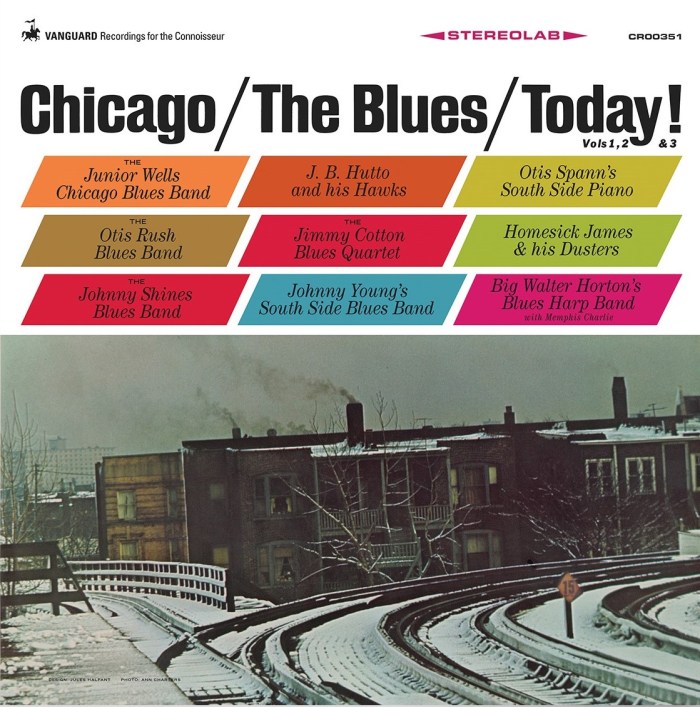
  1. Various Artists: Chicago / The Blues / Today, Volumes 1-3 # 
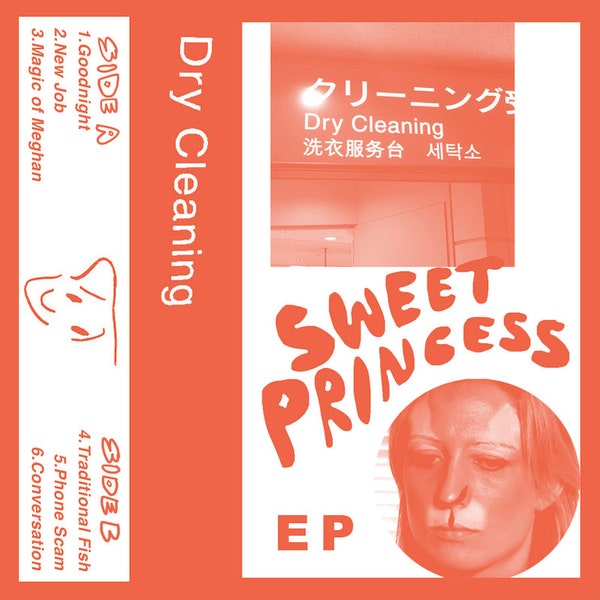
  1. Dry Cleaning: Sweet Princess (EP) 
  1. Sons of Kemet: Black to the Future 
  1. Graham Haynes vs. Submerged: Echolocation 
  1. Dawn Richard: Second Line  
  1. Jupiter and Okwess: Na Kozonga 
  1. The Goon Sax: Mirror II 
  1. The J Ann C Trio: At Tan-Tar-A #
  1. Brockhampton: Roadrunner—New Light, New Machine 
  1. Ches Smith and We All Break: Path of Seven Colors 
  1. Hasaan Ibn Ali: Metaphysics—The Lost Atlantic Album # 
  1. Amythyst Kiah: Wary + Strange 
  1. Genesis Owusu: Smiling with No Teeth 
  1. Marianne Faithfull (with Warren Ellis): She Walks in Beauty 
  1. Low-Cut Connie: Tough Cookies 
  1. Jaubi: Nafs at Peace (featuring Latamik and Tenderlonious) 
  1. Barry Altschul’s 3Dom Factor: Long Tall Sunshine 
  1. Czarface & MF DOOM: Super What? 
  1. BaianaSystem: OXEAXEEXU 
  1. SAULT: Nine 
  1. McKinley Dixon: For My Mama and Anyone Who Look Like Her 
  1. Vincent Herring: Preaching to the Choir 
  1. Lukah: When the Black Hand Touches You 
  1. Maria Muldaur & Tuba Skinny: Let’s Get Happy Together 
  1. Angelique Kidjo: Mother Nature 
  1. ICP Orchestra & Nieuw Amsterdams Peil: 062 / De Hondemepper 
  1. Body Metta: The Work is Slow 
  1. Damon Locks / Black Monument Ensemble: NOW 
  1. Loretta Lynn: Still Woman Enough 
  1. Anthony Joseph: The Rich are Only Defeated When Running for Their Lives 
  1. Jason Moran & Milford Graves: Live at Big Ears 
  1. Alice Coltrane: Kirtan–Turiya Sings #
  1. Mistreater: Hell’s Fire 
  1. Blue Gene Tyranny: Degrees of Freedom Found # 
  1. JD Allen: Queen City 
  1. Various Artists: He’s Bad!—11 Bands Decimate the Beat of Bo Diddley  
  1. Various Artists: Wallahi Le Zein! 
  1. Various Artists: Indaba Is 
  1. Wau Wau Collectif: Yaral Sa Doom 
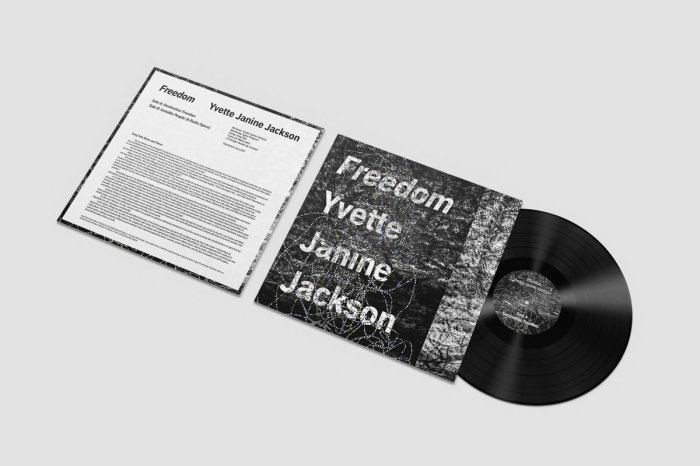
  1. Yvette Janine Jackson: Freedom 
  1. Various Artists: Alan Lomax’s American Patchwork # 
  1. Peter Stampfel: Peter Stampfel’s 20th Century in 100 Songs 
  1. Backxwash: I Lie Here with My Rings and Dresses 
  1. Pure Hell: Noise Addiction #
  1. Various Artists: Doomed & Stoned in Scotland 
  1. Jazmine Sullivan: Heaux Tales 
  1. Burnt Sugar The Arkestra Chamber: 20th Anniversary Mixtapes / Groiddest Schizznits, Volumes 1-3
  1. Various Artists: Allen Ginsberg’s The Fall of America–A 50th Anniversary Musical Tribute 
  1. Les Filles de Illighadad: At Pioneer Works 
  1. Billy Nomates: Emergency Telephone (EP) 
  1. Gyedu-Blay Ambolley: 11th Street, Sekondi 
  1. Various Artists: Rare.wavs, Volume 1 #
  1. Dry Cleaning: New Long Leg 
  1. Nermin Niazi: Disco Se Aagay # 
  1. Madlib: Sound Ancestors 
  1. Joe Strummer: Assembly # 
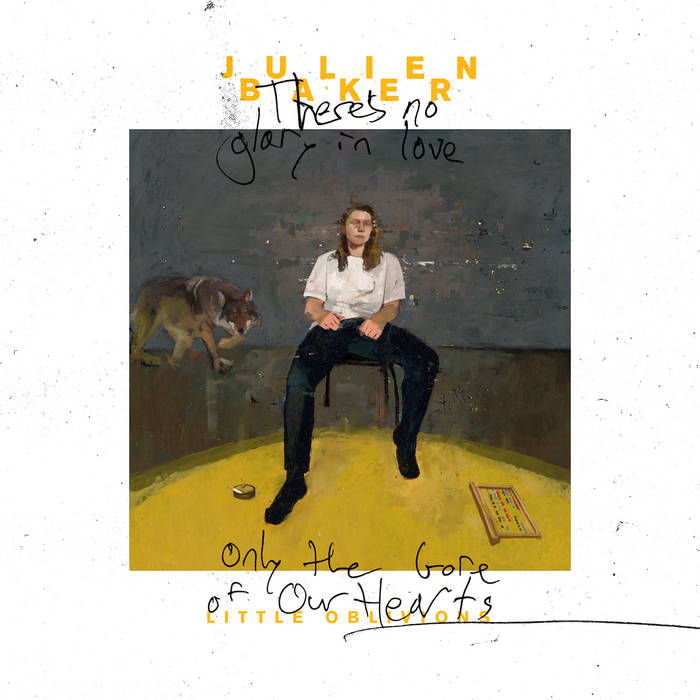
  1. Julien Baker: Little Oblivions 
  1. Cedric Burnside: I Be Trying 
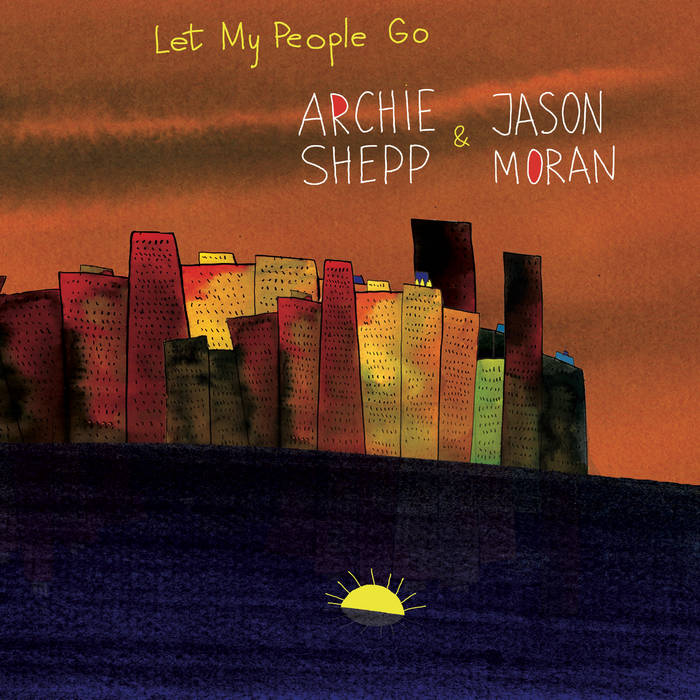
  1. Archie Shepp and Jason Moran: Let My People Go 
  1. Roisin Murphy: Crooked Machine  
  1. girl in red: if I could make it go quiet 
  1. Lana Del Rey: Chemtrails Over the Country Club 
  1. Robert Miranda’s Home Music Ensemble: Live at The Bing # 
  1. Vijay Iyer, Linda Han Oh, and Tyshawn Sorey: Uneasy 
  1. Olivia Rodrigo: SOUR 
  1. Steve Earle: JT 
  1. Tee Grizzley: Built for Whatever 
  1. Tony Allen (and friends): There is No End 
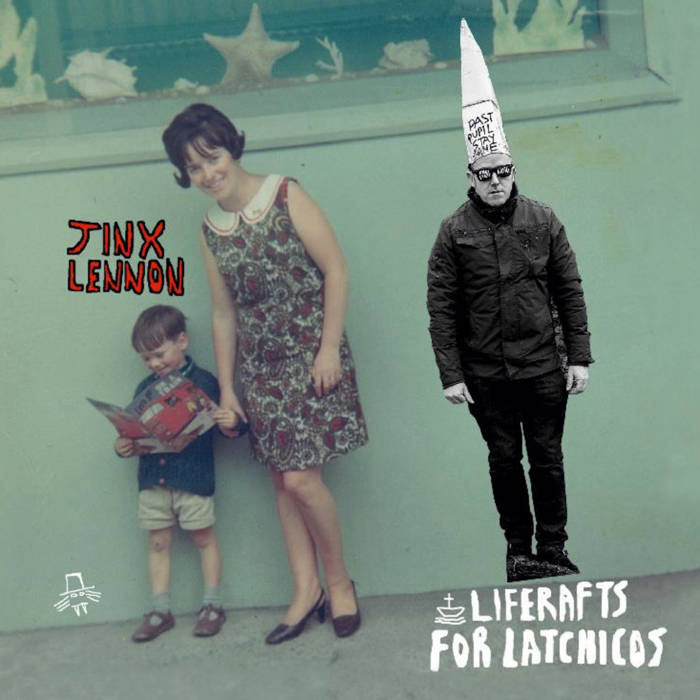
  1. Jinx Lennon: Liferafts for Latchicos 
  1. The Hold Steady: Open Door Policy  
  1. Elizabeth King & The Gospel Souls: Living in the Last Days 
  1. Alder Ego: III 
  1. Garbage: No Gods No Masters 
  1. Shem Tube, Justo Osala, Enos Okola: Guitar Music of Western Kenya 
  1. Contour: Love Suite 
  1. Alton Gün: Yol 
  1. Various Artists: Edo Funk Explosion, Volume 1 # 
  1. Hearth: Melt 
  1. Trak Trak: Sur Sur 
  1. Floating Points & Pharoah Sanders: Promises 
  1. Sana Nagano: Smashing Humans 
  1. serpentwithfeet: DEACON 
  1. Rodrigo Amado & This is Our Language Quartet: Let the Free Be Men 

SINGLES

Dry Cleaning: “Bug Eggs”/”Tony Speaks!” 

Steve Lehman:: “Cognition” (JLin remix

Henry Threadgill: “Clear and Distinct” (Georgia Ann Muldrow remix) 

Axxe: “Through the Night” / Rock Away the City” 

Tweaking the Classroom, With The Dogg, and Between the Pages (September 3-10, 2018, Columbia, Mo)

I am constantly tweaking my teaching strategies for my freshman comp/pop music class at Stephens College. Thinking about data-based questions, I stumbled upon what I thought would be a stimulating lesson plan:

1) zero them in on an artist with fresh work out, and ask them to sample the entire album;

2) ask the kids to read some new and quality reviews and/or features on the artist;

3) funnel them to some good and recent performance and video clips of the artist;

4) ask them to annotate as they explore, listen, think, and reflect;

5) convene for a kind of Socratic seminar, with the above serving as the data.

Actually, the lesson was pretty successful. Since we’re a women’s college, I thought Mitski and her new album Be the Cowboy would be an ideal subject. The young woman’s an intense singer, a talented writer and musician, and loves to mine her (justifiably, I feel) turbulent emotional life for material. Myself, I like her and her new album very much, but, honestly, that had nothing to do with my choice: I simply thought it would be reliably stimulating for my class of 18.

It was. But. A few students responded very positively and strongly to her work; a few (not necessarily the same few) skillfully used evidence and analysis to back up their opinions; most, however, found her a little much. What did that mean? All over the place musically (I was thinking that range was more a tour de force, if not more simply the artist matching setting with material, as were a couple kids; most wanted a groove). Providing too much information (for example, there is a masturbation line) and relying too much on lyrics. Not being chill enough. And–this was probably the most interesting thread of the conversation–cannily packaging herself as having a foot in pop and a foot in avant garde in order to be easily commodified, for the convenience of consumers, with Urban Outfitters. As you might be suspecting, we have a passionate anti-capitalist in the house, which I am enjoying immensely, but, while she accused the writers of the three articles I’d assigned them of “fellating” Mitski with no real supporting arguments (unfair in some ways, though none of the writers did supply any caveats or constructive criticism about her work), the student herself had a little trouble supplying specific support for her own attack. Since one of my ulterior motives was getting them to effectively substantiate their contentions–or at least start practicing same–perhaps the ensuing provided an obvious model of what to avoid. I don’t know, but I’m always surprised to find in this course that, often, women hold female artists to a very (too?) high standard. I’ll have to continue letting that phenomenon marinate.

I was very encouraged by a very quiet student’s lone contribution, though, which followed the above barrage: “You know, she’s a very young artist. Shouldn’t the fact that she’s still developing earn her some room to be messy?” (Yes.)


HOT TAKE: Swamp Dogg’s superbly titled Love, Loss, and Auto-Tune is one of the best–and the strangest–r&b records of the year. Only The Dogg could take Auto-Tune and make something deep out of it–except that it really appears to have been Justin Vernon’s idea (why, Lord, why?), so that hurts, but I have to admit it works, and Swamp’s the show. His songs, lyrically speaking, aren’t as eccentric as usual (“Sex with Your Ex” the exception)–in fact, the covers are among the brightest highlights–but the shot of loneliness and alienation with which the much-maligned effect injects them is…a word I never thought I’d use in connection with Bon Iver…POWERFUL. Great cover art and liner notes, as one would expect.


Otherwise this week, I indulged in some very, very good music-related reading. Sam Anderson’s wild and wonderful Boom Town focuses on Mr. Wayne Coyne of The Flaming Lips as one exemplar of the spirit of his subject, Oklahoma City. I’m not a huge fan of Coyne or his group (though seeing them when they were just kids was a trip), but Anderson makes a convincing case that to understand the city and its travails and aspirations, you have to consider them. Elsewhere, a star weatherman, the OKC Thunder, and several “city visionaries” flesh out his analysis. This is one of the very best books I’ve read this year, and it’s as much about us as it is about Oklahoma City, looked at a certain way.

Playing Changes

More exclusively about music is Nate Chinen’s Playing Changes: Jazz for the New Century. A test any music book must pass with me is, “Does it hurt my wallet by sending me to stuff I never knew about or unfairly dismissed?” Well, technically, with Apple Music, I don’t have to fork over any green, though that’s a sad fact I’ve addressed elsewhere and don’t feel like going into here. Chinen’s book easily passes the test; as I read, I constructed a playlist from the chapters’ subjects and his extensive discography that will take me until the middle of the next decade to fully absorb. The main thing it did for me is pry me out of my stubbornly resistant attitude toward jazz that’s flavored by new-millennium r&b and hip hop. Examples: Robert Glasper, Snarky Puppy (shitty band names can hurt a group!), and Lalah Hathaway, all of whom Chinen induced me to like). He’s also great in chapters on jazz education and international influence, innovation and practice, but I pouted when I realized he would not be including Scandinavia or Portugal in the latter discussion. I am biased, but how he could skip over Joe McPhee in looking at the role of “the new mentors” in the transfer of methods and ideas to the new generation leaves me nonplussed.


An article about Jelly Roll Morton showed up in my feed, courtesy of (hmmm) The Wall Street Journal: “Plotting His Way Into Jazz History.” John Edward Hasse, a writer previously unknown to me, presents Morton as “jazz’s first theorist,” which I’d heard argued before, but he hooked me with this paragraph–I don’t play an instrument, so I can’t initially hear this stuff when I listen to jazz:

“…Morton took on several problems. In just over three minutes, how do you create interest and drama? In a musical style taking shape, how do you prove the full potential of jazz to integrate the planned with the spontaneous, the notated with the improvised?”

Even better is how Hasse succinctly explains Morton’s solutions (exemplified in the classic “Black Bottom Stomp”)…but read the article yourself for that. Suffice it to say that I went straight from reading the article to JSP’s great Morton box set and Wynton Marsalis’ Morton tribute, Mr. Jelly Lord, my favorite record by my favorite musical tight-ass. Why? Well, the band is effin’ cream: Don Vappie on banjo and guitar, Dr. Michael White on clarinet, Herlin Riley on drum kit, Wycliffe Gordon on ‘bone, tuba, and trumpet, and Marsalis himself as loose and playful (and masterful) as you’re gonna hear him. Did you ever wonder if Harry Connick, Jr., ever really applied on record anything he learned from James Booker? He does here, and does justice to his mentor. The selections are perfect and often surprising (“Big Lip Blues,” for example), and the arrangements, execution, and production do not embalm them. And you get lagniappe in the true NOLA fashion, with Wynton and pianist Eric Reed nailing “Tomcat Blues” via wax cylinder from the Edison Museum:


I swear, right now books are like heroin to me (yes, I listened to the Gun Club this week). I should count myself lucky. I also picked up John Szwed’s Billie Holiday: The Musician and The Myth, which sets out to vaunt the former and puncture the latter. It’s note-perfect in doing so thus far, and has convinced me that I do too need to to read Lady Sings the Blues. I didn’t know Billie made it to film at 19, singing an Ellington song with Duke backing her and already exhibiting the mastery that would make her legendary. She begins singing at about the 4:40 mark:

Szwed also wrote the best book yet on Sun Ra. Check him out.

Short-shrift Division:

David Virelles: Mboko (WOW!!!!!!)

The Gun Club: The Fire of Love

Elvis Costello: This Year’s Model (expanded edition)

George Coleman: Live at Yoshi’s

Robert Glasper: Black Radio

Lalah Hathaway (feat. Snarky Puppy), “Something” (ZOINKS!!!)


Are You Sure Outlaws Really Done It This Way? (July 3rd, 2018, Columbia, MO)

Some simple forays into the music today.

On a prestigious critical recommendation, I sampled Armadilloes & Outlaws, a new compilation surveying country’s “Roaring ’70s” and purporting (or seeming to purport) to represent the range of players involved. I am already well-versed in the stuff, but I’d heard there were surprises. There were a few good ones: a Jessie Colter tune I really dug, a new-to-me Tom T. Hall cautionary, an incandescent early version (I think–I have no notes) of “Dallas” by the Flatlanders, and Lou Ann Barton taking on an Irma Thomas classic fronting an early version of Stevie Ray’s Double Trouble. But. The rest of the solid tracks are totally predictable. The proto-outlaw Doug Sahm is unaccountably missing–his influence is too strong for him to be omitted, and there’s plenty cross-licensing power behind the collection. [CORRECTION: Sahm’s “Groover’s Paradise” (and a few others I didn’t hear yesterday, are included in the album but not available for streaming, for some reason. Those significantly upgrade the overall quality—but I still consider it an infield single, if you will.] And there is baaaaaad shit. David Allan Coe’s “I Still Sing the Old Songs” is unspeakable Confederate apologist nostalgia; the usually good for a laugh Bobby Bare and the overly vaunted Jerry Jeff Walker are avert-your-ears dated; and Michael Murphy should have just kept on ridin’ into the cosmos–out of earshot. I usually abjure the dis, but this compilation could have been leagues stronger, and more representative.

I am reading Steven L. Isoardi’s outstanding overview of the South Central Los Angeles jazz scene and social environment surrounding the too-little-known giant Horace Tapscott, The Dark Tree; the title comes from one of Tapscott’s greatest compositions. I’m only a quarter in, but today I encountered a story of a bespectacled alto saxophonist who entered Tapscott’s circle, which was filled with fearsome players, and just cut heads. Jimmy Woods was the name, and agile, speedy, inventive lines were apparently his game. I look forward to more musical discoveries from Mr. Isoardi.

Phineas’ Hour (June 2nd, 2018, Columbia, MO)

I’ve spent the afternoon luxuriating in the music of two brothers from Whiteville, Tennessee (and always associated with Memphis), pianist Phineas (pronounced FINE-us by his family but eventurally FIN-ee-us by the artist) Newborn Jr. and guitarist Calvin Newborn. The elder brother’s command, invention, precision, and speed on the 88s was such that critics still battle, as they’ve done with other keyboardists, over whether he was a purveyor of mere (mere?) technical facility or an artist of abiding soulfulness–the latter requiring a treacherous, possibly arrogant and presumptuous leap for the listener to make. As much as I’ve listened to music, I’m not at all convinced that I listener can accurately gauge “soul”; I mean, I can say for certain how it makes me feel, but if soulfulness exists in the musician as he plays, how would I ever know, and precisely what aspects of the recorded evidence indicates whether it did or not–and why do they? As for the younger Newborn, one has to dig a little to hear him in his exuberant youth, then in his prime, as he was usually an accompanist, and versatile and flexible enough to thrive in any setting, especially (maybe) when he was asked to play a discreet musical role. Only some thirty years after the advent of his recording career did he become a solo artist, and by then his best work may well have been past him. Suffice it all to say that he was one of jazz’s most underrated guitarists of the ’50s and ’60s.

You can think about both questions–of Phineas’ soulfulness and Calvin’s unjust obscurity–on the records I listened to today, combined on one CD by Jazz Beat Records: 1956’s Here is Phineas–The Piano Artistry of Phineas Newborn, on Atlantic, and 1958’s Fabulous Phineas, on RCA. The brothers play together on both releases (more so on the later) and furnish plenty of evidence to support my claims that the feeling, knowledge, and ideas behind Phineas’ playing = soulfulness, and that Calvin, coming out of Memphis blues and southwest jazz, was a force to be compared with the likes of Pee Wee Crayton and even (lightly, hoss) Wes Montgomery–particularly in his ability, honed through sibling battles and the oversight of their drummer father, to stick with Phineas even at his fleetest and highest.

As a bonus, enjoy the masterly rhythm sections on both, the Atlantic session featuring Kenny “Klook” Clarke and Oscar Pettiford, the RCA Denzil Best and the Newborns’ childhood friend and long-time musical cohort, George Joyner (each pairing, drums and bass, respectively).

Short-shrift Division:

I mentioned this a few pieces back, but if you love the above, you’ll want to try this very, very, very unsung set from the same basic period, as it features a mess of smokin’ Memphis players, most of him are from the Newborns’ cohort.

Up for some very entertaining and enlightening music lit you’ll have to search, then pay for?

I suggest this. (Price range on three used copies currently for sale on Amazon: $125-150–I didn’t pay half that much, so you might set your bobber out on the pond, if you know what I mean.)

IMG_2498

‘xcuse me while I plagiarize my Goodreads review:

This hard-to-find book is a classic of Memphis culture. Newborn and his brother Phineas Jr., both skilled multi-instrumentalists–the latter one of the greatest jazz pianists of the latter half of the 20th century–rise up through the Memphis’ rich musical soul, then ride a rollercoaster through regional and national tours, professional recording sessions, the Armed Forces, night life in New York and Los Angeles, and struggles with substance abuse.

Note: the book is not particularly professionally assembled. Misspellings and typos abound, a chapter number is skipped, three blank pages leave the reader in a state of mystery, the index is in alphabetical order by first letter ONLY, and the photo section is slopped together at the very end of the book. HOWEVER, it is also chock-full of great stories, the author’s mischievous wit, insights into mid-century African-American life in a very complicated city, charming candor, delightful idiosyncrasies of narrative…and the slopped-together photos are GREAT. I paid a pretty penny for a copy, and I do not regret it in the least (though I would like to know if EVERY copy has the blank pages).

Kirk Works! (May 10th, 2018, Columbia, MO)

When I seek joy, I often turn to the work of Rahsaan Roland Kirk. Columbus, Ohio’s multi-instrumentalized jazz genius seemed to have direct and immediate access to the full range of human emotions (often, when he was at his best, on display on a single recording), and be reliably alive in the moment whether on stage in the studio. When an old friend who’s just getting into jazz inquired after something new (he’s been cutting his teach on Blue Note hard bop), I knew just where to turn. We were meeting for coffee, he still listens to CDs, so I decided to begin a “Great Albums Series” for him with two-on-one Kirk mix disc.

It’s not that easy to pick the best two Kirk records to start someone on his aural learning journey. Certainly, few would argue with such stellar and unique recordings as Rip, Rig, and Panic or The Inflated Tear; one could even make a fan for life from the man’s sideman sessions, like The Jaki Byard Experience (its versions of “Evidence” and “Memories of You” alone vault both leader and accompanist to jazz Valhalla) or Charles Mingus’ Oh Yeah. However, I chose the two records I turn two most: 1961’s audacious We Free Kings (Kirk a mere 26) and 1964’s sui generis flute tour de force, I Talk with the Spirits–on which he does, if spirits really do exist.

We Free Kings is both the ultimate proof Kirk’s playing of tenor sax, flute, stritch, manzello, and siren (just those on this record, and up to three at once) was mastery and sound attack, not gimmickry, and a complete display of his many strengths. To wit? A fondness for and deep knowledge of both old and new styles (here, demonstrated on the title cut, which takes the old holiday chestnut into Traneland as if that were the most logical idea in the world). A knack for catchy, penetrating, soulful original compositions (the eternal “Three for The Festival”) and daring explorations of the jazz repertoire (Bird’s “Blues for Alice”). That previously-stated ability to tap into the deepest (see the aptly named “The Haunted Melody) and the most buoyant (see “Some Kind of Love) human emotions. The ability to consistently surprise: the sudden, virtuosic shifts from one instrument to the next (check the stop-time flute passage on “Three for the Festival”!); the astonishing ability to wring profound blues out of a flute; the spirited vocal interjections at key inspired moments. That should be enough to convince, but his backing combo, especially the underrated Charlie Persip on drums, sticks with Kirk through every hairpin turn.

You may have noticed I used the word “flute” three times in the last ‘graph. I am no fan of that instrument, but in Kirk’s hands it is a magic wand–on I Talk to the Spirits, it’s all the famed multi-instrumentalist plays. You may have noticed that I called We Free Kings audacious, and it is: Kirk’s confidence, at 26, in going there in numerous ways, in JazzWorld 1961 (think about it), is astounding. However, the word might be better applied to this album. Kirk dares to keep us locked in, surprised, moved, and even rocked for the full duration of a record with only the most notoriously light of instruments. Not only that, but he bets he can make Barbara Streisand (“People,” from Funny Face) and Joyce Kilmer (“Trees”? Yes, “Trees”!) stand firm and tall next to not only his own indelible originals (try playing “Serenade to a Cuckoo” only once, then avoid a week-long earworming–I double-fuckin’-DARE ya!) but also canonical offerings from Clifford Brown, John Lewis, and Brecht-Weill. And he cleans out the house on that. Again, the backup is superb. Drummers? Rah could pick ’em: Walter Perkins is all ’bout it on a very eccentrically accented session. The piano’s manned by the estimable Horace Parlan, whose elegance anchors Kirk’s wonderfully wild ideas. There is no album like this is the annals of jazz, my friend needs it, and so do you.

Just gotta say, I love Rahsaan so much primarily because he has serious fun–he’s soulful and mischievous–and he loves both the old and new, the disposable and the essential. I strive for the same, though I don’t really have to work at it. It seems the nature of our time here, and I’ve always heard Kirk as–in a nod to my fellow jazz fiend Charles–a sensei. I’m confident you will, too.

Note: if you are able, please check out the great young filmmaker Adam Kahan’s insightful Kirk documentary, The Case of the Three-Sides Dream.

Anita: The Most (March 30, 2018, Columbia, MO)

One album I will always, always listen to is Anita Sings the Most, starring the scintillating Ms. O’Day and Oscar Peterson, who both supports her winningly and constantly challenges her (she’s more than equal–the proof’s in the pudding) throughout the 33:59 of the 1957 recording. It’s brief, but packed with radiant music.

Anita is at her sassy, mischievous, inventive, joyous best here–it’s the LP I’d recommend first to listeners dark to her genius–and it’s telling that she’s listed as co-producer with Norman Granz. She’s in control, from the song selection, tempos, and drummer, her longtime telepath, codependent, and partner in rhythm John Poole. The band is essential Peterson’s group, with Ray Brown on bass and Herb Ellis, frequently sounding teleported, on guitar, but Anita could always count on Poole to turn the sharp corners she made in her interpretations.

Where to start? Where else but the beginning! Anita Sings the Most explodes out of the gate with two minutes and fifty seconds of quicksilver Gershwin: “‘S Wonderful / They Can’t Take That Away from Me.” There’s something about the heart-quickening pace and instrumental magic that makes her delivery of “You can’t blame / For feelin’ amorous” even more irresistibly fetching:

And it’s not just the sheer speed that’s exciting here. You can hear Anita ache, wince, and steel herself as she feels her way through “Love Me or Leave Me” and (especially) “Bewitched, Bothered, and Bewildered”:

If you jazz diva channel only features Billie, Ella, Sarah, and Dinah, consider adding Anita to your programming. Anita Sings the Most is a sure convincer.

Short-shrift Division:

Bettye LaVette: Things Have Changed–Bettye sounds forced into some selections of this all-Dylan program, and her voice at times sounds on the verge of shredding, but she nails the title song, wears “Ain’t Talkin'” like she’s Alida Valli at the end of The Third Man, and wrests “Do Right to Me, Baby” out of Dylan’s grip, and Christendom’s.

The Be-Bop Boys (March 12th, 2018, Columbia, Missouri)

BUDSTITTkenny_dorhmam1

A very straightforward but exciting day of listening. I was a bit overwhelmed with tutoring chores and catching up on reading, but I made time for some amazing work by the individuals pictured above: pianist Bud Powell (left), saxophonist Sonny Stitt (center), and trumpeter Kenny Dorham (trumpet).

When the average music fan with a broad but general taste thinks about unit that personify the style known as be-bop, she must first think of Charlie Parker’s units with first Dizzy Gillespie and then Miles Davis on trumpet, usually driven to their legendary heights by Max Roach on drums. And those groups produced unquestionably masterful, exciting music that you can live your whole life with and never grow tired of. But another unit, recording during the same general time period, recorded stunning and thrilling tunes of their own that, while it may not match Bird’s group’s work for emotional intensity, will stop you short with their skill and invention.

I’m talking about the Be-Bop Boys, led by Powell, Stitt, and Dorham, virtuosos and composers all, occasionally augmented by two other young greats, Fats Navarro on trumpet and Kenny Clarke on drums. Here, Powell is poised to become, with his friend Thelonious Monk, the most influential pianist of his generation; Stitt is contending furiously for Parker’s alto mantle (experts differ on who was first to the attack they share, though the mercurial nature of the latter’s playing make them easy to distinguish–to my ear at least); Dorham, perhaps more in the shade than his compatriots, plays with a control that belies his years.

Of special note are the original versions of tunes that would later become established Powell classics (“Bebop in Pastel”–> “Bouncing with Bud”; “Fool’s Fancy”–> “Wail”), as well as another that is probably this unit’s claim to lasting fame in the jazz book: “Webb City.”

But here–don’t trust me. Partake and judge for yourself with this Be-Bop Boys playlist, which includes the three tracks above and more:

ROLLINS (March 1st, 2018, Columbia, Missouri)

SONNY

Sometimes you take a swallow of something you’ve enjoyed forever but just haven’t knocked back for awhile, and you think, “Jesus H. Roosevelt Christ, this stuff’s not only cask-strength, it’s so rich and full I think I’ll just slosh around the next sip!”

Such was my experience after unwrapping Craft Recordings’ new deluxe edition of Sonny Rollins’ 1957 album Way Out West. The record is justifiably famous for three reasons: it stands as the first jazz studio album recorded in its entirety in a bass-drums-sax format; it’s graced by a hilariously droll cover that seems like a joke but becomes a concept once you look at (and hear) the titles; and it features Rollins, not quite 27, demonstrating a jaw-dropping, self-possessed, jocular mastery of his art. I’d truly be insane to try to say anything profound about Sonny that real writers haven’t already said, but if you are either somewhat or totally unfamiliar with him, consider this: the trio format–free of a piano, guitar, or other horns–leaves a cavernous amount of space for Rollins to create in, and, for some, that responsibility would be perilous, if not disastrous; for this tenor saxophonist, however, that space gives him the opportunity to unfurl his very fecund vocabulary of sounds, all integrated into an unmistakable tone that does indeed reach out and grab one by the throat. Authority. Logic. Wit. Warmth. Audacity. Inventiveness. Grace. Depth. Just stop me–or wait, I’ll stop myself. But I’m not lying about any of those qualities.

So, OK, this is a two-LP reissue that costs a pretty penny. Is it worth it? I think so. The sound, engineered by Roy DuNann, was always stellar; my 1980s pressing is only mediocre by comparison with Craft’s remaster. You’ve heard people say about a record, “It sounds like you’re in the same room with the musicians”? Well, this recording has that same quality, and it is a true giant, on fire with deftly controlled inspiration (yeah: Rollins can be on fire and under control at the same time), whose horn bell you’re leaning into. By the way, drummer Shelly Manne and bassist Ray Brown:  definitely no slouches.

The second disk is only relatively less fluent and exciting alternate takes–very nice for Craft to put them together there–three of which are previously unreleased. The truly irresistible bait, however, are two telling snippets of dialogue, including one in which Sonny confirms what most already suspected was one of his improvisational by singing some of “I’m an Old Cowhand”‘s most piquant lines to his fellow musicians and emphasizing their importance. The cover art (photographs by the great William Claxton, also responsible for the photo at the top of my scrawl) is beautifully reproduced, and both the original liner notes and revealing new ones by Neil Tesser helpfully supplement the set. Honestly, I bought it as a birthday present to myself, and I think you can tell I am not the least disappointed.

Below is a YouTube playlist for Rollins newbies. Thing is, with Way Out West, couched between his equally great Saxophone Colossus (’56) and his daunting live trio record from the Village Vanguard (recorded later in ’57), Sonny was just getting started; his next near-sixty years would be studded with masterpieces. He is one of the last living jazz artists with a totally distinctive, instantly recognizable instrumental voice, and I emphasize the word “is”: give the man props while he’s living.

In Walked Budd (February 24th, 2018, Columbia, Missouri)

Budd Johnson, that is! From the opening notes (just click above, podnah) you know you’re going on a deep tenor sax dive, which is what I did yesterday with Johnson on his Swingsville album, Let’s Swing, and indirectly on Etta Jones’ luxuriously blue Lonely & Blue, where Budd, with assistance from the equally great tenor man Gene Ammons, wraps the singer in thick, slow-swinging swaths of indigo.

Both LPs are simply classic. Both are rendered in Rudy Van Gelder’s stunning sound. Both feature a richness and depth of feeling you’ll have some difficulty finding in a new set today.

Funny: I just read an article on meditation written by Repa Dorje Odzer and published in tricycle, and I’d advise you to listen these in much the way the article advised me to sit:

1) Don’t think about past records you’ve heard.

2) Don’t judge what you’re hearing now (hear it arise and unfold).

3) Don’t imagine where the music will go.

4) Don’t try to figure the music out.

5) Don’t try think about how the music could be/should be different (resist controlling thoughts).

6) “Rest, like a bee stuck in honey,” and let the music wash over you.

Easier typed out than done, but Johnson’s and Jones’ (and Ammons’ and Van Gelder’s) work provides a perfect opportunity to try and merge meditation and fully present listening. I’m trying it in a bit.

Short-shrift Division

Hailu Mergia: Tche Belew(Wow! Truly a master Ethiopian jazz-funk composer–I get the funk now.)

Harlem River Drive (all hail the Palmieri Brothers!)

Dennis Gonzalez’ Yells at Eels: In Quiet Waters (Wow! Truly a master free jazz composer!)

Jason Marsalis and the 21st Century Trad Band: Melody Reimagined, Book 1 (Doesn’t quite live up to the ambitions of the band name or album title, but it’s swinging and lilting and lively nonetheless. The leader’s on form.