A full morning, so much so that I need to add a bit of detail that I normally avoid on a Sunday post. At 7:45, I participated in KOPN’s Guinness Book of World Records-scaling attempt to interview the most humans (with completely unique questions) in a 24-hour period. I gabbed, unsurprisingly, about Tracey Thorn, Bettye LaVette, Gary Lucas/Nona Hendryx, Lamont Hawkins, and did I mention Tracey Thorn? Five questions in five minutes and Bob’s yer uncle. Also, Nicole and I invited our next-door neighbor over for brunch: cheesy scrambled eggs, thick-cut local bacon, mini-waffles with bourbon-barrel maple syrup, and Bloody Marys–several of the most latter. Because I had scoped her CD collection while tending to her cat while she was out of town, I treated Shireen to a bit of kinda-country brunch, as follows:
(Note: we’d warmed up with two hours of Lefty Frizzell.)
ANYWAY, here’s the usual week-ending Spotify playlist, summing up my listenings as far as the platform makes it possible (apologies The Thing’s Again, especially–an album-of-the-year candidate):
And here are this week’s awards:
Plucked from History’s Dustbin (best recent purchase of an old record): Marine Girls’ Lazy Ways / Beach Party
Grower, Not a Shower (old record I already owned that’s risen in my esteem): The Mamas and The Papa’s two-disc, perfectly titled Gold.
Encore, Encore! (album I played at least twice this week): Lefty Frizzell’s Country Favorites
Through the Cracks (sweet record I forgot to write about): Rodrigo Amado’s A History of Nothing (featuring Joe McPhee).
Today is National Best Friends Day, and we’re having one of my very best friends over tonight, so the day’s been spent cooking and getting the house ready for his arrival. He’s a former student of mine, and few days after his 21st birthday (he’s currently 43), he showed up on my doorstep with a 12-pack to share and we listened to George Jones on the front porch for hours. Tonight the main focus is eating (Nicole’s killer Thai chicken), drinking [local microbrewery Logboat’s killer (a touch light, a touch sweet, 6.6 ABV) porter, Dark Matter], and watching the NBA Finals (simply to appreciate a couple different kinds of GOATs), but I know I’ll play him the recently-surfaced Gary Stewart demos, and maybe, since he’s a metal fan, the new Zeal & Ardor album, Stranger Fruit. I loved the last one (Devil is Fine); this one’s a bit more extreme, and conventional, but it still features the blues traces and chant-powered dynamics that originally attracted me. A sample:
While we were preparing for Regan’s arrival, I tried to convert my very best friend (Nicole) more fully to the album I can’t quit mentioning, Tracey Thorn’s Record. I think I succeeded (she adores the song “Sister”), but in listening to it myself for about the 12th time, I realized not only how deeply hooked I am by her rich voice, but also that this album man (I think it’s because I am also a book man) has three favorite singles this year, and they are all Tracey’s, from this album: “Guitar,” “Dancefloor,” and, yes, Nicole’s favorite, too (it’s already a great National Best Friends Day):
I can’t praise those songs enough.
Also, I slapped on Sidi Touré’s great new desert blues album, Toubalbero, which features some of the most varied and most driving guitar ever out of a mess of records that are about guitar (also: kora and balophon). Dig:
Right now, as the Thai chicken’s grillin’, some equally hot and somewhat obscure Latin jazz. Feel free to ride it into your own weekend.
Another day of mostly being inspired to expand my musical horizons by good memoirists–a brief side trip to West Helena, Arkansas.
Sad to say, especially being a pretty strong Wu-Tang Clan fan, but I’d never explored Method Man’s tracks. I’ve dug his leads on Wu rekkids and his guest spots on other Clansmen’s, and I am a long-time deep admirer of his team-up with Aunt Mary, but that’s as far as it’s gone. In U-God’s memoir Raw, we learn that Meth was a teenage compadre of the author, and stories of their exploits sent me to 2009’s Best of Method Man, which I enjoyed aside from some hard wincing at flying misogyny. Great production, honed style and flow, always goosed by Redman.
I am also reading Tracey Thorn’s terrific memoir from last decade, Bedsit Disco Queen, which her terrific (and AOTY candidate) Record led me to in the first place. Due to unfortunate prejudices and youthful ignorance, until today I had never listened to Everything But the Girl (well, I had, on the benefit comp Red Hot and Rio, but I hadn’t paid attention). Reading the book, I’d have been a stubborn fool to continue holding out, so I spun the bottle and started with Amplified Heart, which I very much enjoyed–especially the lyrics. Every song seems to have an aching line, and nearly every song traces the struggle of women in this here time. I’m gonna have to be in the right mood when I listen again, and it’s not the most dynamic attack in the world, but…I’m sold. And regretful. My fave (and I now know what a goods train is!):
By the way? Read the book. And check the gal’s track record!
Last but not least, Nicole and I listened to one of our stone-cold heroes, Sonny Boy Williamson, while buzzing ’round town. Besides being a master harmonica blower, the man was a sly and funny singer, and quite a writer–in fact, a kind of poet of the close call, the futile plea, the learned lesson, the sideways seduction, and the not-so-veiled threat. His known for his Chess label work, but his work prior to that (especially on Trumpet) is rawer, funnier, and often more powerful. Listen to him saunter, moan, stutter, and almost whisper through this one:
I swear, I seem to require my whole day to be rigidly organized just so I will be forced to schedule a post, which, my regular readers (I might be able to field a basketball starting lineup) may remember, I have vowed to wrote every day. Also, the lazy unfolding of the teacher off-season day doesn’t seem to lend itself to narrative, either, so here’s another random blow-by-blow:
Morning Earworms
Why did I awaken with this in my ear…
…which then handed me off to this?
No, I wasn’t dreaming about TP–if I were gay or a woman I’d be more than happy to!–nor have I been knocked out of love commission. Nicole and I did have a splendid day (including a fart war), so maybe that was it.
Reading Accoutrement
I am love-love-loving Wu-Tang Clan member U-God’s memoir Raw, but I’d never checked his rap rekkids. I listened to his debut–he doesn’t have mad skillz, but he’s got heart, he goes light on the misogyny, he’s got production, and his persona matches the book (which you should read, too):
Research
I take Pitchfork with a grain of salt, but I don’t have any other journalistic sources for electronic music, which they occasionally review if it’s somehow attention getting. I have loved a few of Music from Memory’s other releases, so I sampled this new Kuniyuki Takahashi comp. I’m rather ignorant about the genre, but I know what I like, and I like the moodiness, dynamics, and touches of Japanese folk music here; the vocals, not so much:
Afternoon Chill-Out and Reading Accompaniment
What better for focused, intense reading than the light, graceful, swinging and surprising musical steps of MJQ? And were they ever better live than here?
Nicole and I went on a seven-mile trail walk today, but I still squeezed in multiple records and there’s still time. In the colossally self-righteous words of Ian Mackaye, “What have you done?” (Wait…was there a cuss word in there? Oh yeah–profanity was pure enough for him!)
So, I will attempt to address each of those platters with a one-liner precise enough to tempt you to try them if you haven’t.
Dr. Michael White: Tricentennial Rag
I confess, I’m a fool for NOLA trad, and here the reigning clarinet master and his not-that-mouldy henchman go back so far, several tracks on this new release kick in with a marching band drum cadence–and he ends with a teasing “Saints.” (No YouTube yet; here’s an Apple Music link.)
Preservation Hall Jazz Band: So It Is
On the other hand, if you need something smokin’ hot, deliriously catchy, and stretching from Africa to Cuba to the Crescent City, get with 2017’s best jazz album immediately.
Ty Segall: Slaughterhouse
This totally rips, but Segall has a touch of Stooges Disease: he tends to find a way to derail his best efforts, here with quonset hut production values that make one wanna beg for a remix.
Wes Montgomery: In Paris
If you’ve never been convinced of the man from Indiana’s greatness on guit, he’s on fiya on this typically stellar Resonance dig, the best such rekkid so far in ’18.
Die Like a Dog Quartet: fragments of music, life, and death of Albert Ayler
Worthy of the named master without being too reverent–also, featuring surprisingly subtle Brotzmann fury, and surprisingly irreverent electronics and brass from Toshinori Kondo, who almost steals the thing.
Bettye LaVette: Things Have Changed
Perhaps I am repeating myself, but this sucker’s a AOTY contender, and ten listens have elevated it in my esteem from flawed but ambitious diamond to a deep masterpiece–never count a soul queen out!
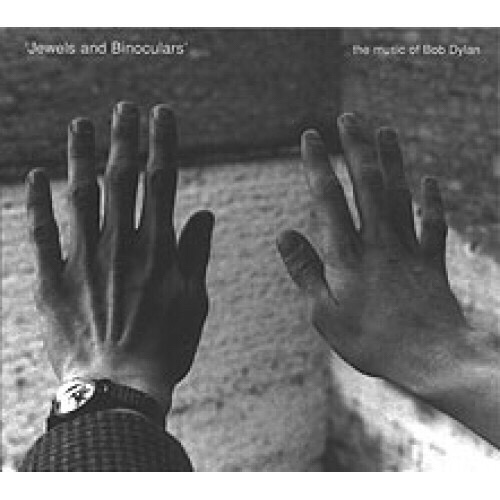
I’ve been a Dylan freak since I was 15, and I’ll die one. I’m probably going too far here, but without him the best things in my adult life (teaching, the woman I chose for my wife, this life-long quest for knowledge) would never have materialized. I know I’d have been less happy in my alternate lives. The guy aggravates the crap out of me as well–I’m convinced that he’s the least annoying naked emperor around–but that’s just because he’s taught me not to accept bullshit. I bring this up because today I was finally able to dive a little more deeply into unsung reedman Michael Moore’s three successful attempts to prove Dylan’s music has modern jazz applications, one of which I’ve owned in a digital version for awhile, but all of which I just bought from separate Discogs vendors because I sense I may have few chances later. See, I told you I was a freak: Dylan? Jazz? YEAH! What Moore, bassist Lindsay Horner, and percussionist Michael Vatcher do is gamely improvise structures around snatches of melodies from the likes of “Dear Landlord,” “Highway 61 Revisited,” “Blind Willie McTell,” and “Boots of Spanish Leather,” then pretty consistently replicate the mood suggested by the songs’ lyrics when they cut loose within the structures. Moore, on clarinets, saxes, and bells, is the main soloist, evoking klezmer, British Isles folk, Arabia, and the blues. The commitment of the musicians to the concept pays off over and over again, and even when they don’t quite hit the mark, they sound like they’re making a gauzy B+ ECM record–no shame in that. Most important, they honor Dylan’s achievement and even make a case for extending it–when’s the last time you heard anyone raving about the man’s melodies, or nominating him for a spot in jazz’s standard repertoire?
Of the three the first, 2000’s The Music of Bob Dylan, is the best, taking the most chances with song selection (even covering a Dylan cover) and varying the attack more frequently. The third, Ships with Tattooed Sails (2003), with outstanding guest work by guitarist Bill Frissell, is next, and Floater, also from 2000, a bit too often lives up to its name but is still strong. For those of you who are free jazz shy, first, note my mention of structure above, and second, the songs’ duration seldom extend beyond five minutes–this unit’s focused beyond the standard. Also, Dylanophiles can amuse themselves by listening without the track list and trying to identify the songs; it’s not hard, but it’s not always easy–and it’s rewarding. The trio takes the original material and makes something new, and moving, out of it.
A sample:
You can also listen to the entirety of the group’s first record:
Speaking of making something new out of Dylanology, Nicole and I thrilled to these great new live performances by Bettye LaVette of songs from her new album of Bob interps, Things Have Changed:
We spent much of this week on vacation–our prime time for listening together, which is a whole different thing that I very much love. As such, much of this playlist is music that is also played at home on a very frequent basis. Dominant: meditative Ethiopian pianistics and roots reggae from the golden age.
This week’s Living to Listen Awards:
Plucked from History’s Dustbin (best recent purchase of an old record): Jewels and Binoculars’ unthinkably great Dylan-goes-modern jazz trilogy, Floater, Ships with Tattooed Sails, and The Music of Bob Dylan. Now, I need to find time to listen to the two I don’t know that well up close.
Grower, Not a Shower (old record I already owned that’s risen in my esteem): Phineas Newborn’s Fabulous Phineas, with Brother Calvin on point. Modern jazz, Memphis-style.
Encore, Encore!(album I played at least twice this week): The aptly-titled The Power of The Trinity–Great Moments in Reggae Harmony. I played it three times–I bet you can’t play it just once.
Through the Cracks (sweet record I forgot to write about): Neil Young’s Time Fades Away.
Sunday’s Children / Today’s Sounds: Believe it or not, I haven’t listened to anything but the last of half of Serengeti’s Dennehy. I promise I’ll get it in gear.
I’ve spent the afternoon luxuriating in the music of two brothers from Whiteville, Tennessee (and always associated with Memphis), pianist Phineas (pronounced FINE-us by his family but eventurally FIN-ee-us by the artist) Newborn Jr. and guitarist Calvin Newborn. The elder brother’s command, invention, precision, and speed on the 88s was such that critics still battle, as they’ve done with other keyboardists, over whether he was a purveyor of mere (mere?) technical facility or an artist of abiding soulfulness–the latter requiring a treacherous, possibly arrogant and presumptuous leap for the listener to make. As much as I’ve listened to music, I’m not at all convinced that I listener can accurately gauge “soul”; I mean, I can say for certain how it makes me feel, but if soulfulness exists in the musician as he plays, how would I ever know, and precisely what aspects of the recorded evidence indicates whether it did or not–and why do they? As for the younger Newborn, one has to dig a little to hear him in his exuberant youth, then in his prime, as he was usually an accompanist, and versatile and flexible enough to thrive in any setting, especially (maybe) when he was asked to play a discreet musical role. Only some thirty years after the advent of his recording career did he become a solo artist, and by then his best work may well have been past him. Suffice it all to say that he was one of jazz’s most underrated guitarists of the ’50s and ’60s.
You can think about both questions–of Phineas’ soulfulness and Calvin’s unjust obscurity–on the records I listened to today, combined on one CD by Jazz Beat Records: 1956’s Here is Phineas–The Piano Artistry of Phineas Newborn, on Atlantic, and 1958’s Fabulous Phineas, on RCA. The brothers play together on both releases (more so on the later) and furnish plenty of evidence to support my claims that the feeling, knowledge, and ideas behind Phineas’ playing = soulfulness, and that Calvin, coming out of Memphis blues and southwest jazz, was a force to be compared with the likes of Pee Wee Crayton and even (lightly, hoss) Wes Montgomery–particularly in his ability, honed through sibling battles and the oversight of their drummer father, to stick with Phineas even at his fleetest and highest.
As a bonus, enjoy the masterly rhythm sections on both, the Atlantic session featuring Kenny “Klook” Clarke and Oscar Pettiford, the RCA Denzil Best and the Newborns’ childhood friend and long-time musical cohort, George Joyner (each pairing, drums and bass, respectively).
Short-shrift Division:
I mentioned this a few pieces back, but if you love the above, you’ll want to try this very, very, very unsung set from the same basic period, as it features a mess of smokin’ Memphis players, most of him are from the Newborns’ cohort.
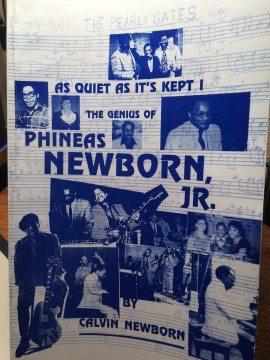
Up for some very entertaining and enlightening music lit you’ll have to search, then pay for?
I suggest this. (Price range on three used copies currently for sale on Amazon: $125-150–I didn’t pay half that much, so you might set your bobber out on the pond, if you know what I mean.)
‘xcuse me while I plagiarize my Goodreads review:
This hard-to-find book is a classic of Memphis culture. Newborn and his brother Phineas Jr., both skilled multi-instrumentalists–the latter one of the greatest jazz pianists of the latter half of the 20th century–rise up through the Memphis’ rich musical soul, then ride a rollercoaster through regional and national tours, professional recording sessions, the Armed Forces, night life in New York and Los Angeles, and struggles with substance abuse.
Note: the book is not particularly professionally assembled. Misspellings and typos abound, a chapter number is skipped, three blank pages leave the reader in a state of mystery, the index is in alphabetical order by first letter ONLY, and the photo section is slopped together at the very end of the book. HOWEVER, it is also chock-full of great stories, the author’s mischievous wit, insights into mid-century African-American life in a very complicated city, charming candor, delightful idiosyncrasies of narrative…and the slopped-together photos are GREAT. I paid a pretty penny for a copy, and I do not regret it in the least (though I would like to know if EVERY copy has the blank pages).
Time for my end-of-the-month update of records that fly in the face of the commonly heard assumption/argument/untested hypothesis that all the good music’s already been made. Based solely on what I’ve heard–much, but I know ears that have taken in far more–this calendar year’s produced 85 records I’d give a B+ or better to (I’m a teacher–as much as I think grades are institutionalized violence), it’s what I’ve got. By the way, they are ranked in order of most powerful in their effects upon me to least–but even #76 reaches me.
It’s a damn great year, in particular, for creative, outspoken women (no surprise), improvising musicians, artists of color and guitar bands (how ’bout that?). And, as always, plenty of old digs are proving they still got game–including one of the very oldest, and very best.
You’ve got the power at your fingertips to stream any of these, so dig in; do what I made my students do, and just pick 5-10 you’ve never heard of and try two-three tracks from each. But do keep an open mind, and remember what millennium you’re traipsing around in.
Tracy Thorn: Record
Nona Hendryx and Gary Lucas: The World of Captain Beefheart
Berry: Everything, Compromised
CupcaKe: Ephorize
Mary Gauthier and Songwriting with Soldier: Rifles and Rosary Beads
Sons of Kemet: Your Queen is a Reptile
Janelle Monae: Dirty Computer
Bettye LaVette: Things Have Changed
Joe McPhee: Imaginary Numbers
Chloe x Halle: The Kids are Alright
Superchunk: What A Time to Be Alive
Young Fathers: Cocoa Sugar
Jinx Lennon: Grow a Pair
Parquet Courts: Wide Awake!
Sly & Robbie and Nils Petter Molvaer: Nordub
Orquesta Akokan: Orquesta Akokan
Sidi Toure: Toubalbero
Quelle Chris & Jean Grae: Everything’s Fine
Grupo Mono Blanco: ¡Fandango! Sones Jarochos from Veracruz
John Prine: The Tree of Forgiveness
Evan Parker, Barry Guy, and Paul Lytton: Music for David Mossman
Jonghyun: Poet / Artist
Halu Mergia: Lalu Balu
Jeffrey Lewis: Works by Tuli Kupferberg
Willie Nelson: Last Man Standing
Bombino: Deran
Idris Ackamoor & The Pyramids: An Angel Fell
Rapsody: Laila’s Wisdom
Courtney Barnett: Tell Me How You Really Feel
Peter Brotzmann and Fred Lonberg-Holm: Ouroboros
Toni Braxton: Sex & Cigarettes
Car Seat Headrest: Twin Fantasy
Salim Washington: Dogon Revisited
Angelika Niescier: The Berlin Concert
Charge It to The Game: House with a Pool
JPEGMAFIA: Veteran
Various Artists: Girls Just Wanna Have Fun…and Rights!!!
Wussy: What Heaven is Like
No Age: Snares Like a Haircut
Marc Sinan & Oğuz Büyükberber: White
Meshell Ndegeocello: Ventriloquism
Cardi B: Invasion of Privacy
Shopping: The Official Body
The Thing: Again
Ebo Taylor: Yen Ara
Alice Bag: Blue Print
Dana Murray: Negro Manifesto
David Murray (featuring Saul Williams): Blues for Memo
Pusha T: Daytona
Shame: Songs of Praise
Henry Threadgill: Dirt..and More Dirt
Hot Snakes: Jericho Sirens
Ceramic Dog: YRU Still Here?
Van Morrison & Joey DeFrancesco: You’re Driving Me Crazy
Various Artists/Sahel Sounds: Field Recordings
Kendrick Lamar, et al: Black Panther—Music from and Inspired by the Film
MC Paul Barman: Echo Chamber
Kris Davis and Craig Taborn: Octopus
Tal National: Tantabara
Rodrigo Amado (with Joe McPhee): History of Nothing
Rich Krueger: Life Ain’t That Long
MAST: Thelonious Sphere Monk
Tallawit Timbouctou: Takamba WhatsApp 2018
Amy Rigby: The Old Guys
Migos: Culture II
Parliament: Medicaid Fraud Dogg
Apolo: Live in Stockholm
Yo La Tengo: There’s a Riot Goin’ On
The Del McCoury Band: Del McCoury Still Sings Bluegrass
Superorganism: Superorganism
Laurie Anderson and Kronos Quartet: Landfall
Sleep: The Sciences
Ibibio Sound Machine: Eyio
Various Artists: I Only Listen to The Mountain Goats
Afternoon Freak: The Blind Strut
Princess Nokia: A Girl Cried Red
OLD MUSIC NICELY REPACKAGED
Sonny Rollins: Way Out West (Deluxe Reissue)
Neil Young: Roxy—Tonight’s the Night
Gary Stewart: “Baby I Need Your Loving” / “Yester-Me, Yester-You, Yester-Day”
The Revelators: In which the Revelators perform live renditions of selections from the Billy Childish songbook
Against All Logic: 2012-2017
Entourage: Ceremony of Dreams—Studio Sessions & Outtakes 1972-1977
Camarao: The Imaginary Soundtrack to a Brazilian Western Movie
Various Artists: Africa Scream Contest, Volume 2
Wussy: Getting Better
Short-shrift Division:
Nicole and sailed home from our vacation on the vibraphone mastery of the great Milt Jackson. I put five albums together on a playlist, but these two made leaving Excelsior Springs a shade less painless: