I don’t have much to say. The national scene is so ugly I actually thought today, “What if two years from now I look back and say, ‘This is when it started’?” I also took a second to reflect on Tim Snyder’s 20 lessons (about totalitarianism) from the 20th century, and you can draw a line through quite a few here in the USA…he didn’t even really mentioning taking children from “the other” and stashing them away. Then, I read about civil rights being struck from high school history books in Michigan–and the current administration leaving the UN Human Rights Council (what–a bit over a week after mugging around with and flatteting a full-blown totalitarian dictator?). It’s fucking depressing, I couldn’t focus on reading, and for the most part didn’t even want to listen to music. Ever felt that way?
Anyway, some exceptions.
Poolside during 10:45-11:45 am “adult swim” (not as great as the man’s sessions w/Sonny Clark, but loosey-goosier):
Fighting off full-on rage with a new purchase of an old record that fits the moment damn well:
Celebrating Juneteenth in my head (Peter Stampfel is always good for joy in the face of the void):
And celebrating my friend David’s 71st birthday in his classical music lair:
Also discussed in the lair (over Moscow Mules and gage): Korn…or gold?
Good night. May tomorrow bring some justice.
P. S. Piano man at Murry’s? That was a DAMN fine “Jitterbug Waltz”!
On our way up Arkansas 62 to Missouri 37, trying to figure out what Carter Family tune purloined the melody from Dick Justice’s “Henry Lee”:
Answer?
Roaring up I-44, trying to keep Nicole awake, I sprung something on her that she’d gotten a few seconds’ earful of Saturday. I am not unerring in matching new stuff with her very refined taste:
Response: “My face hurts!”
Staying revved on MO-5, -54, -63, and I-70, with iced tea, Redmon’s candy, and selections from such illustrious releases as Wanna Buy A Bridge?, 1977 Roxy London Live, Dangerhouse Complete Singles, The Best Punk Rock Album in the World Ever, and Rhino’s D.I.Y. series–a yell-along, slap-yer-dashboard, punk-rock party:
Since I’m on va-cay and out of pocket, I’m departing from my newly-established Sunday ritual of Spotifying the week’s listening and sharing another project I’m working on that might benefit and enlighten you and me.
I’m two chapters into Chris Weingarten’s so-far stellar 33 1/3 offering on Public Enemy’s Nation of Millions. I’ve read a passel of ’em; this is vying for my favorite, though it’s perhaps a shade too glib and overwritten. One neat thing Weingarten does is focus on the construction process behind a highly constructed album that, due to the profusion of samples the Bomb Squad layered in, couldn’t conceivably be made today, even by a moneybags like Jay Z.
What I decided to do was, chapter by chapter, include all the sample sources, influential tracks, and highlights in a YouTube playlist as a reading supplement. Needless to say, it’s under construction, but it’s already 29 tracks deep and is enjoyable independent of the book.
A long time ago, before this blog existed (for the most part) and before Podcast World exploded, I often created podcasts for Hickman High School’s radio station. Before I knew it, I’d made 75! Here are a few of the later ones; they are not slick, but they are heartfelt, they should exhibit reasonable expertise, and I sure had fun doing them (listen for ice tinkling in a glass). Let me know if you like them.
Another Podcast from the “Rock Therapy” Archives:
A fun African music podcast I once made for my wife’s students, who were learning African geography!
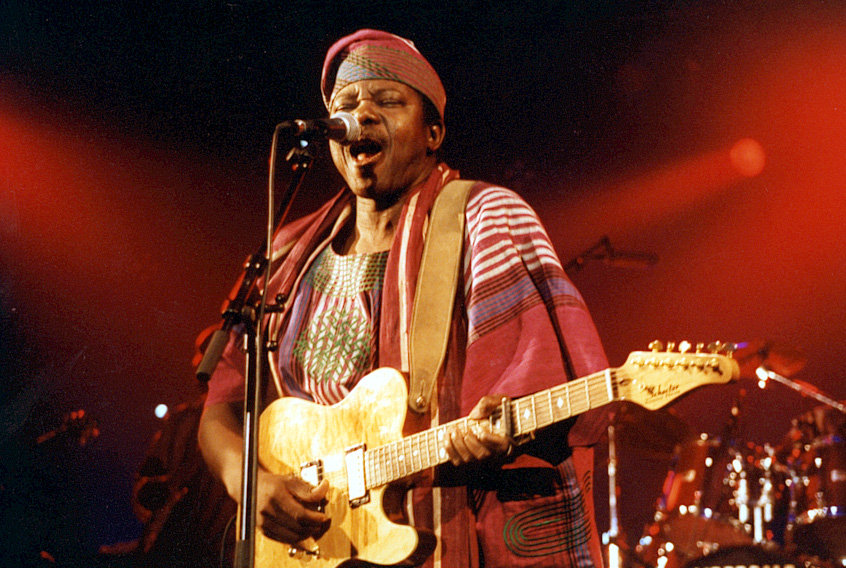
King Sunny Ade, leading off…
“Dedicated to Columbia (MO) Hickman High School’s Academy of Rock: Let Them Do Their Thing!”
EPISODE THREE OF THE ROCK THERAPY REBOOT!
Playlist:
Intro–The Rock and Roll Trio: Segment from “Rock Therapy”
Mr. Quintron and Miss Pussycat: “Haterz”
Company Freak: “Theme from Company Freak”
Obnox: “How to Rob”
Wussy: “Teenage Wasteland”
Miranda Lambert: “Platinum”
Geeshie Wiley: “Last Kind Words”
Off!: “Jeffrey Lee Pierce”
The Gun Club: “The Fire of Love”
Raw Spitt: “Songs to Sing”
Bassekou Kouyate: “Jama Ko”
The Hot 8 Brass Band: “Let Me Do My Thing”
Latyryx: “Every Man for Himself”
Neneh Cherry (featuring Robyn): “Out of the Black”
Natural Child: “Don’t the Time Pass Quickly?”
Keith Frank (featuring Lil’ Boosie): “Haterz” (original version)
Outro–The Rock and Roll Trio: Segment from “Rock Therapy”
“Texas Me: Rib-Stickings from a 2,100-Mile Drive Into Texas”
EPISODE TWO OF THE ROCK THERAPY REBOOT!
Another Podcast from the “Rock Therapy” Archives: REGGAE TAKE OVER!
Folks, it’s getting hot, and I don’t know about you, but when the mercury’s about to explode out of the thermometer, I like to be comforted by some music from where that’s just natural. So, ladies and gentlemen, let “Reggae Take Over”….
NEW! “Cakewalk in No Man’s Land: The Return of ROCK THERAPY,” featuring the music of Allen Lowe, Wussy, Anita O’Day, Neneh Cherry, Ronnie Barron, and many more.
Allen Lowe in the lab (click on the image to visit his website)
Rock Therapy Podcasts from the Vaults
REMEMBERING THE POPE OF MEMPHIS MUSIC, JIM DICKINSON
Put this podcast together shortly after Dickinson passed on August 15, 2009. Though he’s better known as a producer (of Alex Chilton, The Replacements, Barrence Whitfield, and scads of others) and player (as a member of the Dixie Flyers and with the Rolling Stones and Bob Dylan), he made some great rekkids under his own name and with his own bands. Many of those are highlighted here:
(Unfortunately, the link above is to a download only and not to streaming–I’m working on it):
Explore the world of taking other folks’ masterpieces and making them one’s own. A banquet of recontextualizations and reimaginings!
Spring is here–and it’s time for some euphony courtesy of the jazz saxophone. Enjoy this podcast from the Rock Therapy archives!
Happy Mardi Gras, y’all! I offer a podcast from the vaults of Rock Therapy, dedicated to the special jubilation produced only in the Crescent City!
ROCK AND ROLL GUMBO! NEW ORLEANS ON FYAH!
For many years, as part of my duties as the sponsor of David H. Hickman High School’s Academy of Rock, I created not-exactly-hi-fi podcasts–sometimes thematic, sometimes a funhouse random play of my passions du jour–for the kiddies to use to get their learn on. A little over a year ago, our free server flitted back off into cyberspace, so I suspended my activities, but as I get this blog booted up, I think it might be appropriate to share some of the best of the batch. Here’s “Big Cheeseburgers and Good French Fries: The Return of Rock Therapy.”
The the ghost of my 14th year visited unexpectedly again today. After a trip to Nevada with Nicole and my parents to visit the Bushwackers Museum (interesting, but apologetic of those dang Confederates and cruel and unusual punishment) and check out a Mexican restaurant (Los Sauces–they will roast your stuffed peppers), we returned to Monett and surfed for a good movie we’d all like. We landed on Dazed and Confused, which my parents hadn’t seen but we’d seen multiple times. I’d even screened it for high school classes (a mighty fine resistance theme) and my 30th high school reunion (very, very accurate portrayal of our experience, minus the Texas fixins). I wasn’t immediately aware of it until we were 20 minutes into the film, but, just as I was 14 when I first heard “Night Moves” (see yesterday’s post), I was Wiley Wiggins’ character Mitch’s age during that bicentennial year.
So what? Every time I see this great film I have a new personal epiphany. This time, it occurred to me that the pitch-perfect soundtrack toggles between songs that (for me, at least) triggered emotional and even physical liberation (like “Free Ride” and “Cherry Bomb”), and songs that seemed to portend social intimidation and anxiety (like “No More Mr. Nice Guy,” “Paranoid,” and “Stranglehold). They weren’t (aren’t) guilty pleasures; they captured what particularly small-town high school life was like to navigate. I did get physically intimidated like Mitch and his friends (chipped: punched in the chest); I didn’t really have an upperclassmen take me under his wing. I did escape joyfully into headphones and cold sixers; I didn’t ever figure out how to be cool and withhold my enthusiasm. I most definitely let it all hang out, screaming out car windows to an Alice song, but I never found the philosophers. 9th grade was frustrating, and social hierarchies, sexual game theory, and indifferent, often hostile adults had a lot to do with it.
I wish I could say I got the best of an O’Bannion. The closest I came was joining with my fellow jv football captain Shawn an organizing a practice walk-out, aimed at our coaches and the varsity team, who demanded we go full scrimmage the day after we returned home at 3 a.m. after an overtime loss and bus issues. In general, my actual experience supported Randall “Pink” Floyd’s vow never to call high school the best years of his life.
Short-shrift Division:
Tonight’s Five Crown soundtrack provided by Errol Garner, Johnny Hartman, Fats Waller, and Anita O’Day.
We were on the road today and listening to Naomi Klein’s new book on disaster capitalism’s grip on Puerto Rico (we finished it, you should read it), then hanging with the parents. I almost wound up with nothing to write about, but on the way back from dinner, courtesy of that old medium the car radio, came ringing “the mystic chords of memory.”
When “Night Moves” first hit the airwaves in 1976, I was 14. I recognized it was being sung by someone lookin’ back; his description of his younger self’s exploits was what I thought I should be doing, but all that seemed a galaxy away. Weird, but the nostalgia caused me to think that if I wanted to do high school right, I had better master space travel. I never did. I couldn’t not look for a pie-in-the-sky summit–my curse (maybe it was a blessing). The awkward teenage blues stuck to me without relief.
Listening to it today at 56, it suddenly occurred to me how lonely the song sounds. Why’s the persona reminiscing so intently, and so intensely? Those times were tough, messy, reckless, careless–surely he can’t be nostalgic for that. Maybe for the freedom to use and be used? Maybe for that one gal? And with autumn closing in, and the observance of time’s passage, an acknowledgment of mortality. The song’s quite a bit more interesting than I remembered, and it was interesting then.
Who is this guy?
Short-shrift Division:
When we returned home to play Five Crown, Dad hollered at Alexa to play “piano jazz.” Predictably, something painfully sterile tinkled out of the speakers. I had another idea:
Other than a fourth go ’round with Shanachie’s The Power of the Trinity: Great Moments in Reggae Harmony, I simply listened to the voices in my head reading the last turbulent, delirious, and true 100 pages of this book to me. They were so strong I had to pour a few drinks. In a very tiny nutshell, as Roth puts it, “Shoulda, Woulda, Coulda. Three blind mice.” That is the personal. The political and philosophical? Tougher, more lacerating ground. I notice most reviewers sidestep it. Good questions for any novelist: who are we, really, and what are we here for? Roth lives in those queries.
I spent the day with some of my favorite noise. Why not?
I love Bob Wills and the Playboys anyway they can be served, but the loose virtuosity, astounding range of repertoire, joyous swing, and infectious camaraderie of their Tiffany Transcriptions of 1946 and 1947 are their recorded apex. Wills is full of mischief, guitarist Junior Barnard is helping invent rock and roll, Millard Kelso is romping on the 88s, and Tommy Duncan? At the peak of his everyman world-weariness and experienced ease. The band recorded these tracks after having come off the road, and it’s quite possible the resulting delirium and collapsed defenses are the secret ingredients. Volume 2 features the band’s biggest tines and, along with the bluesier Volume 3, are the ones to check out.
I know of few sounds wilder and more thrilling than Sidney Bechet’s soprano sax playing, and today I dipped into Storyville’s The King Jazz Records Story, which covers a series of New Orleans jazz sessions recorded between 1945 and 1947. King Jazz was a label booted up by Jewish “voluntary Negro” Mezz Mezzrow, of Really The Bluesfame. Mezzrow partly intended the label to show off his clarinet playing, but not only does Bechet’s intense genius overshadow it, but Sammy Price’s expert boogie woogie occasional steals both of their thunder (he also excelled teamed with Sister Rosetta Tharpe). A great opportunity to hear top-rate New Orleans swing across five inexpensive discs, with Mezz frequently supplying characteristic commentary.
I know of no easier way to aural bliss than to engage with Sonny Sharrock’s Ask the Ages, the “chainsaw jazz” guitarist’s final album before his unjust early demise at the hands of a heart attack. Sharrock often commented that he aspired to play Coltrane on a six-string, and here those aspirations are reached; Trane-mates Elvin Jones and Pharoah Sanders are on hand to help. One thing I love about this album is its very memorable and grand themes are both supported and sparred with by pulse-quickening free spasms by Sharrock and Sanders, especially on the back-to-back classics “As We Used to Sing” and “Many Mansions.” Cathartic, lyrical, romantic, and proud, the record covers a mile of emotional ground. I will die owning this CD. (By the way, I played it today because I received a remastered edition made available by Bill Laswell. It’s indeed an improvement, especially in the definition of Jones’ drums.
Short-shrift Division:
I cannot quit playing this album–four times in two weeks now –and its excellence forced me to abandon Apple Music and buy the damn thing. Great notes by reggae expert Randall Grass, too.
The day’s music began as Nicole and I rode in my truck to go pick up her car after a seven-mile hike. She hadn’t heard Willie King, so (yeah–after 26 years of marriage) I was trying to impress her. She digs North Mississippi Hill Country blues and juke joint music in general, but King’s an Alabaman with a more locked-in backbeat and few more musical tricks in his bag that do not hamper the boogie or over-polish the attack. She quietly dug it, as did I, as I hope the reader will.
Speaking of vehicles, Trio Da Kali’s spectacularly good 2017 album Ladilikan has been rocking in Nicole’s for a week, and we didn’t change the selection when we motored to and from breakfast. I liked it a year ago when I first heard it; on my two most recent reps, it has deepened its hold on me. Powered by a tremendous Malian singer, Hawa ‘Kassé Mady’ Diabate, traditional balafon and bass ngoni to lift her higher, and the Kronos Quartet’s striking strings to dramatize and (fruitfully) complicate the ascension, it’d be in my top 10 for last year if I could vote again. Tranquil–but not a sedative.
After a much-needed shower and a news peruse, I set out to finish Tracey Thorn’s great 2010 memoir, Bedsit Disco Queen. I don’t like reading in silence, but Thorn’s sharp, funny, and often caustic voice brooks no “cross-talk,” so I needed something…easy. I didn’t intend to “stay” in Mali (honestly, in terms of listening, I reside there much more frequently than the average American music buff), but dude-who-listens-to-twice-the-music-I-do Tom Hull, via a Tweet, apprised me of a new album by another desert chanteuse, the great Fatoumata Diawara. He’d given it a moderately positive review, which I inferred might mean it probably goes down a little too easily to trust (Diawara is very seductive). That turned out to be the case, though Fenfo has some surprises in store midway, and that was just what I needed: I read nearly 200 pages like drinking a cold glass of water after mowing a midsummer lawn.
Finally, just before I headed down here to knock out this post, after reading about it in Bedsit Disco Queen, I laid ears on Todd Terry’s 1995 (or was it 1994?) remix of Everything But the Girl’s “Missing” for the first time in my life! Yes, embarrassing–especially since, besides being an aural force to be reckoned with, it’s just a damn great piece of writing, as great as any in Tracey’s impressive repertoire (which I am just learning about, but I already discern that fact). I wasn’t clubbing then–Nicole and I preferred honky tonks and house parties–but had I been, I hope I would have been driven willy-nilly to the dance floor, though it’s probably more likely I’d have been distracted by the lyrics.
Every morning for the past damn-near-decade, I’ve awakened and posted two songs on my Facebook wall. Sometimes they address current events; sometimes they are morning earworms; sometimes they are predictive of what I’ll be listening to later. I awakened this morning having listened to Lefty Frizzell for over two hours yesterday, and sure enough, Frizzell’s “Cigarettes and Coffee Blues” was humming in my ‘drums:
What to pair it with? I do tend to awake almost immediately into full consciousness, and in a flash, Otis Redding’s “Cigarettes and Coffee” came to mind:
Talk about two very different songs, as much as their titular subject matter is almost identical. Frizzell’s is a bouncy blues about separation and loneliness; Redding, with the genius assistance of the Stax/Volt house band (especially drummer Al Jackson and guitarist Steve Cropper), creates a dramatic, just-before-dawn solemnity in which is embedded a moment of great joy: a marriage proposal.
Usually, these song posts just end with the posting. Sometimes folks will comment, sometimes I pursue the artists’ music further. In this case, though, Redding came back later, on Facebook, but in a different thread. Last night, several friends and I were playing a game of “Make Me Choose Between Two Bands” on my wall and having a blast. B52s or Go-Gos? Skynyrd or Allmans? Cecil or Thelonious? Dolls or Stooges? Sonics or MC5? You can see how music nerds would go hog-wild with such questions.
In last night’s case, I had been in the position of doing the choosing (with some justification required), but as I prepared to retire for the night, I decided to pose a choice of my own: Pickett or Redding? An unspoken rule of the game is that, if you pose the question, you let the other player/s choose. Myself, well–I’m fortunate I don’t really have to choose, but I am more an Otis guy as far as taste and my own personal makeup are concerned. Otis was deeper, and, as my buddy Ken wrote, warmer. And a sharply skilled writer, too.
Be all that as it may, a question came up, or was suggested, in the thread: had Otis lived, what would have been his path? Maybe I run in the wrong circles, but I hear that question asked about every other tragically snuffed-out music icon, but not about Otis. And it’s a very fascinating question. One participant stated pretty straightforwardly that his star would have continued to rise, but–not that I would have it this way, it’s just that the circumstances he would have faced would have been complicated–I found myself disagreeing. I’m going to blatantly plagiarize my Facebook commentary/suggestion to said individual, if you don’t mind:
“Take a close look at the soul masters of the Sixties with a) a rural background, even a Southern base; and b) no particular innovative acumen. Then trace their progress in the Seventies. Also, I’d take a look at the book Sweet Soul Music, by Peter Guralnick, and the chapters that deal with the impact of King’s assassination and the collapse of the Civil Rights Movement on, in particular, Memphis-based soul, and the financial disaster at Stax. I LOVE Otis, and I’m not saying my theory is fool-proof (you could argue Al Green is an exception, but I have a counterargument for that), but he had a very specific thing — within that thing a little variation — that I see him having some difficulty adapting out of. “Dock of the Bay” was different, maybe a sign of a shift, but I’m not sure. Disco Otis? Doubtful. Silk – suit slick – session Otis? Unlikely. Indelibly Southern, naturally gutbucket and unpretentious Otis? Probably. And there you’re heading into Latimore/ZZ Hill/Bobby Bland territory. The Staples adjusted, so maybe Otis could have. But Pops already had a quarter-century of biz-navigation under his belt. A fascinating question, but you’ll have difficulty convincing me he could have sustained his success much further than the early Seventies.“
Here’s the dealio: if you’re reading this, and you have a dog in the hunt, would you mind giving your take? Again, the question is fascinating, and infrequently asked.
Elsewhere in the day, I was striving to finish Lamont “U-God” Hawkins’ Raw, his look back at his Staten Island Youth and time with the Wu-Tang Clan, which he helped found. It’s pretty good, if in need of some editing (might have been more powerful at 200 as opposed to 290 pages), and it pushed me to listen to two amazing rap rekkids I hadn’t unshelfed in forever.
While listening to The 36 Chambers, I practiced identifying each of the MCs. That’s easy, I think, with Meth, Ghost, and Rae, but the others not so much. Ever more impressed with production, the lyrical skills, the personas, and the concept, but they sure as hell never topped it:
I am embarrassed, somewhat, to say it, but I had not listened to Ready to Die since the mid-’90s. That’s right. Initially, I guess, the insistent sex rapping backed me off from it. I’m funny that way. BUT THIS TIME? Jeez Louise, those beats broke my damn jaw, and Biggie’s command of accents and dark sense of humor? Audacious.