Made in Chicago / Made in a Mad Mind (January 23, 2018, Columbia, Missouri)

At the end of 2015, I listed Jack DeJohnette’s Made in Chicago as the album I considered the very best of that year. I believed it, yet at times I have wondered if my biases toward older artists, toward free jazz, and toward historic occasions had too much to do with my choice. Yesterday, I broke out the album for some deep listening in The Lab (my truck’s cab), and can confirm that the music therein was easily worthy of that top ranking. I’ve listened to it several times in the past two years, but it had been awhile, and distance has a way of clearing away the fog of prejudice.

Made in Chicago is more a celebration of the 50th anniversary of the Windy City’s legendary Association for the Advancement of Creative Musicians (AACM) than it is a DeJohnette album, though the on-stage drummer’s leadership is clear throughout: on piano, the late Muhal Richard Abrams (ship’s captain and co-founder of AACM); on alto saxophone, bass flute, bass recorder, Henry Threadgill (playing more horn, and playing more scintillatingly, than he has in years); on soprano and alto saxophones, wooden flute, Roscoe Mitchell); and on double bass, violoncello, Larry Gray.  Those jazz fans who have a passing knowledge of the work produced by the AACM over the past half-century might expect this live show, part composed and part improvised, to be difficult, cacophonous, and/or cerebral (at the cost of its emotional impact). To the contrary: the five performances–especially the opening three–are a treat for the ears, directly evoking a wide range of conscious states (meditation, serenity, trance, wakefulness, joy), progressing–thanks to these wise septuagenarians’ expert ears and quick minds–with exceptional coherence and logic, and communicating great depth of feeling. Abrams and Threadgill in particular are in great form, the former often playing hypnotic, repetitive figures that bring to mind birdcalls or early morning rain-patter, the latter letting loose a dazzling variety of breath-length vocalizations. Maybe my favorite music of the entire set is the laughter and delight the men share at the end of each piece: considering they have proven to be musicians with exceptionally high artistic and intellectual standards, their happiness with their work confirms for me that I am hearing something grand. Also, you’ll seldom hear such an impassioned reaction to this kind of music by a live audience.

Verdict: yes, this is a great record. If you’ve heard of the AACM and want to dip a toe in its broad and deep expanse, this is a wonderful point of entry.

Recently, I admitted that, if forced into a choice, I’d take Dion over Elvis. Perhaps this declaration is a bit less controversial, but I’d also argue that the greatest non-melanated American rock and roll singer of all-freakin’-time is none other than Austin, Texas’ own Roky Erickson. I don’t have to be nudged too firmly on any day of the week to put on an Erickson platter, from the ground-breaking psychedelic garage rock of his mid-Sixties units The Spades and The 13th Floor Elevators to his post-acid / schizophrenic-breakdown, post-prison-stint solo work in the early Eighties, a period I chose to visit yesterday. The Evil One, originally issued in 1981 on 415 Records and nicely reissued by Light in the Attic in 2013, is, simply put, a landmark of the decade, with at least 10 of its 15 songs being among the best 20 Erickson ever wrote (present are “Two Headed Dog,” “Stand for the Fire Demon,” “The Night of the Vampire,” “Creature with The Atom Brain,” “Don’t Shake Me Lucifer,” and one of his rare Buddy Holly-styled yearners “If You Have Ghosts”), and featuring some of the most transported yowling ever recorded. In the best Roky howls, you can hear a whirring bandsaw blade’s edge, as well as an aching vulnerability hidden deep in his keening Texas twang, and his guitar could and did rhyme with all of that. The lyrics? Best not thought about too deeply, but in today’s political and social environment, Erickson two-headed dogs, demons, zombies, vampires, ghosts, and atom-brained creatures might just take on new meaning for folks just getting their feet wet. The thing is, as late-night sci-fi-corny as his scenarios can be, the best of them can’t conceal and don’t distract from the excitement, inspiration, and depth of feeling Roky invests in his singing. If you love Little Richard, I don’t see any reason why you won’t, don’t, or shouldn’t like Erickson. They’re both uniquely mad, they’re both still breathing, and, while Richard may have gotten his fair share of acclaim, we need to break Roky out of the cult ghetto before it’s too late. Recommendations: very obviously this record, Don’t Slander Me (from 1985), and the career-summing two-disc comp I Have Always Been Here Before, released by Shout! Factory, now out of print but certainly worth the hunt and obtainable at a reasonable price.

Dedicated to my friend Dave Gatliff: An YouTube playlist that should serve as a decent introduction to Roky’s work!

Short-shrift Division  (courtesy The Marvelous Mrs. Maisel):

Ricky Nelson, “Be-Bop Baby”

The Coasters, “Yakety Yak”

Blossom Dearie, “The Gentleman is a Dope”

Charlie Parker, “Bird of Paradise”
 

Apples and Oranges (January 22, 2018, Columbia, Missouri)

ErnestDawkins

As I do with my reading, I follow my nose when I explore music. I read, I chat with folks, I read some more; what I don’t tend to do is put myself in an algorithmic cage, which isn’t that different from radio other than the cage has broader dimensions. In the case of the most explosive and deeply felt music I listened to yesterday, neither YouTube nor Spotify nor Pandora (nor most certainly radio) would have helped me, as I only happened to learn about this particular recording through a perusal of jazz critics’ best-of-’17 lists in Jazz Iz (a publication I seldom see but happened to notice in the rack shadows in a local grocery store). You could say I sniffed it out. You might also carp about critics being gatekeepers, but, look–their job is to listen, and they have the time to do more of it than we do because of that. And lists are very important: right now I know I am not alone in hoping that the Village Voice eventually provides all voter ballots for the 2018 Pazz and Jop Poll, which are almost always a better resource than the list itself and its accompanying lists.

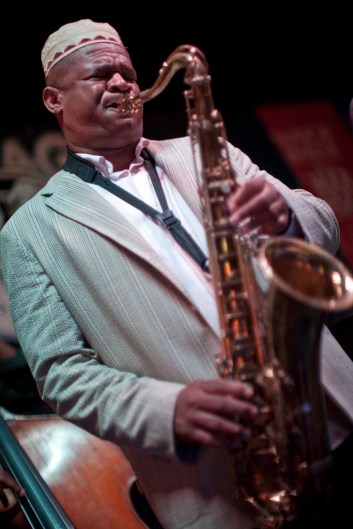
Cutting to the chase: the album I am speaking of is Transient Takes, Chicago saxophonist and AACM member Ernest Dawkins‘ 16th as a leader. Dawkins, 64, is in magisterial form on alto and tenor, shifting easefully between woolly blues, passionate ballads, and no-holds-barred free scrums that unsurprisingly landed the record on two Jazz Iz correspondents’ lists–and at the very top of one of those. Reinforcing Dawkins’ powerful, emotionally complex, and witty playing is Vijay Iyer, one of jazz’s most preeminent  pianists, but also one who is frequently accused of being too cerebral and cold (a stereotypical assessment, perhaps). Frankly, Dawkins (if not such observers) seems to inspire Iyer to some of the earthiest playing I’ve ever heard from him–and I’m a big fan. Isaiah Spencer on drums and Junius Paul also provide solid, rousing, and sensitive support, and the crisp live recording makes a very present group performance even more immediate. Transient Takes is one of the best American releases of any kind from 2017; it would have been on my year-end list had I known about it in time, but I’ll vote for it next year anyway!

The catch: Should you like a copy of Transient Takes–and if you are a fan of Dawkins, post-Trane jazz in general, the AACM, the Chicago tradition, saxophone, or Iyer, I believe you should like one–you’ll need to a) trust me re: the above take (or dig David Whiteis’ review in Jazz Times), because there’s not much commentary out there; b) write Mr. Dawkins directly at the following address for a copy ($20 if shipped in the U. S., I think)–because you’ll not find it streaming, or for sale anywhere but from him.

Ernest Dawkins, P. O. Box 7154, Chicago, Illinois, 60680

You might think it’s perverse for an artist not to “get his work out there,” but in this world of free and instant access, I found it refreshing. The process of obtaining Transient Takes took me back to the days when, hunkered down in my college dormitory, I mail-ordered punk albums from Trouser Press.

Note: According to his website, Dawkins is working on two very interesting commissioned projects that might be reason to stay informed.

OK, those were the apples. Now for the oranges….

I will freely admit to being slow to the dinner table when it comes to pop music. I don’t club, I don’t listen to the radio at all, I don’t follow the charts (my nose can’t smell them for some reason), I feel creepy listening to Taylor Swift, I’ve perhaps become too temperamentally and philosophically aligned with the world of underground, experimental, and otherwise marginal music, I don’t trust megasmashes–the list goes on and on. Though when I read Neil Postman many years ago he annoyed me, for some reason when I think of contemporary pop music, I detect him whispering in my ear, “This is what I was talking about.” However, I like to think that, particularly after friends and fellow writers wear me down and I make an effort, I do eventually bow at the feet of the Undeniable Pop Smash.

Cardi B is undeniable. Migos are undeniable. I am warming back up to Ms. Minaj. And–I am feeling my forehead here–I am even interested in Bruno Mars, thank to this:

My Stephens students laughed out loud at me this morning when I told them I had just listened to a Cardi B song for the first time yesterday (true statement). I had distributed to each of them the above Pazz & Jop poll results, and assigned them to highlight every album and song they’d heard, star each one of those they could defend in public, and otherwise notate records they hadn’t heard but were curious about, which filled them with immediate enthusiasm, but also some reticence, especially when I mentioned I’d voted in the poll. I could see on their faces a look that anticipated my stern judgment of their choices, but in response I said, “How smart can I be if I just listened to Cardi B yesterday?”


Gene Smith’s Sink (January 21st, Columbia, Missouri)

Sink

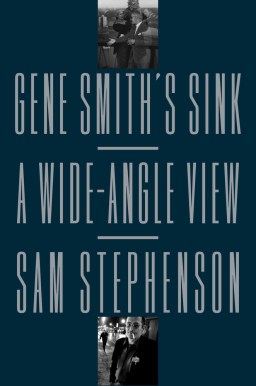
My criteria for a great non-fiction read are, of course, that the author illuminates his subject, but, on a more personal level, that his book sends me off in new reading and listening directions. Sam Stephenson, in a culmination of his more than two decades of study the photographer W. Eugene Smith, easily meets both in Gene Smith’s Sink: A Wide-Angle View, applying a Citizen Kane-style strategy to get to the tortured core of Smith’s genius and, perhaps coincidentally (Stephenson would argue not necessarily), tapping into both areas I’ve very recently explored (Japanese culture and disaster, Tennessee Williams’ complicated vision) and opening new doors for me: to the work of Robert Frank, Ronnie Free, and the deeper depths of Sonny Clark’s discography, beyond Cool Struttin’.

Perhaps the best of many brilliant chapters in the book involve, first, one that examines the source of and reason for the call of a Chuck-Will’s Widow that turns up on one of Smith’s many loft recordings, and, following right on its heels, an examination of Clark’s tragic life. How all these things connect I’ll leave it to the reader to discover–I couldn’t recommend this book more highly–but they rocketed me to a four-hour listening session that incorporated the whole of Clark’s recordings with the St. Louis-born guitarist Grant Green and two albums Clark made as a leader, Leapin’ and Lopin’ and The Sonny Clark Trio. My goal? Well, in that latter chapter, Stephenson’s driving to understand why Japanese jazz fans seem to revere Clark even more than Coltrane, and he breaks down two symbols frequently used by Japanese jazz writers to describe Clark’s music; I simply set out to test their description myself. It’s not this simple, but the symbols, used together, indicate both a muffling of deep feeling and the expression of deep feeling through the contraction of the heart. Interesting, huh? I found that description holds up.

Just prior to being set on this listening path, and just prior to having read the two chapters that lit me on fire, I’d read an interview with Philip Roth in the current New York Times Book Review. You’ll soon understand why, shortly after reading it, I was shaking my head in wonder; check out this response of Roth’s:

I seem to have veered off course lately and read a heterogeneous collection of books. I’ve read three books by Ta-Nehisi Coates, the most telling from a literary point of view, “The Beautiful Struggle,” his memoir of the boyhood challenge from his father. From reading Coates I learned about Nell Irvin Painter’s provocatively titled compendium “The History of White People.” Painter sent me back to American history, to Edmund Morgan’s “American Slavery, American Freedom,” a big scholarly history of what Morgan calls “the marriage of slavery and freedom” as it existed in early Virginia. Reading Morgan led me circuitously to reading the essays of Teju Cole, though not before my making a major swerve by reading Stephen Greenblatt’s “The Swerve,” about the circumstances of the 15th-century discovery of the manuscript of Lucretius’ subversive “On the Nature of Things.” This led to my tackling some of Lucretius’ long poem, written sometime in the first century B.C.E., in a prose translation by A. E. Stallings. From there I went on to read Greenblatt’s book about “how Shakespeare became Shakespeare,” “Will in the World.” How in the midst of all this I came to read and enjoy Bruce Springsteen’s autobiography, “Born to Run,” I can’t explain other than to say that part of the pleasure of now having so much time at my disposal to read whatever comes my way invites unpremeditated surprises.

Why read? How can you not, if you’re able?

Short-shrift Division:

Del McCoury Band: The Cold Hard Facts

Lester Flatt and Earl Scruggs and The Foggy Mountain Boys: The Complete Mercury Sessions

The Essential Bill Monroe and His Bluegrass Boys (on Columbia)

STAND! (January 20, Streets of Columbia, Missouri)

Nicole and I hit the streets today (as we did exactly a year ago) to show solidarity with those people and institutions under egregious attack by our own government. The turnout was again in the thousands, compared to around a hundred at a rally in Jefferson City in support of the current administration. When we returned home, I wanted to keep the vibe high, so I put on one of the most instantly encouraging, politically and socially encouraging albums I know of, Sly and The Family Stone’s Greatest Hits. It’s another of those collections every American should own. I have to be honest about a couple of things, though: I’m skeptical anything serious is going to happen anytime soon to address the disgrace that’s happening in front of our eyes, and I’m more than well aware that the problems I care most about have been by-products of this country’s design from the beginning. Thus, I programmed, after the whole of Greatest Hits, the more pessimistic moments of its predecessors, …there’s a riot goin’ on and Fresh. Just for balance, you understand.

32E46881-6722-4765-8287-ACCB2A9734D9

Seeking some hands-across-the-border sounds, needing more guaranteed pure delight, and inspire by having seen Joe Nick Patoski’s neat Doug Sahm documentary Sir Doug and the Genuine Texas Cosmic Groove earlier this week on Amazon Prime, I put on another house favorite, Texas Tornados. Along with the Traveling Wilburys and Lil’ Band of Gold, the Tornados were one of the best (and few artistically successful) supergroups in our music’s history, and their debut album is almost perfect; my only quibble is that their cover of Butch Hancock’s “She Never Spoke Spanish to Me” should have been a grand slam but sounds a bit soggy. Maybe it’s just the context. The record’s an unbeatable mix of driving and droll Tex-Mex rock and roll and soulful, romantic conjunto. And though Sahm, Freddy Fender (listen for his neat guitar solo on “(Hey Baby) Que Paso”!), and accordian master Flaco Jimenez would seem to be the main attractions, it’s Augie Meyers (on Vox organ, of course, but also wailing on accordian himself and singing the hell out of his two infectious compositions) who purt-near steals the show. If somehow you’ve never heard this record, change that, please.

Son of Rough Mix, on the Fly (January 18-19, Columbia, Missouri)

Still wrestling with wedging writing time in between returning to work, compulsively striving to keep up with my reading goals, catching up with Call the Midwife, and simply living. But I’m gonna by-God post every day of January if it kills me….

Thursday:

Like 15-20 other people in this world, I buy and read jazz mags. After scanning about the 50th Smoke Sessions label ad I’ve flipped to in two months, I broke down and downloaded Heads of State’s Four in One, like many Smoke releases a gathering of old pros (two of my old faves here, Gary Bartz and Al Foster) crisply and skillfully playing mostly jazz rep with a sprinkling of originals, and new-to-me Detroit pianist / vocalist Johnny O’Neal’s In the Moment. O’Neal, too, is an old pro who can make the 88s speak several jazz dialects, and he sings a bit, too. I’d love to see him in a little bar. For the record, though neither release breaks any new ground…so what? These players feel the music, the production is smart and clean, and the performances have an immediacy that’s stirring.

Friday:

Morning: due to Nicole’s enthusiasm for the Carter Family biography Will You Miss Me When I’m Gone, I sneakily bought her (read: me) (no, really, I got it for us) JSP’s endlessly wonderful The Carter Family 1927-1932 5-disc box. We broke it out at 5:15 and listened raptly to the first two discs. Few foolish moves therein, and YES Maybelle plays driving guitar. Also, that Guthrie stole their “When the World’s on Fire” melody for “This Land is Your Land”just gives the latter even more subtext.

Later in the day, driving from job to job in “The Lab” (the ’92 red-orange Ford Ranger that serves as my high-volume listening center), I revisited two old rap faves, Dizzee Rascal and Busdriver. Rascal: I love that early grime sound and I’m a sucker for an MC with a British accent. Bus: I found myself thinking, “This is prog-rap!” an association that would normally force me to separate myself from the music but which in this MC’s case, thanks to wit and humor, passes muster, barely. I was proud of myself for coming up with that label, then remembered that Robert Christgau had, hilariously and quite accurately, compared Busdriver’s delivery to Sparks and Conlon Nancarrow, so I’d probably My-Sweet-Lorded ol’ Bob.

Speaking of, Xgau recommended the new Joey Badass release in his Expert Witness column today, so I dipped my toe in that musical pond. Badass has never moved me much, but his social commentary on All-Amerikkkan Badass was just what the doctor ordered for this dude, who today finished the highly-recommended anthology Tale of Two Americas. Here, listen to the whole thing free!

The weekend has presented itself, so I hope to leave something more coherent tomorrow.

“Rock and roll is about attitude. You don’t have to play the best guitar.”

Johnny Thunders

Rough Mix on the Fly (January 17, 2018, Columbia, Missouri)

CupcakKe

Yesterday, I was back to work tutoring and trying to catch up on my reading (I shoot for 100 books a year, and as of yesterday morning I had not finished one). I listened to much music out of the corner of my ear, but I am too harried at present to connect it, so on days like these–to meet my goal of posting once a day, I am just going to list-and-one-liner.

CupcaKke (pictured above): Ephora – Featuring the first song I’ve heard in awhile that’s made me blush.

Lil’ Band of GoldCajun supergroup fronted by ebullient driving accordianist Steve Riley, with avant garde saxophonist (Dickie Landry) as secret weapon, calls out to benighted Texas Tornados fans.

Moor Mother: Fetish the Bones – Radical poet riding rap rhythms redolent in attack of, um, The Pop Group.

Pink Floyd: Relics – Out of the blue I’ve found a Pink Floyd album I really, really like, and it’s (glorious) patchwork.

Roswell Rudd: Embrace – What a nice album to leave us with before he stepped on a rainbow (here, sample a song)!

Archie Shepp: Attica Blues – Legendary–at least much-discussed–jazz (though often not jazZY) concept album not as angry and far more romantic than the title would suggest.


“You got your radio turned down too low–TURN IT UP!”

Bo Diddley


“With My Two Fists of Iron” (January 16, 2018, Columbia, Missouri)

Dion

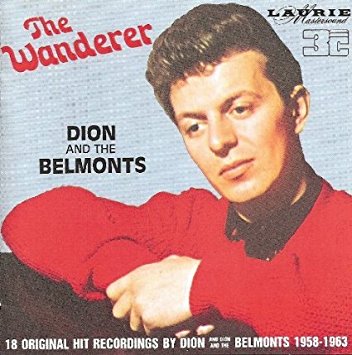
I’ve said it privately to two people, but it’s time I came clean: given a choice between Dion and Elvis (a purely fantastical situation, I know), I’d take Dion. I couldn’t possibly dispute that Elvis waxed more great songs than Mr. DiMucci ever will, as well as recorded several great albums, where I do not think The Wanderer recorded one. No doubt, Elvis was a more important figure in American culture by many miles. Over time, though, other than the Sun sessions, the ’68 Comeback, and a terrific compilation called Reconsider Baby, I’ve found his magic doesn’t work on me the way it used to. On the other hand, Dion’s voice has held me more and more in thrall. Like Presley did, the guy can sing almost anything–doo wop, cutting-edge rock and roll, folk-rock, Delta blues, romantic pop–and someone needs to get him in a studio soon, because, at 78, he can still cut it. Dig if you will (I love, and hope you will love, this for more reasons than that it proves my point):

I guess it’s the lack of affect in Dion’s delivery–a frequently very unselfconscious sincerity, regardless of the kind of material he’s singing–that puts the hook in me. That, and his fascinating musical odyssey, one that, frankly, Elvis really never got a chance to embark upon of his own accord, outside of Hill & Range Publishing. I’m not doing a very good job explaining it…it just is. Simply put, I light up much more quickly and permanently when I hear “Lovers Who Wander,” “Born to Cry,” “Daddy Rollin’,” “My Girl the Month of May,” “Your Own Backyard,” “If I Should Fall Behind,” “Two-Ton Feather” and, especially, the two songs that inspired me to listen on this day, The Great Double-Standard Should-Have-Been-Double-Sided Fantasy 45, “The Wanderer” b/w “Runaround Sue” than I do when spinning Elvis’ classics. My dear friend Jill posted yesterday afternoon on Facebook that she’d never noticed how, well, unfair to women those latter two monster hits are, especially taken together. And, of course, on the merits of the lyrics alone, they pretty much are.

If you know about DiMucci’s youth, or if you’ve read Richard Price’s The Wanderer, though, such a viewpoint shouldn’t surprise you, nor would they likely inspire you to excuse them. But, on one hand, the other merits of these songs are bounteous: the musical arrangements, the vocals–at his best, there is a very subtle raw edge to Dion’s singing that’s his equivalent of Elvis’ style on songs like “Trying to Get to You,” and he’s at his best on these–the musicianship (Mickey “Guitar” Baker, Milt Hinton, Panama Francis, need I go on?)? WOW. And, lookit, I hear a little something different in the lyrics. When I hear “Runaround Sue,” I hear a cocky guy who’s gotten wounded by a spirited, beautiful, and free woman. That’s always been an occasion for a laugh in my book. In “The Wanderer,” you might note that the protagonist himself notes that, even with his “two fists of iron,” tattoos, and trail of broken hearts, he’s “goin’ nowhere.” I’m not the first to point that out, but it’s a nice irony, and in his true artistic life, Dion wasn’t interested in a pop/doowop pigeonhole. Just sayin’.

After I read Jill’s post and engaged in some spirited commentary, I couldn’t help but break out the above Laurie compilation, which Nicole and I have worn out over the years. It’s got some dreck on it, but that’s what programming is for. It’s entirely possible that the reader might not be familiar with Dion’s work, and this is the starting point, but should you get hooked, I highly recommend this great multi-disc collection (you may have to lean on your library or Spotify):

Box set

I’ll leave you with this, as I did with Jill when I departed the Facebook conversation, a deeply felt, graceful, and definitive Dion cover version of a great Springsteen song the beauty of which Bruce couldn’t quite tease all the way out. Herein, we hear that The Wanderer has come a long, long way:

Short-shrift Division:

The soundtrack I provided for Nicole, who was cooking caldo de pollo.

Trio San Antonio

Texas Tornados

Flaco Jimenez: Arriba El Norte

Caldo


“I Got a Telephone in My Bosom” (MLK Day, Columbia, Missouri)

As I mentioned in my last post, it’s a house tradition on Dr. King’s holiday that we listen to Curtis Mayfield and the Impressions. But we also always dig pretty deep into the golden era of black gospel. My knowledge of such has been vastly expanded by the astute, enthusiastic, witty, and passionate writing of Anthony Heilbut (I recommend you to The Gospel Sound–loaded with a killer discography–and The Fan Who Knew Too Much), as well as his expert gospel productions and compilations.

Today’s artifacts:

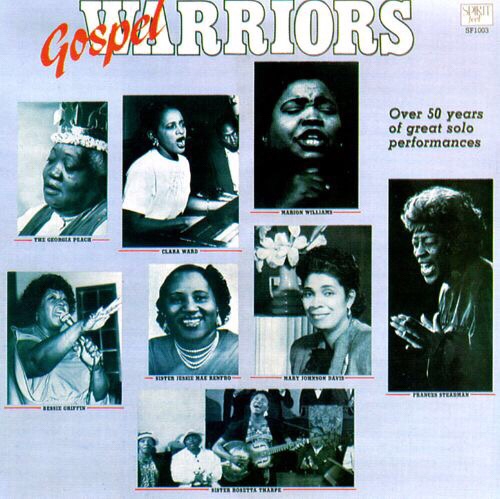
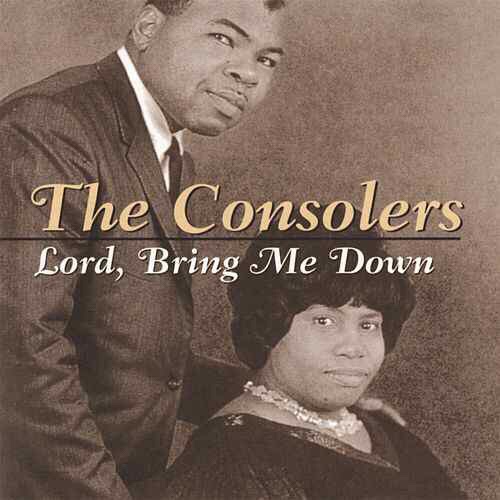
Speaking of Heilbut, this collection is typical of the catalog of his Shanachie-distributes Spirit Feel label, from which I’ve drunk many times and always left lit. Along with names you should know (Rosetta, Mahalia, Clara, and Marion–who lets loose with some of the mighty whoooos that, in earlier incarnations, Little Richard picked up and passed to the Beatles), you also get The Georgia Peach and the amazing, bluesy Bessie Griffin (when she hollers “I got a telephone in my bosom / So my heart can call on God,” this atheist almost believes). The tracks’ vintage spans from 1931 to 1982, and Heilbut’s notes are typically fascinating. Stuff is not easy to find, either.

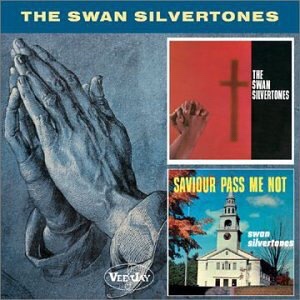
The cream of the Silvertones on Vee-Jay, which is to say the cream of the Silvertones. Which is to say the cream of golden-era quartets. Which is to say some of the greatest American music ever recorded. The Reverend Claude Jeter, forever.

Raw twinned vocals, electric guitar, a touch of organ, and that’s just about all–and, I ask you, what more might you need? Gems from the great Nashboro label.

Samples, anyone?


Short-shrift Division

Inspired by Nicole’s Carter Family reading:

Various Artists: Will the Circle Be Unbroken

June Carter Cash: Wildwood Flower

King Cakes & Muffaletta Stromboli (January 14, 2018, Columbia, Missouri)

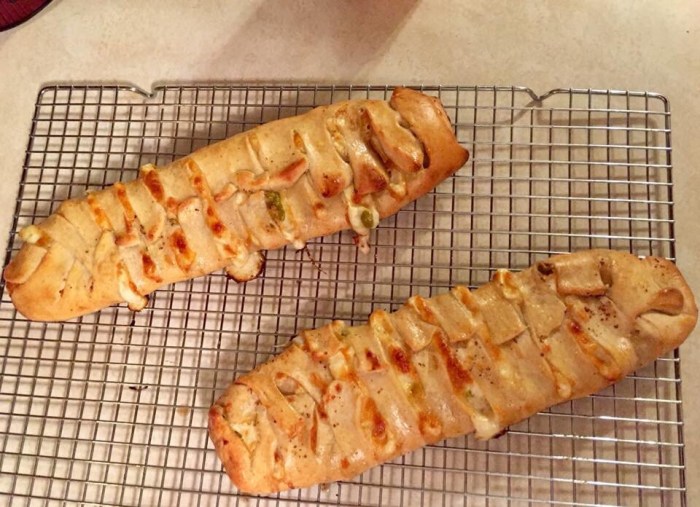
Not everyone lives such a life of luxury that he can just play music all day long, but yesterday was a very special occasion: in thrall to Carnival season, Nicole was baking King Cakes and some very intriguing muffaletta stromboli (recipe to follow), and the Saints were on TV striving to make the conference finals, so I needed to provide the soundtrack. For that service I am always game.

Obviously, I strongly recommend everything we listened to. We actually began the day with ASV Living Era’s outstanding Lester Young and Fats Waller compilations (there is something, mysterious to me, about Waller and Sundays), but soon switched to Louisiana music. Here’s a partial list before I get to the special item:

Various Artists: Alligator Stomp, Volume 1

Allen Toussaint: American Tunes

Professor Longhair: Live in Chicago

Michael White (before he was a doctor): Shake It & Break It

Billie & De De Pierce / Jim Robinson’s New Orleans Band: Jazz at Preservation Hall (this great, out of print Atlantic series is well worth searching for)

Big Chief Juan Pardo & The Golden Comanche: Spirit Food

James Booker: The Lost Paramount Tapes

Various Artists: J’ai Ètè Au Bal, Volume 2 (I’m telling you, this documentary is essential viewing!)

There were more, but I want to get to a fantastic record from 2013 that I broke out that still releases thunder and lightning, and actually broke some musical ground in it’s tradition: Bo Dollis, Jr. and The Wild Magnolias’ A New Kind of Funk. The promo is worth watching for background and beats reading me:

A New Kind of Funk, in its way, is what it says it is. The mini-tradition of Mardi Gras Indian tribes recording albums goes back to Bo’s dad’s taking the Magnolias into the studio (with ace guitarist Snooks Eaglin) and recording a classic eponymously titled record for Polydor in 1974, and The Wild Tchoupitoulas, aided and abetted by the Nevilles, The Meters, and Allen Toussaint, following suit (and, to my ear, stomping some romp, ever so narrowly) in 1976. Most sane music aficionados believe it ends there, but those two records started something. Several dozen “tribal records” have been released since, at least–the folks at Lousiana Music Factory are probably the only ones who know for sure–and all I’ve heard are good. A recent highlight, for example, is 79rs Gang’s Fire on the Bayou. But young Mr. Dollis’ album takes “Injun music” into rock territory on the album without losing what’s essential: the funk. Guitar (slide and resonator, along with some power chording) leaps loudly, but without vulgarity, out of the mix on several tracks. Electric bass, and drumming that doesn’t seemed honed in parades, further juices the best songs; if someone had told me this before I bought the album, I wouldn’t have bought it, but it would have been my loss. These seeming sins against the order work, because they’re carefully balanced against the inspired traditional chanting and refrains that make the mini-genre fun (and educational) and interwoven with the eccentric rhythms and local sounds (like a country violin) of southern Louisiana. Another kind of innovation is that the younger Dollis has dared to write songs (the title tune, the rousing opener “We Come to Rumble“) that push up against the likes of “Tootie Ma,” “Liza Jane,” “Fire Water Big Chief Got Plenty,” and the eternal “Hell Out the Way.” The record isn’t perfect–a cover of Toussaint and Lee Dorsey’s “Everything I Do Gohn Be Funky” doesn’t get off the ground. But if you wanna take a chance on some music that will set your house on fiya during Mardi Gras season, think about tracking it down. It’s listed as being on One More Time Records, but maybe check CDBaby first.

The Saints lost on what I will call a non-tackle, but the delicious King Cake (alas, no baby for me), the music, and the muffaletta stromboli was most decent salve. Hey, courtesy of louisianacookin.com and Nicole, here’s the recipe if you wanna try it:

Muffuletta Stromboli

Makes about 24 servings

Ingredients

• 1 (15-ounce) package pizza dough

• 2 tablespoons Creole mustard

• ¼ pound thinly sliced soppressata

• ½ pound thinly sliced deli ham

• 1 cup olive salad*

• 1 cup shredded mozzarella cheese

• 6 slices provolone cheese, halved

• 1 large egg, lightly beaten

Instructions

1 Preheat oven to 400°. Spray a large rimmed baking sheet with cooking spray.

2 On a lightly floured surface, roll dough into a 14-inch square. Spread mustard onto dough, and cut in half.

3 Arrange overlapping slices of soppressata down center of 1 piece of dough, leaving a 2-inch border on both sides. Top with 3 slices ham, ¼ cup olive salad, ¼ cup mozzarella, and 3 provolone halves; repeat layers once. Cut strips of dough at ¾- to 1-inch intervals on both sides of filling. Fold top and bottom pieces of dough over filling, and braid strips of dough diagonally over filling, stretching strips, if necessary. Place on prepared pan. Brush dough with egg. Repeat with remaining dough, soppressata, ham, olive salad, and cheeses.

4 Bake until golden brown, about 25 minutes. Let cool for 5 minutes before slicing.

Notes

*We used Boscoli Italian Olive Salad.

A Poetry of Code (January 13, 2018, Columbia, Missouri)

“It’s all codes.” James Luther Dickinson

We have a tradition in out house over Dr. King’s weekend: we listen to the Impressions. The best of Curtis Mayfield’s writing for the group consists of delicately coded messages of encouragement for black Americans during the civil rights struggle, the most famous, perhaps, being “People Get Ready,” “I’m So Proud,” “We’re a Winner,” “It’s Alright,” and “Keep On Pushin’.” The titles do not suggest much coding, but the lyrics can be heard (and were heard by many, I am sure) as deeply romantic. A deeper dive into the Sixties Mayfield songbook, however, will reward you with more complex gems, such as “Long, Long Winter” and, especially, “Isle of the Sirens.” The former would resonate powerfully with Mayfield’s fellow Chicagoans, both in their activism and their tilting against that cold wind they call “The Hawk,” but it’s the latter that stuns me most. First, have a listen:

On the surface, as perhaps the only pop music representation of an episode from The Odyssey, it’s stunning enough: the lyrics, which could easily have been strained, are expertly crafted; the vocal arrangement reinforces the fact that the episode (and America’s climate) threatened a group; and the guitar? If you’ve ever wondered why Jimi Hendrix was so rapt in his attention to Mayfield, think of Jimi’s gentler compositions and listen to this again. But beneath the surface, the shout of “Keep course!” is where the real action is.

I wish Mayfield’s songs weren’t still so relevant and necessary. We’ll be playing them all day Monday.

Short-shrift division:

Guitar-heroes : Bassekou Kouyate and his ngoni army, wailing as a coup is being launched outside the studio walls in Bamako, on Jama Ko.

Injuns comin’ (it’s Carnival Time): Donald Harrison, Jr. stitching tribal chants into modern jazz on Indian Blues

Joy from Acadiana: the magical soundtrack to J’ai Ete au Bal – see the movie, luxuriate in (and dance to) the music.