Good to My Earhole, September 2016: TYLER KEITH AND THE APOSTLES–DO IT FOR JOHNNY! If ya got any guts!

THE highlight–THE HIGHLIGHT–of my last week’s listening (and that’s including Rosetta Tharpe, The Kinks, and The Electric Eels), based on a 10-point scale coordinated with my inability to quit playing the record:

Tyler Keith and The Apostles: DO IT FOR JOHNNY – 9.5 – You know what I think about a lot? Rock and roll (it used to roll) sprang from the other side of the tracks, sounded really dangerous, and skipped a lot of school, so to speak. That’s why it has meant so much to me, from the age of 13 to now, people. These days, it’s predominantly ‘burby or downtowny, makes nice (boasting credentials from the James Taylor 2.0 I’m-Sensitive-So-Lay-Me School), and studies its vinyl collection until 2 a.m. Which is why my eyebrows touch my scalp when I hear about a new Tyler Keith release. A church-raised, working-class Mississippian, Keith forged his previous bands, the Neckbones and the Preachers Kids (their records well worth your quest), into units that had too much Watts-Richards rhythmic spring to be stuck in the garage, and too much post-punk disrespect and dissonance (epitomized by Tyler’s snotty but passionate Richard Hell-goes-to-Popeye’s vocals and always-unruly guitar) to ever break college-rock. Those categories are pulverized now; it’s all a crapshoot, a REAL crapshoot, which is why you should just trust me and check out this release. Do It for Johnny is keyed to the title song, the greatest anyone will ever write about The Outsiders (and it ain’t just fandom–you might have noticed some socs vs. greasers cultural ruckus lately, or maybe not, and Tyler’s consciously tapped in), and kicks off with the class-conscious “Criminal Gene”–what current young white band of note do you know would admit to, describe fighting against, and just fuck it and give in to, such a characteristic? Like Mick, only with less care and delicacy–that’s a compliment to Tyler–he has no fear of a tough ballad to change the pace (“Dangling on a Wire”). He impressively shows off his Spanish on the narco-rocker “Vaya Con Dios” (the idea of a God’s never far from this man’s mind). He exposes imagination for the terror it really is on a sneaky, wildly rocking green-eyed monster song. He essays a less romantic, poor man’s versions of Springsteen’s “Backstreets” (the deceptively titled “Bright Side of the Road”). And he and his crack, sleazily loose band go out on a crime-beat Leiber-Stoller tribute that supports the old adage, “Tell the truth, then run.” Final temptation on the sticker? It features those time-honored tensions of–really, again, battles between–sin and salvation, youthful adrenaline and mature sedation, and class and, um, no class. It’s fully loaded, the best rock AND ROLL record of the year, available right here:
Good to My Earhole. August 10. Kama Sutra and Bondage. I give! My safe word: trumpets!

Jason-Derulo_Talk-Dirty_Cover

Highlight of my week’s listening–yep, that’s singular–ranked on a scale Thich Nhat Hanh’s teachings forced me to use:

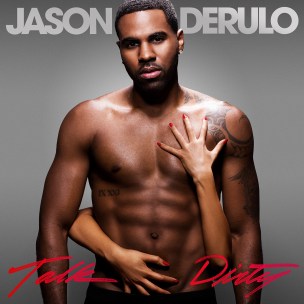
Jason Derulo/TALK DIRTY – 9.5 – Okay. First, the sheer dam-bustin’ daily flood of music makes it impossible to hear everything right when it comes out, so get off my ass for just now bringing this up. Second, though I was apprised of the excellence of this should-be-illegal album long ago…well, look, I am a 54-year-old white dude, and it seems of shaky grace for me to be carrying around–or actively and avidly listening to–a record that has a cover like this one (I have a habit of picturing myself in the position of artists, and I collapse in laughter at the thought of me walking in ol’ Jace’s shoes there, or through the songs). Then I found out he’s involved in those…talent shows. HOWEVER–I decided to take the plunge for gits and shiggles. I have been feeling my age and mortality of late, and maybe I was questing after a jolt. Who knows? Too, I’ve always dug black music barely more than white (that distinction is slowly being erased, and bully for that), Al Green’s my man, so, as Sam Peckinpah wrote, “Let’s go–why not?”

I am helplessly in love with this record! Each of the first four songs are augmented with fabolous, tweak-ready, ALIEN noises: Balkan Beat Box-isms, what sounds like a toy flute, synthesized trumpets (?), corny oldsters Snoop and 2 Chainz, thonkin’ bass. Plus, besides singing ok, Mr. Derulo has a sense of humor–bondage and Kama Sutra? The lyrics are mostly dumb, but when I listen to it as pure music, under the guidance of Mr. John Cage, it’s irresistible. Maybe his Haitian heritage helps?

There’s a Black-Eyed Peas moment (still, though, pretty much an up, given our times), and some yawny semi-slow ones, but–returning to a nod above–no one who dug/digs classic era Al Green has a right to scorn this. Jason does NOT have those pipes, but the package is so physically stimulating you can’t afford to miss it. Like I wrote posting the title song to Facebook, “Uncle!” Let me up! I hate strip jointz, but long live bubble gum.

Apropos of nothing but The Reaper…a plug for an old, simple George Jones documentary that might stun you.

I can’t shake mortality off my mind. I have been playing the hell out of Hag and Prince; after having recently read a book a piece about Gaye and George Jones, I’ve also been jamming those guys and scoping vids.

I must tell you: if you are a Possum fan and haven’t seen this documentary, which I picked up for $3 at a grocery store VHS sale in the early ’90s, you’re cheating yourself. It’s a very simple production (by Charlie Dick–yeah, that Charlie Dick), with somewhat corny narration, and its packaging does the product no favors. However, it is loaded with treats. Loaded

*Great clips of a happy, healthy George, just hanging out at the hacienda, joyously offering up impromptu versions of gospel (“Lily of the Valley”) and Jones (“No Money in This Deal”!!!–just a couple of lines, but holy shit!) classics on acoustic guit for the director.

*Wizened and oft-hilarious testimony from bizzers like Gabe Tucker and Don Pierce (old Starday hands) and Billy Sherrill (reminiscent of Rip Torn’s Artie on The Larry Sanders Show), and peers like Cash, Jennings, Lynn, Hall, Twitty, and Owens. I was gonna call Cash and Jennings old, but when this video was made they were my age. Or close.

*Fantastic performance clips: Jones knocking “Into My Arms Again” out of the park on The Ozark Jubilee; exchanging Cheshire cat grins with master fiddler Johnny Gimble as he defies mild hoarseness and kills on “Bartender’s Blues” (see below) and “He Stopped Loving Her Today”; winding up for a somewhat disturbing mock punch during the “…as they fight their final round…” line while jocularly dueting with Tammy on “Golden Ring; and totally sticking the landing (as he was so often wont to do on last lines) while craftily moseying his way, in deeply loving fashion, through the greatest version of Hag’s “I’ve Always Been Lucky With You” anyone will ever do.

*Sobering and moving testimony from Jones on the trials and tribulations of booze and drugs, as he recalls dropping to 105 pounds (backed up by a shockingly gaunt, diminished Possum desperately working through “Someday My Day Will Come” on a country show in the mid-Eighties) and 72 points of IQ (backed up by the infamous highway patrol arrest footage you may have already seen).

Sorry to run on–but it is that good. I think I’ve watched it 20-some times. Used to do a music documentary series once a month at the high school I used to teach at. When I screened this, the audience consisted solely of me and this young kid with a special ed diagnosis who wrote and sang Hank Williams-styled songs. We sat together on the front row and didn’t speak or blink for an hour.


Sorry So Slow, Jazmine!

I don’t need to tell you there is not enough time to be able to hear all the great music that is available to you. Nevertheless, I do my level best to at least sample records (across the board, because I am philosophically dedicated, too, to listening broadly) that are either very widely recognized as excellent or that writers whose standards are high and whose opinions I value write paeans to.

But–I missed a masterpiece last year, one I was aware of but for whatever reason (I will admit to being very picky about modern r&b) I kept putting off. FINALLY, yesterday, I got to it, and many of you who know the record already are going to laugh at my tardiness. Had I bought it when it was released, it would have been in my year-end Top 10, and, after four gobsmacked listens, I imagine I might well have slotted it at #1.

As I listened to it again in the truck this morning, I began thinking of many folks my age whose tastes run more completely to radio-friendly music than mine, specifically those who claim (or suspect) that “there’s nothing new that’s good.” No offense, but that is always a ridiculous claim; however, when we experience–along with ever-quickening years–a shift in priorities, when we don’t get out much among more than our private circle, when we forget about our own youth (and the dance floors we were on), when we keep it on just one station, it can happen. I’ve had to fight that battle myself, to be honest (though only occasionally, and I always win).

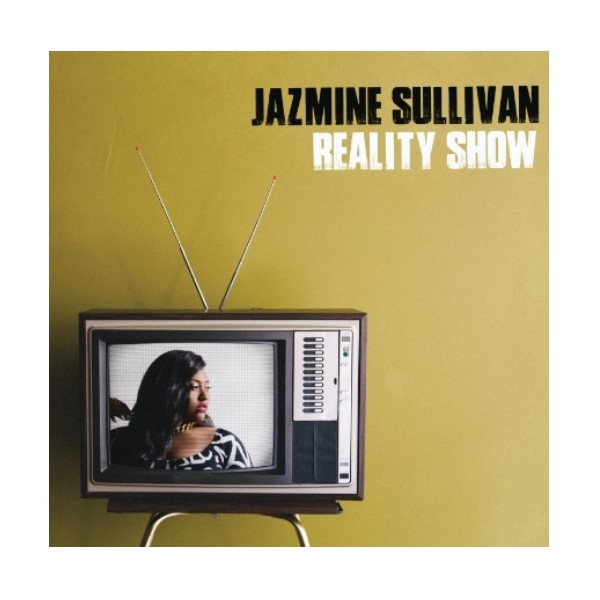
For an unholily great combination of singing, production, and writing, for a deft ability to shift in and out of recognizable personas that she makes us care about and see differently, for a wonderfully sustained theme of rising above that never goes corny, for the one-two punch of toughness and vulnerability in her singing and writing–if, like me (until just the other day), you don’t know her or this album–you need to listen to Jazmine Sullivan’s REALITY SHOW. My socks are knocked off, my hat’s in the creek. I hope I didn’t bore you; if it’s any consolation, this record WON’T. I could provide specifics to back up that catalog of virtues, but that will only spoil your own discovery.

jazmine-sullivan-reality-show-1cd-

JAZMINE_SULLIVAN_REALITY_SHOW_art2


Good to My Earhole, April 6-9: Goodbye, Merle

On the off chance one of my blog-followin’ friends hasn’t heard much ‪#‎MerleHaggard‬ and would like to give him a shot now that he’s stepped on a rainbow, well…we all have our favorites, and he made a slew of albums, but I reach for these most frequently. On these recordings, he is in tip-top voice, his justly-famed band matches him move for move, and the material? I can stand it, but I can’t hardly. And that’s a compliment…

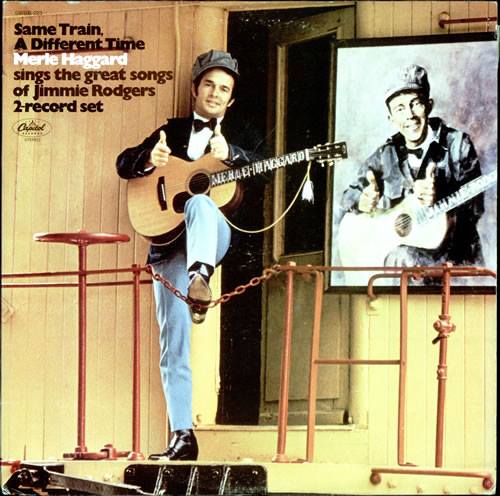
Same Train

Same Train, Different Time: A tribute album to one of Hag’s idols, Jimmie Rodgers, the Singing Brakeman. It’s got narration, but frankly, I love it, because it’s from deep. The selections reflect Merle’s close study and, with both James Burton and Roy Nichols picking, things even get a little funky. It was a different time, and the singer will make you feel it.

'51

The Way It Was in ’51: I do believe this is tragically out of print, but it’s one side of Hank Sr. covers and another of Frizzell tunes–with a heartfelt pair of Hag bookends. Short, sweet, and sung the hell out of. Sure bet: Merle + Lefty tune = double, triple, or homer. Impossible to get out or pitch around.

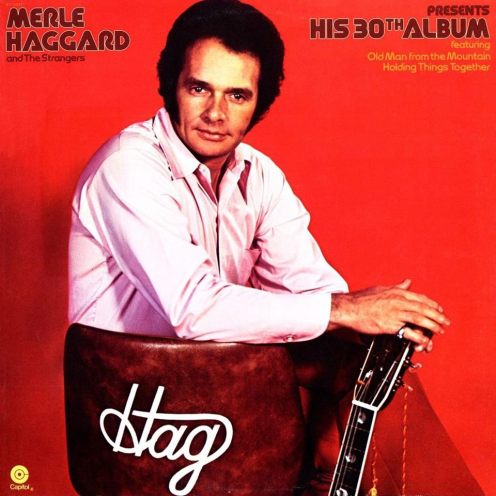
30th

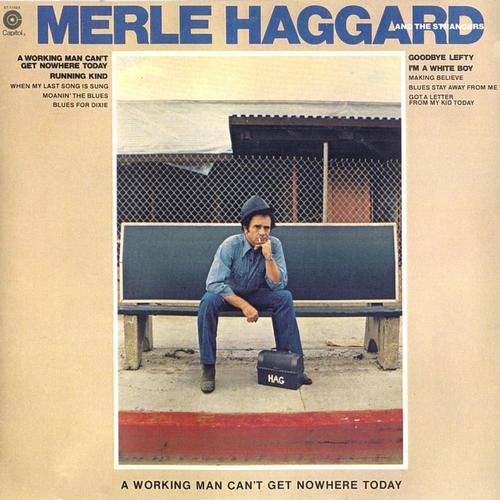
Working Man

Presents His 30th Album/A Working Man Can’t Get Nowhere Today: Two tuff rekkids now on one disc. The Strangers at peak sting-and-swing, with Merle’s pen drawing a little blood. There’s a few clinkers, but the likes of “Old Man From the Mountain,” “Honky-Tonk Night-Time Man,” “Holding Things Together,” “Running Kind,” the title tune, and two gutsy songs about being white will make you forget ’em. Plus, as always: masterful covers of Wills, The Delmore Brothers, Kitty Wells, and The Hillbilly Shakespeare.

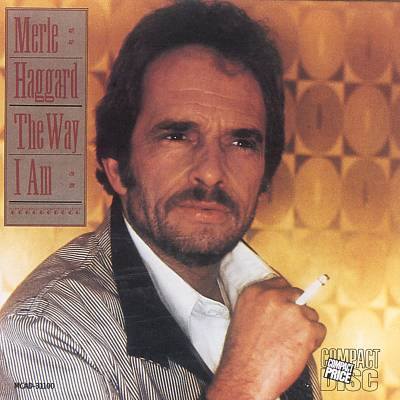
the way I am

The Way I Am: This leads with a moving, autumnal take of Sonny Throckmorton’s title tune, and features a couple of ace originals–but best in show are a set of Ernest Tubb and Floyd Tillman covers woven together with love–those two pre-and-post-war honky tonkers could have been twins, in a way–and balanced expertly between impression and homage.

Best of

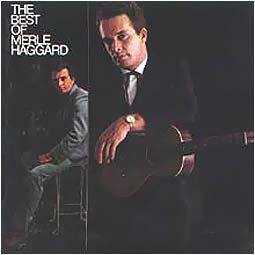
The Best of Merle Haggard: This was the first country record I ever bought, for $3, at a Wal-Mart, when I was still in my teens and didn’t know from country. Black cover, Merle in black, too–and, um, “Branded Man,” “Sing Me Back Home,” “Lonesome Fugitive,” “Swinging Doors,” “The Bottle Let Me Down,” “I Threw Away the Rose,” “Strangers.” It ought to be illegal to unleash that learning on a kid all at once. And that ain’t all: for emotional breadth and shifting masks, a great novelty (“Shade-Tree Fix It Man”), a scary spiritual number (“High on a Hilltop”), and a sleeper you don’t hear many folks mention, “My House of Memories,” which was the first time I realized singing required thinking (and listen to the way he sings the last word of its lines!). $3, over in less than 30 minutes, life changed forever. And let’s bring the needle down again, shall we?

Heart of the Midwest: Money for Guns’ 21st Century Life

moneyforguns3

“When Pierre started this city
He set the streets just for you and me
But he never could have had all this in mind
And if you’ve got the time, I’ve got the time….”

“I’m Your Mark,” (Will Saulsbery)

From his early days in the Frustrated Bachelors, through his days doing dirty work as a substitute high school teacher, to his current work in St. Louis’ Money for Guns, Will Saulsbery, the band’s principal writer and lead singer, has never yearned to get the hell out. As a nearly lifelong Missourian (like Will), I can testify that that is, in fact, a yearning one hears frequently, particularly from artistic types. I can definitely understand such a yearning; often, particularly when my mind drifts to our state’s legislature, I feel the state name should be spelled “M-I-S-E-R-Y.” What I like about Saulsbery and his band is that, in their music and words, they capture fairly vividly what it’s like to live here, without condescending, which, for all our growing resemblance to dubious states that shall remain nameless, would be a dick move.

Paradoxically, though, part of what makes one a Missourian is the desire to escape, however temporary that desire might burn. The album begins with “Dead, Drunk, and Pretty”‘s persona lost in a dream of New Orleans (are the referenced “gutter punks” from the dream, or on St. Louis streets?), and ends with a drawn-out, dope-sprung dream of El Dorado, in which a lover uncomfortably comforts his junkie paramour with the likely-doomed idea of cutting and running from St. Louis’ radiating gateway. It’s hard not to notice, though, the telling, unifying details that evince an admirable rootedness: of interstates out of Kansas, of hawks’ eyes, of trains (three references, not sure if one is a MetroLink), of the founding father Pierre Laclede, of cold-eyed live burials, and of straight-out declarations like “I can’t wait to see St. Louis again”–without its “TV or the gunmen.” I wonder if all of this is all that Missourian, or if it’s U.S.A. circa 2015. I think it’s Missouri. “The Catholic kids drowning this town” of “I’m Your Mark”–which, by the way, lead into another suggestion of leaving–might be the tip-off.

I don’t trust labels as far as music goes. They usually sell the creators short. 21st century Missouri seems most known for Nelly, Tech9 (sp?) and, vaguely, Americana. The former two rappers couldn’t be more different, though they are underrated in how of this place they are; the latter genre has to stretch a little to incorporate The Ben Miller Band, whatever Mark Bilyeu’s up to, Kentucky Knife Fight, and this group of ne’er-do-wells–just to name a few I know well. Kansas City, St. Louis, and Columbia all have their bohemias, but, from my experience, they don’t seem rooted in this place. What feels Missourian about Money for Guns is the touches of Americana, especially Dr. Todd Jones-Farrand’s mandolin, which doesn’t always do the usual things (check out his runs and comping on the at-times-punk-jazzy “Red High Heels”!), without the abandoning of a straight-ahead Midwestern kid’s love of straight-ahead rock and roll. Epitomizing this strategy (that seems like a cynical word, and I do not mean it that way) are the album’s two lead cuts, the title track, and the flat-out beauty quoted twice already, “I’m Your Mark.” I wouldn’t call a daringly extended piano-fueled coda “Americana”; I’d call it guts and growth. And vocals are sure enough music, as well; Saulsbery’s tenor has matured considerably from American Trash, where at times he seemed to be trying to catch the elusive (but fading) tail of Conor Oberst’s hyper-emotive star. On 21st Century Life, he’s content to let the natural tears (rhymes with “bears”) in his singing convey the matters of his Midwestern heart. I find that Kyle Kelley’s baritone changes of pace need a little work, a little nuance. But I don’t remember him taking verses or leads on the debut, so perhaps all he needs is time.

I really like this album. I can tell you from three listens that “Dead, Drunk, and Pretty” (the production of which shows up the rest of the album a shade), “Red High Heels,” and, especially, “I’m Your Mark”–a definition of the heart of the Midwest if anything I’ve heard is–are worthy of your downloading if you are just wanting to tire-kick or dip your toe in the Money for Guns pool. I would lay down a Jackson that the album will grow a layer of intensity performed live, so look for them in your town. And, thinking about the band’s (and the, um, auteur‘s) future, I will also wager that the opening out of this record into the wild air of the state’s streets, highways, and rails, from American Waste‘s dank and dangerous club interiors, indicates creative minds focused on more than just the song at hand. That is the sign of artistic endurance, folks.

BUY IT NOW! ALERT

Schooley

John Schooley: The Man Who Rode the Mule Around the World (Voodoo Rhythm)

Niangua, Missouri, escapee Schooley continues to evolve. As the gee-tar and co-writin’ fulcrum driving The Revelators (of Columbia, Missouri–find their Crypt releases), he helped coin a kind of style: rockabilly oi–it seemed to me at the time–or farmboy boogie, as he might call it now. As the whip across the shoulders of Austin’s Hard Feelings, he found a place of no disgrace in the rockaroll world during a time when that wasn’t easy. As the hardest-working, hardest-thinking one-man-band (there are a few) in the Yew-(be)Nighted-States, he has preached and played across this turf and yon til his knuckles and tonsils have bled. This is a man who doesn’t settle, who is as Show-Me-State-stubborn as the mule Charlie Poole rode ’round the world, and his new release is his best. Augmenting his barnstorming six-string and bigfoot beat with banjo, fiddle, piano, handclaps, and harmonica (courtesy of the great Walter Daniels), barreling through old weird American traditionals (a plangent but lively “Cluck Old Hen”!), golden-age nuggets from Marvin Rainwater and G. l. Crockett, and some snazzy originals, he achieves something akin to what Greil Marcus once wrote about Jerry Lee Lewis’ Sun auditions: “…[O]ne long roadhouse stomp.” And on “Doubleneck Stomp,” he catches up to his long-time ambition of mating Roy Buchanan and Link Wray. His vocals still need some oomph, but if you turn the record up as you are instructed to on the album cover, it just doesn’t matter.

THE THREE-SIDED DREAM: A Must-See Film About Rahsaan Roland Kirk

Roland

Blinded as a newborn by hideously incompetent medical personnel, discovering sound possibilities as a youth by blowing through the cut-off end of a garden hose, dreaming of playing multiple horns simultaneously then soon after finding the perfect (and antique!) horns in a pawn shop basement, and, unaccountably, willing himself into one of the most unique and passionate players in jazz during a decade (the Sixties) of abundant uniqueness and passion, Rahsaan Roland Kirk should have been the subject of a feature-length documentary a long, long time ago. True, Dick Fontaine’s 25-minute 1967 documentary Sound??, featuring Kirk and John Cage making a compelling and wryly humorous case for sound as music, is a cult classic–the footage of Kirk serenading wolves at the London Zoo and rocking the hell out of his classic “Three For the Festival” at Ronnie Scott’s can make a benighted viewer a lifelong fan. Rhino’s issue of Kirk’s wonderful 1972 Montreaux concert is also a piece of essential viewing for any jazz freak. But the inspiring and tragically short life of Kirk is one of the most gobsmack-inducing tales in music, and director Alan Kahan has done it proper in The Three Sided Dream. See it as soon as you get the chance; my sources tell me Kahan’s having difficulty finding screenings for it, and that’s a completely unjust situation for him and his film.

Honestly, having been a Kirk fan for many years, seen, heard, and read everything about him I could get my hands on, and experienced a few more unimaginative music documentaries than I would have liked, I walked into the film with, well, meager expectations. That is, I figured I’d see footage I was already familiar with, hear a procession of talking heads retell Kirk’s life story, and miss some important information (likely, I thought, about his politics) that might have made the film and the artist’s portrait more complex. I’m happy to report that Kahan’s film is a major success. Mainly, he invests it with such emotional power, through his handling of Kirk’s struggles with critical misunderstanding, racism, and blindness (the latter, wonderfully, seems the least difficult challenge Kirk faced!) and his integration of Dorthaan Kirk’s home movies of her husband and children, that I–and other viewers–struggled with tears of inspiration throughout the movie. Also, the talking heads here almost always have something insightful and interesting to say, especially trombonist Steve Turre, who played in Kirk’s band after the hornman suffered a stroke that would have ended the career of 99.5% of other musicians but which failed to completely derail Rahsaan. Turre’s sense of humor and wonder, and his trove of concert stories, are a cut above the usual music-doc fare. Mrs. Kirk’s recalling of her life with Rahsaan–especially her reflections on his post-stroke struggles–are also major highlights of the film. Though I had seen roughly half of the footage Kahan unearths for The Three Sided Dream, what I hadn’t seen was often revelatory, especially a full, spectacular performance on The Ed Sullivan Show, the story behind which is worth the price of admission–and you will have to pay it to find out. Most important, Kahan lets the voice of Kirk–visionary, witty, angry, playful, the voice of a true old soul–tell most of the story.

I have few quibbles about the film. I initially felt the long, initially-uncredited reminicense/assessment of Kirk by a modern poet that opens the film unnecessarily hindered its momentum; upon reflection, it now seems equivalent to a good theme-setting introduction to a book. One sequence includes Kirk’s famous (and amazing!) combining of “Sentimental Journey” and a segment from Dvorak’s New World Symphony–he plays the melodies simultaneously on different horns and harmonizes them, with spectacular results–but the narration and animation run over the actual performance, so that when we are left alone to hear the music, Kirk’s moved on from his experiment to a new melodic expression. But, as I said, those are mere quibbles.

I cannot overstate how powerful this movie is. It hit me so hard I was still feeling sorrow (along with an overpowering desire to listen to Kirk all of this week, which I will) an hour after I walked after the theater–that Kirk died at 42 is just a cruel theft of (or by?) the cosmos. As well, I felt immense joy and inspiration in beholding a story of titanic artistic and personal accomplishment against towering odds. I cannot quite imagine the impact it will have on open-minded, open-eared music fans who know nothing of Kirk’s life and music. Do your best to seek this film out and see it; consider, as well, the possibility of helping the filmmaker get The Three Sided Dream to a wider audience.

Note: Upon having seen the film–or, perhaps, in preparation for it–read John Kruth’s engrossing Kirk biography Bright Moments, and try these classic Kirk recordings just to get started (there’s more):

We Free Kings  (Mercury)

Rip, Rig, and Panic (Mercury)

I Talk with the Spirits (Verve)

The Inflated Tear (Atlantic)

Volunteered Slavery (Atlantic)

10 Reasons to Read Amanda Petrusich’s DO NOT SELL AT ANY PRICE

donotsellatanypricecoverimage

I had been eagerly awaiting the release of this book. I am a man who has no resistance to enthusiasm–I prefer it, in fact, to appearing cool, by a long shot–and a serious, 35-year record-collecting habit that’s led to an 8,000-unit collection tentacling through my domicile. My only 78s are a little Ernest Tubb “book” from the early ’50s, but the collectors chronicled here have long been heroes of mine, having made it possible for me to hear Jim Jackson’s “Old Dog Blue,” Blind Willie Johnson’s “Dark Was the Night, Cold Was the Ground,” and countless other heart- and mind-piercing classics from before Hitler permanently darkened the world. In fact, my only worry about reading the book was that I’d go on auto-pilot, since I’d already read much by and about Harry Smith, Joe Bussard, John Fahey, and R. Crumb (who’s not profiled here, for good reason). That mild anxiety, joined with my tendency to self-start, my voracious and ominivorous regular reading habits, and my almost-hysterical imagination of the contents of a future book about which I’ve become interested–well, I was prepared to be disappointed. Ms. Petrusich, however, did a wonderful job on a difficult task. The proof of the pudding is I devoured it in two days, and I’m a busy guy.

As a bow to her chapter on the links between gender (and disabilities such as OCPD, Asperger’s and autism) and record collecting, being a man, I will present you a list of 10 reasons why you should read Amanda’s book:

1. She is very fair to a parade of (mostly) weird, old white guys who would alienate most people–even the mysterious and not particularly hygienic Don Wahle. As alienated as many of these collectors are, she imparts them with dignity.

2. She learns to scuba dive, braves foggy, twisty Appalachian roads, fends off lecherous truckers, suffers stomach viruses, seldom gets to draw on sisterly support, has to endure a thirty-year-old hipster with a bowler hat and pocket watch, and sits still under the imperious gaze of every collector who demands total silence while a record’s being played–just to bring us this book.

3. She very deftly blends thorough research, probing interviewing skill, bemused humor, both aesthetic and psychological analysis, skepticism, deep curiosity, and the time-honored quest narrative.

4. She will send you hurrying back to your own collection (or to your purchasing wish list) with her descriptions of piquant songs–and you will be surprised and enlightened, no matter how well-versed you are. For me, it was to learn the history of “Skokiaan,” a song I love in its current interpretation by The Pope of NOLA Kermit Ruffins, but didn’t know the history of. An iron law of music books: it must lighten your wallet and enrich your aural store.

5. This is a subject that could easily have been presented with great (and fatal) sobriety and convolution. Ms. Petrusich succeeds in navigating it with delight and clarity–the delight especially rubs off.

6. She can write a great chapter heading (and subtitle), then justify it.

7. She’s from Brooklyn, and you never feel hipped out to the margins.

8. These days, it seems like every non-fiction writer is required to incorporate brain research into her text, but, by the time Petrusich reaches that chapter, you feel it’s…necessary. In fact, you will probably have developed your own theories, which she will make it fun for you to test.

9. She is moved to buy 78s herself.

10. Regarding the matter of what makes a performance great, after a little wrestling, she seems to side with Dionysus as opposed to Apollo. This appears to be because, according to the research, she’s a woman, but Joe Bussard and I stand here to cry that you can make research say whatever you like. It won’t trump the joy that roars from ear to heart to extremities.

Follow Amanda on Twitter, and, until Amazon chills out, grab her book from one of the OTHER choices listed here.