Phil’s Faves: A Mid-Year Report


These are the “new” recordings that I’ve enjoyed the most in 2014.

1. Allen Lowe: Mulatto Radio–Field Recordings 1-4, or: A Jew At Large in the Minstrel Diaspora – This is the most ambitious recording of 2014–if not the decade, or the century. That difficult-to-love high school principal of jazz, Wynton Marsalis, pissed off Lowe, as ardent a student of our country’s musical history as you can find, in a conversation about jazz that, of course, ventured into areas of race, appropriation, and creative rights. Lowe responded with a four-disc (five, if you ordered it early!) tour de force that’s more alive and interesting than anything Marsalis has recorded in years, if ever. You don’t have to love jazz to be fascinated with the result, which easily lives up to its provocative title and tours every nook and cranny of the genre. And, in this listener and thinker’s view, it wins the argument. Check out my buddy Ken Shimamoto’s much-more-wise commentary at his Stash Dauber blog (he’s a writer/muso like Lowe).

2. Bo Dollis, Jr. and The Wild Magnolias: A New Kind of Funk – What happens when you run a line of serious wattage into a Mardi Gras Indian practice.

3. Obnox: Louder Space – Continuing the fine Cleveland/Columbus tradition of ugly noise and urban protest. Lamont Thomas, with a serious punk pedigree to deepen his geographical birthright, makes a racket to light a fire under Mick Collins’ ass. Euphonious racket!

4. Latyrx: The Second Album Who cares if their first album dropped 17 years ago? Lateef and Lyrics Born are still two of the most unique rappers spittin’.There ain’t no “Balcony Beach”–how could there be?–but there is “Deliberate Gibberish”!

5. Ross Johnson and Monsieur Jeffrey Evans: Vanity Sessions – Out to prove the Memphis rock and roll underground is still nuts now that the Oblivians have grown up, they win, four falls out of six. The title of the opener–“Three-Beer Queer”–says more than any review can.

6. Wussy: Attica! – Robert Christgau calls them a blending of VU and the Flying Burrito Brothers, which is absurd. What they are, with the star- and shock-power of rock and roll browning out, is the voice of far less polymorphously perverse and doomed adults than Reed and Parsons ever were, negotiating the 21st century into a draw and constructing a passionate but unflashy soundtrack to back their bargain. That’s probably absurd, too, but if you are a rock and roll fan of a certain age (say, if you actually walked the Seventies teenage wasteland), and are feeling just a little embattled, this Ohio band is for you.

7. Marc Ribot Trio: Live at Village Vanguard 2012 – Two Aylers, two Tranes, and two sentimental faves, socked home by, arguably, the country’s most daring guitarist.

8. Neneh Cherry: The Blank ProjectStill in a buffalo stance. This mid-forties mama can roll with the zeitgeist–just ask Robyn, who spices up one of the best tracks here.

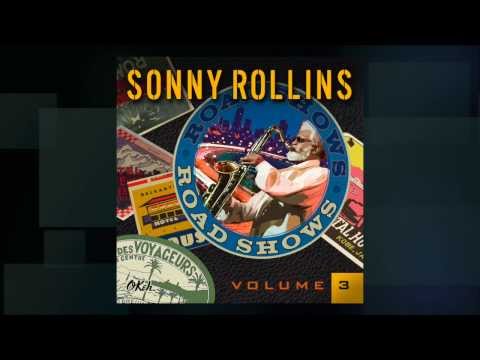
9. Sonny Rollins: Road Shows, Volume 3 – Old Man River just keeps rolling out the cadenzas. All three volumes are musts.

10. Tinariwen: Emmaar – How many Tinariwen albums does one need? Well, remember what they have always said about ol’ Hank and the Ramones, and ask yourself how many notes it takes you to recognize “Ramblin’ Man” or “Beat on the Brat.” This band has a sound, a groove, and a brood in their wake, not to mention that, politically and aesthetically, Saharan blues is good for what ails ye.

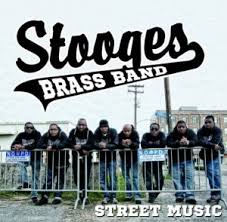
11. The Stooges Brass Band: Street Music – I believe New Orleans music gets short critical shrift because the city’s always been teeming with such traditional music that it’s assumed its innovations are long past. I won’t argue that this band of Stooges is all that innovative, but brass-band toons with the lyrics and cultural weight of “Why They Had to Kill Him” and “We Gotta Eat” aren’t everyday creations. And these guys work in a damned HOT crucible of competition.

12. Natural Child: Dancin’ with Wolves – I admit it: I am a sucker for these Nashville no ‘counts, and even I regard their countryward turn with a tinge of dubiosity. But they are so fun-loving, so unselfconscious, so unambitious, so charming that if I didn’t laud them I would have to turn in my Sir Doug Fan Club badge. Face it: unselfconscious men are hard to find these days.

13. Roscoe Mitchell and Tyshawn Sorey (with Hugh Ragin): Duets – Mitchell’s 73, Sorey’s 33, they both know their Cage and Feldman, and, if you’re not into the sound of becoming–the sound of sound–you best shop elsewhere. But this hands-across-the-generations team-up is relentlessly interesting. All I’d ask is that Sorey played more drums.

14. Parquet Courts: Sunbathing Animal – See Pitchfork. But it’s even better than they say. You gotta watch that groupthink.

Singles (Record Store Day double-header):

Bobby Rush: Upstairs at United – 81 years young this coming November, the inventor of folkfunk and seriously randy grandy is still one of our country’s underappreciated masters, and with the blues influence in our music trickling down to drops, you best get out to see him if he shows up in your ‘hood. But fathers, watch your daughters. Note: he also put out a full-length this year, and we’re only halfway through!

Marc Ribot w/Deerhoof: Who Sleeps, Only Dreams – When our age’s heir to Sonny Sharrock appears, attendez-vous!

Old Stuff/Reissues:

Various Artists: Haiti Direct! – Rhythm nation. And, oh, those guitars and horns.

John Schooley One-Man Band: Schooley’s Greatest Hits – The instrumental fulcrum of two-count-’em-two great lost garage punk bands, The Revelators and the Hard Feelings, Schooley will deliver all of the excitement and relentless rock of Bob Log and his ilk with none of their bullshit. Aaaaaaaaaaaaaaaaand — it’s free!

Bob Wills & The Texas Playboys: Riding Your Way–The Lost Transcriptions for Tiffany Music 1946-7 – The best band in the USA, circa 1946-7. Camaraderie, versatility, chopsmanship, rhythm, and high times–plus, of course, you can dance. Aaaaaaaaah-HA!

Various Artists: Angola 2

Various Artists: The Rough Guide to the Music of Mali, Volume 2

D’Angelo: Live at the Jazz Café, London – His band and back- up singers work harder than he does, and it’s still a great show.

Gories: The Shaw Tapes—Live in Detroit 1988

Sid Selvidge: The Cold of the Morning – A Memphis cult hero, his voice was silenced by cancer on May 2, 2013. This reissue of a ’70s Peabody Records release captures him in his prime, comfortable with everything from Furry Lewis to Jimmie Rodgers to Fred Neil and boasting a very flexible, very American voice that gives off not a whiff of minstrelsy or strain.


GOOD TO MY EARHOLE, First Half of June 2014

Marc Ribot: Two Serenity-Wreckin’ Trios

Ceramic DogRibot at VV

Ceramic Dog: Your Turn (Northern Spy)

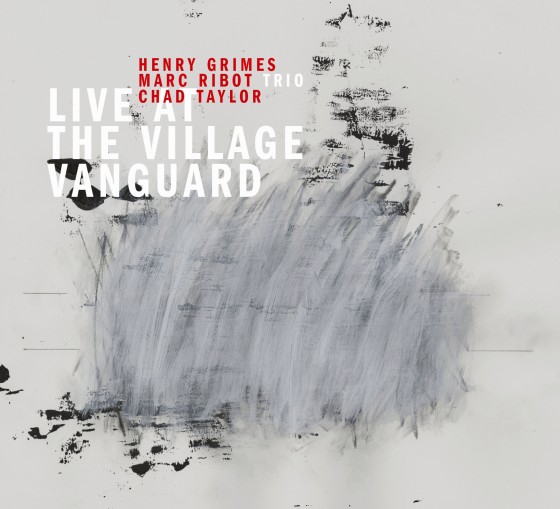
The Marc Ribot Trio: Live at the Village Vanguard (Pi Recordings)

Best known as an accompanist for The Lounge Lizards and Tom Waits, Ribot’s never put out a boring solo record. He plays guitar as if a jagged tin can and ropes of barbed wire are being employed, but, like Jimi Hendrix, he is able to control and channel his sound to produce frequently quite beautiful works. Also, Ribot’s smart and well-versed enough that he can adapt his sound to Cuban rhythm (check out his Los Cubanos Postizos records), rhythm and blues (he used to play in Solomon Burke’s band), punk (he’s the star on the recent and controversial re-recording of Richard Hell’s Destiny Street, filling the shoes and tracks of the legendary Bob Quine), pop (accompanying Marianne Faithfull), and jazz (his Albert Ayler-dedicated Spiritual Unity Trio). Being someone who believes that inventive electric guitar noise–loud electric guitar noise–is receding into our pop music’s background, I am thrilled to recommend to you two very different recent trio recordings Ribot’s made–that only Ribot could have made. Ceramic Dog is his rock project, and 2013’s Your Turn should have been in many, many critics’ year-end Top 10s. Besides offering the listener a truckload of skronky, intense six-string wailing and riffing (including the raging title cut, which sounds like a tribute to chainsaw jazz inventor Sonny Sharrock), it features the greatest lyric yet recorded about illegal downloading (“Masters of the Internet”) and one of the only songs based on materialist philosophy I have ever heard. As well, it takes Dave Brubeck’s “Take Five” five ways from Sunday, and astutely adapts a turn-of-the-twentieth-century poem by James Oppenheim to our modern use. The fact that Ribot can’t sing but only yells matters not a whit. The Vanguard trio has gone under multiple names; because it’s a) largely dedicated to Ayler recordings; and b) lured legendary avant-jazz bassist Henry Grimes (an important Ayler sideman) out of what seemed like permanent retirement, it’s often called Spiritual Unity, after one of Ayler’s greatest albums. Let’s sweep nomenclatural confusion out of the way, though, because the band’s 2012 live performance (Grimes’ first in almost 50 years) is stunning. The set list includes two relatively obscure Coltranes (“Dearly Beloved” and “Sun Ship”), two normally corny standards (“Ol’ Man River” and “I’m Confessin'”) and, of course, two Aylers (“The Wizard” and the ol’ New Thing chestnut “Bells”), and the trio digs into them with great intensity, invention, and interaction. If you haven’t heard Ribot before, but know Trane and Ayler, you might well ask, “How does a guitar deal with the huge noise of those horns?” Well, for the most part, he sidesteps the “bigness” issue and invests in ritual repetition, melody, vocal emulations, and, especially, the questing nature of those great men’s styles. The big triumph, to me, is that Ribot’s audacious decision to mount those corny standards alongside free compositions many jazz experts still wouldn’t think of allowing into the canon pays off in spades: the set sounds unified and the compositions of a piece. If you’ve never thought you’d like free jazz, you might take this one for a spin.

haiti-direct-art

Haiti Direct! (Strut Records)

I know doodly-squat about Haitian music–other than that its traditions have flowed to Cuba, Puerto Rico, Jamaica, Trinidad, Mexico, and, especially, Africa, and that it’s a country where slave-chains were thrown off in a revolution and the river of freedom drunken from deeply (though in some ways the worst was yet to come). If you happen to be in a music store when this is playing, you might very well mistake it for a Congolese release, if you know your Franco and Rochereau. But, if you buy one international release this year, make it this one. Of course, the rhythms are bewitching and various and compelling–most of them are designed to bring the dancer to the point of frenzy. But the tensile guitars cut through the mix like serrated knives, the horns are played as if to wake the dead (which takes on multiple dimensions in Haiti), and the vocals, though not everpresent, range from demented screaming to–yes–meowing. If you’re a scholar, the record surveys multiple styles and is festooned with thorough notes. But if your heart, mind, ass, and feet like to move, you can save the reading for later and slap this on the turntable Saturday night once the drinks start to kick in.

the-gilded-palace-of-sin-the-flying-burrito-brothers1

Flying Burrito Brothers: The Gilded Palace of Sin (4 Men w/Beards reissue)

A good friend who I loaned this to as he was recovering from a breakup begged me, “Don’t ever give this to anyone who’s heartbroke again! It’s unbearable.” I’d been aware of that possibility before I loaned it; I’d used it myself for the same purpose, but, personally, I like to be taken to the very bottom before I start heading back up to the surface. Parson’s yearning, soulful, precisely imprecise vocals–the bane of multiple producers trying to get great records out of him during his comet-streak of a career–are at their peak here; even if you’re in a blissfully bounteous relationship, if you can listen to him sing, “He may be/Sweet and nice/But that won’t keep you warm at night/’Cause I’m the one/Who let you in/I was right beside you then….” without feeling the knife twist, you ain’t human. And the songs. The heartbreak songs are extraordinarily painful and indelible, mainly by virtue of splendid dabs of specific detail, but the others, especially “Sin City,” “Christine’s Tune,” “Wheels,” and the International Submarine Band chestnut “Do You Know How It Feels,” pull off that near-impossible trick of wedding the personal with the political, with no sign of strain or pretention. Elsewhere, Gram re-genders and tweaks “Do Right Woman,” matching Aretha (did I stutter?), and closes each side (I’m talking about vinyl here, folks) with marvelous comic relief: the draft-dodging “My Uncle,” trailing echoes of Merle Haggard, on Side A, and the droll Staples Singers/Hank Williams send-up “Hippie Boy” on Side B. The band was ace, especially Sneaky Pete Kleinow on steel, who cranks and fuzzes up his notes, the ultimate instrumental collision of city and country. This release corrects a very crappy remix foisted upon consumers by Edsel’s CD version, which quiets down Kleinow’s contribution slightly and bungles the balance–it’s one of the clearest, cleanest, richest sounding vinyl reissues of the current landslide, and that’s especially relevant since the rights to the album seem in questionable territory, and the last vinyl version I owned (A&M’s) sounded half as bright. Safe at Home (International Submarine Band), Sweetheart of the Rodeo (The Byrds), and Grievous Angel (solo) confirm Parsons’ genius. By now, most of us know he picked up country music second-hand, enjoyed trust-fund status, and treated friends, family, fellow musicians, and the ladies with imperfect consideration. But, in classic artist-as-martyr fashion, he died to capture the end of an era and birth an entire genre on this magnificent album, and I’m almost OK with that.

SweetInspirations

The Sweet Inspirations (Collectors’ Classics/Atlantic)

Familiar with this go-to group of backup singers from their subtle work on Dusty in Memphis, I stumbled across a reference to their 1967 debut album while plumbing the darkened corners a famous critic’s archives. I hadn’t known they’d recorded albums of their own, and generally backup groups’ records are a little plain. Not so this one. Led by Cissy “Whitney’s Mama” Houston, the ladies deliver a very, very effective and emotionally powerful performance in the heat of the spotlight. The tersely pain-filled opener, Darryl Carter’s “Oh! What A Fool I’ve Been,” should be a Northern Soul classic if it isn’t already; the ace cover of Pop Staples’ “Why Am I Treated So Bad?” opens them out into the real world of the Civil Rights Movement and lends the record gravitas. In between, they’re professionals-plus, especially on the already oft-recorded “Let It Be Me,” the title tune, and the knockout hillbilly-boogie cover “Blues Stay Away from Me” (you’ll never need to listen to the Delmore Brothers’ original again). They can’t quite chase the memory of Eddie Floyd on “Knock On Wood,” and they are too put-together to handle the Ikettes’ lettin’-it-loose “I’m Blue,” but with the studio aces of Memphis’ American Sound Studio shoring them up (especially Reggie Young on guitar) when they (only) occasionally flag, the Sweet Inspirations turn in what I’ll confidently call a minor masterpiece.

albumcoverSergeChaloff-BlueSerge

Serge Chaloff: Blue Serge (Capitol)

A flat-out beautiful record, one that should be among Kind of Blue, Time Out, and A Love Supreme as “starter” records offered to neophytes wanting to test the unpredictable and varied waters of jazz. The ill-starred Chaloff, a veteran of the great Woody Herman “Thundering Herd” band that also featured Stan Getz and Zoot Sims, plays his baritone with seductive lightness and ease (and a hint of bebop), the tunes, standards and newly-minted soon-to-be classics are unbeatable, and the combo is stunning, especially the fleet, inventive and equally ill-starred Sonny Clark on piano and the unflappable and star-defying Philly Joe Jones and drums. Seductive, engaging, and well-nigh perfect.

WYR0514tubejktnoguidlines

Parquet Courts: Sunbathing Animal (What’s Your Rupture?)

Almost every review of I’ve read of this band’s music leans very heavily on comparisons (no surprise there–it’s easier than thinking), but, if you’ll excuse me for being guilty of the same vice, I have been pleasantly surprised that I’ve mostly been reminded of none of the bands referenced therein. What Sunbathing Animals puts me in mind of most is The Libertines’ Up the Bracket: unpredictable explosions, careening forward momentum, drunken shifts, a healthy helping of ‘I don’t give a fuck”–all in all, a great rock and roll rush. I also appreciate that the lyrics don’t seem assembled from a magnetic poetry kit. Only things I haven’t liked is the grating outro of Side A–I love shitty noise, normally–and the ground-out of Side B. Good show, kids, and please stay in love with your guitars.

Sooges

Stooges Brass Band: Street Music (Sinking City)

I like this tiny New Orleans-based vinyl-only label: its first release was the charming and historic compilation of Ricky “Shake Fa Ya Hood” B. singles, B is for Bounce, and though the Stooges’ record is only its third offering in a year in business, it’s a step in the right direction. The Crescent City is full of excellent brass bands, but The Stooges are my favorite because they seem most comfortable stepping out of the tradition. On this six-song record, they play with great exuberance, but they also deliver two powerful lyrics, the opening “Why They Had to Kill Him” and the closing “I Gotta Eat,” that deal unflinchingly and unsentimentally with the problems of 21st century poverty in the USA–a topic few musical acts in the USA go within a ten-foot pole of. Did I mention that they play with great exuberance?

Good to My Earhole: Bo Dollis, Jr., and The Wild Magnolias’ A NEW KIND OF FUNK

bodollisjrandthewildmagn

Technically, this record is a 2013 release (it came out last September), but, if’n I get a chance to vote in any record polls in 2014, it’s sure to be in my Top 10. My decision will be justified: it’s on a tiny New Orleans label (One More Time), it’s distributed by CDBaby, it features no mega-stars, it arrived with no hoopla (when I bought my copy at Louisiana Music Factory in New Orleans, the very well-seasoned owner couldn’t even get excited about it when I asked about it), and, well, it’s out of New Orleans, the still-fabulous music scene of which may be back in the public eye thanks to Treme but still gets very, very little critical love and mainstream coverage. So: we may as well call it a 2014 release.

Now that I’ve expended a paragraph on a barely-necessary justification…some background. Dollis is the son of one of the most legendary big chiefs in the Mardi Gras Indian tradition, the chief, in fact, who sang lead on the 1970 45 “Handa Wanda,” the first commercially released Indian chant. That single was the first of three significant such releases of the decade, the others being long-players released by two competing tribes, The Wild Magnolias (1974) and The Wild Tchoupitoulas (1976). If you’ve never heard ’em, they feature some of the straight-on greasiest funk of their time, with P-Funk, riot-era Sly, and JB its only equal. Each record features only traditional Indian chants, with only two overlaps, and those so differently arranged you might not notice; these chants deserve your attention, because their subtext is defiance, bravery, and endurance, themes that at this point in America’s racial history have gained deeper, more painful, and more inspiring resonance. Each record features a different famous force of funk: on Magnolias, the great guitarist Snooks Eaglin, who might pre-date JB in his history with the style; on Tchoupitoulas, the quirky and inventive Meters drummer Ziggy Modeliste. Each record features a local-legend producer: the ’74 record, Willie “Thank You, John” Turbington, the ’76 record Valhalla-bound songwriter/pianist/arranger Allen Toussaint. Each record, my friends, is a stone classic. Unfortunately, as far as your average music consumer is concerned, that would seem to be the end of Mardi Gras Indian music on record. However, there has been a steady stream of these records released across the last three decades, from further releases by Dollis, Sr., and his Wild Magnolias as well as the Golden Eagles tribe in the ’80s (they received a smidgen of roots-music ink) to the extremely obscure but excellent 1997 Flaming Arrows’ Here Come the Indians! and the vaguely 21st-century set of tracks laid down by the Hundred & One Runners on the tiny Mardi Gras Records’ 2012 Best of New Orleans Mardi Gras Indians. Like Western swing, this little subgenre seldom fails to deliver pleasure, delightful camaraderie, and the urge to get the hell up and dance.

Which finally brings us to the release in question. In view of both the general lack of consumer and critical attention given to Mardi Gras Indian music and the historical evolution of the subgenre, the record is a very significant one. Bo, Jr. and his producer Joe Gelini have achieved a rare trick: usually, when an artist or producer tries to “rock up” a non-rock genre, the result is a tasteless, unsubtle, desperate aural brew that disappoints everyone involved, specifically including listeners; here, the frequent dabs and splashes of guitar crunch, supplied by St. Louisan Mike Zito and Brothers’ son Devon Allman, are nicely accompanied by deftly mixed and soulfully played dobro, fiddle, piano, and horns (none familiar aspects of the subgenre), as well as the usual funky percussion and tambourine. The intelligence and touch behind the conception, playing, and production, best exemplified by the Dollis’ opening “We Come to Rumble,” makes A New Kind of Funk the best chance yet for Mardi Gras Indian music to jump off the island of esoterica onto the mainland of Americana. That is, if the project had more commercial and media support behind it–a guy can dream. Also, Dollis’ decision to weave in his own originals and Indian-style covers of classic New Orleans jazz (“Tootie Ma,” “Little Liza Jane”), r&b (“Hey Now, Baby” featuring fine Professor Longhair-style piano from Tom Worrell), and soul (a not-entirely-successful “Everything I Do Gonna Be Funky”) with traditional battle cries like “Fire Water Big Chief Got Plenty” and “Hell Out the Way” pays off big in two ways, appealing honestly to outside fans as well as expertly connecting four Crescent City musical traditions–and helping to keep the music in a state of evolution.

A New Kind of Funk is an exciting, spirited, and various set that deserves much more attention than it likely will get, and it comes at a time when the tribes are struggling to keep that ever-infernal “younger generation” interested in their rich history of exuberant and stylish resistance. If the kids followed that history back to mid-1800s Congo Square, where it started, they might just discover it is the wellspring of their music. And, oldsters, you might find it’s also the wellspring of yours. If you do buy this album, and like it, please please please go right on ahead (or back, I should say) to The Wild Magnolias and The Wild Tchoupitoulas. You will feel the fire of a sound that’s kept folks off their knees for a long, long time.

Good to My Earhole: May 17-30 (Hey! I Work for a Living!)

I have been quiet here for a while–but I have been listening diligently, and that diligence has been quite pleasurable. To wit, three aural adventures:

“Mr. O, What’s ‘The Golden Age’ of Rap?'” 

This was a question posed to me by a couple of my young Science Olympiad competitors after, as is my year-end ritual, I offered to custom-assemble an MP3 disk of music for each student on the team. Counting graduates who returned for our celebratory banquet, I knocked out 22 disks, but the one that was the most fun to put together was the one that answered that query. My definition of rap’s Golden Age is loose (1988-1994?) and arguable, and I stepped outside of it for a few selections, but I wanted them to taste some stuff that they might well have overlooked in the flood of possible Spotify/YouTube/iTunes choices, and here are my personal favorites of what I fed the kidz:

The Goats: “Typical American”

This Philly trio had one great album in them, and it’s still one of a kind. a) It’s a concept album about the traps of ’90s USA that works; b) the skits are as great as the songs; and c) it delivers an anthem–this song–that still, unfortunately, resonates.

Busta Rhymes with Old Dirty Bastard: “Woo-Hah” (Remix)

The original is just fine, but, to my ear, the remix is outta sight. One might argue that the two MCs’ styles are too close for a great team-up, but the Dirt Dog’s improvs, associations, and even-crazier-than-usual vocal stylizations mean there’s no mistaking who’s who. And ODB just steals the track.

Fu-Schnickens: “Sneakin’ Up On Ya”

Speaking of insane vocal stylizations, what the heck happened to Chip Fu, the only real reason to listen to this group? Yeah, he was fast, but that was far from all: on the Fu-Schnicks’ best tracks, he came closer than anyone to justifying the shaky claim that rap is simply verbal be-bop. That sells be-bop short, but Charlie Parker was grinning in jazz heaven when he heard Chip explode on his mind- and ear-bending verse here.

Ahmad, Ras Kass, and Saafir: “Come Widdit”

My man Alex Fleming from the Windy City tells me this trio was actually a short-lived GROUP called the Golden State Warriors; at the time, I only knew ’em from singles, and Ahmad’s killer debut. Listening to this now, it’s shocking that none of the three ever really blew up: their flows are fresh (especially Saafir’s, lingering just behind the beat), their rhymes and vocab are stunning, their personas as distinct as almost any rapper’s at the time you might want to name. This track’s from the great soundtrack of a horrible movie, Streetfighter. Lend a special ear to Ras Kass’ figurative language!

The Coup: “Dig It”

“Gunned us, gunned us/They raped us and they hung us/I’d like to take a moment to say/’Fuck Columbus!'” Thus The Coup and their mighty-mouthed MC Boots Riley ushered in their career, carried by a killer drums ‘n’ keys track that still sounds freshed. If you had bet on any of the writers featured in this list NOT to make it, you might have put your chips here, not because the skillz aren’t in play, but the confrontational style might have even scared off the hardcore. It’s a tribute to Riley’s commitment, brains, and talent that the best was yet to come, and that they are still in play almost two decades later. Note: if this track appeals to you, please read Ta-nehesi Coates’ recent related piece in The Atlantic.

Diamond D: “Best-Kept Secret”

For a moment, Diamond D was both a rising MC and an assassinatin’ producer. This track from the classic Stunts, Blunts, and Hip Hop demonstrates exactly why.

Showbiz and A.G.: “Fat Pockets”

Another shining Diamond D production moment, but the duo themselves showed every sign of stardom, and this tune was on almost every mix tape I made ’92.

Natural Resource: “Negro League Baseball”

Don’t be fooled by the video image; it’s the uploader’s way around a copyright dispute. However, the group did indeed feature a young woman, here not quite out of her teens, who’s long been my choice for “Queen of Hip Hop”: Ms. Jean Grae. Her verse is the standout, to my ears.

Heavy D and Friends: “Don’t Curse”

My all-time favorite posse cut, a hilarious idea that the gathered MCs actual pull off–barely!!!–and the best use ever of Booker T and the MGs’ classic “Hip Hug Her” outside of the original (and maybe the intro to Barfly). Heavy D, R.I.P.!

Ricky B: “Shake For Ya Hood”

The proof of the brilliance of this NOLA classic is, after a few plays, you’ll adopt it as your own anthem, no matter how pristine your own ‘hood is. And as raw as it is, it’s also innocent in its own special way (as many of the above tracks are): it’s hard to be outraged at a rap track that uses a zylophone (playing a cagey clip from The Staple Singers’ “I’ll Take You There”) for its hook, and, for once, an MC other than Chuck D really does live up to the “Black CNN” label. Ricky scans the scene, describes it in mournful detail, reveals his fear, but claims his turf anyway.

Oh, Anita!

On a recent trip to our old stomping grounds in Springfield, Missouri, my wife and I forced one of our favorite artists down the throats of two of our friends. You ever do that? I thought you had! If you see me on the street and you’re in a hurry to get somewhere, whatever you do, DON’T mention Anita O’Day, or you’ll have to drag me wherever you’re going. Graduate of the school of hard knocks, protofeminist in the manly world of jazz, fashion pioneer, author of an unapologetic memoir that earns it title (High Times, Hard Times), survivor of not only an accidental uvula-ectomy and nearly two decades of heroin abuse but also neglect during her senior years, but–most important–a vocal stylist on par with Billie, Sarah, and Ella, she’s a jazz legend and inspirational icon you’re very unlikely to know. In my mind and ear, she has no other peers. Since we’re not on the street, I’m writing, and I do have places to go, here’s my quick attempt to hook you:

From the superb jazz documentary, Jazz on a Summer’s Day:

From a Sixties appearance in Tokyo:

And the trailer for what we forced down Rex Harris’ and Heather Phipps’ throats (it went down smoothly, they would say–and they will be forcing it down others’ throats all too soon):

OK…you say you’re hooked? I knew you would be. Since YouTube so nicely offers COMPLETE ALBUMS (a development about which I am not sure), here’s my fave Anita album–bend a special ear to her album-long duel with accompanying pianist Oscar Peterson, and ask yourself what other vocalist could keep pace.

Appreciating the latter studio recordings of the Sinatra of Jazz, Sonny Rollins

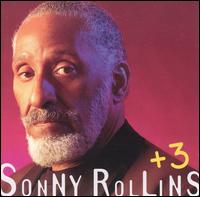
Sonny_Rollins_+_3albumcoverSonnyRollins-GlobalWarmingThis_Is_What_I_DoSonnyPlease

If you are reading this blog, you no doubt know that Sonny Rollins, one of the last living jazz titans and surely one of three greatest tenor saxophonists ever, has just released the third in a series of live albums, called Road Shows, that document the outstanding playing of his seventh and eighth decade swinging on this mortal coil (I will plug the first as so far the most mind-blowing, but they are all excellent). Also, if you have been reading this blog since its recent inception, you no doubt know it’s mostly dedicated to keeping rekkids that might be destined to be lost in the torrent in your eye- and ear-lines. Well, if you’ve heard or are simply very interested in the Road Shows volumes, I would also encourage you to sample Rollins’ last four studio albums. The proper albums of Rollins’ post-1970 career have often been maligned as 1) too stiff; 2) too clean; 3) too boring; 4) too generous to too-pedestrian sidemen and, perhaps that’s true (Gary Giddins’ Silver City compilation argues very effectively otherwise for 1970-1990), but Sonny Rollins +3 (1995), Global Warming (1998), This Is What I Do (2000), and Sonny, Please (2006), none of which are represented on the Giddins comp, have many, many things to recommend them. Primary is–big surprise!–Rollins’ playing. Though the man’s never been shy of experimenting, and though the complexity and abstration of some of his greatest solos are pretty danged challenging, on these records he lets loose his huge, confident, sly sound on the melodies and just rides them. In a recent NPR, Sonny claimed that it’s impossible for him to think and play at the same time, but you’ll doubt that claim as he bends, twists, savors, exclaims, questions, scolds, and dances with these numbers, many of which are calypsos, which he typically blasts into the upper deck. Another underappreciated aspect of these records are the number of outstanding compositions by Rollins himself. He does have a few pieces of jazz repertory to his credit (“St. Thomas,” “Oleo,” “Doxy,” to name a few), and it seems he’s best known for his miraculous interpretations (“I’m An Old Cowhand,” “There’s No Business Like Show Business,” “Isn’t She Lovely?”), but he has given future jazzmen and jazzwomen plenty to dig their teeth into with “Biji” (from +3), “Island Lady” (from Global), “Salvador” (from This), and “Nishi” (from Please). There’s a great compilation lurking in just the originals alone. Finally, the players? I am not sure Al Foster, Jack DeJohnette, Tommy Flanagan, Idris Muhammad, and Steve Jordan strike you as pedestrian, but I guarantee you they didn’t strike Sonny that way, and, though they mostly stay out of the way and let the man blow, that isn’t all that easy to do well, really. Here’s my main pitch: if you’re familiar with the best of Sinatra’s Capitol and Reprise recordings, what you’ll be getting out of Rollins’ horn is equal to what Ol’ Blue Eyes was intoning into the mic: warm, intelligent, intimate sound, created by a brain that knows its material inside and out. I do not proffer that comparison lightly.

Poor ol’ YouTube has very few tracks from these albums up; Spotify, however will help you out. But here’s a live track of Sonny blowing on “Salvador” that, if it speaks to you, should send you on to the rekkids I’ve rekkamended above.

I Recommend an All-Time Desert Island Top 20 (plus a 50-item appendix to prove I am not an old fart) to a Class of 12th Graders

Temporarily deluded that they might want my advice, I put together a list of rekkids I believe every true United States citizen should own for my 12th grade students last week. What follows are a link to a Spotify playlist I put together to further induce them (again, I am deluded: they prefer YouTube), the list of 20 accompanied by annotations aimed at them–as opposed to specialists–and my roughly 2001-2014 old fart repellent Top 50. I am already regretting choices–where’s Neil Young’s Rust Never Sleeps?

1. Bob Dylan (with some help from The Band): The Basement Tapes. In my not so humble opinion, you are not a true United States citizen if you do not own a Dylan album. This one’s special. Having recovered from a possibly faked motorcycle accident in the middle of some freakish fame, Dylan retired into the country with his pals and wrote some ageless songs that conjured the mysteries, absurdities, and tragedies of life. Curiously, few young Dylan fans have tried it.

2. The John Coltrane Quartet: A Love Supreme. For 37 minutes, the most obsessively questing jazz saxophonist of the 1960s communes with his Higher Power. Some of the most powerful spiritual music ever made in this country. If you don’t believe in Higher Powers, simply dig a 37-minute composition in three distinct movements that will set your soul on fire. If you don’t believe in souls, give your ears a present. Note to drummers: Check out Elvin Jones on this recording. You think you don’t like jazz? Try this before you make up your mind.

3. Hank Williams, Sr.: 40 Greatest Hits. The Hillbilly Shakespeare, as he is known by adepts, wrote 50 of the 100 greatest country songs of all-time before spina bifida, quack doctors, the one-two combination of his mama and his ex-wife pounding away at his self-esteem, and his own self-destructive ways sent him to meet Jesus at 29. And he could sing a little bit—especially if you like voices that channel unvarnished yearning, heartbreak, despair, dread, and, on more than a few occasions, joy. If you don’t know him, our educational system has failed you, but surely you know “Hey, Good Lookin’” and “Your Cheatin’ Heart”? Attention students of African descent who might not feel country music has anything to do with them: at Williams’ massively-attended funeral in Montgomery, Alabama, more blacks attended than whites; plus, the man learned his basic stuff from a black musician. Great American music: NEVER SIMPLE.

4. Minutemen: Double Nickels on the Dime. At this point, punk rock peaked in terms of how expansive it could be and still be called punk rock. Then…the slow decline. “Our band could change your life.”

5. Al Green: Greatest Hits (Expanded Edition). Speaking of Reverend Al, and speaking of the world’s greatest singers, he sounds great enough in his mid-‘60s (check out his most recent album, produced by ?Love of the Roots), but when he was ruling the charts in the ‘70s, no one, not even Aretha Franklin, could match his range, command, and pure seductiveness. This version includes a DVD that shows that his voice was not the only weapon in his arsenal; also of interest is one of Memphis’ greatest studio bands, totally in synchronization with even the most sudden improvisatory impulses of the star.

6. Billie Holiday: Lady Day. This two-disc set showcases 1) a singer of limited range but unmatched intelligence and instincts who could alchemically turn song-crap into eternal gold and who utterly changed one somewhat significant guy’s approach to singing (Frank Sinatra, anyone?) by flirting with the beat, usually trailing titillatingly behind it; 2) an assortment of studio bands that represented the greatest jazz musicians of the Thirties, specifically including Lester Young on tenor, who laces accompaniment through Holiday’s vocals like vines through a trellis; 3) many of the greatest pop songs ever produced in this country—ones she didn’t have to transmute.

7. Professor Longhair: Crawfish Fiesta. Having spent five or six of the greatest weeks of my life (including my honeymoon) in New Orleans, and recognizing that its people have the most indestructible spirit in the country, I’d have to have something from the Crescent City with me while lying in the sand. “Fess,” one among many piano “professors” in the New Orleans tradition, invented his own style: a gumbo of boogie woogie, rhumba, blues, and traditional second-line parade rhythms that is sheer intoxication. No one’s yet matched it, and all New Orleans pianists and most of the city’s citizens have pledged infinite fealty to him. He wrote the Mardi Gras theme song. And he is one of the greatest whistlers in music.

8. Sonic Youth: Daydream Nation. The sound of the apocalypse, made primarily by two guys who tune their guitars differently for every song. How’s apocalypse sound? Fun, scary, surprisingly, relentless—like a rollercoaster ride.

9. Bob Wills & the Texas Playboys: The Tiffany Transcriptions, Volume 3–Basin Street Blues. Wills will always be my hero. First, he had the genius to love blues, country, jazz, Native American and Mexican and German folk music, fiddle breakdowns, pop toons—purt-near everything in the American musical lexicon—and play it all with panache, and to think of adding drums to country music (this would lead to rock and roll). Second, the camaraderie he engendered as the leader of his band is intoxicating—the sound of love of music and friendship and playing for the people and really digging American noise, played with expert chemistry, intuition, and—especially—perfect looseness. Third, his measure for whether the band was any good on any given night was whether people danced. Hell, even I can dance to Bob Wills.

10. James Brown: Star Time. Despite his rather inglorious final years and passing, Butane James aka Mr. Dynamite aka The Hardest Working Man in Show Business aka Soul Brother #1 was no joke. Surviving absolutely harsh poverty and abuse—read about it, and weep (I kid you not)—rising above detention homes and early indifference to music, he not only invented funk, became a vital part of the Civil Rights Movement (he single-handedly saved Boston from being at least partially burned to the ground after MLK was murdered), trained a legion of ground-breaking musicians, put on the most exciting show on earth night after night (check out Live at the Apollo, Volume 1 or II), influenced politicians but left and right, but…a big but…there’d be NO rap without his beats. NONE. Pay your respects, children. This is a cheap four-CD box that will never let you down. I tell no lies when it comes to music.

11. M.I.A: Kala. I simply cannot dream of a point in my future where I will not love this album. Incredible beats, imaginative and disruptive sound effects, a somewhat terrifying and exhilarating view of international upheaval, high comedy, sex appeal—and you can dance and think to it at the same time.

12. The Beatles: Beatles for Sale. This is the Beatles on the brink of artsiness and thus pretentiousness—pre-Rubber Soul, pre-Revolver, pre-Sgt. Pepper’s, the run of albums that provoked John Waters to call the band “those honk(ies)…who ruined rock and roll.” To my ear and mind, it is the Beatles at their very best; John Lennon especially is on his game. The sound and songs range from desperate (“I’m a Loser”) to ecstatic (“Eight Days A Week), from celebratory (“Every Little Thing”) to disconsolate (“I Don’t Want to Spoil the Party”)—never artsy or pretentious. Plus, many of the songs are unfamiliar to the youth of America circa 2010.

13. Motorhead: Orgasmatron. At once, a denunciation of war and a musical celebration of its power. Too fast for metal, too heavy for punk, too smart and honest for both genres, Lemmy Kilmister’s hard rock machine has never packed more punch than here.

14. Public Enemy: It Takes a Nation of Millions to Hold Us Back. Rap albums have a short shelf life: what sounded great in 2009 might sound stiff by 2010! The question of which rap album would reward 1,000 playbacks on a deserted island is a tough one, but no one—not even Public Enemy itself—has caught up with the explosive beats and disruptions of this record (at the time, equally popular with black and white listeners), and no single rapper—not even Chuck D himself—has caught up with this MC’s sustained command and invention. For comic relief, there’s Flavor Flav at his sickest.

15. Muddy Waters: Hard Again. As one of the songs here argues, the blues had a baby, and they named it rock and roll. With the amazing Johnny Winters producing and playing flaming slide behind him, the man from whom The Rolling Stones took their name demonstrates authoritatively that age is just a concept, hollering and celebrating manhood as if he’d just turned 21, instead of 63. And NO blues record sounds this great cranked up to 11.

16. Howlin’ Wolf: Howlin’ Wolf/Moanin’ at Midnight. Never was a nickname more appropriate; in fact, one could argue, the nickname isn’t menacing enough to do justice to Chester Burnett’s bone-shattering voice. Combined with Hubert Sumlin’s crazed solos (they gave birth, more or less, to Eric Clapton) and delivering several of the greatest songs in modern blues history, mostly written by Willie Dixon (“The Little Red Rooster,” “Back Door Man”—that’s right, the one The Doors covered—“Goin’ Down Slow,” “Asked Her for Water (She Gave Me Gasoline),” “Killing Floor”)—that voice, once you have heard it, will be impossible to forget.

17. The Ramones Leave Home. 1-2-3-4! The band that stripped rock and roll down to its bare essentials—most of you could learn a Ramones song in a week, even (maybe especially) if you don’t play—was also surprisingly complex in its use of persona and irony, consistently hilarious, and more fun than any American music that doesn’t come from New Orleans.

18. The Coasters: 50 Coastin’ Classics. “Charlie Brown.” “Yakety Yak.” “Along Came Jones.” “Little Egypt.” One by one, the seemingly innocent rhythm and blues hits march out of this collection, usually led by King Curtis’ tenor sax and ace harmonies. Then you notice that some of these hits—“What About Us?” “Run Red Run,” “There’s a Riot Goin’ On,” “Shoppin’ for Clothes”—have code laced into their chants. And they do, thanks to two Jews (Jerry Leiber and Mike Stoller, also authors of “Hound Dog” and “Jailhouse Rock”) dedicated to scripting parables of civil rights for a group of black singers. That is rock and roll.

19. The Best of The Sir Douglas Quintet. Not everyone can invent style. Then again, not everyone writes songs titled “You Can’t Hide That Redneck (Underneath that Hippie Hair”) or keys a psychedelic Summer of Love ballad to the line, “You just cain’t live in Texas/If you don’t have a lot of soul!” Sir Doug (Doug Sahm) honed his chops in San Antonio and had his mind blown in San Francisco, and the result is Tex-Mex (or, as he called it, conjunto) rock and roll: bluesy guitar, punchy horns with border flavor, one helluva flexible beat, soulful but bent singing—and the addictive polka-styled (!) Vox organ playing of Sahm’s sidekick, Augie Meyers. See also Sahm’s Tex-Mex supergroup, The Texas Tornados.

20. Van Morrison: Moondance. Maybe rock’s most perfect “perfect album.” From the singing to the writing to the playing to the arrangements to the production, it seems to emerge from a euphoric dream of the past, and the worst songs—to my ear, “Moondance” and “Crazy Love”—have become standards. And for all that, it’s still eccentric, thanks to an Irish expatriate who gets stoned on a drink of water, dreams about Ray Charles, and promises a revelation to his lover—if she’ll only turn up her radio, into the mystic.

In case you think I’m an old fart…my Top 50 from the last fourteen years of our lives:

1. Bob Dylan: “Love and Theft”
2. Outkast: Stankonia
3. The Dirtbombs: Ultraglide in Black
4. Todd Snider: East Nashville Skyline
5. D’Angelo: Voodoo
6. Detroit Cobras: Mink, Rabbit, or Rat
7. Drive-By Truckers: The Dirty South
8. Lil’ Wayne: Da Drought is Over 3
9. MF Doom and Madlib: Madvillain
10. The Hold Steady: Boys and Girls in America
11. James Carter: Chasin’ the Gypsy
12. Merle Haggard: If I Could Only Fly
13. The Handsome Family: In the Air
14. The Coup: Party Music
15. Ghostface Killah: Fishscale
16. Shaver: The Earth Rolls On
17. The Best Bootlegs Ever
18. Tom Ze: Jogos de Armar
19. Warren Zevon: The Wind
20. Mr. Lif: Emergency Rations
21. Serengeti: Dennehy
22. Johnny Cash: American IV: The Man Comes Around
23. Bettye LaVette: I’ve Got My Own Hell to Raise
24. Balkan Beat Box
25. Gogol Bordello: Super Taranta!
26. Tinariwen: Imidiwan: Companions
27. The Perceptionists: Black Dialogue
28. Art Brut: Bang Bang Rock and Roll
29. Glasvegas
30. Crunk Hits, Vols. 1 & 2
31. Tom Waits: Orphans
32. Arcade Fire: Neon Bible
33. Elizabeth Cook: Welder
34. Girl Talk: Feed the Animals
35. Jay Reatard: Blood Visions
36. Leonard Cohen: Live in London
37. The Baseball Project: Frozen Ropes and Dying Quail
38. Mulatu Astatke/The Heliocentrics: Inspiration Information
39. Girls: Album
40. Jean Grae: Jeanius
41. The Roots: How I Got Over
42. Wussy: Attica!
43. Group Doueh: Zayna Jumma
44. Youssou N’Dour: Egypt
45. Martha Redbone Roots Project: The Garden of Love: Songs of William Blake
46. Hayes Carll: Trouble in Mind
47. Natural Child: 1971
48. Our New Orleans
49. Tyler Keith and The Preacher’s Kids: Romeo Hood
50. Mariem Hassan: El Aaiun Egdat

Good to My Earhole: May 5-9 – What? NEW Rekkids?

Good to My Earhole: May 5-9 – What? NEW Rekkids?

The huddled sandspeck of humanity who regularly visit this blog no doubt have discerned a certain propensity of the author’s for looking backwards. Always said I never would, now I seem always to be. I’ve made the “dustbins of cyberspace” argument, and I am indeed left slot-mouthed in response to “new music,” but, to be fair, one needs a little perspective (in addition to 42 years’ worth of listening to records) to evaluate art accurately. However, two new albums by established giants came through the mail slot this week, as well as one from a local hero who‘s just sailed from between Scylla and Charibdis scarred but not scared, so I cannot resist taking a shot at ’em.

rollins

Sonny Rollins: Road Shows, Volume 3 (Doxy) For the 83-year-old Rollins, both the road and the show seem to go on powerfully forever, and together. The third volume in this highly recommended and expertly compiled series mixes three Rollins originals–he is an underrated composer–one solo flight, and two of the American-songbook chestnuts Sonny was seemingly born to explore the contours of for an approximation of an epic performance (the tracks actually date from four different appearances, 2001-2012). Though his solos may not forge and unfurl unbroken like in days of old, his tone, invention (though he claims not to think and play at the same time), sense of humor, and grace are still beyond the reach of mere mortals–aka “the living body of jazz players.” Case in point: the majestic “Why Was I Born.” As my man at The Stash Dauber, Ken Shimamoto, has eloquently suggested, there are worse predicaments on Planet Earth 2014 than having the grammar of world popsong (that is, of the HISTORY of popsong) at your disposal. Give your man props while he’s living. Don’t wait ’til the heartbeat stops.

LetterHome


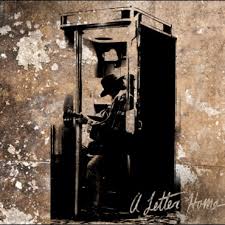
Neil Young: A Letter Home (Third Man) Honestly, I haven’t attended Uncle Neil for awhile, but that doesn’t mean I’ve given up on him. He’s always had one eye on the hands of time, so he’s a sure bet to still have plenty of artistic life in him as he ages. Which brings us to his newest release, one, conveniently, that plays with time by virtue of its recording circumstances. You can go elsewhere for the specific technical details, but Young recorded a set of very thematic O.P.s (“other people’s”) in a contraption that spits out “forest-fire” audio, complete with pops, crackles, lo-fi gauze, and unreliable pitch, that is reminiscent of both a very primitive demo and a much-abused 78 from the ’20s. It’s not a new trick–among major artists, Tom Waits has had it up his sleeve in the past–and I am not sure I like it. At first glance, I thought the song selections were chosen with inconsistent imagination, and would end up being my major complaint; after two listens, I actually like even “On the Road Again” and “My Hometown,” and the concept speaks the way the artist intended it to. It’s even moving. However, I don’t see the point in intentionally make it sound like crap (PRIMITIVE I will take in a minute–not the same thing!); maybe it’s just me, but that would seem to compromise the emotional power of the project: the deliberately “antique” production not only creates an unnecessary barrier for the intimacy of Young’s performance to penetrate, but it also raises my suspicions about Neil’s sincerity, if the record had to be thus fiddled with. And if he’s NOT being sincere–man, gimme my money back to spend on some Pono thing. I confess to being highly sensitive to the taint of Jack White’s hand in matters–he’s screwed up other projects for folks with his gimmickry (most notable past victim: Wanda Jackson) after having largely built his own reputation on gimmicks. It’s something I’d never have thought Neil Young would fall for. So…caveat emptor, if you’re going to spend your hard-earned dough. Try this, which is the highlight, to my ears:


Glen David Andrews: Redemption (Louisiana Red Hot) What would a blog post of mine be without some New Orleans flavor? Unbeknownst to outsiders, Mr. Andrews, a talented trombonist, songwriter, and singer, as well as progeny of a royal music family line, has spent the good part of the last fifteen years putting great music down in the studio, traveling the country testifying to the continued vitality of Crescent City traditions, and putting his feet in the street and squaring up to authorities as an activist for multiple local causes. Unfortunately, he did all of that while wrestling with substance abuse, which finally brought him down during the first years of this decade. Redemption is one of the most musically and emotionally powerful sobriety albums since Stevie Ray Vaughan’s In Step; Andrews himself says, “This is a record about my journey back from the living dead.” Glen is one of the finest brass band and NOLA trad jazz players alive, but the music here is brawny, funky rock and roll. This is not only an accurate projection of Andrews’ personality, but also an expression of spiritual joy buoyed by rebirth and a product of the man’s muscular support: Ivan Neville, Galactic’s Ben Ellman, and local guitar hero Anders Osborne. If you’ve never heard (of) him, time to get on board. Special guest appearance from beyond: Mahalia Jackson.

Good To My Earhole: Selections Across Two Busy Weeks

It’s hard to hold down a blog when you have two real jobs. But the need to separate the wheat from the chaff, and to tug underrecognized music out of the clutches of time’s dustbin, never wanes.

Image

Khaira Arby: Timbuktu Tarab (Clermont Music) Arby jumps out of the otherwise simply excellent Festival Au Desert concert recording with a possessed vocal that, though I do not know the Tamashek language, sounds like freedom to me. After two months of fruitlessly searching for more of her recordings–she’s a match for Mariem Hassan , if that name means anything to you, which it should–I stumbled upon this, apparently her only other available recording. Not only is she consistently in the same powerful form that she demonstrates on the the concert track, but her band is stellar, more shifty and demonstrative and less trancelike than Tinariwen and other “desert blues” stalwarts. Especially the guitar. Yeah: driving guitar and heart-stopping female singing–where you gonna go to get that these days?

Serengeti/Kenny Dennis: “Rib Tips” (video, produced by Jel and Odd Nosdam) Chicago’s favorite recovering alcoholic/lost ’90s MC/Ditka-head/hip hop alter-ego returns with another contagious, oddball video from last year’s Kenny Dennis EP. Possibly, he’s too quirky or silly or ramshackle for you; me, I find him an addictive antidote to the heavily constructed, brightly polished, vulgarly materialistic run of mainstream rap. Oscar Wilde: “Life is too important to be taken seriously.”

Image

Johnny Adams: The Soul of New Orleans (Fuel) This compilation catches the legendary Tan Canary, possessed of a rich vibrato redolent of Billy Eckstine but, more scintillatingly, a dry falsetto that lends his every recording an aspect of suspense, between his early years as a New Orleans r&b hitmaker (the stone-classic “I Won’t Cry,” “A Losing Battle,” “Please Release Me”) and his valedictory Sinatra-goes-soul sessions with Rounder. The time? The Seventies. The label? Hep’ Me. The producer? The legendary Senator Jones, who threw everything at Adams that might be a hit, in many cases country, which he handles with depth, care, and passion, and occasional disco and milder dance music, which he attacks like a pro (he gets away a strobe-lit “Spanish Harlem”). Couched among many strong performances are two more stone classics, “After All the Good is Gone” and “Hell Yes, I Cheated” (though this version substitutes “Oh” for the unmentionable hot place). The powers that be need to put together a cross-label best-of to cement Adams’ reputation in Soul Valhalla.

Image

Fats Domino: In Concert (Mercury German import) I know what you’re thinking: Wouldn’t a live Fats album sound pretty much like a Fats studio album? True, he had a sound and a method and he stuck to it like glue. The further truth is, on this mid-Sixties performance, you get some bonuses: his charming patter, some relatively wild piano solos, and–here’s the kicker–covers of fellow Crescent City legends Professor Longhair (who’d pay him back later on “Whole Lotta Lovin'”–see below) and Guitar Slim–as well as Tony Bennett! If you’re a fan, and if you’re persnickety about live albums, it’s worth your time and money.

Image

Professor Longhair: The Last Mardi Gras (Real Gone Records) It may be tainted by the guiding hand of Albert Goldman, but I believe he has degraded to atoms, so, if you’re new to Fess, this is a great place to start: he’s heated up in front of a live audience, Uganda Roberts is on congas–they are one of the great R&B instrumental pairings!–the horn section sounds like it’s just hit the sweet spot of a Friday night buzz, and the song selection is Longhair’s hits sprinkled with bawdy house classics. AND the audio is splendid. Learn why he earned that title.

Image

Muscle Shoals (PBS Documentary, directed by Greg “Freddy” Camalier) I was disappointed when the first three voices we hear in a documentary about one of the great studios of the American South are those of Brits (!?), including that insufferable horner-in, Bono, but the film recovers to lift the veil on the fascinating and turbulent career of founder Rick Hall, the kinship and acumen of the Swampers (like the Funk Brothers and the Wrecking Crew, with mountains of hits to their quiet credit), and the sessions that produced such hits as “I’ve Never Loved Man (The Way That I Love You”),”I’d Rather Go Blind,” “Patches,” and “In the Midnight Hour.” Even music obsessives already familiar with the Fame/Muscle Shoals studio story may not know about the precise moment “Southern Rock” was invented; that anecdote alone is worth the two hours’ time of the movie.

Image

Deerhoof (w/Marc Ribot)/Ceramic Dog: Who Sleeps, Only Dreams (Northern Spy Split Single) One of only two Record Store Day purchases I made this year–and I confess, I bought ’em on line Sunday morning because I didn’t really have a choice. I am a straight sucker for the havoc Ribot wreaks on guitar, on Side A here alongside Deerhoof and Side B with just the most recent of his many underrated projects, Ceramic Dog. No guitarist with a sound this beautifully ugly has moved so effortlessly across r&b, cabaret rock, lounge/avant garde/chamber/free jazz, strict accompaniment, and experimentalism. This single belongs. Try an earlier Ceramic Dog recording on for size to test the waters:

ImageImage

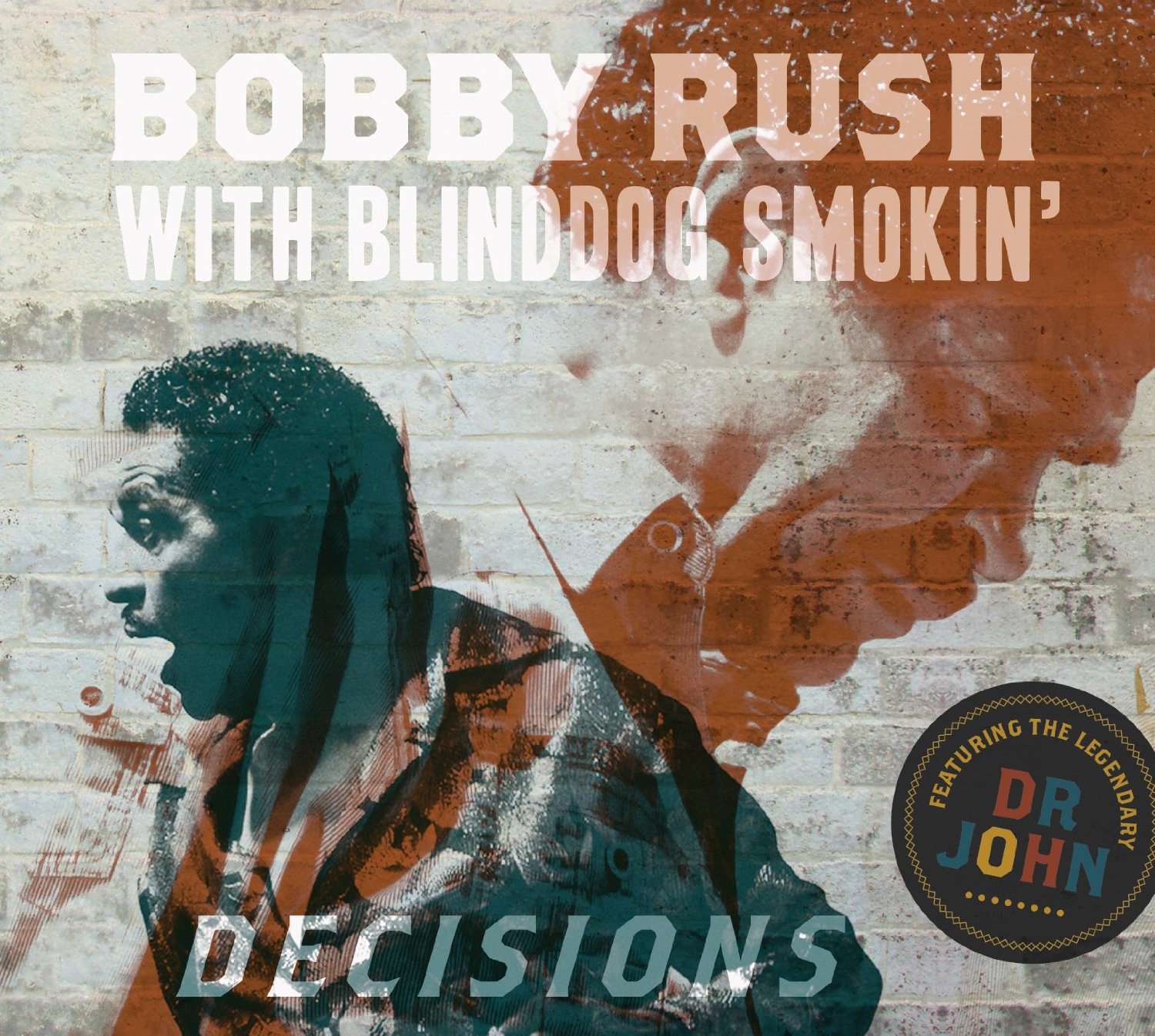
Bobby Rush: Decisions (with Blinddog Smokin’) (Silver Talon) and Upstairs at United (453 Recordings) Since he appeared at the high school I teach at and knocked a Tuesday evening crowd of students, their parents, and grandparents out cold with an old-school set of dirty-old-man blues–yep! in a public school!–Rush, the inventor of “folkfunk,” has been my hero. At 73, he shows no signs of slowing down, having just released a VERY solid full-length record featuring a dark Dr. John cameo as well as a 12″ four-song EP for Record Store Day, courtesy of the otherwise-pretty-indie “Upstairs at United Series” (on which he covers The Beatles and Eddie Floyd, writes a great new one, and reconfigures one of his own chestnuts). Never really mentioned in the same breath as his contemporaries, of which there are fewer with each passing month, Rush deserves our full attention–don’t wait ’til the heartbeat stops!–and, if you have a chance to see him live, you will see a 19-year-old in Grandpa’s body (along with, no doubt, a pair of women’s undies that belong in the Guiness Book of World Records).

Image

Wussy: Attica! (Damnably) I wrote about this one a few weeks ago. After a third focused listen, I am convinced it is the most passionate new work of what is still called rock and roll–in fact, my favorite new record of the year so far in any genre. If you enjoy the thrill of witnessing a very good band taking the next step–to greatness, to record-making, to artistic unity–you’ll want to check it out when it’s released later this month. And you’ll want the other records just to fully appreciate that witnessing. I’m just sayin’.

Good to My Earhole: Listening Top 10, April 12 – April 18, 2014

I blew off the Drive-By Truckers, who were in town (the new one isn’t moving me yet). But it wasn’t all bad.

1) Lazy Lester: I’m a Lover Not a Fighter (Ace/Excello). God bless the Excello label and Jay Miller. The R&B, blues, and soul they released was distinctly country-flavored, with no small dose of Louisiana mixed in. The great Slim Harpo is their gold standard, but if you haven’t sampled Lester deeply, he’s callin’ your name. Drawling, behind the beat and taking his time, he waxed nearly as many memorable tunes as his label mate, prime among them “Sugar-Coated Love,” “I’m a Lover Not a Fighter,”  and “Take Me in Your Arms” (all here). He also backed numerous other Excello artists, and is still out there on the road.

2) Chuck Carbo: “Second Line on Monday” and “Meet Me With Your Black Drawers On”: Carbo was one of the finest and versatile but most underrated of NOLA’s r&b kings of the ’50s (when, primarily, he was the lead vocalist in The Spiders). My wife Nicole and I have been plotting a move to New Orleans (a surprise I am sure is not big to careful observers of these Top 10s), I’ve been reading Jeff “Almost Slim” Hannush‘s The Soul of New Orleans, and my research has happily turned up these two examples of Carbo’s longevity from the 1980s, when he put these songs on the permanent ‘OZ Mardi Gras playlist.

3) Khaira Arby: “La Liberty,” from Festival Au Desert: If you are a completely unabashed appreciator of beauty and passion in all musics, you NEED a chanteuse of Saharan desert blues sand-blasting through your speakers. Mariem Hassan would seem to rule the roost in this category, but this live track from one of Timbuktu’s last (pre-revolution) festivals shows Arby’s right on her heels. The whole rekkid’s amazing but hard to find; if you want to dip into the genre, a better starting point you cannot find.

Watch an entire Arby concert on NPR:

4) Big Star: Third/Sister Lovers (Rykodisc): It takes a special occasion for me to put this on in my ma-toor-ity, but Holly George-Warren’s excellent Alex Chilton bio caused me to pull it from the shelves, and it made for a weirdly pleasant lava-flow afternoon. Definitely as sui generis as anything this sui generis artist ever produced, and it’s got “codeine” stamped all over it. Jim Dickinson was at the controls, and that just made it worse/better. Enjoy the full damn album, courtesy of You Tube (I paid for mine):

5) Dead Moon: “Poor Born,” “40 Miles of Bad Road,” “54/40 or Fight”: The great Fred Cole, who’s hardcore commitment to DIY–in music, in life, in romance, in child-rearing–has spanned right on 50 years, has been recuperating from heart surgery over the past week, and I can’t get him off my mind. Mastermind behind The Weeds, Zipper, The Rats, The Range Rats, Dead Moon (THE ultimate cult punk band), and (currently) The Pierced Arrows, so down-to-earth he appeared at my high school for a free show, he deserves as much support as the cognoscenti can muster–so I played these three faves over and over. You should, too.

A vintage performance of “54/40 or Fight”:

6) Earl King with The Meters: Street Parade (Fuel): Perfect title for this pairing of two Crescent City institutions, one an influential guitarist (are you familiar with Jimi Hendrix, who covered one of his tunes?) and songwriter (did you know he wrote this?), the other an R&B instro act that often makes Booker T and the MGs sound…stiff. When your drummer is Ziggy Modeliste, a street parade will be in the mix.

7) Johnny Adams: There is Always One More Time (Rounder Heritage): They don’t call him “The Tan Canary” for nothing. Possessed of both a penetrating yet silky baritone as well as a shocking falsetto, Adams laid down stunning tracks on a fairly consistent basis from the late ’50s all the way into the lower reaches of the ’90s. This collects the best of his late phase. If you dig Sinatra, you have no excuse to ignore an exploration:

moseallison

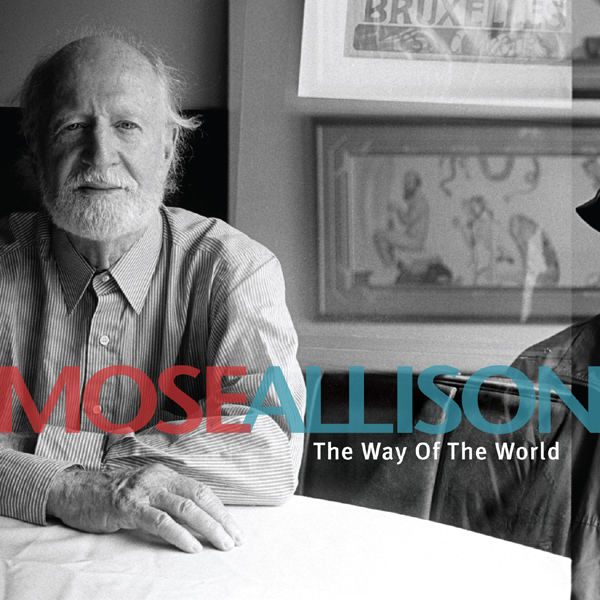
8) Mose Allison: Way of the World (Anti-): “An old man/Don’t get nuthin’ in the world these days.” Well, he didn’t write that, but he wrote the very similar line (and song) The Who made famous at Woodstock and on Live at Leeds. Too many folks slept on his last release, exquisitely produced by Joe Henry (who’s never done a job I haven’t admired), and are un-American for doing so. Mose is all precision on the keys and, as always, brainy on the lyrics, one of the best of which lauds his octogenarian brain–as long as there’s coffee available. A national treasure–give him his props, before the heartbeat stops.

9) Beausoleil: “Bessie’s Blues”/”I’ll Go Crazy”/”You Got to Move,” from From Bamako to Carencro: Not sure anything like this has been done in Cajun music, or any kind of Americana–a cover sequence moving  through nuggets originally composed by surprising guiding lights John Coltrane, JB, and Mississippi Fred that doesn’t stumble once. The twin genius axes of Michael (fiddle) and David (guitar) Doucet are at peak levels of invention, passion, and dexterity. I’d try to link it, but, trust me: just buy it.

10) Sisyphus (Secretly Canadian): It’s tempting to dismiss this as sissy fuss, with Sufjan Stevens on hand and Serengeti continuing to threaten to waft away into the indie-sphere. But, at least to my ears, there’s something original and even encouraging in this almost-formula: Stevens (often) provides a plaintive frame for a more substantial and (at least relatively) gritty narrative/inner monologue/confession by ‘Geti. Son Lux lays down the beats, that last word one that gatekeepers would put in quotes. Just gotta say, it gets to me in a near-prophetic way: the ‘burbs and the urbs joining forces to try to communicate a complicated reality.

Good to My Earhole: Listening Top 10, April 5 – April 11, 2014

I guess it is going to become regular…

destruck624

1) Holly George-Warren: A Man Called Destruction–The Life and Music of Alex Chilton from Box Tops to Big Star to Backdoor Man (Viking) I am a mass devourer of pop music tomes, but also a bit of a Chilton skeptic: even the brilliance of the best Big Star material is largely attributable to Chris Bell, and too much of the man’s notoreity is connected to things other than music. But George-Warren not only makes a great case here, taking the reader behind the scenes to bedroom rehearsals, bent late-night studio experiments, eccentric apprenticeships, and a long, disciplined, sober road to demonstrate Chilton’s hands were on the wheel more often than reported–even when he was barely conscious. More important, she shapes meticulous research (oh, to have grown up in the Chilton home!) into breezy and fascinating narrative, and balances that with insight into the making of the music. Plus, she passes my first test of good music books: her book sends you racing back to the music (the proof of which you will see in this week’s entry). In fact, my Brit Lit class enjoyed a Big Star block party today while they worked on their writing portfolios. Note: it does share something significant with a recent Zevon tome— this was a guy who, despite his charisma and multiple connections, was very, very lonely.

2) “Every night I tell myself, ‘I am the Cosmos, I am the wind’/But that won’t bring you back again….” Easily one of my favorite rock and roll couplets. Chilton didn’t write it; his partner Chris Bell did, though the sound of his post-Big Star productions (captured on the Rykodisc release I Am the Cosmos) revealed that band’s sonic architecture might well have sprung initially from Bell’s mind. I love the combination of metaphysics and heartbreak, and, really, the whole “record” (Bell died before he could complete a solo album) is fascinating:

3) Doris Duke: I’m a Loser–The Swamp Dogg Sessions (Kent) Jerry Williams, Jr., is one hell of a producer, songwriter, and bandleader, but seldom did he oversee someone else’s record that topped his own eccentric and piquant output. Working with luminaries like Irma Thomas and Gary U. S. Bonds, he wrote nice material and created solid settings, but somehow the artists didn’t catch fire. Not true on these 1969 recordings with one of soul’s great lost treasures, Miss Duke from Sandersville, Georgia. She rises to the occasion of great Dogg titles like “Ghost of Myself,” “Divorce Decree,” and “To the Other Woman (I’m the Other Woman,” selling them with a smoky, soulful, very country authenticity that’ll make you wonder why she didn’t become a star (I’d argue, a late start in the soul game).

4) Jessie Mae Hemphill: The George Mitchell Collection, Volume 45 (Fat Possum) I can’t get enough of one of Senatobia, Mississippi’s finest citizens. Hemphill, “The She-Wolf,” plays in the distinctive, trancy, north Mississippi style, and these are her first recordings (her mother and aunt often turn up accompanying Fred McDowell on his records). Along with two fetching cuts comes an interview with Miss Hemphill. Hear the whole thing right hyar:

5) Wussy: Attica! (Damnably) Sometimes I feel like arguing, “You either love Wussy or you don’t know they exist.” Living as we do in a world of fiberglass hoods, erotic teens, calendar cowboys/girls, and Mensa-folk conformists, it seems impossible not to support, encourage, and listen to (if not lionize) rockin’ and writin’ marrieds whose personae as well as music is as entrancingly homely and evocative of lived lives as Chuck Cleaver and Lisa Walker’s. On this brand-spankin’ new rekkid, the musical attack’s a little richer (helped by a member of Cleaver’s former band, The Ass Ponys) and the tart harmonies and wry words (the opener finds Walker lost in a corn maze) show absolutely no loss of concentration. Even their best records are a little uneven, but, on second listen, I feel safe dubbing this one their most consistent. Fans of George and Tammy (sorry), John and Exene (sorry), Thurston and Kim (sorry), Bruce and Patti (well, OK), Ira and Georgia (righteous), Fred and Toody (the MOST righteous), and Cecil and Linda (wait….) need to do the right thing and take this band for a ride. If I were in a band with my wife, I would want it to sound this honest and unique: “Attica, baby/Call it LOVE!” Also, I can relate to Chuck’s observation that, twenty years ago, he was more beautiful, but also more monstrous. For the benighted, an alternate version of a Wussy classic:

6) Guided By Voices: Bootlegged live, ’94. I don’t know much about this recording, though it seems to be made in Ohio from the apparent presence of Ron House in the audience; the recording was passed along to me by a long-time rock and roll compatriot. I’ve never been a fan, and I don’t know why, because in many ways they seem to have been made to hit my musical pleasure points: swift, concise, raw, literate, and tuneful. I think I thought Robert Pollard’s approach was too cute, that his writing and concept was, weirdly, too facile. Anyway, this changed all of that. Pollard and very likely the band are blasted (which was their rep, I guess), but as they rip through tunes from the just-issued Bee Thousand and before, they sound perfect to me, in all the previously enumerated ways. And it’s valuable to keep in mind that the Replacements, predecessors with much the same ethic, never left a live document this alive. Thanks to Mark Anthony of the much-missed website The Rawk. From the same time period:

7) Neneh Cherry: Blank Project (Smalltown Supersound) 20 years after she knocked the world on its ear as a young mother and avant garde progeny in a buffalo stance (that single STILL sounds marvelous), Ms. Cherry, fresh from fronting a free jazz record–not an easy VOCAL task–has issued this equally challenging project, where her still free-inflected vocals dart and linger in and around extremely crisp and deep trip-hop inflected tracks. It’s hard to judge it, because I haven’t heard much like it, but I have been encountering some age-ism lately, and Cherry’s work is argument against it.

8) Dry Wood (directed by Les Blank) and Bury the Hatchet (directed by Aaron Walker) One old, one new doc out of Louisiana, the former about Creole culture (specifically, music and food) in Mamou, the latter about NOLA Mardi Gras Indians (specifically, Big Chiefs Alfred Doucette, Victor Harris, and Monk Boudreaux). Both films are beautiful and do what they set out to do and more. But they are most striking in capturing Americans making and building (also, unfortunately, rebuilding) things themselves–they will strike you across the face with what you are missing out on. VERY, VERY highly recommended.

Dry Wood trailer:

Bury the Hatchet trailer:

9) Allen Toussaint: Life, Love, and Faith (Four Men with Beards Reissue) Toussaint’s mild, almost shy singing causes some listeners’ minds to wander, but here it’s backed by the original version of The Meters (notably including the drumming of Ziggy Modeliste, which is always interesting by itself) and some of the best tunes and arrangements Allen ever wrote for himself. Quietly and seductively funky, in the New Orleans way.

10) Fats Waller, 5:15 a.m. on a Saturday morning. Scrambling to get it together to meet my Science Olympiad crew at 6:30 at the local university, my stressors were vanquished when my wife Nicole got the right medicine out of the cabinet. If the world is too much with you, if you can’t pry your mind from lost planes, corporate control of your country, the frustrations of your job (if you even have one), or absent friends or family, let the mischievous Mr. Waller remind you that life is too important to be taken seriously. His deft command of the 88s, his phrasing-with-a-wink, his jaunty rhythm, his raffish charm–what more can you ask for to lift your tension?


Good to My Earhole: Listening Top 10, March 30 – April 4, 2014

Not that I expect this to become a regular feature–I hope it does, though my small band of followers must have noticed I am casting about a bit–but here are some brisk takes on the ten things that spun most euphoniously around my eardrums this week. Consider them strong recommendations for application to your own soul-ills, whatever they may be.

1) Tin Men: Avocodo Woo Woo (CD Baby). I was skeptical about this NOLA trio (featuring Washboard Chaz, the astonishingly ubiquitous songwriter and guitarist Alex McMurray, and sousaphonist–only in the Crescent City!–Matt Perrine) possibly being a dad-rock cum Parrothead act until I read a notably scrupulous and discerning NYC critic’s glowing notice of this, their new album. It is perfectly frothy and spirited fun, with interestingly dark (“Blood in My Eyes”) and dirty (the title song) turns. And, frankly, I love the sound they get from their three pieces.

2) Como Now: Voices of Panola County (Daptone). I am not sure how this brainstorm by “The Label Sharon Jones Built” came about, but in ’06 their agents found themselves in Como, Mississippi (home/former whereabouts) of Fred McDowell, Otha Turner, and Napolion Strickland), soliciting a capella gospel songs from black Christian locals and recording them in a local church. A moving listening experience, especially Irene Stephenson’s harrowing “If It Had Not Been for Jesus.” I am an atheist, and it transfixed me.

3) The Staples Singers: Freedom Train (Epic). Not to be confused with the relatively recent Columbia best-of of the same title, this live album was cut in a church in the group’s then-hometown of Chicago, and the location and the clarity of engineering make it one of the most powerful gospel records of the ’60s, methinks. It’s out of print; I thought I’d pulled a fast one and snagged a $4 copy on eBay, but it was pretty banged up–not so much so that I did not THOROUGHLY enjoy the almost otherworldly dynamics of the performance, particularly Pops’ always-venomous guitar and Mavis’ almost atavistic pleadings.

4) Jessie Mae Hemphill: Feelin’ Good (Shout Factory). Just a bit north of Como (also north of Winona, where Pops Staples was raised up–can you tell I’ve been to Mississippi recently?) is Senatobia, and the space between is one of the locations where North Mississippi Hill Country blues was born. It’s a different animal than Delta blues: structurally and lyrically, it’s more repetitive, but that’s not necessarily a deficit when it’s played with intensity. That’s when it becomes hypnotic–in some ways, it’s an extreme version of the John Lee Hooker sound. Hemphill was raised in this (and the related fife-and-drum) tradition; she’s not as loud nor does she project as well as R. L. Burnside or Junior Kimbrough, but her feminine perspective and toughness often make up for that. Try this:

5) Fu-Schnickens: “Sneakin’ Up On Ya” (from Nervous Breakdown, Jive Records). As Chicago rapper Serengeti’s Tha Grimm Teachaz project suggests, there’s one thing very special about the best rap rekkids of 1990-1995: they don’t date as badly as the prime cuts of other eras. Also, that period seemed stylistically wilder, with seemingly unforgettable (but now pretty much forgotten) MC Chip Fu providing a mind-boggling thrill every other song for this unique group. Other MCs may have been faster, but not more inventive at the same time. By the way, how many current rap GROUPS can you count?

6) D’Angelo: Live at the Jazz Cafe, London, 1996 (Virgin/Universal). This was a Japan-only release back in the day it was recorded, but, as I understand it, even then it wasn’t as expansive as this new reissue, which features ACE covers of The Ohio Players, Mandrill (“Fencewalk”!), Smokey Robinson, and Al Green along with classics from Brown Sugar–principally, a phenomenal performance of the tital track. Weirdly, the artiste often seems to recede into the performances, so he’s no more emphasized than the band or the backup ladies (led by Angie Stone), almost…a Billie Holiday thing. At first I was disappointed he didn’t project more, then I began to suspect it was part of the conception. The link below may be the whole dang thing. Keep your ladies inside the fence….

7) Duke Ellington Orchestra: “Snibor” (from the American Hustle soundtrack or, better advised, And His Mother Called Him Bill on RCA). I finally had a chance to see American Hustle this week, and Nicole and I were surprised and thrilled to hear Johnny Hodges’ alto oozing from this film-opening soundtrack cut. Also, having courted to rekkids ourselves, we were surprised and thrilled to see the protagonists (played by Christian Bale and Amy Adams) do the same thing, to Duke and Jeep’s “Jeep’s Blues.” If you are not familiar with Hodges’ sound, it is the definition of sensuous AND sensual; if you are not familiar with Billy Strayhorn’s compositions for Duke, they are usually designed to highlight that sound. Weirdly, I can’t find a YouTube clip for this tune, but here’s an equally seductive one from the same, HIGHLY RECOMMENDED album (a tribute to the recently-passed Strayhorn):

8) The criminally underrated music of Tyler Keith. As a long-time teacher, I am closely acquainted with the dangers of certainty; in fact, I make it a point to seldom if ever come at students from that angle. Music, as esoteric as our perceptions are, is even more problematic in that regard. But I am certain of this: in a world where the rock and roll impulse is dimming, quite seriously (I think that’s a result of the natural evolution of cultural history, of young musicians, for example, casting off the influence of the blues–although donning the robes of a hipster version of James Taylor, in my view, is a misstep–and not feeling the pressures and releases of a society obsessed with sin and salvation, which I think our society still is but youth circa 2014 may not necessarily be), Tyler Keith of Oxford, Mississippi, may well be the  last live-wire link to both the near-insane energy and rhythm of rockabilly and the bugged-eyed gaze into the void of Richard Hell’s strain of punk, which might really have never been fully exploited for its potential. Whew. That was a long one. But goddam I believe it, and the proof is in the best of Tyler’s work with the Neckbones, and three of his rapidly disappearing four “solo” albums (with the current Apostles and the former Preachers’ Kids), in chronologically descending order, Black HighwayWild Emotions (a fantastic rekkid that MIGHT AS WELL NOT EXIST ON THE INTERWEB!!!), and the perfectly-titled Romeo Hood. Keith’s vocals leap out of his larynx as if propelled by a blood-surge, the music is deeply embued with tough-ass-Stones, sprung-Chuck Berry flavor and Johnny Thunders-styled explosions that are quite unpredictable (!) but perfectly timed in nature, and lyrics that are as obsessed with sin and salvation as The Killer’s favorites, though one suspects with Tyler those are purely existential notions. He can even nail a ballad, even one called “Angora,” about a certain sweater. I have never seen him live, but the intensity of his best recordings cause me to suspect that if I do and he is on, it will be hard to stay in the same room with him. The thing is, I felt this strongly when there was a decent herd he was travelling in; now, he is the burning antithesis not only of the swarms of bearded strummers that play, in critic and musician Allen Lowe’s perfect phrase, as if they have napkins folded in their laps, but also of the depleted strain of rockers who, honestly, usually protest their rockitude too much. With Keith, one feels he’s communicating his wild emotions without artistic calculation, and that’s special. I’ve gone on too long, and I can’t do him justice, but I AM RIGHT: here’s a video of one of the best tunes on his recent rekkid, the BEST rock and roll album of 2013.

Chuck

9) Public Enemy: “Can’t Truss It” (live on Yo! MTV Raps). Nicole and I were fortunate enough to see the great rap orator Chuck D speak at Columbia’s Missouri Theater Tuesday night, for FREE (not nearly enough folks there, though). He is a hero of both of ours–I’ve even read his books–and we came with high expectations. He delivered grandly, though he talked mostly about critical thinking in the age of extreme technology and devolution of United States popular culture (remember when that two-word phrase was a joy? a reason to live?). I prepped for his appearance by watching this great raw video of one of PE’s greatest songs, one I used to teach in American lit, though I didn’t show it to kids this week (I was thinking about using it to promote the appearance) because I didn’t want to be met with slot mouths.

10) Tommy Boy All-Stars: “Malcolm X: No Sell Out” (Tommy Boy 12″). This, too, was part of my prep for seeing Chuck D, a man who, really, hasn’t sold out, either. I’ve read both the Haley/X “autobiography” and Manning Marable’s corrective bio, and I absolutely love the threading of perfectly chosen soundbites from Malcolm’s speeches (“I was in a house tonight that was bombed…my own. It’s not something the makes me lose confidence in what I’m doing.”) through an ace Keith LeBlanc track. In a perfect world, it woulda been a hit. Still inspiring: “I’m not the kind of person who would come here and say what you like.”