Brothers’ Goodbye: “Upon Reflection—The Music of Thad Jones” (February 26th, 2018, Columbia, Missouri)

Who doesn’t appreciate an album with a story behind it? In this case, the story couldn’t be much more poignant: pianist Hank Jones and drummer Elvin Jones saying a musical so long to their late brother, trumpeter, composer and bandleader extraordinaire Thad by playing his work. Anyone with any familiarity with the surviving brothers’ own style and work should be imagine the level and skill, depth of feeling, and sureness of touch they bring to the occasion, but a bit of a surprise is the serenely joyous tone of the album: a warm send-off, with smiling hearts. Another delight is the performance of George Mraz, who is so inspired that at times his lines threaten to steal the show–but don’t.

It’s that the record is devoid of somber moments. In fact, maybe the most powerful is also the most inevitable: when the trio close with Thad’s most famous composition, the delicate, pensive “A Child is Born.” I love what the much-missed Penguin Jazz Guide claims about the performance–that if hearing it doesn’t at least mist the listener’s eyes, he may want to check the composition (the substance!) of his ticker. Test yourself:

Short-shrift Division:

Eric Revis: City of Asylum–What I feel like, at least metaphorically, so many of us are seeking. A marvelous free recording from Clean Feed, led by Revis on very exoressive bass, with Kris Davis on piano and Andrew Cyrille on drums, it seems to aurally build that kind of structure. The only cut that beats their disassembling of Monk’s “Gallop’s Gallop” is the leader’s haunting “Sot Avast.”

James P. Johnson: 1921-1928–Stride piano being effervescently born.

Three Spaced Masterpieces by “The Hillbilly Dalai Lama” (February 25th, 2018, Columbia, Missouri)

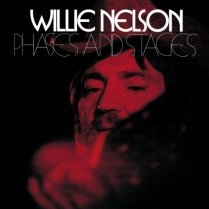
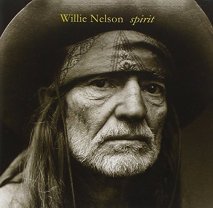
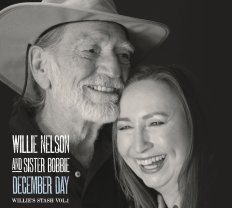
PhasesSpiritDecember Day

My Sunday afternoon was graced by these three magical records recorded across forty years by Willie Nelson, the man accurately dubbed “The Hillbilly Dalai Lama” by Kinky Friedman. If Nelson had left nothing but these albums, he’d be in the pantheon; it’s truly awe-inspiring to consider that outside of these masterworks lay hundreds and hundreds of diamonds. I have often casually said to friends and students that Hank Williams wrote 50 of the 100 greatest country songs of all-time and he only lived to 29. In tranquility, and hypnotized by the man’s stunningly eloquent and accurate way into our moments of darkness and light, I think that Willie just picked up that mantle and extended it, as if to rebuke an unjust universe.

All three of these albums are humbly conceptual, the first two linked by the lyrical thread of Johnny Gimble’s fiddle, the last two by big sister Bobbie Nelson’s piano, all three by crack bands and Willie’s unmistakable acoustic guitar. Phases and Stages (1974) plumbs the heartbreak, humor, and illumination of both a woman’s and a man’s side of a break-up–taken outside the context of the concept, each of the songs is a classic, either major (“Bloody Mary Morning”) or minor (“Sister’s Coming Home” / “Down at the Corner Beer Joint”). Spirit (1996), sparer, drumless, linked mostly by the instrumental passages titled “Matador” and “Mariachi,” meditates on loss and perseverance, and its songs, perhaps, rely on each other for their eternal air. December Day (2014) is one of the most startling road-band studio recordings I’ve ever heard. The concept’s pretty simple, and seems to have come from Bobbie: as she’s quoted as asking in the studio, “Why not record our favorite songs like we play them for ourselves?” It works–the listener does feel like he’s eavesdropping on a little corps of musicians (on a family of musicians) laying back and sharing what’s always made them happiest. In that way, December Day might be the most successful of the three, and its song list may well have been assembled much more casually than the others’: three Irving Berlins, a Reinhardt, a Jolson, “Mona Lisa,” and “Ou-es tu, mon amour” surrounding several old Nelson copyrights (for example, “Permanently Lonely,” ’63) and a couple of very poignant–and dryly funny–new ones  (“I Don’t Know Where I Am Today,” “Amnesia,” and “Laws of Nature,” of which the Dalai Lama himself would surely approve). The effect is confidently valedictory: “This is the stuff I’ve loved all my life, and, by the way, do you notice how my stuff stands up in the American pop canon?” Not too valedictory, as it turns out, as Willie’s released several albums since then, and probably has more in the chute. I don’t doubt that he might also have another masterpiece in him, and that it’ll be 2028 before we know it.

Dig in:

Short-shrift Division:

Otis Redding: Otis Blue/Otis Redding Sings Soul–Willie got me hankering for more mastery, and when I called this up on Apple Music I was stunned by what sounds like an expert aural restoration.

Swamp Dogg: Gag A Maggot–“Just call me wife-sitter / I’m a mighty happy critter! / Don’t be bitter / ‘Cause I’m wit’ her….”

Pan Afrikan People’s Arkestra (Horace Tapscott, conductor–and pianist): Flight 17–I have yet to hear a Tapscott-associated album I didn’t love, and this is no exception. It’s wayyyy out of print, so I had to throw my bobber out on Discogs Lake and wait for twitch…and wait…and wait. But was it worth it! Recorded at Los Angeles’ Immanuel United Church of Christ, it’s a large group recording of power and delicacy, with no Tapscott compositions but two strong ones by the departed honoree (pianist Herbert Baker), one by saxophonist Sabir Mateen (who’s on board, and how), and a winning foray through a Coltrane medley.


In Walked Budd (February 24th, 2018, Columbia, Missouri)

Budd Johnson, that is! From the opening notes (just click above, podnah) you know you’re going on a deep tenor sax dive, which is what I did yesterday with Johnson on his Swingsville album, Let’s Swing, and indirectly on Etta Jones’ luxuriously blue Lonely & Blue, where Budd, with assistance from the equally great tenor man Gene Ammons, wraps the singer in thick, slow-swinging swaths of indigo.

Both LPs are simply classic. Both are rendered in Rudy Van Gelder’s stunning sound. Both feature a richness and depth of feeling you’ll have some difficulty finding in a new set today.

Funny: I just read an article on meditation written by Repa Dorje Odzer and published in tricycle, and I’d advise you to listen these in much the way the article advised me to sit:

1) Don’t think about past records you’ve heard.

2) Don’t judge what you’re hearing now (hear it arise and unfold).

3) Don’t imagine where the music will go.

4) Don’t try to figure the music out.

5) Don’t try think about how the music could be/should be different (resist controlling thoughts).

6) “Rest, like a bee stuck in honey,” and let the music wash over you.

Easier typed out than done, but Johnson’s and Jones’ (and Ammons’ and Van Gelder’s) work provides a perfect opportunity to try and merge meditation and fully present listening. I’m trying it in a bit.

Short-shrift Division

Hailu Mergia: Tche Belew(Wow! Truly a master Ethiopian jazz-funk composer–I get the funk now.)

Harlem River Drive (all hail the Palmieri Brothers!)

Dennis Gonzalez’ Yells at Eels: In Quiet Waters (Wow! Truly a master free jazz composer!)

Jason Marsalis and the 21st Century Trad Band: Melody Reimagined, Book 1 (Doesn’t quite live up to the ambitions of the band name or album title, but it’s swinging and lilting and lively nonetheless. The leader’s on form.

Not THAT Thomas Jefferson! (February 23rd, 2018, Columbia, Missouri)

I love old-time New Orleans jazz records–that so many seem to and might actually have been recorded in an empty VFW hall is a charm I cannot resist–and I was pleasantly surprised earlier this week when those nice kids at Hitt Records gave me a copy of Thomas Jefferson’s If I Could Be with You One Hour Tonight. Jefferson is one of the later-period greats of traditional NOLA trumpeting, and he sounds great on this record I’d never heard of (he’s an affecting singer, too); it was actually recorded at The Lord Napier in Surrey, England, and the set list features some warm surprises (“A Long Way to Tipperary”). One of the clerks, Taylor, had had a conversation with me about a similar record I’d found at the store, and said to me, “Y’know, I don’t know much about this stuff–I probably need to get caught up.” He must be wasting no time.

I have been the beneficiary of great generosity this week, and much of it hasn’t had to do with my birthday. My good friend Isaac, with whom I share a constant stream of wonderful music on a regular basis, alerted me to the release of a new record by Hailu Mergia, an Ethiopian pianist of considerable reknown. If you don’t think you need to hear Ethiopian piano-based music, sorry, but you do. Mergia’s Lala Belu combines fascinating searching melodies (Mariam Gebru, his fellow Ethiopian keyboardist, seems to have minted them) with striking, swirling accordian, dark-toned violin, and lightly funky drums. Here’s the whole record:

Finally…about my entry of 2/22/18? I’d mentioned Joyful Noise Recordings’ “White Label Series”? Well, I gave a deeper listen to one of those, the band Berry’s Everything, Compromised, and I think it’s major, one of the best releases of 2018. The album title’s an unfortunately accurate aspersion cast on the state of the nation, and for pop music political statements, especially in the indie rock vein, it’s remarkably subversive, witty, pointed, and weird. If you’re both pissed and bemused, you might want to pick it up if you can find it.

http://berrytheband.bandcamp.com/album/everything-compromised

Short-shrift Division:

More later, I am sure, on this one, but Superchunk’s new and mordant What A Time to Be Alive is also a real killer with a political edge–and does it rock out!

A Birthday Playlist (February 22nd, 2018, Columbia, Missouri)

I turned 56 yesterday, and I admit I was a bit too distracted to now be making any sense of what I listened to, which was plenty. So, after a few bits of news, I’ll just leave you with a playlist of the highlights.

Nicole and I had breakfast at Ernie’s, a diner which every visitor to Columbia should visit. Whatever blues satellite station they were tuned to was kickin’ my ass–we didn’t have Shazam handy, and the selections were stumping me, which, to be honest, isn’t easy for a blues satellite station to do. A sprightly blues version of “Old Chunk of Coal”? Hmmmm.

Perhaps one of the best presents I received was from Netflix, which announced a Roxanne Shante biopic set for a March 23rd release. I’m all about that, as she has long been a hero of mine; as she once put it herself, she gave birth to most of them MCs. Here’s the trailer, which looks mighty promising:

Also, I subscribed this year to a very interesting series of albums Joyful Noise Recordings is curating. The White Label Series sends subscribers an “undiscovered LP” each month; each LP has been chosen by an already-established artist (the presence of Serengeti, Mike Watt, and Aesop Rock convinced me to pony up) and is limited to a 500-copy run. I finally had time to listen to the first two White Label releases yesterday: Weirding Module’s A Newer Age (curated by Kid Millions, and including an apology to Italo Calvino!) and Berry’s Everything, Compromised (curated by Dale Nixon, who was initially transfixed by the band at an unamed dive bar in St. Louis). The former features some aggressive and zoinky noise which I kinda liked; the latter, which I wasn’t able to concentrate much on at first but came quickly back to, some very plaintive, literate, subversive (!!) and odd semi-pop music. I have to give them both more attention, but I really like the idea, especially since the liner notes require the curators to justify their choices, and since it forces me out of my comfort zone. Care to sample?

Annnnnnd…here’s my birthday playlist! Enjoy!

“So What If I Did?” (February 21, 2018, Columbia, Missouri)

“‘So what if I did?’ she said / ‘So what if I did? / I don’t want to account to you– / I don’t wanna account to no one!'” That’s the opening line of the Thelonious Monster album Stormy Weather (coupled on a great two-fer CD with its predecessor Next Saturday Afternoon, linked above), which I hungrily revisited yesterday. There’s something about Bob Forrest’s gutter-snipe whine that’s always struck me as tough, and oddly soulful, and something about his best lyrics that reflect a preoccupation with being held accountable. Sure: in many of his early songs (I’d prefer to forget “Why Don’t You Blow Me and the Rest of the Band?”), his sentiments are punk-callow or worse. But a broad and deep listen, which this CD facilitates, reveals a singer and writer who doesn’t want anything that comes easy, who likes honest admissions and the problems they set up. The response he puts in the mouth of the persona of “So What If I Did”? “I guess you don’t remember what we had / Maybe–maybe–you forgot.” Later on down the records, there are problems not just anyone wrote about: a wayward son fathered in a moment’s passion and ready to square off; a relationship gone very bad but not over yet (“We’ll both feel so relieved / When I walk out the door!”); a parent blithely writing off uprooting a family to “property values”; the fact that Lena Horne is still having to sing “Stormy Weather”; the realization that maybe Paul Westerberg didn’t walk on water. Those are just a few of the conundrums Forrest posed for himself to grapple with. Even when he wasn’t coming up with his own, he didn’t mind covering Tracy Chapman (not the cool move for a Cali punk rocker in the mid-Eighties–not the easy move!), who provided for him a conundrum of her own: two weeks in a Virginia jail for her lover. Even when confronting the emptiness of rock (and maybe of America’s promise to underclass kids), like Forrest does behind the seemingly easy humor of “Sammy Hagar Weekend,” he’s not only cold-eyed, but ultimately compassionate. I’d argue there’s an empathetic ache behind that chorus of “We’re gonna drink some beer / Smoke some pot / Snort some coke / And drive / Drive over 55!” That’s all there is? Maybe–and maybe we thought so, too.

In retrospect, it’s pretty easy to understand how Forrest gravitated toward counseling others as they strove for sobriety: no chance of it happening any easy way.

I love Bob Forrest’s writing and singing. They just don’t age, to my ear, and they never fail to…inspire me. I mean, I’m not sure many folks would place these albums (especially Stormy Weather) next to Sly and the Family Stone’s Greatest Hits on the shelf you reserve for your never-fail restoratives, but I’ve drunk deep and keep coming back.

I am dedicating this blog post to my friend Eric Johnson, who is the only person I know who is as much a fan of Bob as I am, and without knowing it has encouraged loyalty to the man.

Short-shrift Division (Bandcamp “Let The Music Do the Talkin'” Edition):

Winner of my award for the 2017 Album That Just Won’t Quit. I can’t say enough how terrific it is. Guest starring Spider Stacey, Dickie Landry, and some strange and beautiful textures.

I am sure there’s bad music that’s been (and is being) made in Brazil, but there’s a whole lot more that’s irresistibly quirky, attractively off, and eminently danceable. One more in that seemingly inexhaustible tradition.


Hypnotized by “The Nile River Suite” (February 20th, 2018, Columbia, Missouri)

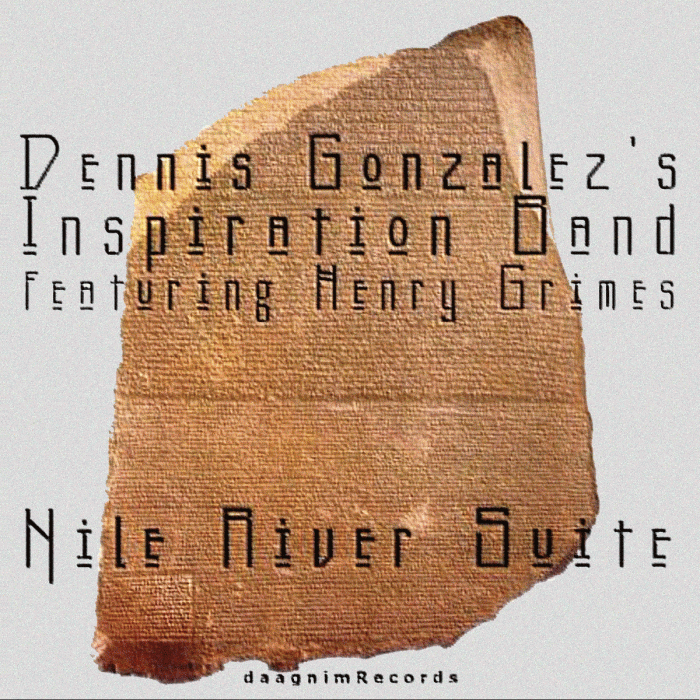
Texas trumpeter Dennis Gonzalez, backed by his perfectly named Inspiration Band, released The Nile River Suite in 2004. A look at Discogs reveals one available used copy for a little over $30. This is discouraging, as it is merely one of the greatest–one of the deepest, one of the most moving–jazz albums of the millennium.

Three of the compositions were written by Gonzalez; the miraculous title piece is credited to all the musicians, and…what a lineup: Roy Campbell Jr. on trumpet and flute, the unsung master Sabir Mateen on all manner of reed, “T. A” Thompson on drums, and the legendary Henry Grimes on bass in his first appearance in years. Though these players are accurately associated with the free genre, Nile River Suite is not a work of cathartic expressionism or conversational blips, blats, and blurts (not that there’s anything wrong with those)–it’s a masterpiece of surprisingly quiet intensity, studded with lyrical exchanges you won’t soon forget (between Thompson and Grimes in particular) and arrangements that magically exploit the two-trumpet lineup but also give Mateen the spotlight in which to prove he’s the greatest saxophonist you’ve never heard of. Gonzalez manages to conjure the desert in “Sand Baptist,” and send the listener out in meditation with the closing “Hymn for the Ashes of Saturday”; his writing and voicings made me think of Coleman, Mingus, Tapscott, and Ibrahim, but a sidetrack to two other Gonzalez works (Idle Wild, Debenge Debenge, both of which I also highly recommend) confirmed for me that what’s in play is Gonzalez’s unique vision.

One other note: the album was recorded in lustrous and detailed fidelity, which intensifies the sensation of unified intent and shared emotion the group’s performance generates.

I repeat: one of the greatest jazz albums of the millennium. Good luck scoring a copy, and there’s no audio to share here. But it is a most worthy Grail search.

Check out more of Gonzalez’s work at his Bandcamp page and on his blog. Also, a special thank you to Ken Shimamoto, The Stash Dauber, for putting me on Dennis’ trail. Ken has written some exceptional liner notes for a few of Gonzalez’s records.

Short-shrift Division:

Songhoy Blues: Music in Exile

Oruç Güvenç and Tümata: River of One

Soul Sok Sega–Séga Sounds from Mauritius 1973-1979

“Jazz is a globalized African American freedom vehicle”: Nicole Mitchell (February 19th, Columbia, Missouri)

Again, I had a very busy day reading, hanging out, watching movies, and welcoming back one of our outdoor cats who’d been on a walkabout–little time to listen. BUT I was able to bend a long-promised ear more intently to the wonderful, exploratory jazz of Ms. Nicole Mitchell, former president of the AACM, current professor of music at the University of California-Irvine, and jazz flautist and composer deluxe.

I’d listened to her Mandorla Awakening II–Emerging Worlds several times last year, and her interstellar settings (very much in the path of the great Sun Ra), magnanimity (there’s always as much space for her collaborators as she makes for herself–often more), feeling for poetry (both literal and figurative), and her activism (explicit or not, her work is always addressing the struggle) consistently hit me hard in the solar plexus.

Yesterday, for the first time, I took in her Intergalactic Beings album, and this cut stuck with me for most of the day:


I was also dazzled by both Mitchell’s playing, composition and band leading and (the great jazz bassist) Alan Silva’s artistic contributions to this video from Mandorla Awakening II:

Songhoy, But Not Blues (February 18th, 2018, St. Louis / Columbia, Missouri)

In St. Louis for the weekend to hear George Saunders (see 2/17/18) and see Black Panther (today), we did both some jetting and lazing around, including trips to a Vietnamese restaurant we’ve been frequenting for almost 30 years, the Pho Grand, and Mission Taco, which almost assassinated us with horrible piped-in hipster ambience and lazily-prepared and overpriced cocktails. So we didn’t have much time to focus on music, but…couple things:

Caught up with Songhoy Blues’ 2017 release, Résistance. The Malian unit is loved by many folks because they rock it out, and distrusted by many because they are thus impure desert bluesologists. I hold with the former group. I shouldn’t need to say that purity is overrated (if it is even real), and impurities often bring us surprise and delight. They can also lead to a messy artistic experience, but, unlike its predecessor Music in Exile, which sinned simply by rocking up the percussion and guitar ideas, Résistance folds in reggae, funk, horns, Iggy Pop as well and comes out alive. How? Intensity. Commitment. Inspiration.

Nicole: “You know, I think I am going to put together a Top 10 this year, and this is gonna be on it.” It’s slightly old to make a 2018 list, but I’m not going to tell her that–and years are arbitrary constructs anyway, kind of.

Fairly final thoughts on Black Panther The Album–Music from and Inspired by The Film:

“Inspired,” quite honestly, is a poor choice of words. The movie is pure dynamite: it’s visually stunning, conceptually rich, and wonderfully acted. Not a dull moment. The album, however, is frequently dull. Even Mr. Lamar does little but holler a few repetitive hooks; his lyrics only occasionally seem to make contact with the world of the film. The highlights are drop-ins by Schoolboy Q and Ab-Soul, and those are fleeting highs. All in all, a missed opportunity.

I did have a few minor caveats/questions about the film:

*Why do we spend so much time seeing Africans fight Africans? Perhaps there is a longer game the franchise is playing?

*Incorporating a CIA operator into one’s fold is a bizarre move for an African king. I know it’s an alternative, fictional world, but it’s running side-by-side with the U.S.A.’s real history of subjugation, brutality, and oppression. Hasn’t T’Challa read up on, to take just one instance, Patrice Lumumba? Aside from that, there’s just a dollop of white saviorism in play, and, as my friend Greg pointed out in a Facebook post, the political conciliation at the movie’s end is somewhat disappointing.

But–it’s of great art that we ask such questions, because it raises the bar of the possible. I’m thinking about going again today, not to investigate but just luxuriate in its brilliance.

A Great Record, a Great Party and a Great Writer (February 16-17, Columbia and St. Louis, Missouri)

Friday:

I listened to one of 2018’s best new releases. David Murray and Saul Williams’ Blues for Memo is definitely a work for these egregious times. Murray’s sax work is, as always, burly and brawny, but most impressive are the settings his written for Williams’ poetry, much of it adapted from his harrowing US(a.) collection from 2015. The poet’s readings have an actual pocket to breathe inside the songs–Murray wrote them with the lyrics sitting on his piano–though the listener may at times find it hard to breathe when confronting their truths.

Saturday:

My lovely wife threw an early birthday party for me, and I did control the music (the new Songhoy Blues was something I remember playing–there were many Bloody Marys involved), but the best musical moment was one I didn’t control. Imagine that!

My friend Rick Hocks brought his guitar, and near the end of the party played a lightly jazz-tinged arrangement of the above Gregg Allman classic–for me (though I am no midnight rider)! It was very nice, and inspired me to sing “harmonies.” That is a rare thing, and the Bloody Marys hadn’t anything to do with it!

Later in the day, we drove to the St. Louis County Library to hear the great writer and humanist George Saunders discuss his masterpiece (so far) Lincoln in the Bardo and the art of writing. With sprite-like wit and verbal agility, he kept a very impressive crowd rapt with his encouragements, especially regarding the power of line editing, the need to avoid constructing a grand plan before you begin writing, and the importance of being on speaking terms with the story you’re trying to tell. Absolutely delightful, and we eagerly await the next book!

Short-shrift Division:

The Hollies’ Greatest Hits

Fountains of Wayne: Out-of-State Plates

Glasvegas

The Go-Betweens: 1978-1990

Songhoy Blues: Resistance

George Saunders: Lincoln in the Bardo (audiobook–166 different readers, and it’s a must!!)