Phil’s Faves: A Mid-Year Report


These are the “new” recordings that I’ve enjoyed the most in 2014.

1. Allen Lowe: Mulatto Radio–Field Recordings 1-4, or: A Jew At Large in the Minstrel Diaspora – This is the most ambitious recording of 2014–if not the decade, or the century. That difficult-to-love high school principal of jazz, Wynton Marsalis, pissed off Lowe, as ardent a student of our country’s musical history as you can find, in a conversation about jazz that, of course, ventured into areas of race, appropriation, and creative rights. Lowe responded with a four-disc (five, if you ordered it early!) tour de force that’s more alive and interesting than anything Marsalis has recorded in years, if ever. You don’t have to love jazz to be fascinated with the result, which easily lives up to its provocative title and tours every nook and cranny of the genre. And, in this listener and thinker’s view, it wins the argument. Check out my buddy Ken Shimamoto’s much-more-wise commentary at his Stash Dauber blog (he’s a writer/muso like Lowe).

2. Bo Dollis, Jr. and The Wild Magnolias: A New Kind of Funk – What happens when you run a line of serious wattage into a Mardi Gras Indian practice.

3. Obnox: Louder Space – Continuing the fine Cleveland/Columbus tradition of ugly noise and urban protest. Lamont Thomas, with a serious punk pedigree to deepen his geographical birthright, makes a racket to light a fire under Mick Collins’ ass. Euphonious racket!

4. Latyrx: The Second Album Who cares if their first album dropped 17 years ago? Lateef and Lyrics Born are still two of the most unique rappers spittin’.There ain’t no “Balcony Beach”–how could there be?–but there is “Deliberate Gibberish”!

5. Ross Johnson and Monsieur Jeffrey Evans: Vanity Sessions – Out to prove the Memphis rock and roll underground is still nuts now that the Oblivians have grown up, they win, four falls out of six. The title of the opener–“Three-Beer Queer”–says more than any review can.

6. Wussy: Attica! – Robert Christgau calls them a blending of VU and the Flying Burrito Brothers, which is absurd. What they are, with the star- and shock-power of rock and roll browning out, is the voice of far less polymorphously perverse and doomed adults than Reed and Parsons ever were, negotiating the 21st century into a draw and constructing a passionate but unflashy soundtrack to back their bargain. That’s probably absurd, too, but if you are a rock and roll fan of a certain age (say, if you actually walked the Seventies teenage wasteland), and are feeling just a little embattled, this Ohio band is for you.

7. Marc Ribot Trio: Live at Village Vanguard 2012 – Two Aylers, two Tranes, and two sentimental faves, socked home by, arguably, the country’s most daring guitarist.

8. Neneh Cherry: The Blank ProjectStill in a buffalo stance. This mid-forties mama can roll with the zeitgeist–just ask Robyn, who spices up one of the best tracks here.

9. Sonny Rollins: Road Shows, Volume 3 – Old Man River just keeps rolling out the cadenzas. All three volumes are musts.

10. Tinariwen: Emmaar – How many Tinariwen albums does one need? Well, remember what they have always said about ol’ Hank and the Ramones, and ask yourself how many notes it takes you to recognize “Ramblin’ Man” or “Beat on the Brat.” This band has a sound, a groove, and a brood in their wake, not to mention that, politically and aesthetically, Saharan blues is good for what ails ye.

11. The Stooges Brass Band: Street Music – I believe New Orleans music gets short critical shrift because the city’s always been teeming with such traditional music that it’s assumed its innovations are long past. I won’t argue that this band of Stooges is all that innovative, but brass-band toons with the lyrics and cultural weight of “Why They Had to Kill Him” and “We Gotta Eat” aren’t everyday creations. And these guys work in a damned HOT crucible of competition.

12. Natural Child: Dancin’ with Wolves – I admit it: I am a sucker for these Nashville no ‘counts, and even I regard their countryward turn with a tinge of dubiosity. But they are so fun-loving, so unselfconscious, so unambitious, so charming that if I didn’t laud them I would have to turn in my Sir Doug Fan Club badge. Face it: unselfconscious men are hard to find these days.

13. Roscoe Mitchell and Tyshawn Sorey (with Hugh Ragin): Duets – Mitchell’s 73, Sorey’s 33, they both know their Cage and Feldman, and, if you’re not into the sound of becoming–the sound of sound–you best shop elsewhere. But this hands-across-the-generations team-up is relentlessly interesting. All I’d ask is that Sorey played more drums.

14. Parquet Courts: Sunbathing Animal – See Pitchfork. But it’s even better than they say. You gotta watch that groupthink.

Singles (Record Store Day double-header):

Bobby Rush: Upstairs at United – 81 years young this coming November, the inventor of folkfunk and seriously randy grandy is still one of our country’s underappreciated masters, and with the blues influence in our music trickling down to drops, you best get out to see him if he shows up in your ‘hood. But fathers, watch your daughters. Note: he also put out a full-length this year, and we’re only halfway through!

Marc Ribot w/Deerhoof: Who Sleeps, Only Dreams – When our age’s heir to Sonny Sharrock appears, attendez-vous!

Old Stuff/Reissues:

Various Artists: Haiti Direct! – Rhythm nation. And, oh, those guitars and horns.

John Schooley One-Man Band: Schooley’s Greatest Hits – The instrumental fulcrum of two-count-’em-two great lost garage punk bands, The Revelators and the Hard Feelings, Schooley will deliver all of the excitement and relentless rock of Bob Log and his ilk with none of their bullshit. Aaaaaaaaaaaaaaaaand — it’s free!

Bob Wills & The Texas Playboys: Riding Your Way–The Lost Transcriptions for Tiffany Music 1946-7 – The best band in the USA, circa 1946-7. Camaraderie, versatility, chopsmanship, rhythm, and high times–plus, of course, you can dance. Aaaaaaaaah-HA!

Various Artists: Angola 2

Various Artists: The Rough Guide to the Music of Mali, Volume 2

D’Angelo: Live at the Jazz Café, London – His band and back- up singers work harder than he does, and it’s still a great show.

Gories: The Shaw Tapes—Live in Detroit 1988

Sid Selvidge: The Cold of the Morning – A Memphis cult hero, his voice was silenced by cancer on May 2, 2013. This reissue of a ’70s Peabody Records release captures him in his prime, comfortable with everything from Furry Lewis to Jimmie Rodgers to Fred Neil and boasting a very flexible, very American voice that gives off not a whiff of minstrelsy or strain.


Good to My Earhole: Bo Dollis, Jr., and The Wild Magnolias’ A NEW KIND OF FUNK

bodollisjrandthewildmagn

Technically, this record is a 2013 release (it came out last September), but, if’n I get a chance to vote in any record polls in 2014, it’s sure to be in my Top 10. My decision will be justified: it’s on a tiny New Orleans label (One More Time), it’s distributed by CDBaby, it features no mega-stars, it arrived with no hoopla (when I bought my copy at Louisiana Music Factory in New Orleans, the very well-seasoned owner couldn’t even get excited about it when I asked about it), and, well, it’s out of New Orleans, the still-fabulous music scene of which may be back in the public eye thanks to Treme but still gets very, very little critical love and mainstream coverage. So: we may as well call it a 2014 release.

Now that I’ve expended a paragraph on a barely-necessary justification…some background. Dollis is the son of one of the most legendary big chiefs in the Mardi Gras Indian tradition, the chief, in fact, who sang lead on the 1970 45 “Handa Wanda,” the first commercially released Indian chant. That single was the first of three significant such releases of the decade, the others being long-players released by two competing tribes, The Wild Magnolias (1974) and The Wild Tchoupitoulas (1976). If you’ve never heard ’em, they feature some of the straight-on greasiest funk of their time, with P-Funk, riot-era Sly, and JB its only equal. Each record features only traditional Indian chants, with only two overlaps, and those so differently arranged you might not notice; these chants deserve your attention, because their subtext is defiance, bravery, and endurance, themes that at this point in America’s racial history have gained deeper, more painful, and more inspiring resonance. Each record features a different famous force of funk: on Magnolias, the great guitarist Snooks Eaglin, who might pre-date JB in his history with the style; on Tchoupitoulas, the quirky and inventive Meters drummer Ziggy Modeliste. Each record features a local-legend producer: the ’74 record, Willie “Thank You, John” Turbington, the ’76 record Valhalla-bound songwriter/pianist/arranger Allen Toussaint. Each record, my friends, is a stone classic. Unfortunately, as far as your average music consumer is concerned, that would seem to be the end of Mardi Gras Indian music on record. However, there has been a steady stream of these records released across the last three decades, from further releases by Dollis, Sr., and his Wild Magnolias as well as the Golden Eagles tribe in the ’80s (they received a smidgen of roots-music ink) to the extremely obscure but excellent 1997 Flaming Arrows’ Here Come the Indians! and the vaguely 21st-century set of tracks laid down by the Hundred & One Runners on the tiny Mardi Gras Records’ 2012 Best of New Orleans Mardi Gras Indians. Like Western swing, this little subgenre seldom fails to deliver pleasure, delightful camaraderie, and the urge to get the hell up and dance.

Which finally brings us to the release in question. In view of both the general lack of consumer and critical attention given to Mardi Gras Indian music and the historical evolution of the subgenre, the record is a very significant one. Bo, Jr. and his producer Joe Gelini have achieved a rare trick: usually, when an artist or producer tries to “rock up” a non-rock genre, the result is a tasteless, unsubtle, desperate aural brew that disappoints everyone involved, specifically including listeners; here, the frequent dabs and splashes of guitar crunch, supplied by St. Louisan Mike Zito and Brothers’ son Devon Allman, are nicely accompanied by deftly mixed and soulfully played dobro, fiddle, piano, and horns (none familiar aspects of the subgenre), as well as the usual funky percussion and tambourine. The intelligence and touch behind the conception, playing, and production, best exemplified by the Dollis’ opening “We Come to Rumble,” makes A New Kind of Funk the best chance yet for Mardi Gras Indian music to jump off the island of esoterica onto the mainland of Americana. That is, if the project had more commercial and media support behind it–a guy can dream. Also, Dollis’ decision to weave in his own originals and Indian-style covers of classic New Orleans jazz (“Tootie Ma,” “Little Liza Jane”), r&b (“Hey Now, Baby” featuring fine Professor Longhair-style piano from Tom Worrell), and soul (a not-entirely-successful “Everything I Do Gonna Be Funky”) with traditional battle cries like “Fire Water Big Chief Got Plenty” and “Hell Out the Way” pays off big in two ways, appealing honestly to outside fans as well as expertly connecting four Crescent City musical traditions–and helping to keep the music in a state of evolution.

A New Kind of Funk is an exciting, spirited, and various set that deserves much more attention than it likely will get, and it comes at a time when the tribes are struggling to keep that ever-infernal “younger generation” interested in their rich history of exuberant and stylish resistance. If the kids followed that history back to mid-1800s Congo Square, where it started, they might just discover it is the wellspring of their music. And, oldsters, you might find it’s also the wellspring of yours. If you do buy this album, and like it, please please please go right on ahead (or back, I should say) to The Wild Magnolias and The Wild Tchoupitoulas. You will feel the fire of a sound that’s kept folks off their knees for a long, long time.

Good To My Earhole: Selections Across Two Busy Weeks

It’s hard to hold down a blog when you have two real jobs. But the need to separate the wheat from the chaff, and to tug underrecognized music out of the clutches of time’s dustbin, never wanes.

Image

Khaira Arby: Timbuktu Tarab (Clermont Music) Arby jumps out of the otherwise simply excellent Festival Au Desert concert recording with a possessed vocal that, though I do not know the Tamashek language, sounds like freedom to me. After two months of fruitlessly searching for more of her recordings–she’s a match for Mariem Hassan , if that name means anything to you, which it should–I stumbled upon this, apparently her only other available recording. Not only is she consistently in the same powerful form that she demonstrates on the the concert track, but her band is stellar, more shifty and demonstrative and less trancelike than Tinariwen and other “desert blues” stalwarts. Especially the guitar. Yeah: driving guitar and heart-stopping female singing–where you gonna go to get that these days?

Serengeti/Kenny Dennis: “Rib Tips” (video, produced by Jel and Odd Nosdam) Chicago’s favorite recovering alcoholic/lost ’90s MC/Ditka-head/hip hop alter-ego returns with another contagious, oddball video from last year’s Kenny Dennis EP. Possibly, he’s too quirky or silly or ramshackle for you; me, I find him an addictive antidote to the heavily constructed, brightly polished, vulgarly materialistic run of mainstream rap. Oscar Wilde: “Life is too important to be taken seriously.”

Image

Johnny Adams: The Soul of New Orleans (Fuel) This compilation catches the legendary Tan Canary, possessed of a rich vibrato redolent of Billy Eckstine but, more scintillatingly, a dry falsetto that lends his every recording an aspect of suspense, between his early years as a New Orleans r&b hitmaker (the stone-classic “I Won’t Cry,” “A Losing Battle,” “Please Release Me”) and his valedictory Sinatra-goes-soul sessions with Rounder. The time? The Seventies. The label? Hep’ Me. The producer? The legendary Senator Jones, who threw everything at Adams that might be a hit, in many cases country, which he handles with depth, care, and passion, and occasional disco and milder dance music, which he attacks like a pro (he gets away a strobe-lit “Spanish Harlem”). Couched among many strong performances are two more stone classics, “After All the Good is Gone” and “Hell Yes, I Cheated” (though this version substitutes “Oh” for the unmentionable hot place). The powers that be need to put together a cross-label best-of to cement Adams’ reputation in Soul Valhalla.

Image

Fats Domino: In Concert (Mercury German import) I know what you’re thinking: Wouldn’t a live Fats album sound pretty much like a Fats studio album? True, he had a sound and a method and he stuck to it like glue. The further truth is, on this mid-Sixties performance, you get some bonuses: his charming patter, some relatively wild piano solos, and–here’s the kicker–covers of fellow Crescent City legends Professor Longhair (who’d pay him back later on “Whole Lotta Lovin'”–see below) and Guitar Slim–as well as Tony Bennett! If you’re a fan, and if you’re persnickety about live albums, it’s worth your time and money.

Image

Professor Longhair: The Last Mardi Gras (Real Gone Records) It may be tainted by the guiding hand of Albert Goldman, but I believe he has degraded to atoms, so, if you’re new to Fess, this is a great place to start: he’s heated up in front of a live audience, Uganda Roberts is on congas–they are one of the great R&B instrumental pairings!–the horn section sounds like it’s just hit the sweet spot of a Friday night buzz, and the song selection is Longhair’s hits sprinkled with bawdy house classics. AND the audio is splendid. Learn why he earned that title.

Image

Muscle Shoals (PBS Documentary, directed by Greg “Freddy” Camalier) I was disappointed when the first three voices we hear in a documentary about one of the great studios of the American South are those of Brits (!?), including that insufferable horner-in, Bono, but the film recovers to lift the veil on the fascinating and turbulent career of founder Rick Hall, the kinship and acumen of the Swampers (like the Funk Brothers and the Wrecking Crew, with mountains of hits to their quiet credit), and the sessions that produced such hits as “I’ve Never Loved Man (The Way That I Love You”),”I’d Rather Go Blind,” “Patches,” and “In the Midnight Hour.” Even music obsessives already familiar with the Fame/Muscle Shoals studio story may not know about the precise moment “Southern Rock” was invented; that anecdote alone is worth the two hours’ time of the movie.

Image

Deerhoof (w/Marc Ribot)/Ceramic Dog: Who Sleeps, Only Dreams (Northern Spy Split Single) One of only two Record Store Day purchases I made this year–and I confess, I bought ’em on line Sunday morning because I didn’t really have a choice. I am a straight sucker for the havoc Ribot wreaks on guitar, on Side A here alongside Deerhoof and Side B with just the most recent of his many underrated projects, Ceramic Dog. No guitarist with a sound this beautifully ugly has moved so effortlessly across r&b, cabaret rock, lounge/avant garde/chamber/free jazz, strict accompaniment, and experimentalism. This single belongs. Try an earlier Ceramic Dog recording on for size to test the waters:

ImageImage

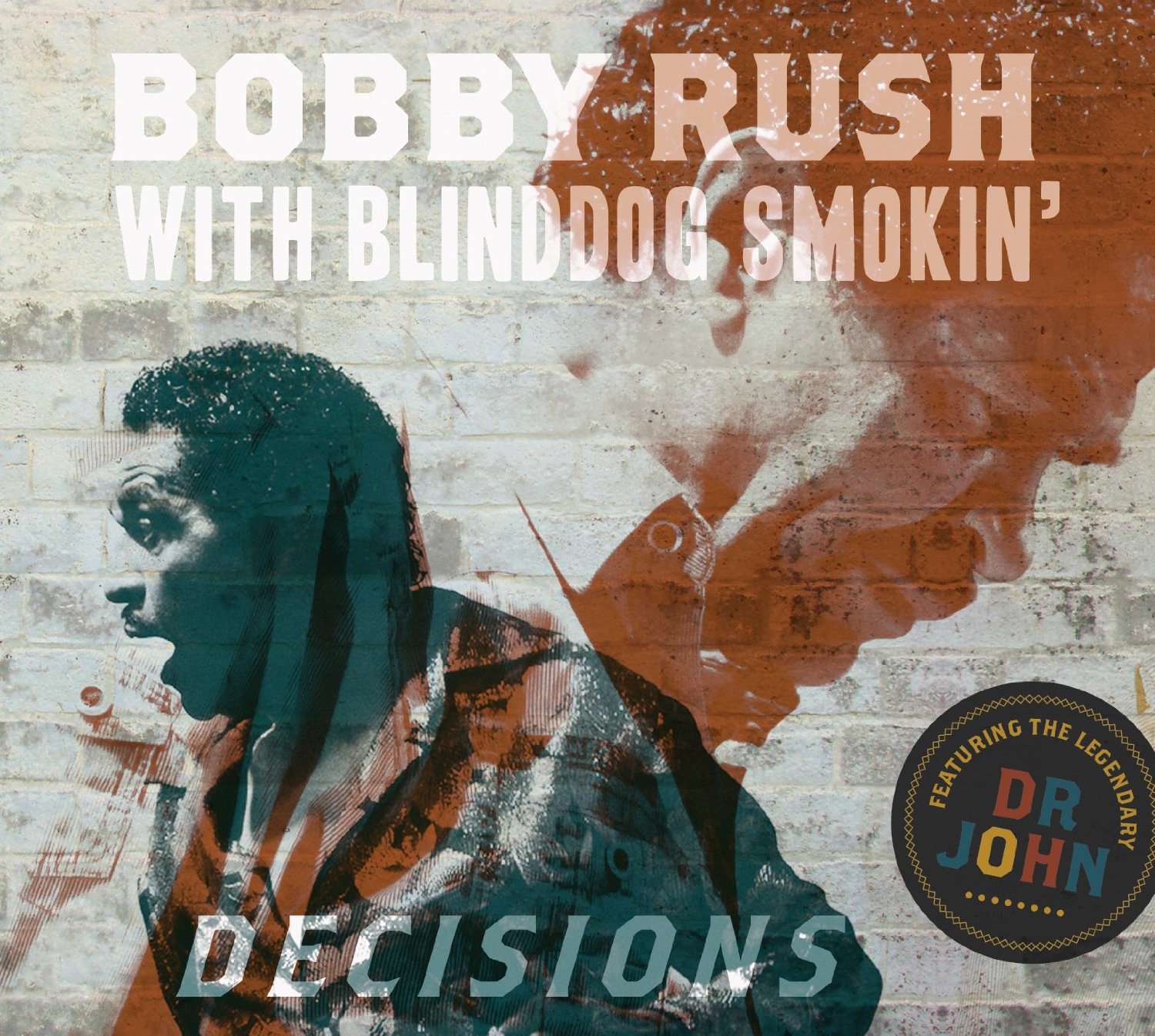
Bobby Rush: Decisions (with Blinddog Smokin’) (Silver Talon) and Upstairs at United (453 Recordings) Since he appeared at the high school I teach at and knocked a Tuesday evening crowd of students, their parents, and grandparents out cold with an old-school set of dirty-old-man blues–yep! in a public school!–Rush, the inventor of “folkfunk,” has been my hero. At 73, he shows no signs of slowing down, having just released a VERY solid full-length record featuring a dark Dr. John cameo as well as a 12″ four-song EP for Record Store Day, courtesy of the otherwise-pretty-indie “Upstairs at United Series” (on which he covers The Beatles and Eddie Floyd, writes a great new one, and reconfigures one of his own chestnuts). Never really mentioned in the same breath as his contemporaries, of which there are fewer with each passing month, Rush deserves our full attention–don’t wait ’til the heartbeat stops!–and, if you have a chance to see him live, you will see a 19-year-old in Grandpa’s body (along with, no doubt, a pair of women’s undies that belong in the Guiness Book of World Records).

Image

Wussy: Attica! (Damnably) I wrote about this one a few weeks ago. After a third focused listen, I am convinced it is the most passionate new work of what is still called rock and roll–in fact, my favorite new record of the year so far in any genre. If you enjoy the thrill of witnessing a very good band taking the next step–to greatness, to record-making, to artistic unity–you’ll want to check it out when it’s released later this month. And you’ll want the other records just to fully appreciate that witnessing. I’m just sayin’.

Good to My Earhole: Listening Top 10, March 30 – April 4, 2014

Not that I expect this to become a regular feature–I hope it does, though my small band of followers must have noticed I am casting about a bit–but here are some brisk takes on the ten things that spun most euphoniously around my eardrums this week. Consider them strong recommendations for application to your own soul-ills, whatever they may be.

1) Tin Men: Avocodo Woo Woo (CD Baby). I was skeptical about this NOLA trio (featuring Washboard Chaz, the astonishingly ubiquitous songwriter and guitarist Alex McMurray, and sousaphonist–only in the Crescent City!–Matt Perrine) possibly being a dad-rock cum Parrothead act until I read a notably scrupulous and discerning NYC critic’s glowing notice of this, their new album. It is perfectly frothy and spirited fun, with interestingly dark (“Blood in My Eyes”) and dirty (the title song) turns. And, frankly, I love the sound they get from their three pieces.

2) Como Now: Voices of Panola County (Daptone). I am not sure how this brainstorm by “The Label Sharon Jones Built” came about, but in ’06 their agents found themselves in Como, Mississippi (home/former whereabouts) of Fred McDowell, Otha Turner, and Napolion Strickland), soliciting a capella gospel songs from black Christian locals and recording them in a local church. A moving listening experience, especially Irene Stephenson’s harrowing “If It Had Not Been for Jesus.” I am an atheist, and it transfixed me.

3) The Staples Singers: Freedom Train (Epic). Not to be confused with the relatively recent Columbia best-of of the same title, this live album was cut in a church in the group’s then-hometown of Chicago, and the location and the clarity of engineering make it one of the most powerful gospel records of the ’60s, methinks. It’s out of print; I thought I’d pulled a fast one and snagged a $4 copy on eBay, but it was pretty banged up–not so much so that I did not THOROUGHLY enjoy the almost otherworldly dynamics of the performance, particularly Pops’ always-venomous guitar and Mavis’ almost atavistic pleadings.

4) Jessie Mae Hemphill: Feelin’ Good (Shout Factory). Just a bit north of Como (also north of Winona, where Pops Staples was raised up–can you tell I’ve been to Mississippi recently?) is Senatobia, and the space between is one of the locations where North Mississippi Hill Country blues was born. It’s a different animal than Delta blues: structurally and lyrically, it’s more repetitive, but that’s not necessarily a deficit when it’s played with intensity. That’s when it becomes hypnotic–in some ways, it’s an extreme version of the John Lee Hooker sound. Hemphill was raised in this (and the related fife-and-drum) tradition; she’s not as loud nor does she project as well as R. L. Burnside or Junior Kimbrough, but her feminine perspective and toughness often make up for that. Try this:

5) Fu-Schnickens: “Sneakin’ Up On Ya” (from Nervous Breakdown, Jive Records). As Chicago rapper Serengeti’s Tha Grimm Teachaz project suggests, there’s one thing very special about the best rap rekkids of 1990-1995: they don’t date as badly as the prime cuts of other eras. Also, that period seemed stylistically wilder, with seemingly unforgettable (but now pretty much forgotten) MC Chip Fu providing a mind-boggling thrill every other song for this unique group. Other MCs may have been faster, but not more inventive at the same time. By the way, how many current rap GROUPS can you count?

6) D’Angelo: Live at the Jazz Cafe, London, 1996 (Virgin/Universal). This was a Japan-only release back in the day it was recorded, but, as I understand it, even then it wasn’t as expansive as this new reissue, which features ACE covers of The Ohio Players, Mandrill (“Fencewalk”!), Smokey Robinson, and Al Green along with classics from Brown Sugar–principally, a phenomenal performance of the tital track. Weirdly, the artiste often seems to recede into the performances, so he’s no more emphasized than the band or the backup ladies (led by Angie Stone), almost…a Billie Holiday thing. At first I was disappointed he didn’t project more, then I began to suspect it was part of the conception. The link below may be the whole dang thing. Keep your ladies inside the fence….

7) Duke Ellington Orchestra: “Snibor” (from the American Hustle soundtrack or, better advised, And His Mother Called Him Bill on RCA). I finally had a chance to see American Hustle this week, and Nicole and I were surprised and thrilled to hear Johnny Hodges’ alto oozing from this film-opening soundtrack cut. Also, having courted to rekkids ourselves, we were surprised and thrilled to see the protagonists (played by Christian Bale and Amy Adams) do the same thing, to Duke and Jeep’s “Jeep’s Blues.” If you are not familiar with Hodges’ sound, it is the definition of sensuous AND sensual; if you are not familiar with Billy Strayhorn’s compositions for Duke, they are usually designed to highlight that sound. Weirdly, I can’t find a YouTube clip for this tune, but here’s an equally seductive one from the same, HIGHLY RECOMMENDED album (a tribute to the recently-passed Strayhorn):

8) The criminally underrated music of Tyler Keith. As a long-time teacher, I am closely acquainted with the dangers of certainty; in fact, I make it a point to seldom if ever come at students from that angle. Music, as esoteric as our perceptions are, is even more problematic in that regard. But I am certain of this: in a world where the rock and roll impulse is dimming, quite seriously (I think that’s a result of the natural evolution of cultural history, of young musicians, for example, casting off the influence of the blues–although donning the robes of a hipster version of James Taylor, in my view, is a misstep–and not feeling the pressures and releases of a society obsessed with sin and salvation, which I think our society still is but youth circa 2014 may not necessarily be), Tyler Keith of Oxford, Mississippi, may well be the  last live-wire link to both the near-insane energy and rhythm of rockabilly and the bugged-eyed gaze into the void of Richard Hell’s strain of punk, which might really have never been fully exploited for its potential. Whew. That was a long one. But goddam I believe it, and the proof is in the best of Tyler’s work with the Neckbones, and three of his rapidly disappearing four “solo” albums (with the current Apostles and the former Preachers’ Kids), in chronologically descending order, Black HighwayWild Emotions (a fantastic rekkid that MIGHT AS WELL NOT EXIST ON THE INTERWEB!!!), and the perfectly-titled Romeo Hood. Keith’s vocals leap out of his larynx as if propelled by a blood-surge, the music is deeply embued with tough-ass-Stones, sprung-Chuck Berry flavor and Johnny Thunders-styled explosions that are quite unpredictable (!) but perfectly timed in nature, and lyrics that are as obsessed with sin and salvation as The Killer’s favorites, though one suspects with Tyler those are purely existential notions. He can even nail a ballad, even one called “Angora,” about a certain sweater. I have never seen him live, but the intensity of his best recordings cause me to suspect that if I do and he is on, it will be hard to stay in the same room with him. The thing is, I felt this strongly when there was a decent herd he was travelling in; now, he is the burning antithesis not only of the swarms of bearded strummers that play, in critic and musician Allen Lowe’s perfect phrase, as if they have napkins folded in their laps, but also of the depleted strain of rockers who, honestly, usually protest their rockitude too much. With Keith, one feels he’s communicating his wild emotions without artistic calculation, and that’s special. I’ve gone on too long, and I can’t do him justice, but I AM RIGHT: here’s a video of one of the best tunes on his recent rekkid, the BEST rock and roll album of 2013.

Chuck

9) Public Enemy: “Can’t Truss It” (live on Yo! MTV Raps). Nicole and I were fortunate enough to see the great rap orator Chuck D speak at Columbia’s Missouri Theater Tuesday night, for FREE (not nearly enough folks there, though). He is a hero of both of ours–I’ve even read his books–and we came with high expectations. He delivered grandly, though he talked mostly about critical thinking in the age of extreme technology and devolution of United States popular culture (remember when that two-word phrase was a joy? a reason to live?). I prepped for his appearance by watching this great raw video of one of PE’s greatest songs, one I used to teach in American lit, though I didn’t show it to kids this week (I was thinking about using it to promote the appearance) because I didn’t want to be met with slot mouths.

10) Tommy Boy All-Stars: “Malcolm X: No Sell Out” (Tommy Boy 12″). This, too, was part of my prep for seeing Chuck D, a man who, really, hasn’t sold out, either. I’ve read both the Haley/X “autobiography” and Manning Marable’s corrective bio, and I absolutely love the threading of perfectly chosen soundbites from Malcolm’s speeches (“I was in a house tonight that was bombed…my own. It’s not something the makes me lose confidence in what I’m doing.”) through an ace Keith LeBlanc track. In a perfect world, it woulda been a hit. Still inspiring: “I’m not the kind of person who would come here and say what you like.”

Four Sounds I Really Like

Roky Erickson’s rock and roll cry:

For all Roky has been through–undiagnosed mental issues, hallucinogens, Texas cops, unjust incarceration, whacky custodial care, unhealthy fan worship, self-rigged residential clamor, the sheer ravages of time and The Road (which he is still rollin’ down)–his voice has proven extremely durable. Even in full-throated rave, as in the above, close listeners can hear not only a fetching Texas curve or two but also a vulnerability that, when he’s doing a ballad, makes him seem like he’s channeling Buddy Holly.

Johnny Hodges’ seductive, fluid alto sax:

As one writer whose name I cannot recall once wrote (I am paraphrasing), his sound is like honey pouring out of a jar. Note: I wanted to find a clip of his intro on Ellington’s early-’40s version with Ivie Anderson on vocals, which is almost unbearably erotic, but no luck. The Jeep could jump, but he could really ease back and beckon.

Natural Child’s unselfconscious, appealingly homely…groove:

I just started this blog three-four days ago and I have already mentioned this happy-go-lucky band of Nashvillians three times (plus posted an old article about them in the archive), but, dammit, they have their hooks in me. Whether they’re rockin’, bluesin’, hoein’ down, shufflin’, they lock in like The Rolling Stones’ little brothers, and they can catch up short with their acumen. I was hooked from the first note I heard and saw ’em play in 2010 at The Scion Garage Rock Festival, and I think this was the song. The bass is weirdly in the lead, and they love to yell-along. Perfectly unfashionable.

Anita O’Day–in flight!

Easily one of the most–if not THE most–underrated jazz singers ever, at her absolute peak. She looks smashing (and by her own admission in HIGH TIMES, HARD TIMES she was smashed), the band swings, the crowd projects the best (and quirkiest) aspects of the coming New Frontier, but Ms. O’Day steals the show. The lightness and fetching quality of her timbre (sorry for the fancy word), her absolute mastery of rhythm, her humor and sexiness, her DEFTNESS–OK, I’ll stop, just play it over a few times, OK?

“Panther Burn” Take Over Memphis Public Access and the Cotton Carnival in 1979

Somehow, Tav Falco and his “art-damaged” rockabilly band finagled their way onto Memphis’ public access show “Straight Talk” (hosted by the perfectly-named Marge Thrasher) in 1979. On stage with them…the King and Queen of Cotton, looking bewildered. After slinking through a version of The Rock and Roll Trio’s “Train Kept A-Rollin’–an example of the “invisible Memphis” Falco talks about in the clip, the band is stopped in its tracks by the host as they attempt to barrel right into a “rock tango,” and the ensuing clash between Tav and Marge is one for the ages. A classic example of art busting up stale and ironic convention, and does Falco maintain his cool during the conversation. Keep an eye out for the still-loony, still-rockin’ Ross Johnson on drums, and the late, great “XL Chitlins” on guitar. And if you love this, seek out the band’s great BEHIND THE MAGNOLIA CURTAIN and Robert Gordon’s epic IT CAME FROM MEMPHIS. Exhilarating!