Stephens College Conservatory Ace Sophie Davis Parses the Virtues of Lewis Capaldi’s Broken By Desire To Be Heavenly Sent

As I mentioned below, I am teaching an asynchronous pop music class to a group of Stephens College conservatory students this summer, and enjoying it. One day a little over a week ago, I was scanning the latest hot takes in a Facebook music group I belong to that is made up of avid fans of the hoary but still effectively hortatory pop music critic Robert Christgau. Yes, nerds. It just so happened that Xgau (as he is known to us) had just laid a very positive review upon the Scottish pop person known as Lewis Capaldi in his monthly “Expert Witness” column, concerning his new album Broken By Desire To Be Heavenly Sent. I had skipped Capaldi’s debut album, honestly because Bob’s positive review of it contained phrases that signaled I need not waste my finite seconds exploring it (also, he is an 81-year-old who sometimes tries too hard, it seems to me, to stay relevant to the kiddies). Well, it appeared from my skimming of reactions in that Facebook group that a bit of poptimist vs. rockist acne was breaking out, and, like acne, some of it was funny.

Later in the day, I was grading some student work, suddenly sat bolt upright (usually face down into the keyboard is my usual response), and wrote the class, “Hey, is anyone a Lewis Capaldi fan?”

I waited a few hours, and finally, a lone response popped up in my email: a bright, hardworking, and enthusiastic student named Sophie Davis reported that she loved the album. Rubbing my hands together in mischievousness, I offered her a deal (well, we kind of collaborated on it): if she’d write a full-length review of Broken By Desire, breaking it down to its essence, I’d excuse her from three of the five weekly assignments she had coming up. Of course, it had to be good, but her previous work had already shone, so I felt confident about that part. Also, I did take the dive and listen to the rascal’s record–and kinda kinda liked it. As the descendent of two Scottish lines that began in castles that don’t look so good right now, I was now rooting a bit for him, but mostly, I was hoping Sophie might nudge me off the fence. She did. Here’s what she came up with:

Lewis Capaldi’s Broken By Desire To Be Heavenly Sent: A Tour of That Rollercoaster Called Love.

A review by Sophie Davis, Stephens College Conservatory

Lewis Capaldi’s Broken By Desire To Be Heavenly Sent” is an album that speaks about love as a whole: the good, the bad, and the ugly. When I say that listening to this album is an absolute rollercoaster, I mean it wholeheartedly. While studying this album and searching for common themes, I found myself thinking I had found the overall theme multiple times, only for it to change every other song. With this in mind, I will be taking you through each theme, as well as dissecting the emotion behind it and its effect on my soul.

Capaldi starts off the album strong with “Forget Me.” My immediate reaction to this song was that this album was about to be a breakup album, but not in the typical sense. It’s true—this is a breakup album in many ways, but it’s still very unique and well-crafted. “Forget Me” is the kind of break-up song that makes you want to dance around the room and scream along to the lyrics. It perfectly captures the moment of feeling betrayal, as you realize the other person is moving on and, in turn, forgetting you. This is the perfect way to start an album, as it gives us our first theme: the fear of letting go of an old love.

Moving forward in the album, we are met with “Wish You The Best.” This song perfectly captures the realization that you don’t always get the closure of telling someone how much you still love them even after breaking up. This is the moment of acceptance—realizing that you just want what’s best for the person you love, even if their best is without you. He contemplates everything he did wrong that could have possibly led to the parting between him and his previous lover. In the end, we see fully his acceptance of the fact that all he can do is be happy for her and everything she has accomplished without him. (Also, as a side note, this music video is soul crushing and beautiful.)

“Pointless” is one of my top three songs on Broken By Desire. When first listening to it, I was immediately under the impression that he was talking about a current lover. However, upon listening to it more, I realized that he could very well be talking about a love that is yet to come into his life. The lines “I’ll wait for you/ You’ll wait for me, too” make me believe this is a possibility. Plus? The very solid understanding about what he gets from her and what she gets from him makes me think this is about someone for whom he is patiently waiting. This song is truly talking about the purest form of love that any human can experience. It fills my soul with so much joy and reveals the good parts of love. One thing that is very beautiful about Lewis Capaldi’s voice is that, because he has such a raspy belt, it adds such a one-of-a-kind sound to the ballads on this album, especially including this song. So, not only are we getting this beautiful ballad that perfectly captures a healthy and balanced love, but we have the rawness of Capaldi’s voice to add to that. “Pointless” is the first song on the album that introduces us to a fully positive aspect of love and gives many hope for a future love that they have yet to meet.

“Heavenly Kind of State of Mind” is another song that you can dance around the room to. It perfectly captures the excitement of finding new love and the joy you get from that. You can roll the windows down and listen to it with the love of your life. The lyrics “Now I think about you all of the time/ What a heavenly kind of state of mind” perfectly capture how beautiful life becomes when you are in love with someone who is good for your soul. “Heavenly Kind of State of Mind” is how it feels when you start to see life in color again when you have someone to love who also loves you so fully.

“Haven’t You Ever Been In Love Before” gives us a chance to see how two very different people view love. While Lewis is singing about a man who is ready to jump in and lay everything out on the table with his heart on his sleeve, the chorus reveals the girl’s perspective: how love hasn’t treated her well and is something that she has a hard time viewing positively. While he is completely ready to take this love by storm, she is hesitant. This is the point in the album when we start to see the less pretty parts of loving someone, because, despite it seeming perfectly balanced, we still see the struggles that come with relationships.

“Love The Hell Out of You” is another song that is among my top three on Broken By Desire. Its theme is simple: loving someone on their hard days, especially when their mental health is low, is never an issue when they do the same for you. Capaldi gives his loved one a little pep talk throughout the song as a way to show that he is here for them, no matter what they are going through. This song is exactly how a long warm hug from the right person feels. It’s simply lovely, because it shows the imperfections in a relationship and how to work through them with each other.

“Burning” is when the album starts to return to the heartbreak side of love: it deals with the realization that a relationship may no longer be healthy for either person, and staying in it is only going to make this realization more prominent and true. It’s about realizing that putting forth the energy it takes to keep this spark alive is no longer worth it and is only causing more pain for each person. It discusses the importance of knowing when to let go, even when you don’t want to. The exhaustion of holding onto something that no longer serves you is far too difficult to deal with and, after a while, it is better to let it all go.

“Any Kind Of Life” explores the struggle of wanting to hold on when you know it won’t do you any good to. The lyrics “Hope, have you some that I could borrow?” are heartbreaking to hear for anyone who has ever felt the fear that comes from leaving someone who was once such a huge part of their daily routine. One large theme we can now see in this album is the stages of grief that we go through with those who are still living. This song is the definition of denial, as Capaldi struggles to let go of this love that was his everything. His desperation to save this love conjures for me an image of someone struggling to keep water in their cupped hands. No matter how carefully you move, the water begins to slip through the cracks in your hands until it’s gone and there’s nothing else that can be done about it. This is the unfortunate and ugly side of heartbreak and love.

“The Pretender” is the last song of my top three from Broken By Desire: the definition of putting on a mask in order to fit into the world of someone else. This song is features Capaldi begging someone to tell him who to be so that he can be loved. As far as stages of grief go, he is bargaining with the person he is singing to. The idea of “I’ll do anything” in order to be loved is gut-wrenching, but so well evoked by the artist. Not only does it capture this bargaining mindset, but it also sheds light on something that many people of all generations experience: hiding how we really feel and who we truly are in order to make others feel comfortable and happy around us. Pretending like one isn’t “on the edge of a knife” is a very common problem for those who struggle with their mental health, and it’s oddly comforting to hear it represented in a song.

“Leave Me Slowly” reminds me of a classic Eighties heartbreak ballad. This is the kind of song that could be playing as you slow dance with the person you love for the last time, and you both know it. It’s conveys the feeling of deeply taking in the last moments you have with this person before you part ways. You get to eavesdrop as he returns to the time when they first met, and the appealing moments they shared together in this relationship. This is him asking the one he loves to take one more moment before they leave to just be with him. This song is how it feels to hug someone for the last time.

“How This Ends” is fueled by the anger that comes with heartbreak. Capaldi sings about how much time he wasted on this love and how it has all been for nothing, completely forgetting all of the good moments they shared. His anger can be felt in everyone’s chest, as we have all gone through this moment. This song presents the image of someone tearing their apartment apart as they try to destroy any trace of the person who caused them this much pain, feeling betrayed, used and defeated. Capaldi treats this whole experience as if his love for her was nothing more than a mistake, something he could have easily avoided had he chosen to not fall in love in the first place. The ending is too difficult for him to handle, and he longs for it to change—immediately.

“How I’m Feeling Now” ends the album in a very sad way. When we think of self-obsession, we usually imagine someone who is in love with themselves and is sort of narcissistic. We don’t usually think of a person who is trapped in their own mind. This is brilliant writing, because it gives everyone an idea of just how paralyzing mental illness can be, and how much it affects every aspect of our lives. The chorus is where our eyes are opened to the depth of Capaldi’s view of the world when facing mental illness: “So here’s to my beautiful life/ That seems to leave me so unsatisfied/ No sense of self but self-obsessed/ I’m always trapped inside my fucking head.” It is a not-so-happy toast at the end of a dinner party as someone reveals that they are miserable and broken, a sort of “in case you were wondering” moment where this person is confessing that their life is still difficult despite all the time that’s passed. Despite the misery communicated by this song, hope still flickers at the end, as Capaldi reasons that, one day, he will be okay—a fitting end to this brilliant album.

Many themes power this album: love—the good, the bad, and the ugly; the stages of grief as experienced through love; and (my personal favorite, I now realize) non-linear healing. We have our good days and we have our bad days, and, if we are lucky, we have someone who is with us through all of it. However, when those people aren’t around or when they leave, although healing slows, it’s still in motion. Love is the purest emotion anyone can feel. It can either fill a person with joy, or with utter despair—depending on who you ask. In the end, love is truly what gets each of us through the day. The beauty behind Broken By Desire To Be Heavenly Sent lies in the fact that Lewis Capaldi does not hold back when taking the listener on a tour of every aspect of love. His singing communicates so much raw emotion through these songs and the story they tell taken altogether. Capaldi has fully shown us what love is and how magnificent and awful it can be, in a complete pop music masterpiece.

Blogmaster’s Note: Very nice job, Sophie! I am glad I’ve been off the rollercoaster and on solid ground for a couple-three decades–but even so, much of the Capaldi wisdom you extracted still occasionally applies. Thanks for being game!


Teachers: Write Your Own Model Essays! (A Sample Review of Jinx Lennon’s PAST PUPIL STAY SANE)

One of the most effective strategies I’ve used in teaching across four decades is writing models of the kind of essays I’m assigning students to do. This practice has so many advantages, and demonstrates so many essential ideas:

  1. That you are not above the task you’ve asked them to do.
  2. That you can actually complete the task you’ve asked them to complete.
  3. That the work can be fun.
  4. That you’re not afraid to open yourself up to critique.
  5. That, being a teacher, you can do and do do.
  6. That there is a way to do the task correctly.
  7. That thievery is an essential action in creation (“Take from me, my child!”)
  8. That communication between writers about writing is hugely advantageous.
  9. That teaching, in case you or your students have any doubt, is about leadership.
  10. That, being a teacher, you are not above Trojan-horsing into the classroom material you’re enthusiastic about!

Why am I going on about this? Well, my freshman comp/pop music students are taking their first steps toward writing their first record reviews, and of course I am preparing a model for them to look at and possibly follow. I will lead them to believe I just wrote it, when, in actuality, I’ve been tinkering with it for almost exactly a year. Of the many I’ve written, this one is the best. It’s clean, focused, true to my actual voice, specific, and–here’s the tough part–as well-angled to my 18-and-19-year-old audience as I can get it. That last is what I’ve mostly been tinkering with. If you’re curious, take a look!

Phillip M. Overeem

English 107

February 28, 2018

Every Day Above Ground: Jinx Lennon’s Past Pupil Stay Sane (Septic Tiger Records)

            Though the 21st century’s first seventeen years have not exactly been an easy ride, 2017 proved so turbulent in its first two months that the name “Woody Guthrie” crossed many a music fan’s mind. Guthrie, the Oklahoma-born songwriter, poet, and memoirist, though an intricately flawed human being, was a master of speaking truth to power during the first half of the last century, in songs like “This Land is Your Land” (the uncensored version, of course), “Deportee,” and “Jesus Christ.” He even wrote a distinctly unflattering song about our president’s dad. Where is our Guthrie now, you can hear crusty old musical and political history buffs (like me) asking.

            Only I am not asking it, because we have a Guthrie. Sort of. He isn’t an American; he’s from Dundalk, County Louth, Ireland. He isn’t a star; in fact, he’s only played across the pond on scant occasions, and he isn’t even well-known in his home country. However, the ideas he sings about, and how he sings about them, are what we desperately need right now, and that his songs are about the struggles of the people of Dundalk (“I Know My Town,” he titles one of the songs here—and he does) should be no barrier for us. We have the same struggles.

            Mr. Lennon’s musical attack is basic. Though he is sometimes described as a rapper, he is more accurately a yeller, a concept familiar to any rock and roll fan, except Jinx sings like he’s yelling over Saturday night pub noise, sometimes inserting a “YEAH!” to make sure we’re paying attention and getting his point. His accompaniment is spare: a guitar (usually acoustic, but sometimes amplified), a drum machine, occasional alien instruments (like a trumpet), and back-up singing (from his wife Sophie). This basic attack adds up to something important: a sound anyone can make, uncluttered but unpolished, that is direct. That is a compliment one cannot extend to so many of the sounds we’re hearing stateside right now.

            The album title also communicates something important. Mr. Lennon’s songs are indeed about staying sane amidst the welter of bellicose social and political messages that sting our ears and unsettle our guts on a daily basis. One reason to buy this album is that we can feel less alone in the knowledge that U. S. citizens aren’t the only ones grappling with their mental stability in times of upheaval. From health care crises (“Bed Blocka,”in which Jinx sides with ailing working-class patients against fast-processing hospitals: “Why you shoutin’ at them like that?/Who do you t’ink you are?/These people built the country around ya!”) to amped-up consumerism (“Shop Thy Neighbor”) to money worries (“70,000 New Jobs”—in this song, not a number over which to rejoice) to immigration (“Not Bad People”), the subjects of Lennon’s songs about post-Celtic Tiger Ireland suggest he might as well be American.

However, the beauty of the man’s art is that he doesn’t leave you wallowing in despair over these ills; countering every song that gives one a reason to be anxious is another illuminating a reason to be cheerful. In “Chinaman in Dundalk Town,” the song’s persona rejoices in a simple moment experienced with an immigrant: “He spoke to me!” He reminds us that “Every Day Above Ground is a Good Day.” He commiserates with us in “Don’t Let the Phone Calls Annoy You.” He proves quite gallant and empathizes with women (worthy of lauding always, but especially lately) as he chides a fellow pubgoer to “Learn How to Talk to Girls.” He recommends the liberating quality of playing music in “God is In My Guitar.” He even lionizes the humble “Water Meter Man.” Perhaps most striking, though, in Lennon’s efforts are his urgings—the first step toward our recovery—that we not retreat to a state of denial:

            Yeah, there’s good t’ings, and there’s bad t’ings ‘ere.

            Yes! WE CAN LOOK AT IT!

            We can do it! Let’s do it—YEAH!

            I will walk the railway line out the countryside

            Where my grandparents used to live:

            They built a big motorway right t’rough the center of it. (“I Know My Town”)

It isn’t easy to deny denial—but it’s necessary. Lest you think Jinx’s relentless focus on the travails of real life might be hard to take over the course of a 24-song album, the man is also very (and very frequently) funny: Future and Lil’ Wayne might get a laugh themselves from Lennon’s song “Cough Medicine,” and, as for “Fireman Meets Samurai Sword” and “45 Degree Angle Phone Face”? Let those be a comic Siren call to the uninitiated!

            What’s not to like about this record? First-time samplers may require time to get used to Lennon’s in-your-face delivery, as well as his reliance on repetition in order to make sure his messages stay gotten. No doubt the hour-long-plus running time and 24-song playlist could stand some pruning; with an artist as ebullient, energized, and boisterous as Lennon, the listener must be game if she does not want to be worn down.

            On the other hand, though, the same listener might just enjoy a good, long drink of something clean, clear, powerful, and empowering after many months of having to force-guzzle dirty water. During the Great Depression, Woody Guthrie inspired many citizens to endure—to not give up on their fellow men and women. Jinx Lennon is capable of the same, if we can reach across the water (via Bandcamp) and pull him across. As critic Robert Christgau pungently writes: “All he wants is to keep us out of the circle of shit and help make a better world….”

Works Cited

Christgau, Robert. “Jinx Lennon: Know Your Station Gouger Nation!!!” Robert

Christgau: Dean of American Rock Critics. http://www.robertchristgau.com

          /get_artist.php?name=Jinx+Lennon. 2015. Accessed 8 March 2017.

Lennon, Jinx. Past Pupil Stay Sane. Septic Tiger Records, 2016.

          https://jinxlennon1.bandcamp.com/album/past-pupil-stay-sane        


Psst! If you’re intrigued? BUY THE RECORD!

This post is dedicated to Liam Smith, my Irish friend who is directly responsible for me knowing about Jinx!

You must buy Aram Bajakian’s DALAVA: THE BOOK OF TRANSFIGURATIONS

I want to shine SPECIAL light on Dalava: The Book of Transfigurations, by Aram Bajakian and Julia Uleha. The record consists of Moravian folk songs collected by Julia’s great-grandfather and translated into English (for the CD booklet) and sung (in Moravian) by Uleha–songs that poignantly express the title theme of form-change as well as of life’s interruptions and general impermanence (so often the three are connected!). Bajakian is a versatile, imaginative, and powerful guitarist–he’s often associated with Marc Ribot, who’s surely an influence but whom he’s separated himself from with his last three projects–and he, Uleha and his band put these true people’s songs across with real commitment and a complexity of emotion. Surely one of the most impressive musical achievements of the year, and if I have somehow hooked you, get the hard copy, because the 36-page booklet is worth every extra penny.

Jim Jarmusch’s Stooges Documentary GIMME DANGER: The Stash Dauber and I Team Up to Evaluate the Threat

I have been quiet of late: teaching, reading, and worrying about, then recovering from, the election have kept me plenty occupied. However, a recent visit with my fond friend and fellow music obsessive Ken Shimamoto (aka “The Stash Dauber” on Blogspot) resulted in an idea we had fun with a long while back when the Velvet Underground’s Quine box came out: reviewing something together. That something was Jim Jarmusch’s Gimme Danger, a documentary about the legendary Michigan band The Stooges. We both had high hopes (both of us have played–in Ken’s case, still plays–in bands that have covered Stoogesongs, and both of us worship the band’s best work), we both lamped it Saturday night, and we met on the Innertubes yesterday morning, afternoon, and evening to evaluate it. Below, I reproduce his transcript of our conversation, as well as cut in (in segments) the intro I gave for the film at Ragtag Cinema in Columbia, Missouri; it is no piece of scholarship–as always, with me in these matters, it is an explosion of enthusiasm–but perhaps worth entertainment and minor enlightenment to you. Thanks to the Ol’ Dauber for keeping us both focused on the light yesterday!

At the end of a week that knocked lots of folks for a loop, my buddy and Missouri teachaholic Phil Overeem and I both had the chance to view Jim Jarmusch’s new Stooges documentary Gimme Danger and put our heads together via intarweb chat to share impressions. Here’s the resultant chinwag.

Ken: I thought Jarmusch did a good job, appropriate to the material. The MC5’s story was a big story with heavy socio-political significance. The Stooges’ was a little story about young guys growing up together through music. Iggy performed the same role in this as Wayne Kramer did in MC5: A True Testimonial, which is appropriate, because Ig’s a good storyteller. I like that Jarmusch stuck to “family,” with no Dave Grohl/Slash commentaries. James Williamson and Kathy Asheton added interesting sidelights. Steve Mackay and Scott Asheton both looked ravaged and didn’t have as much to say (although I found Scott on Dave Alexander particularly poignant), but they belonged in this. I would have liked to have seen more Danny Fields, but he has his own doco now, I guess.

The big question in my mind going into this was what would Jarmusch do visually, given the paucity of footage (James Williamson told me, “Film stock was expensive and not worth wasting on us”). The synced footage from Cincinnati and Goose Lake that everyone has seen on Youtube was used well. There was some better quality vid of a performance from the Ron era without sound, and some B&W footage without sound from the ’73 Academy of Music show in NYC that I didn’t know existed. Jarmusch used a lot of photo montage, and employed animation to illustrate some stories in the same way the Beware of Mr. Baker filmmaker did. I thought the visuals supported the story well.

Phil: I can’t disagree with any of that. Jarmusch had some serious technical limitations as do so many directors trying to do similar things, and I was hoping he’d be a little more imaginative in overcoming them, but the movie seemed to swing metronomically between talking Ig and content, talking Ig and content, talking Ig and content. Plus clip-recycling and animation (which I admit I found amusing), which are like check-boxes. Also, a little light on L.A. And stretching a short story into a novel, so to speak. I enjoyed it, but it dragged a bit. I love your point about the band as family. That was a major strength of the film.

Ken: By L.A., I presume you mean the “death march” time after Raw Power. Some folks, I reckon, are disappointed there’s not more about the drugs and debauchery. I figure they can read Please Kill Me. The story I was interested in was how these absolutely typical American kids went about becoming a band, and what happened after. I liked that Jarmusch started at the end — kind of like Sunset Boulevard with Bill Holden “narrating” the story facedown in the swimming pool.

Phil: Well, I certainly wasn’t craving drugs and debauchery (I know it well), but for a general audience it’s certainly part of the story, right?

Ken: I don’t think they glossed over it. There weren’t a lot of stories, but it was acknowledged in the context of the band’s deterioration.

Phil: It seemed pretty minimal compared to the reality, to me. But not a huge deal-breaker, true. Also, how did you feel about Ig’s discussion of Bowie’s role? That combined with the stock footage of the plane taking off to Europe made an interesting statement.

Ken: I think it was fairly accurate. At that point, Bowie was as manipulated by De Fries as anybody. But he definitely gained cachet from the help he rendered to Lou and Iggy. I think Ig showed nice humility — and perhaps, self-awareness — in allowing them to skip his entahr solo career until the reformation.

Phil: I thought about that. Jarmusch was wise to just jump that (for the most part–there are a few vid clips from that time) for scope’s sake. We are agreeing for the most part on the content; I think my disappointments were technical and structural, though I too like the way he chose to open. I have been struggling with the question, “Well, how would he have done it differently?”

Ken: I’m glad it exists to bring all of that material together in a coherent way (because I hate watching shit on Youtube). And I still have my grainy Nth generation VHS of Cincinnati. I think it was important to do it while as many of the cats were still living as possible. Ron passed relatively early in the filming, but they did get some good material with him. It wouldn’t have been possible to make a great film like MC5: A True Testimonial or The Kids Are Alright because the Stooges just weren’t filmed that much. Prior to 2004 or so, no producer would have countenanced the making of a Stooges doco. Luckily, Ron told his stories lots of times to lots of folks, so his side of the story is well documented.

Phil: That, to me, was so fortunate: to get Ron’s and Scott’s takes. Also, I was very impressed with Williamson. To your last comment: yeah, that’s part of my struggle in trying to suggest a more imaginative approach–it’s just that I have put so many docs under my belt in recent years I found myself calling the next move. BUT the most important thing is to get it all in one place, coherently, with relative artistry. He did that.

Ken: I like that Ig and Scott gave props to Dave Alexander, and I found the bits on the making of the various recs to be useful.

Phil: I suppose he could have, ala Julien Temple, provided more musical context for what they were doing, instead of mostly the IMMEDIATE context of the MC5 and VU and free jazz. What about the crap that made The Stooges such a shock? I also agree pretty completely with you about keeping the commentary in the family, but it might have been nice to have a few more old dogs other than Danny to record what it sounded like fresh. Was expecting more story on the making of Funhouse, but maybe what was said was the main thing.

Ken: It’s a fan’s document, but still a more coherent narrative than The Kids Are Alright. Most of the people who will see this know the story, from Please Kill Me and From the Velvets to the Voidoids. Not to mention the Paul Trynka and Bob Matheu books. The crap — from Fabian to manufactured flower power — was addressed.

Phil: Yeah: a fan’s document. OK, maybe I disagree a little that the film is just FOR the fans. I mean Jarmusch has his own following that might conceivably not know much; there were several such in the audience. I asked for a show of hands. But Fabian was long past and flower power was waning anyway. Confessional singer-songwriters?

Ken: “Marrakesh Express.” I think you’re correct — they focused on main things. It was longer than I expected it to be. To make a movie of viewable length, excessive context is dispensible. They could have made a longer film crammed with more minutiae, but that wouldn’t have served the Stooges or the viewer any better.

Phil: I initially understood your phrase “fan’s document” as meaning “Jarmusch’s document” but you mean more than just that.

Ken: I mean a telling of the legend for people who already love the Stooges.

Phil: Yeah, I think that was what he was doing, but shouldn’t one reach a little further, at least? I am thinking now about what WAS in there that could have been cut…There will be, I am sure, the inevitable bonus material.

Ken: To your comment about going from Ig to visual, I think that’s why the animation was added — to break the monotony. The best use of stock footage I’ve ever seen was in the Howlin’ Wolf doco. But then again, in comparison, Wolf was filmed extensively. Mike Watt was his loquacious self, and reminded me of the Wylde Rattz thing that Ron talked about when I spoke to him in ’99. (BTW, I hated Velvet Goldmine.)

Phil: I couldn’t make it through VELVET GOLDMINE. Watt was a burst of energy into the proceedings, and THAT was a great example of the occasional details that even solid Stooges fans (like me) might not have known–the genesis of the reunion. That might have been widely circulated, but I missed it. Further example: the band’s decision to just stay in one place when they went on stage!!! Another highlight was Iggy serially dismissing claims that the Stooges were “rock,” punk,” etc–they just were. Surprise for me was SO much about the Five in there. I knew it would be there, but not so developed (“big brother – little brother”).

Ken: I’m not sure it’s possible to make a person under 40 understand what it was like before everything was available all the time. Or what the draft was like. It’s like, I’d dig to see a doco about Buddy Bolden that shows his importance, but such is not possible. But I think Jarmusch focused on the universality of their experience, rather than the uniqueness, for that reason. I know the MC5: ATT filmmakers struggled with narrowing the focus. It could have been a ten hour social history of ’60s America. But I think they made good decisions, as did Jarmusch.

Phil: You said, “I’m not sure it’s possible to make a person under 40 understand what it was like before everything was available all the time. Or what the draft was like.” I honestly would have liked to see a stab at at least the former, and how the latter affected their legend. Thanks for giving me more ammunition!

Ken: Part of the point is that while they were “real communists,” they weren’t involved in “causes” like the Five were. And that is addressed.

Phil: Funny Reagan Republic Ig talking about communism!

Ken: The difference between practical and ideological. “If you live in the same house, eat the same food, and share your money, you’re a communist.”

Phil: Hey, I know you hate this, but what grade would you give it? You’ve moved me up to a B+. BTW, I thought the text seemed either eye-rolling (bleeding? well, I get the connection, but we didn’t see much of that) or cheap.

Ken: I don’t have the objectivity to rate this. Although I’m not close friends with these people, this feels like a movie about people I know. My expectations of it were apparently different than yours. I’d be curious to hear what a young person who was aware of the Stooges (or one that wasn’t) thinks about it. I’m glad they included Harry Partch. I knew of his influence from Please Kill Me and Velvets to Voidoids, but still.

Phil: Yeah, the Partch segment was a very pleasant surprise. OK, OK, I am coming around further. A few times I was made to rethink the Stooges music a bit.

Ken: What I loved about the Stooges was their ordinariness. The Who and the Five looked like golden gods. The Stooges looked like me and my bad acting buddies. I could imagine them sitting with us outside the deli, having spitting and farting contests and wondering why the really neat girls wouldn’t go out with us.

Phil: That last sentence connected with part of my intro, where I stole from what you told me about Iggy seeing the other three just being lowlifes and conceiving the Stooges from that. I don’t remember you using “spitting,” but I did…and polishing switchblades, which was a bit much. They looked like bad news.

Ken: The most revealing story is about the hood-type guys Ig was “friends” with coming over to the trailer and goofing on it and his family. An example of how the anger was fueled.

Phil: Also, “25 words or less.”

Ken: Key to the aesthetic. And Johnny Ramone hating the ’70 shows because they didn’t play songs he knew. They never dwelt in the past, even when they scarcely had any material.

Phil: Where do you think GIMME DANGER ranks against similar docs where the directors had similar disadvantages? You mentioned the Wolf doc and The MC5’s.

Ken: I can’t think of one where there was such a paucity of live footage. But again — as I said starting out, I think the scale and scope was right for the story. It was more like listening to a guy telling a story, with illustrations and digressions. Which is what you could do, given the available materials. I liked the voice recordings of the Asheton kids, which Kathy told me were discovered right before her int, but after Ron was gone.

To people of the Millennial generation and younger, the Stooges don’t sound unique because there are a million bands that sound “like that” now. I think the film recognizes that such was not always the case, but I don’t know how more examples or explanation would have made that point more strongly.

Phil: We are not so far apart. One point, though, that I made in my intro was that as easy as the early Stooges’ sound seemed to be to make, even THEY couldn’t replicate it when they reunited. I don’t really hear many bands sounding like them.  I hear bands trying on that attack but it just isn’t as primitive, as id-rock, as natural-sounding. Sidetrack: another of my favorite moments was Iggy’s analysis of how they came to be thought of as nihilistic (kind of related to the 25-words-or-less vow).

Ken: The reason for that is they learned how to play. Scott says the first time they played “Not Right” was the take. They became more skilled players, but they were more creative when they were reaching beyond their grasp.

Phil: Well, YEAH, they learned how to play, but few bands who don’t know how sound anything like they did when they didn’t!

Ken: By the ’70s with SRB, Scott had become more of a four-on-the-floor drummer. On Funhouse, he’s reaching for Clyde Stubblefield and Elvin Jones. Not making it, but doing something unique.

Phil: See, yeah, that’s it. And out of what did that spring?

Ken: I think Iggy might have been the “pusher.”

Phil: The jazz. The Partch. Yeah, the pusher!!!!

Ken: Free jazz was in the wind in Detroit/A2 because of the Five, Sinclair, and people like Charles Moore. As for Partch: Ig worked at Discount Records.

It was quite revealing that they couldn’t get a band take on the first album unless Ig was in the live room, dancing.

Phil: That’s really the secret. The movie tells it, w/o clubbing you over the head. A-….

Ken: They literally learned to play on the road in front of huge festival crowds. Before that, they were…an art project. The reason they sounded the way they did is because they weren’t copying a established sound, they were playing over their heads with a variety of bizarre influences that they couldn’t possibly have replicated. And then they got caught up in the momentum of volume, adrenaline, and endorphin. I like your “not clubbing you over the head” remark. Just tell the story, and if the viewer is engaged she’ll figure it out.

Phil: Nice. I’m a little overmatched here.

Ken: I’ve been obsessed with this music since 1970. But you and I are different kinds of fans/listeners. I’m a “just enough” guy. You’re a “more” guy. It’s not a criticism, just an observation.

Phil: No, I get that. I think it’s related to my tendency to listen as a gestaltist. I do not know where that came from.

Ken: I don’t think more data would have strengthened the case.You studied lit theory? I’m guessing. I listen more…intuitively. Like a monkey who finds a transistor radio. First it’s magic. Then I listen to it all the time. Then it breaks, and I find…something else. That’s an interesting observation, and I guess I do tend to hear parts before the whole, if they are audible.

Phil: Nope. Well, a little [literary theory]. I listen intuitively, too, on a song by song basis. Certainly I respond and write that way. But I don’t think it’s from that. I want the whole to be better. But see that’s why I don’t think we’re so far apart. I don’t necessarily want more data…maybe different…and different structure. But you’ve brought me over.

Ken: Maybe I went knowing the limitations that existed, and so didn’t expect or want anything more. I think it was done coherently and respectfully. I would see it again. I would recommend it to another fan, or a novice.

Phil: Gear-shift: what year was it when you first played a Stooges song live?

Ken: I didn’t play Stooges music until 2004. No one I knew back then dug ’em, although some of the older cats I knew saw them and the Five at Randall’s Island in ’70.

Phil: “I Wanna Be Your Dog” was a staple of my first band (’85) and “Funhouse” the climax point of my second one (’90). ‘Course, I didn’t play, I “sang”–but those were cathartic songs, especially the second. Lou [Reed] was a great model for me to be a non-singer because of his style but mostly for his verbal genius. Iggy was how to do it physically, release the id, plus…25-words-or-less made the song easy to remember.

Ken: The first Stooge song I played was “TV Eye,” sitting in with a band the night the Stooges played Coachella. Two years later, we started the Stoogeband. When we learned those songs, we started with the mistakes. I mentioned before Scott said the first time they played “Not Right” (not “Real Cool Time”) was in the studio. You can hear on the take, he plays through the break after the first verse. They left it in. We learned it. The beginnings of “Loose” and “1970” are chaos that coalesces.

Phil: Which I absolutely love.

Ken: Me too.

Phil: I guess the reason I went down this road was to try to think about how the movie worked for me just from the perspective of having been in a band of semi-reprobates who could not play (except for one guitar player). We weren’t together long enough to have learned much, but we had a reunion (minus one, with a different guitar player) that sounded like the reunited Stooges sounded compared to the original, now that I think about it. The other band: everyone could play (except me), and it was all covers, and I had anger to expel and often was altered. BTW, that reunion was just a few years ago, and the drummer and original guitarist could play very well, and the added guitarist had come out of SRV into garage punk.

Ken: I always say the MC5 worked harder, but the Stooges always won. Not then, but via historical validation. I think the simplicity of Stooge songs has given them more longevity than the Five’s with the exception of “KOTJ.”

Phil: But don’t you think that’s also due to Iggy’s visibility over the last forty years? And his being taken up as an icon? By the youth circa ’90s, I should say. I am thinking that the (for lack of a better term) grunge kids were the ones who first started to bring them up to me when I was teaching. I remember, too, a couple of videos and his Rock The Vote thing with Kate Moss.

Ken: By 2002, though, as he admitted, he was out of ideas and not selling records. The Stooges reunion was many things. One was a tonic to his career. Although I like that he gave the Ashetons a nice victory lap while they were still living.

Phil: Do not disagree. But he stayed in the public eye via the reunion and some movies and constant comparative references in the rock press, don’t you think? (Still trying to explain why the Stooges–though maybe I am just talking Iggy here–trump the Five for other reasons.)

Ken: The Five were better musos, saturated with Chuck Berry and Stones when they started. That made it harder for them to do something new. Their free jazz freakouts, all released in the ’90s, do not stand up to repeated listenings well. The Stooges were barely competent, and invented their music from the ground up as they went.

Phil: Oh, I agree. Especially about that last sentence. But I don’t think THAT’S the main reason the majority of us don’t think of them as much as we do the Stooges, though it ought to be, I think Iggy has in some ways cast shade over THE BAND–another reason for the documentary to exist.

Ken: The Five’s political aspect is harder for people to grasp.

Phil: Oh, I agree with that, too. Hell THEY had trouble grasping it, and sometimes rejected it.

Ken: Too complex. The Stooges were simple. “25 words or less.”

Phil: Hard to believe Iggy is the last man standing of the original group. BUT…BUT…do you think, say, had Iggy OD’d in ’73 we’d still be seeing the Stooges on a more important level? I don’t mean you and me, because we do, I mean rockdom.

Ken: Affirmative.

Phil: I have thoughts about whether the movie illustrates a band-forming process that is no longer common?

Ken: I don’t think that’s changed much in the fundamentals. What’s changed is what they aspire to. There are more roadmaps/templates/models. Musicianship is generally at a higher level.

Phil: Which, ironically, can be a barrier?

Ken: Yeah. If you have a certain level of chops, it’s easier to copy somebody else (cf. our earlier discussion of the Five). There are “Schools of Rock” now. A few years ago, the Stooge band drummer and I went to one to teach a bunch of 10-year-olds how to play “Search and Destroy.” It was innaresting.

Phil: And you can’t go backwards in time.

Ken: Nope.

Phil: The film really does nicely nail that.

Ken: But aesthetics haven’t changed much in the last 40 years. Even forms that were considered extreme now have conventions.

Phil: Indeed. But can you pretend to not be able to play and run smack into something fresh? Anymore?

Ken: “Pretend to not be able to play” is a concept beyond the scope of this inquiry, I think. You have the life experience that’s been dealt to you. You have all the knowledge you’ve acquired that affects your ability to express yourself through whatever medium you choose. You’re influenced by all of that whenever you try to create something.

Phil: Sorry about that! I was just thinking about the odds of really NOT being able to play and innovating. I mean, can’t musicians code switch just like folks do when they talk? Today, I mean.

Ken: A kid born in 1996 can’t pretend to be Ron Asheton in 1967. Nor would he want to be, I don’t think.

Phil: I would think “a kid” might!!!

Ken: It’s kind of like “Can blue men sing the whites?” You are the product of your time and place. You perform or express yourself in a way that mirrors that.

Phil: So you’re making me rethink the early portion of the film. Slowly pushing me to the “A” by demonstrating how MUCH Jarmusch DOES get in…

Ken: Again, I’d say that given the limitations (available resources, human attention), and the scale and scope of the story (small, human, not grand and epic), I’d say he did what needed to be done. There may be other movies about the Stooges, but this will be, um, hard to beat.

Phil: I think, having seen most of his films, I was looking for more of his stamp on it. But he ceded that to getting the story right.

Ken: Like J. Mascis ceding half of his set on the “Fog” tour to Watt (and later Ron) doing Stooge songs.

Phil: And just dealing with the band-doc conventions. Humility begets humility.

Ken: You can’t make it more than what it is.

Phil: And humility is a gateway to truth.

Ken: They were pariahs who were validated by history.

Phil: Well, yeah!

Ken: And historical validation wears the white Stetson.

Note: Please visit The Stash Dauber regularly for music reportage you will not get anywhere else.

Apropos of nothing but The Reaper…a plug for an old, simple George Jones documentary that might stun you.

I can’t shake mortality off my mind. I have been playing the hell out of Hag and Prince; after having recently read a book a piece about Gaye and George Jones, I’ve also been jamming those guys and scoping vids.

I must tell you: if you are a Possum fan and haven’t seen this documentary, which I picked up for $3 at a grocery store VHS sale in the early ’90s, you’re cheating yourself. It’s a very simple production (by Charlie Dick–yeah, that Charlie Dick), with somewhat corny narration, and its packaging does the product no favors. However, it is loaded with treats. Loaded

*Great clips of a happy, healthy George, just hanging out at the hacienda, joyously offering up impromptu versions of gospel (“Lily of the Valley”) and Jones (“No Money in This Deal”!!!–just a couple of lines, but holy shit!) classics on acoustic guit for the director.

*Wizened and oft-hilarious testimony from bizzers like Gabe Tucker and Don Pierce (old Starday hands) and Billy Sherrill (reminiscent of Rip Torn’s Artie on The Larry Sanders Show), and peers like Cash, Jennings, Lynn, Hall, Twitty, and Owens. I was gonna call Cash and Jennings old, but when this video was made they were my age. Or close.

*Fantastic performance clips: Jones knocking “Into My Arms Again” out of the park on The Ozark Jubilee; exchanging Cheshire cat grins with master fiddler Johnny Gimble as he defies mild hoarseness and kills on “Bartender’s Blues” (see below) and “He Stopped Loving Her Today”; winding up for a somewhat disturbing mock punch during the “…as they fight their final round…” line while jocularly dueting with Tammy on “Golden Ring; and totally sticking the landing (as he was so often wont to do on last lines) while craftily moseying his way, in deeply loving fashion, through the greatest version of Hag’s “I’ve Always Been Lucky With You” anyone will ever do.

*Sobering and moving testimony from Jones on the trials and tribulations of booze and drugs, as he recalls dropping to 105 pounds (backed up by a shockingly gaunt, diminished Possum desperately working through “Someday My Day Will Come” on a country show in the mid-Eighties) and 72 points of IQ (backed up by the infamous highway patrol arrest footage you may have already seen).

Sorry to run on–but it is that good. I think I’ve watched it 20-some times. Used to do a music documentary series once a month at the high school I used to teach at. When I screened this, the audience consisted solely of me and this young kid with a special ed diagnosis who wrote and sang Hank Williams-styled songs. We sat together on the front row and didn’t speak or blink for an hour.


Sorry So Slow, Jazmine!

I don’t need to tell you there is not enough time to be able to hear all the great music that is available to you. Nevertheless, I do my level best to at least sample records (across the board, because I am philosophically dedicated, too, to listening broadly) that are either very widely recognized as excellent or that writers whose standards are high and whose opinions I value write paeans to.

But–I missed a masterpiece last year, one I was aware of but for whatever reason (I will admit to being very picky about modern r&b) I kept putting off. FINALLY, yesterday, I got to it, and many of you who know the record already are going to laugh at my tardiness. Had I bought it when it was released, it would have been in my year-end Top 10, and, after four gobsmacked listens, I imagine I might well have slotted it at #1.

As I listened to it again in the truck this morning, I began thinking of many folks my age whose tastes run more completely to radio-friendly music than mine, specifically those who claim (or suspect) that “there’s nothing new that’s good.” No offense, but that is always a ridiculous claim; however, when we experience–along with ever-quickening years–a shift in priorities, when we don’t get out much among more than our private circle, when we forget about our own youth (and the dance floors we were on), when we keep it on just one station, it can happen. I’ve had to fight that battle myself, to be honest (though only occasionally, and I always win).

For an unholily great combination of singing, production, and writing, for a deft ability to shift in and out of recognizable personas that she makes us care about and see differently, for a wonderfully sustained theme of rising above that never goes corny, for the one-two punch of toughness and vulnerability in her singing and writing–if, like me (until just the other day), you don’t know her or this album–you need to listen to Jazmine Sullivan’s REALITY SHOW. My socks are knocked off, my hat’s in the creek. I hope I didn’t bore you; if it’s any consolation, this record WON’T. I could provide specifics to back up that catalog of virtues, but that will only spoil your own discovery.

jazmine-sullivan-reality-show-1cd-

JAZMINE_SULLIVAN_REALITY_SHOW_art2


Allen Lowe’s New Adventures In the Diaspora of the Diaspora

Allen_Lowe_425

This post is dedicated to the very recent work of Allen Lowe, not only one of the most ambitious, prolific, and interesting jazz composers alive but also a talented saxophonist, an essential author for anyone wanting to deeply understand this country’s music, and a musicologist who can compile a 36-disc about the flexibility and mischievousness of the blues that, at this late date, is full of surprises, no matter how well-versed the listener is. Among musicians, only Swamp Dogg, Charles Mingus, and early Bob Dylan are his peers in piquantly and entertainingly writing one’s own liner notes. He toils away in the state of Maine, pursuing the “everlasting beauty of monotony” (Benjamin Britten) and–successfully, I would argue–pushing his work to speak in new ways about who we are. If that sounds complicated, it is, a little, but it doesn’t violate the law of diminishing returns, I assure you. He has recently released five new records that deserve praise; since, according to Roger Price’s Law, “if everyone doesn’t want it, nobody gets it,” the best way to grab ’em is to contact Allen directly at allenlowe5@gmail.com about the ones you’re interested in, or browse to http://www.allenlowe.com/for-sale/  Keep your eyes peeled for his upcoming Mary Lou Williams Suite, portions of which appear herein. Now, to the reviews, w/accompanying unscientific but deeply-felt ratings out of 10…

Shipp

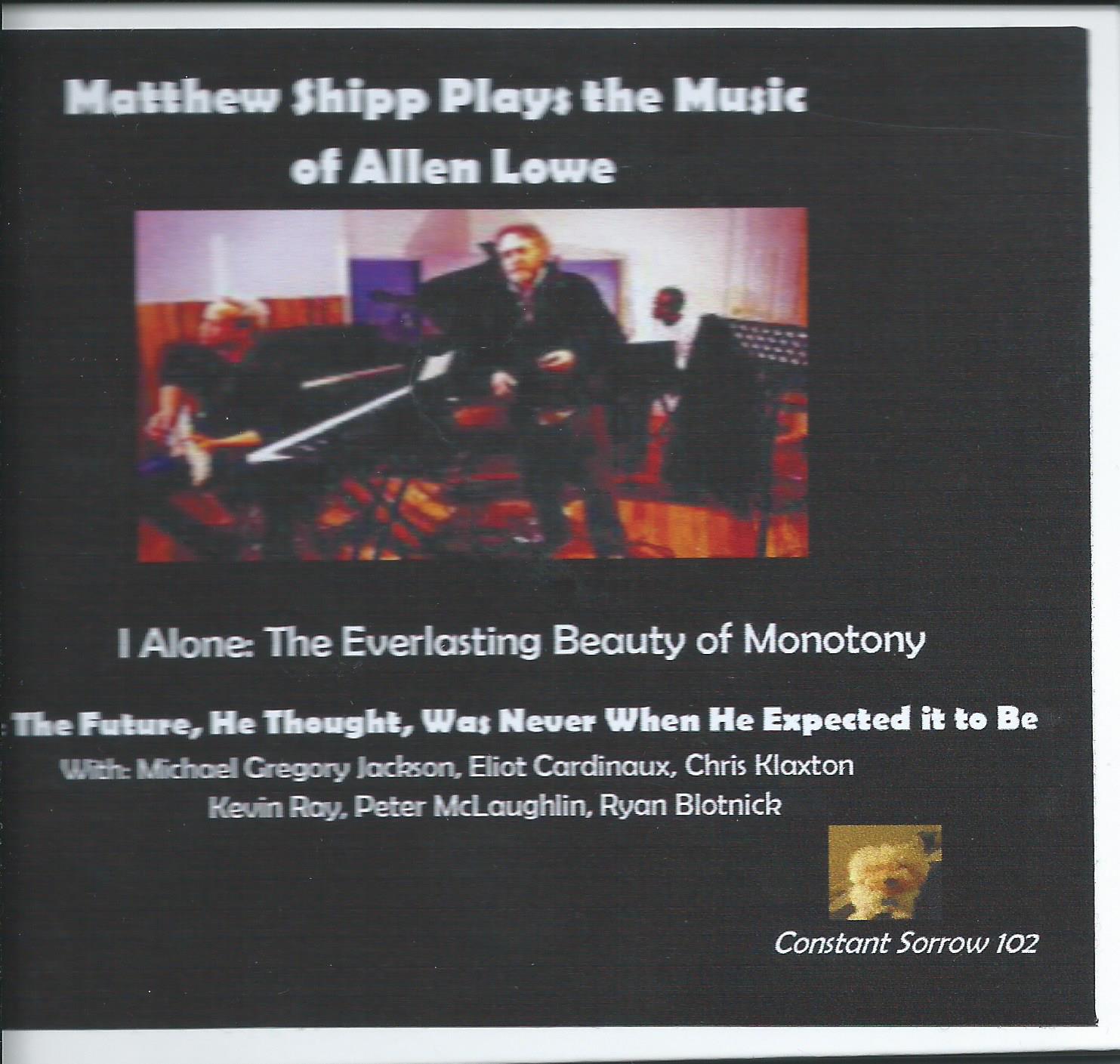
MATTHEW SHIPP PLAYS THE MUSIC OF ALLEN LOWE – 8.8 – Shipp, who’s made his pianistic bones in more abstract settings (notably with David S. Ware), is movingly earthbound here, often striking veins of dark, complicated romanticism that are, I think, at the heart of Lowe’s work. The composer’s alto will remind you of Dolphy’s angularity and Parker’s headlong expressionism–a pleasingly drier-toned version–and bassist Kevin Ray, who plays on most of these recordings, is a wonder: I seemed to learned more about Lowe’s writing following Ray on my third and fourth listen than from focusing on any other musician.
____________________________________________________

From the IN THE DIASPORA OF THE DIASPORA* series :

Bluiett

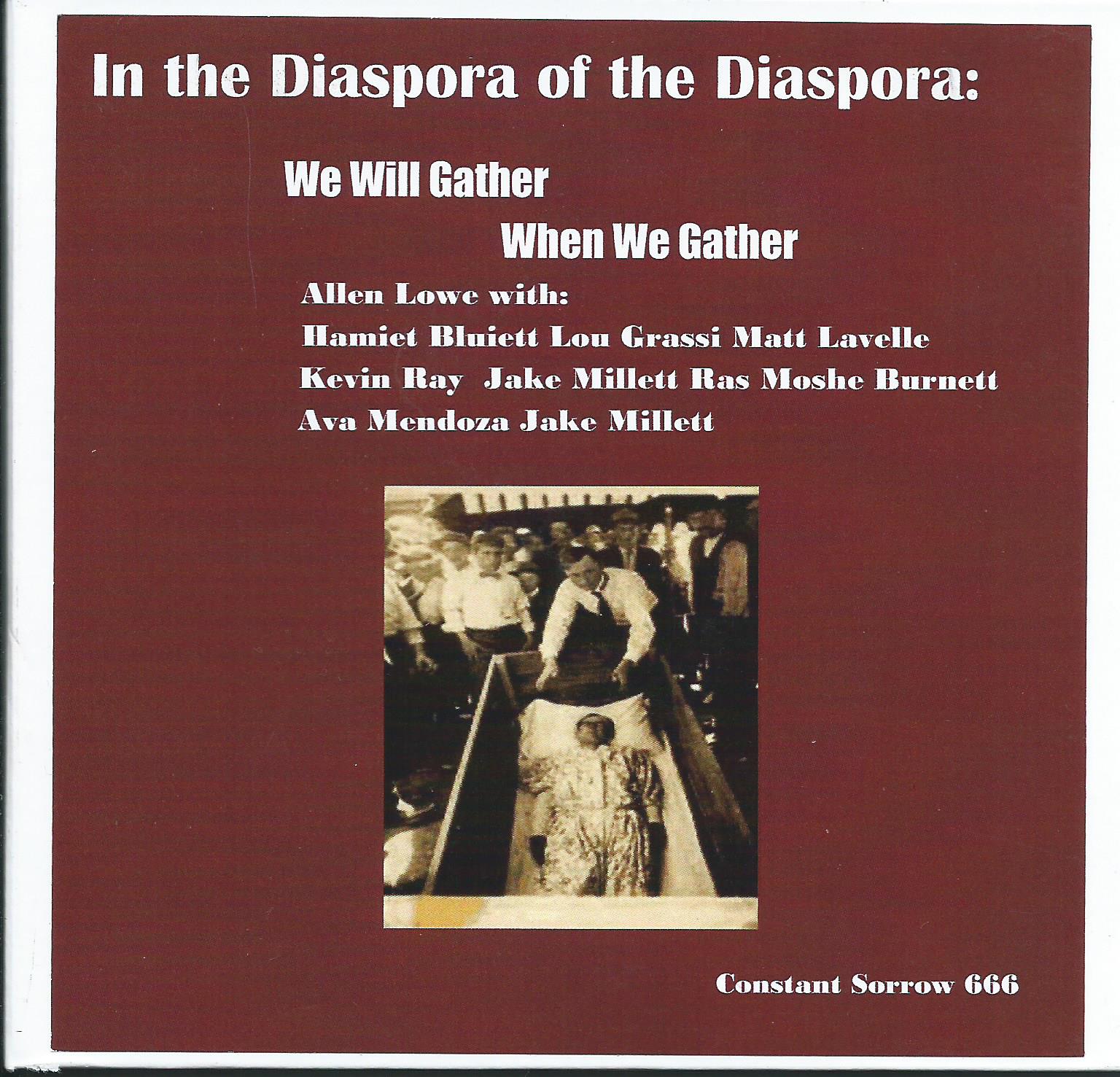
WE WILL GATHER WHEN WE GATHER – 10 – One of the very best jazz albums of the year, with the baritone of Master Hamiet Bluiett shooting worship and subversion through Lowe’s blues- and gospel-colored compositions. Ava Mendoza’s guitar-skronks, Matt Lavelle‘s skittery trumpet (makes me miss Don Cherry even more–and you should mos def try his Monk record!), and Jake Millet’s turntable scrubs and scratches combine with Bluiett’s inventions to do the most justice to Lowe’s vision of any in the series. Pick to click: the first serious composition–to my knowledge–to honor and mourn the murdered Charleston churchgoers, “Theme for the Nine,” maybe my favorite and definitely my most-played track so far. I wish I could share a track with the ‪#‎CharlestonSyllabus‬ project. There is a way….

Johnson

MAN WITH THE GUITAR: WHERE’S ROBERT JOHNSON? – 9.3 – Electronics and turntables are frequent voices in Lowe’s work, and here DJ Logic and Millett answer the title question: Johnson’s ghost haunts the spaces in our best music, as it certainly does on this record (though you won’t hear Robert sampled, you’ll be excitingly jolted out of your contemplation by flickers of Charley Patton’s rasp). Lowe plays tenor and operates electronics on this recording along with playing alto, and Gary Bartz sounds more alive than he has in years, testifying on alto on “Slave Rebellion,” “Delta Sunset,” and “Blues Forever After.”

Cigarette

WHEN A CIGARETTE IS SMOKED BY TEN MEN – 9 – A showcase for an exciting young clarinetist, Zoe Christiansen, with a nod to Pee Wee Russell, a wry jab at Howard Hunt, and two joyful tracks with desolate titles.

Albert

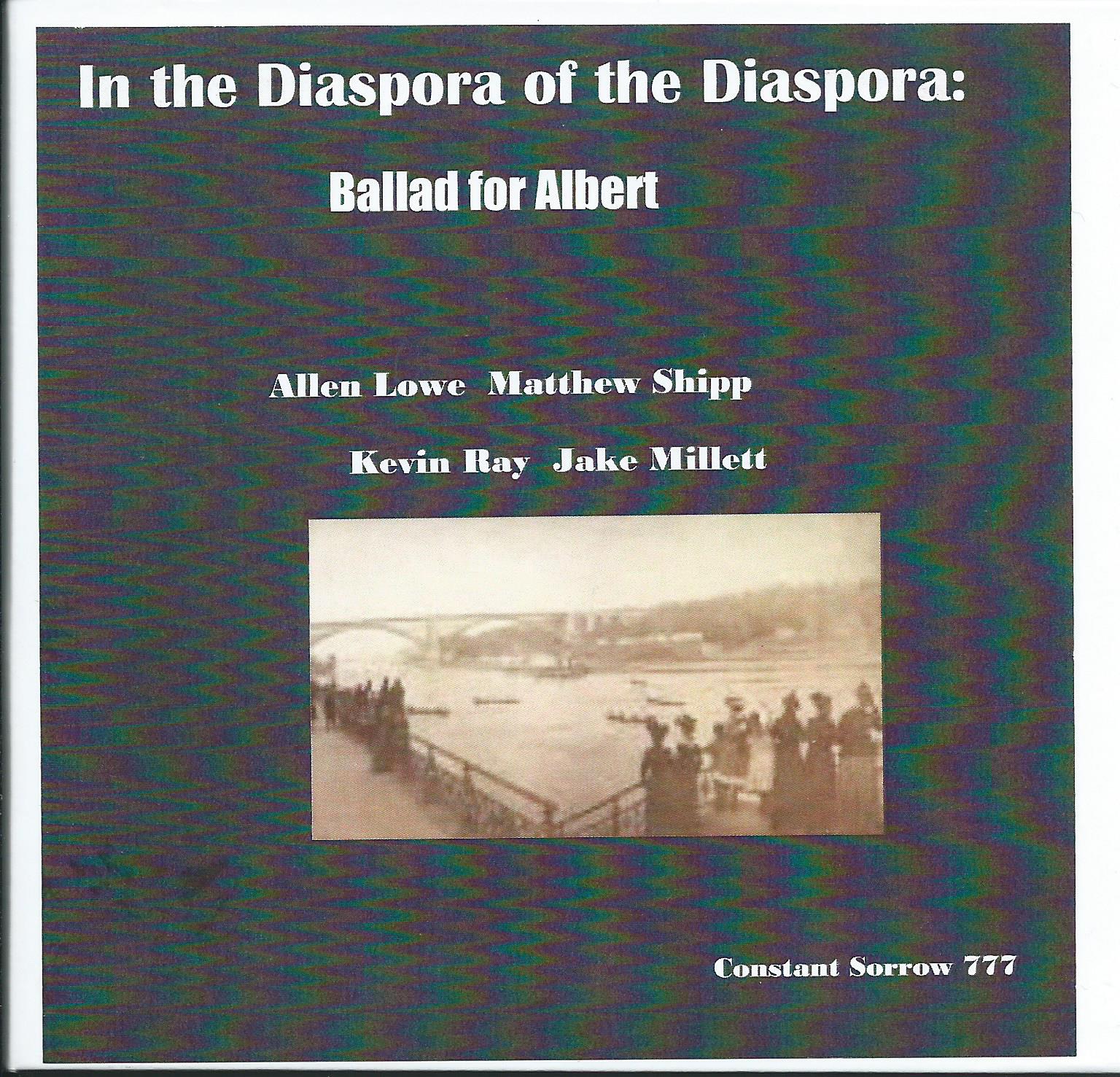
BALLAD FOR ALBERT – 8.5 – This is essentially a trio record, with Millet’s almost-subliminal murmurings of current providing some disruptive texture. I am not sure which Albert the record’s named for (could be Ayler, but, being a longtime fan, I don’t quite hear it), but I am sure that the ballads are lovely and deep–in fact, Lowe’s ballad playing is a shining thread that runs through all five records. Special shout-out to “Maui Shuffle,” which, like many of Allen’s compositions, can make you think the record’s advanced a track if you leave the room, which I adamantly advise you not to do on these records. Hit the WC ahead of time, grab a drink, get comfortable, and lock in–you will be rewarded.

If you are looking to get more deeply into Lowe’s work, advance directly to his masterpiece, MULATTO RADIO: FIELD RECORDINGS 1-4, one of my very favorite records of 2014–so good I couldn’t write about it, if that makes sense. And explore his earlier work, which, unsurprisingly–ranges across the diaspora of the diaspora.

_____________________________________________________

*Allen considers all of his work as fitting under this umbrella, which refers to the diaspora cascading out from the original music of the African diaspora–where, in Lowe’s own words (words, I suspect, that have gotten him in Dutch), “tradition becomes both a means of respectful worship and a matter of subversion…”–but these four records are specifically designated as such.

Heart of the Midwest: Money for Guns’ 21st Century Life

moneyforguns3

“When Pierre started this city
He set the streets just for you and me
But he never could have had all this in mind
And if you’ve got the time, I’ve got the time….”

“I’m Your Mark,” (Will Saulsbery)

From his early days in the Frustrated Bachelors, through his days doing dirty work as a substitute high school teacher, to his current work in St. Louis’ Money for Guns, Will Saulsbery, the band’s principal writer and lead singer, has never yearned to get the hell out. As a nearly lifelong Missourian (like Will), I can testify that that is, in fact, a yearning one hears frequently, particularly from artistic types. I can definitely understand such a yearning; often, particularly when my mind drifts to our state’s legislature, I feel the state name should be spelled “M-I-S-E-R-Y.” What I like about Saulsbery and his band is that, in their music and words, they capture fairly vividly what it’s like to live here, without condescending, which, for all our growing resemblance to dubious states that shall remain nameless, would be a dick move.

Paradoxically, though, part of what makes one a Missourian is the desire to escape, however temporary that desire might burn. The album begins with “Dead, Drunk, and Pretty”‘s persona lost in a dream of New Orleans (are the referenced “gutter punks” from the dream, or on St. Louis streets?), and ends with a drawn-out, dope-sprung dream of El Dorado, in which a lover uncomfortably comforts his junkie paramour with the likely-doomed idea of cutting and running from St. Louis’ radiating gateway. It’s hard not to notice, though, the telling, unifying details that evince an admirable rootedness: of interstates out of Kansas, of hawks’ eyes, of trains (three references, not sure if one is a MetroLink), of the founding father Pierre Laclede, of cold-eyed live burials, and of straight-out declarations like “I can’t wait to see St. Louis again”–without its “TV or the gunmen.” I wonder if all of this is all that Missourian, or if it’s U.S.A. circa 2015. I think it’s Missouri. “The Catholic kids drowning this town” of “I’m Your Mark”–which, by the way, lead into another suggestion of leaving–might be the tip-off.

I don’t trust labels as far as music goes. They usually sell the creators short. 21st century Missouri seems most known for Nelly, Tech9 (sp?) and, vaguely, Americana. The former two rappers couldn’t be more different, though they are underrated in how of this place they are; the latter genre has to stretch a little to incorporate The Ben Miller Band, whatever Mark Bilyeu’s up to, Kentucky Knife Fight, and this group of ne’er-do-wells–just to name a few I know well. Kansas City, St. Louis, and Columbia all have their bohemias, but, from my experience, they don’t seem rooted in this place. What feels Missourian about Money for Guns is the touches of Americana, especially Dr. Todd Jones-Farrand’s mandolin, which doesn’t always do the usual things (check out his runs and comping on the at-times-punk-jazzy “Red High Heels”!), without the abandoning of a straight-ahead Midwestern kid’s love of straight-ahead rock and roll. Epitomizing this strategy (that seems like a cynical word, and I do not mean it that way) are the album’s two lead cuts, the title track, and the flat-out beauty quoted twice already, “I’m Your Mark.” I wouldn’t call a daringly extended piano-fueled coda “Americana”; I’d call it guts and growth. And vocals are sure enough music, as well; Saulsbery’s tenor has matured considerably from American Trash, where at times he seemed to be trying to catch the elusive (but fading) tail of Conor Oberst’s hyper-emotive star. On 21st Century Life, he’s content to let the natural tears (rhymes with “bears”) in his singing convey the matters of his Midwestern heart. I find that Kyle Kelley’s baritone changes of pace need a little work, a little nuance. But I don’t remember him taking verses or leads on the debut, so perhaps all he needs is time.

I really like this album. I can tell you from three listens that “Dead, Drunk, and Pretty” (the production of which shows up the rest of the album a shade), “Red High Heels,” and, especially, “I’m Your Mark”–a definition of the heart of the Midwest if anything I’ve heard is–are worthy of your downloading if you are just wanting to tire-kick or dip your toe in the Money for Guns pool. I would lay down a Jackson that the album will grow a layer of intensity performed live, so look for them in your town. And, thinking about the band’s (and the, um, auteur‘s) future, I will also wager that the opening out of this record into the wild air of the state’s streets, highways, and rails, from American Waste‘s dank and dangerous club interiors, indicates creative minds focused on more than just the song at hand. That is the sign of artistic endurance, folks.

BUY IT NOW! ALERT

Schooley

John Schooley: The Man Who Rode the Mule Around the World (Voodoo Rhythm)

Niangua, Missouri, escapee Schooley continues to evolve. As the gee-tar and co-writin’ fulcrum driving The Revelators (of Columbia, Missouri–find their Crypt releases), he helped coin a kind of style: rockabilly oi–it seemed to me at the time–or farmboy boogie, as he might call it now. As the whip across the shoulders of Austin’s Hard Feelings, he found a place of no disgrace in the rockaroll world during a time when that wasn’t easy. As the hardest-working, hardest-thinking one-man-band (there are a few) in the Yew-(be)Nighted-States, he has preached and played across this turf and yon til his knuckles and tonsils have bled. This is a man who doesn’t settle, who is as Show-Me-State-stubborn as the mule Charlie Poole rode ’round the world, and his new release is his best. Augmenting his barnstorming six-string and bigfoot beat with banjo, fiddle, piano, handclaps, and harmonica (courtesy of the great Walter Daniels), barreling through old weird American traditionals (a plangent but lively “Cluck Old Hen”!), golden-age nuggets from Marvin Rainwater and G. l. Crockett, and some snazzy originals, he achieves something akin to what Greil Marcus once wrote about Jerry Lee Lewis’ Sun auditions: “…[O]ne long roadhouse stomp.” And on “Doubleneck Stomp,” he catches up to his long-time ambition of mating Roy Buchanan and Link Wray. His vocals still need some oomph, but if you turn the record up as you are instructed to on the album cover, it just doesn’t matter.

THE THREE-SIDED DREAM: A Must-See Film About Rahsaan Roland Kirk

Roland

Blinded as a newborn by hideously incompetent medical personnel, discovering sound possibilities as a youth by blowing through the cut-off end of a garden hose, dreaming of playing multiple horns simultaneously then soon after finding the perfect (and antique!) horns in a pawn shop basement, and, unaccountably, willing himself into one of the most unique and passionate players in jazz during a decade (the Sixties) of abundant uniqueness and passion, Rahsaan Roland Kirk should have been the subject of a feature-length documentary a long, long time ago. True, Dick Fontaine’s 25-minute 1967 documentary Sound??, featuring Kirk and John Cage making a compelling and wryly humorous case for sound as music, is a cult classic–the footage of Kirk serenading wolves at the London Zoo and rocking the hell out of his classic “Three For the Festival” at Ronnie Scott’s can make a benighted viewer a lifelong fan. Rhino’s issue of Kirk’s wonderful 1972 Montreaux concert is also a piece of essential viewing for any jazz freak. But the inspiring and tragically short life of Kirk is one of the most gobsmack-inducing tales in music, and director Alan Kahan has done it proper in The Three Sided Dream. See it as soon as you get the chance; my sources tell me Kahan’s having difficulty finding screenings for it, and that’s a completely unjust situation for him and his film.

Honestly, having been a Kirk fan for many years, seen, heard, and read everything about him I could get my hands on, and experienced a few more unimaginative music documentaries than I would have liked, I walked into the film with, well, meager expectations. That is, I figured I’d see footage I was already familiar with, hear a procession of talking heads retell Kirk’s life story, and miss some important information (likely, I thought, about his politics) that might have made the film and the artist’s portrait more complex. I’m happy to report that Kahan’s film is a major success. Mainly, he invests it with such emotional power, through his handling of Kirk’s struggles with critical misunderstanding, racism, and blindness (the latter, wonderfully, seems the least difficult challenge Kirk faced!) and his integration of Dorthaan Kirk’s home movies of her husband and children, that I–and other viewers–struggled with tears of inspiration throughout the movie. Also, the talking heads here almost always have something insightful and interesting to say, especially trombonist Steve Turre, who played in Kirk’s band after the hornman suffered a stroke that would have ended the career of 99.5% of other musicians but which failed to completely derail Rahsaan. Turre’s sense of humor and wonder, and his trove of concert stories, are a cut above the usual music-doc fare. Mrs. Kirk’s recalling of her life with Rahsaan–especially her reflections on his post-stroke struggles–are also major highlights of the film. Though I had seen roughly half of the footage Kahan unearths for The Three Sided Dream, what I hadn’t seen was often revelatory, especially a full, spectacular performance on The Ed Sullivan Show, the story behind which is worth the price of admission–and you will have to pay it to find out. Most important, Kahan lets the voice of Kirk–visionary, witty, angry, playful, the voice of a true old soul–tell most of the story.

I have few quibbles about the film. I initially felt the long, initially-uncredited reminicense/assessment of Kirk by a modern poet that opens the film unnecessarily hindered its momentum; upon reflection, it now seems equivalent to a good theme-setting introduction to a book. One sequence includes Kirk’s famous (and amazing!) combining of “Sentimental Journey” and a segment from Dvorak’s New World Symphony–he plays the melodies simultaneously on different horns and harmonizes them, with spectacular results–but the narration and animation run over the actual performance, so that when we are left alone to hear the music, Kirk’s moved on from his experiment to a new melodic expression. But, as I said, those are mere quibbles.

I cannot overstate how powerful this movie is. It hit me so hard I was still feeling sorrow (along with an overpowering desire to listen to Kirk all of this week, which I will) an hour after I walked after the theater–that Kirk died at 42 is just a cruel theft of (or by?) the cosmos. As well, I felt immense joy and inspiration in beholding a story of titanic artistic and personal accomplishment against towering odds. I cannot quite imagine the impact it will have on open-minded, open-eared music fans who know nothing of Kirk’s life and music. Do your best to seek this film out and see it; consider, as well, the possibility of helping the filmmaker get The Three Sided Dream to a wider audience.

Note: Upon having seen the film–or, perhaps, in preparation for it–read John Kruth’s engrossing Kirk biography Bright Moments, and try these classic Kirk recordings just to get started (there’s more):

We Free Kings  (Mercury)

Rip, Rig, and Panic (Mercury)

I Talk with the Spirits (Verve)

The Inflated Tear (Atlantic)

Volunteered Slavery (Atlantic)