Good to My Ear- and Eyehole Since Last I Posted: Part 3, The Heard.

Finally, the actual music.  And, by the way, just to be clear: not surprisingly, I have many music nerd friends, but I have many more friends who are simply overwhelmed by the amount of music that is available to them, compared to the relative slim pickin’s of their teens. I suppose this is a statement of purpose for this blog (you can exhale now), but since my range of musical interest is pretty broad, since I am damned social and have a pretty decent Innertube reach, and since I am very obviously not an intellectual, bent on hardcore critical analysis, but rather…a musical proselytizer, I am a decent option for those overwhelmed masses. And if not, well, at least I am entertaining myself and keeping a record of what was keeping me sane when. Also, not all of the releases below are new–I don’t understand how anyone can devote themselves exclusively to new music, with as rich a history as we’ve got, but, again, the digital flood threatens to carry away some grand old slabs, and I will make it a point to alert you to some of them, too.

Since what’s ahead is a slew, I am gonna try to do these piquantly in no more than three sentences….
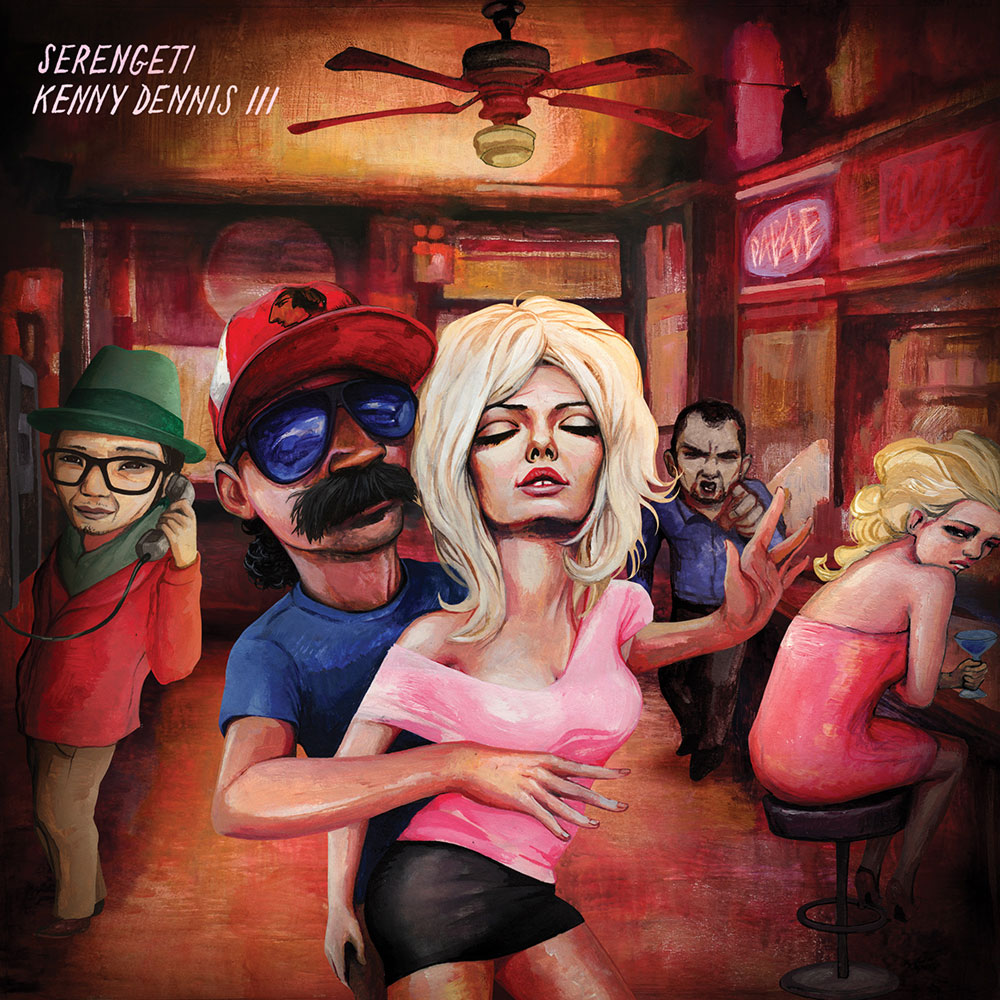
JNR153_serengeti_kenny_dennis-web

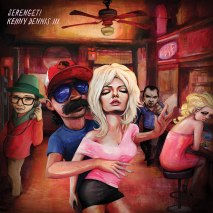
Serengeti: Kenny Dennis III (Joyful Noise)

I suspect with this particular persona of David Cohn (one he’s been exceptionally devoted to of late) that you’re either a fan or you’re not. I am, all the way, but after the opener, and just like last time, I’d like a little more rappin’ (and beats, too) and a little less talkin’. Then along comes Track 15: “Get Back to Rap.” Time: 0:26. After two plays, ‘Geti’s way with a story arc starts to get to you, and you start to realize you have to hear this as something other than rap.

shepp

Archie Shepp and the Attica Blues Orchestra: I Hear the Sound (Archie Ball)

Shepp’s exploring something here that hasn’t been mined enough–and he helped start it back in the volcanic ’60s. There’s very, very nice singing (including some rough vocalizing from Shepp), wise words, powerful large-ensemble playing, strings, and, of course, some free outbursts in just the right places, at just the right duration–and the kicker is the blend is very well-balanced and makes one hell of a statement, to me: keep hoeing this row. I wager it’ll age better than Shepp’s original Attica Blues, and there is plenty of room for more practitioners. By the way, it’s live, and that will stun you, because it’s studio sharp. It is also wonderfully rhapsodic, and, as your mind drifts back to the original Attica Blues release and its turbulent social context, you may find yourself in winding and interesting thoughts about what’s happened in between, and just what this records says about it. Note: some southern college marching band needs to learn “Mama Too Tight.”
OLYMPUS DIGITAL CAMERA

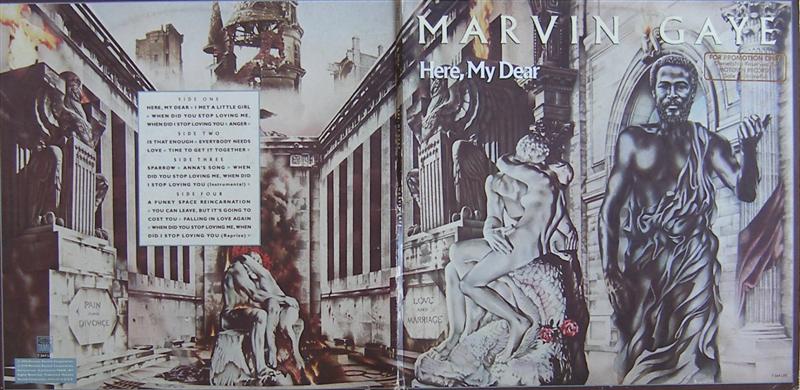
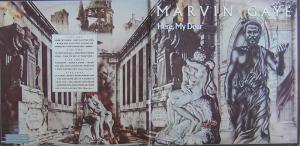
Marvin Gaye: Here, My Dear (Hip-O Select)

I bought this as a cut-out in the Eighties, then rebought it as a specialty reissue with a bonus disc of remixes, and I don’t know why, because both times it underwhelmed me. It’s Marvin relatively near the tragic end, wrasslin’ with divorce and debt, and opting to turn that into a concept album. The cover art seemed to be the best thing about it–biggest problem, I thought, was…it was musically boring. As so often happens, though, I brought it out to the truck (small cab, good stereo, just enough drive time to really concentrate), turned it up to about 7, and the vocals, lyrics, and nakedness wrassle the music (which is extremely well-played, it’s just not too varied melodically) into submission. Recommended to Kanye in about a year.
 Bob_Dylan_-_The_Basement_Tapes_Complete

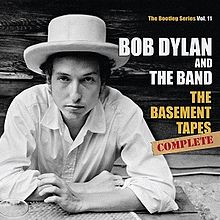
Bob Dylan and The Band: The Basement Tapes–Complete (Columbia)

Many folks have been waiting a long time for this, and, by God, they did it right with the big box (in my humble opinion, they flubbed the budget version). Trouble is, to quote half a Marvin Gaye title from Here, My Dear, “it’s gonna cost you.” You’re gonna hear that it’s like a Van Gogh sketchbook (correct: and I must emphasize, with the pieces that got finished often bowling you over, in very noticeably improved sound). You’re gonna hear that Disc 6 is rough and a waste (incorrect: the whole disc is quite funny, moving, and listenable–250% better than Having Fun on Stage with Elvis Presley–and a few individual recordings are eternal). You’re gonna hear that the Americana genre was born here (correct, but don’t blame them, please, any more than you’d blame Gram Parsons or Ronnie Van Zant). I’m telling you now, and I hope you hear it, that if you can afford it and you’re a Dylanophile, do not think twice–it’s all right. Bonus: you don’t have to get rid of the ’75 Columbia release, as it has The Band tracks (not here–they weren’t “from the basement,” really), compressed sound that has its own virtues when compared to the opened-out quality here, and, in the long run, no necessity to be programmed in your CD player or ‘puter. I listened to the six discs consecutively, was ready to grimace, and never did. Notes and pics are cool, too.
Kabell

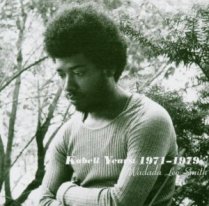
Wadada Leo Smith: The Kabell Years 1971-1979 (Tzadik) and Red Hill (Rarenoise)

Trumpeter Smith’s AACM pedigree and Mississippi roots would seem to have guaranteed he’d have been in my ear 25 years ago, but I first laid ears on him two weeks back. The former two-CD box captures him at what many adepts I know consider his peak, but he was a Pulitzer finalist for the ambitious and stunning multi-disc 10 Freedom Summers in 2012, and jazzbos are touting the latter as one of the best jazz platters of the year. Free is not everyone’s bag, and some would argue he’s not even all that free, but I’ll say this: he sounds to me like what would have happened if Miles had gone off the commercial rails in ’68 (don’t get me wrong: I LOVE WHAT HE DID AFTER THAT),  headed to Chicago, and decided to forego coke and groupies. Also, even when his groups are wiggin’ out (primarily on Red Hill, and his new pianist is very familiar with Cecil Taylor), Smith brings a very strong feeling of peace, serenity, and intellectual reflection to the attentive listener. On the strength of these two rekkids, he’s in my Top 10 Free/Experimental Jazz pantheon.

JLL

Jerry Lee Lewis: Rock and Roll Time (Vanguard)

Surely he has no gas left! After two straight pretty dang-good comeback records! Do you know who we are talking about here???? Opens with a conceptually perfect Kristofferson copyright, swings through some Killer meat ‘n’ potatoes, then–whaddya know?–sets Jerry Lee up with a Skynyrd song! It’s about fucking time. I’ve been dreaming for years of a producer ballsy enough to put together a set of songs from the likes of Ely, Gary Stewart, Ronnie Van Zant, Tony Joe White, Bobby Charles–writers tapped into the man’s main stream–and then sell it. This ain’t that, but it is very, very good, in fact, it has a Muscle Shoals vibe. The piano’s a little quieter–he is plagued by arthritis, though not in the fingers–but the voice is still there, and the mind definitely gets it. This makes me so happy I could gulp a handful of Black Mollys and buy a personal jet. Note: Rick Bragg’s new biography/assisted memoir is a perfect contemplative companion.
Last Home

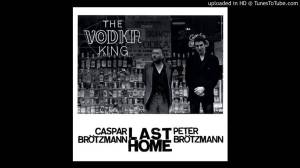
Peter and Caspar Brotzmann: Last Home (Pathological)

Peter, a terrorist on the saxophone whose Machine Gun is probably the most balls-out recording of all-time, I knew about. He can indefatigably unleash torrents, but also shift into a surprisingly affective lyrical mode. Until this recording, I didn’t know much about Brother Caspar, who plays electric guitar. Suffice it to say that he holds his own with a later compatriot of his brother’s: none other than Sonny Sharrock. Maybe my favorite Brotzmann release, and thanks to the great Isaac Davila of Springfield, Missouri, for the loan.
Live+At+The+Oakland+Coliseum+Jimi+Hendrix+Exp++Live+at+the

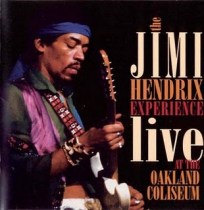
Jimi Hendrix: Live at the Oakland Coliseum (Dagger)

After reading (many years after its release) and loving Charles Cross’ biography Roomful of Mirrors, I had to have me more Hendrix. And I already have a lot. In a long-ago article, an obscure critic named Robert Christgau mentioned this, from a series of official bootlegs released by the Hendrix estate, as something he liked, but warned about the sound. Dagger didn’t put these in stores; you had to get ’em straight from the site, which it looks like you still can. I took the plunge, and, I have to say, across two discs of a surprisingly professional audience recording, Hendrix and band are on. For a bootleg, it’s a B+/A-, and if you are a diehard, I seriously recommend it. 18 minutes of live “Voodoo Chile”? Say no, I dare ye.

Electric Spank

Funkadelic: The Electric Spanking of War Babies (Warner Brothers)

This early ’80s offering from the mind of Dr. Funkenstein and his crazed collaborators has gotten lost in the shuffle, with ’70s albums like One Nation Under a Groove garnering most of the laurels. I myself, upon first purchasing it when it was released, thought it was a mess, slightly unworthy of its not-exactly-tidy predecessors. After reading George’s purty-good/not-bad memoir, I slapped it on for the first time in years, and came away thinking, “This is consistent“–that is, consistent in the mode of Uncle Jam. So, if you’ve read the memoir, and you’ve never got out of the Seventes with ’em, and you’re in need–here, my dear. Highlights: slogans, as always (“When you/learn to dance/you won’t forget it!”); post-Hendrix guit (not quite enough, but oh well); Sly Stone’s last coherent offering; Pedro Bell’s album art; reggae that works; prescient commentary on “The Greatest Generation.” We love you, George.
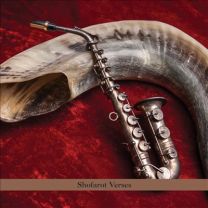
Shapiro

Paul Shapiro: Shofarot Verses (Tzadik)

I feel like describing this record the way you would a gourmet meal (OK, maybe the record isn’t that good, but it’s very good): hints of klezmer, overtones of Lee Allen and Earl Bostic, and a backbone (OK, that’s not a gourmet term) of Marc Ribot, 2014 instrumentalist of the year, name your category as long as it isn’t classical. Recommended strongly to practicing Jews who may wonder where their cultural influence has gone.

NC 45

Natural Child: A bunch of 45 and digital EP tracks that ought to be collected (Infinity Cat, Burger, et al)

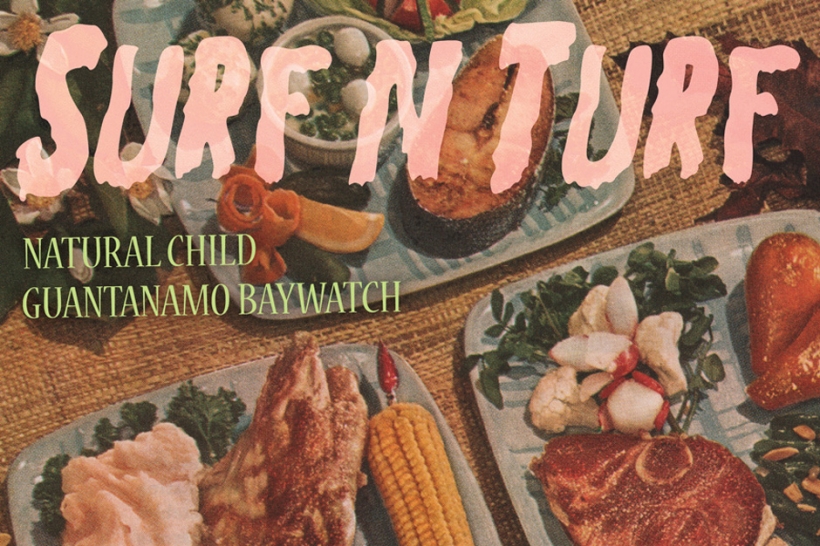
If you actually read me, you know (or suspect) I will go to my grave fighting for these Nashville boys, who, without a goddam doubt, have been shortchanged by the “indie” “rock” press. Pitchfuck, you are in the scope; you’ll review Beyonce, and not these guys? But. No matter. I myself confess that if you’ve only bought their albums, you don’t know the half. Their early singles, represented either by (usually digital) EPs or 45s (two split), contain the essence by which you can truly appreciate the later records. “Shame Walkin'” (about a dude that doesn’t want to fuck, but feels he has to), “Nobody Wants to Party with Me” (flipside of the paradigmical rock and roll night), “Mother Nature’s Daughter” (best Neil Young imitation ever–in fact, it ain’t no mere imitation!), ” Dogbite” (perfect song for wanting to get the hell out of wherever you’re stuck), “Gas Station” (a Liquor Store cover that they have to have completely identified with, given their touring ways), “Crack Mountain” (“I just want to smoke crack with my friends!”), “Easy Street” (to quote the New York Dolls: “If I want too many things/Well, I’m a human being!”), “Cougar” (seriously, these guys don’t just want to get laid), “Don’t Wake the Baby” (from the above-pictured 45, the bleariest, most tequila-soaked, but most charming one-night-stand song of all-time), “The Jungle” (a great spontaneous hootenanny): folks, their greatest album isn’t an album. This is a call to collect the singles, then dare Pitchfork, Pop Matters, Expert Witness (yeah, YOU, Christgau) to say no. I am not WRONG. Seen ’em four times in four different cities, listened to everything they’ve ever put out thrice over, I am fifty-fucking-two and have listened to music AVIDLY for forty-two of them. I am not WRONG. You know what you have to do, people.

annarbor

Various Artists: The Ann Arbor Blues Festival 1972 (Atlantic)

Hound Dog Taylor, Sun Ra, Otis Rush, Sippie Wallace (abetted by Bonnie Raitt), Junior Walker, Bobby “Blue” Bland, Koko Taylor, Dr. John? In great fidelity? In great form? Wait–Sun Ra’s in there? Yeah. And the pretty-free CJQ. Oh, did I mention…Howlin’ Wolf and Muddy Waters? With John Sinclair as a kind of liner-note MC? I know: where has this record been all your life? Personally, the only other festival I’d rather have been at would be Monterey.

BillyBang

Billy Bang: Prayer for Peace (TUM)

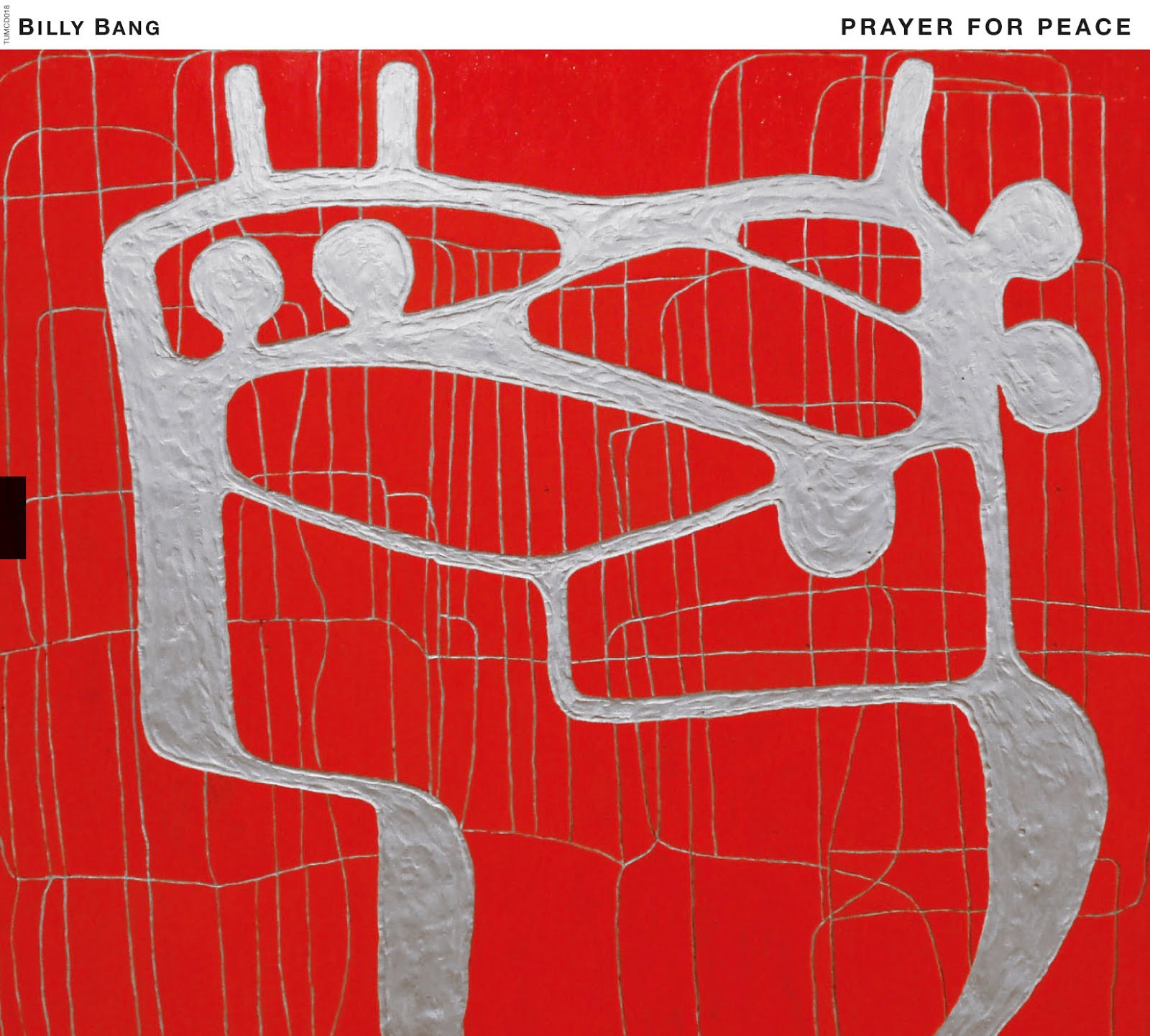
I miss Billy Bang dearly. One of the greatest jazz violinists of all-time (saying something, because there’s Fiddler Williams, Stephane Grappelli, Ray Nance, Leroy Jenkins, and Bang’s great model, Stuff Smith) not only never made a bad album, but a) could swing a lot of jazz directions, and b) as befitting his being a veteran of the Vietnam War, always had something to say about peace. This fantastic record is not as wide-open as some of his others–the perfect invitation for the hesitant–but it’s deep, and, while Bang’s playing is as moving and richly-toned as usual, miraculously encompassing his scarring and his commitment to transcend it, trumpeter James Zollar almost steals the record from him. Bonus: they cover, and cut, the Buena Vista Social Club.

Negativland

Negativland: It’s All in Your Head (Seeland)

Navigate to that label’s website, and you can order this cheap two-CD set, which comes encased in a King James Bible. Disc one’s Christian; disc two’s Muslim, with a slash of Judaism. Both sides are undercut by a voice screaming “There is no God!” and a seeming four-year-old explaining why God doesn’t make sense. Woven throughout are some experts struggling to reconcile religion with science, and other patiently dismissing it. These warriors have been quiet for awhile, and it may come as a surprise to some listeners that it’s a live performance. The title is the concept, and, while it’s not as musical as past releases, in many ways it’s just as liberating. Recommended to Neil DeGrasse Tyson and his army.

Buck and Buddy

Buck Clayton and Buddy Tate: Buck & Buddy/Blow the Blues (Swingville/Original Jazz Classics)

Basie buddies, veterans of the big band territory wars and numerous harrowing car and bus tours that would have brought today’s players in any genre to their knees, Clayton and Tate, on this terrific two-fer-one, swing in a blue mood. The musical equivalent of your grandfather schooling you on the front porch, just before bedtime. Buck wields trumpet, Buddy a very Texas tenor. You know? If you just don’t get jazz, how about starting here? Nothing to get, everything to feel.

Trio3

Trio 3 (with Vijay Iyer): Wiring (Itakt)

The big attraction is three crafty African American veterans–one, Oliver Lake, with a St. Louis Black Artists Group pedigree; one, Reggie Workman, a former Trane sideman; one, Andrew Cyrille, a compatriot of Cecil Taylor and David Murray–and a (relatively) young South Indian, Vijay Iyer, laying into a Trayvon Martin suite.  But the record as a whole is my favorite small-combo jazz record of the year. To my mind, this particular gathering is an event, and, in no small way, an elevation of Iyer to the masters’ mantle.

Good to My Ear- and Eyehole Since Last I Posted: Part 2, The Read.

Part of the reason I’ve struggled keeping this blog updated regularly is I am a compulsive reader. If 24 hours pass and I haven’t read a page or two of something other than what I’m teaching my students, The WeekThe Columbia Tribune, or liner notes, I feel as if I have committed a venality. I’m such a dork, I have my Goodreads blogroll on the opening page of this site, plus I have challenged myself to read 105 books this year, up four from 2013, and I am at 91 as of today. I have even bet my literacy class a pizza party that, as a class of 15, they cannot outread me by the end of the semester (we are currently tied–you have to remember these are kids who struggle with reading, whom I only see every other day, and who have serious difficulty reading at home). I don’t read music tomes exclusively; in fact, they are usually in the minority–except for recently, which accounts for what follows, although I regret that I haven’t yet cracked the weirdly-authored and -titled Jerry Lee Lewis: My Own Story, by Rick Bragg.

Snider

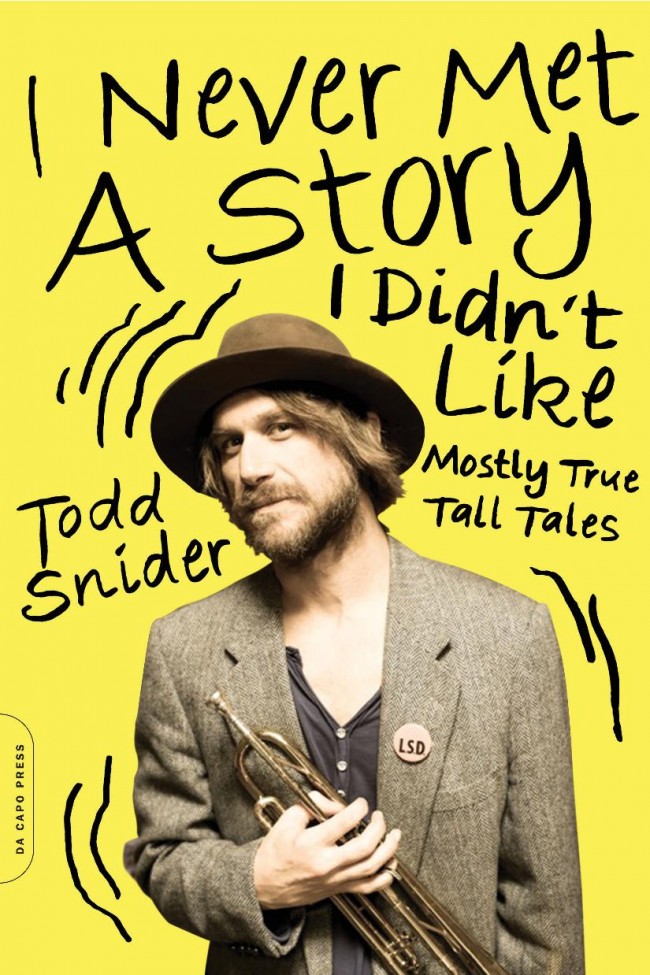
Todd Snider: I Never Met a Story I Didn’t Like: Mostly True Tall Tales) (Da Capo, 2014)

If your a Snider adept, like me, you might ask yourself, “Do I need to read this?” Answer: unequivocally, yes. Yes, you do get many stories you already know from concerts and records, but you also get the stories behind the stories, which, when they involve Jerry Jeff Walker, John Prine, Kris Kristofferson, Jimmy Buffet, Billy Joe Shaver and a host of less immortal rounders, are a serious trip. You also will get inspired, page by page, to live life while you’re living, even if Snider himself may be dead before he hits 50 (fucker will probably live to 90). If you don’t know the man, you can actually read this, enjoy the hell out of it, and go straight to those records you missed. Note: His compassion for outside-the-law dudes is well-documented, but he’s equally compassionate when it comes to outside-the-law babes. Props, buddy.

Carter family

Frank M. Young and David Lasky (illustrations): The Carter Family: Don’t Forget This Song (Abrams Comicarts, 2012)

Things to recommend this GREAT graphic novel: a) the illustrations and text match the deadpan beauty of Carter Family music; b) the chapter titles (Carter Family song titles) wittily match the stories that follow; c) it doesn’t shirk on the black influence on the Carter Thing, and it certainly ain’t romanticized; d) it’s written and illustrated to show how much ASS these Carter women kicked; e) it comes with a CD of rareties; and f) I got it cheap at an Osage Beach outlet store. What else do you want?

Jimi

Charles Cross: Room Full of Mirrors: A Biography of Jimi Hendrix (Hyperion, 2006)

A huge fan of Cross’ Cobain bio, Heavier Than Heaven, in which he just puts its head down, does a shitload of research, conducts a million interviews, and undermines miles of bullshit conspiracy theories, I wanted to read this immediately when it came out, but was vexed by middling reviews by folks I trusted. Children, a lesson: fuck reviews. If it’s a subject or writer you dig, go ahead with your bad self. Goosed by my love for the film Jimi: All is By My Side and curious about its degree of factual accuracy, I picked this up eight years after it came out, and within 100 pages quietly paid penance for not trusting my instincts. A Pacific Northwesterner himself, Cross is interested in his subjects beyond their celebrity, and works his ass off to get the story right. Most moving here is the long-time influence of Hendrix’s mother, whose funeral Jimi’s dad forbade him to attend (the bastard) and whose Seattle grave (in the same cemetery as Hendrix and his dad’s elaborate tomb) is still uncommemorated, and the similarities between Hendrix’s and Cobain’s sad goodbyes: they could not exit the grind, and had no one handy who knew how to facilitate it. I was also blown away to learn that, by Cross’ account, Hendrix spent more days hungry than Elvis–and, you know, Elvis had his mom behind him as he penetrated into cultural acclaim. BTW: that movie nobody went to, Jimi: All is By My Side? With a few exceptions, it’s pretty damned factually accurate, and, affectively, as they say, it’s spot-on.

George

George Clinton (with Ben Greenman): Brothas Be, Yo Like George, Ain’t That Funkin’ Kinda Hard on You?: A Memoir (Atria, 2014)

If you’re like me, you have got to be saying, “How can this NOT be a thrill-ride?” If Greenman just captured the voice that once uttered, “With the rhythm that makes [us] dance to what we have to live through/You can dance underwater and not get wet, OH!” the plot points would be immaterial. Well, the book’s only boring when, in the latest music memoir fashion, it lapses into attorneys and addiction in its final quarter, but for the other three-fourths, George gives us precious little detail regarding what P-Funk sessions were really like, and, come on, isn’t that what you were hoping for? As far as the voice is concerned, Greenman dries out Uncle Jam’s naturally funky delivery, though it does raise up when barbering and fishing are under discussion. Really, it’s a pretty funny read, but not revelatory–for that, I am afraid you must still go to the much slimmer (159 pages!) but much stankier George Clinton and P-Funk: An Oral History (For the Record), a David Mills-written and Dave Marsh-edited oral history that lets it all hang out. Also: Blipp needs to get its shit figured out–the cover trigger doesn’t deliver 1/20th of what it promises.

Good to My Ear- and Eyehole Since Last I Posted: Part 1, The Seen.

For various reasons–I’m busy, but I am retired, so I don’t know exactly how that’s happening–I haven’t updated the ol’ blog for awhile, but I have so much music-related material under my mind’s belt that it’s about to explode, so time to let it loose, I suppose.

 Jimi: All Is By My Side (written and directed by John Ridley)

This movie opened poorly, and it was already burdened by the Hendrix estate’s refusal to let Ridley use any original music. On top of that, it’s about an icon whose myth and reality (occasionally, on that latter count) are very firmly embedded in the public imagination already, an icon who’s famous for his wildness, though his gentleness of spirit might be his defining artistic spirit, even if you’re thinking about the lines he played. Considering those obstacles, the film is pretty brilliant. It covers the year leading up to Hendrix’s cataclysmic Monterey Pop appearance–the band is striding through the San Francisco airport toward the show in the final scene–when the guitarist’s confidence and fortunes were crucially bolstered by key figures on the sidelines who totally believed in him. The performances are excellent, the story is genuinely moving (and, contrary to reports you may have heard, exceptionally accurate, if Charles Cross’ meticulously researched Room Full of Mirrors is any measure), and the music? I think the news that no Hendrix music would be in the film has scared away potential moviegoers, but I argue that the sound of the Experience (and, in one scene, Cream) that’s concocted by three guys you may know (last names Wachtel, Sklar, and Keltner) is audaciously good, as close as anyone’s going to get to sound of the original trio. I was so impressed I waited for the music credits, and laughed out loud with joy when I saw them. No hagiography, either.

Chucho Valdes and Conrad Herwig’s Latin Side, The Missouri Theater, Columbia, Missouri, October 2

This show represented the 20th anniversary of Jon Poses’ We Always Swing Jazz Series, which has made Columbia one of the best places to be for black classical musical in the Bible Belt. The 73-year-old Valdez, a pianist who can roll Garner, Powell, Taylor, and any Latin ivory-tickler you care to name into a big ball and thrust it at the sun, opened with a magnificently florid, funny, and romantic solo recital, and Oklahoma trombonist Herwig’s unit, which has skillfully Latinized the songbooks of several modern composers over the years, did a wonderful number on some hard bop classics, to name a few, Wayne Shorter’s “Ping Pong,” Horace Silver’s “Peace,” and Joe Henderson’s “Inner Urge.” On sax for the night were Joe Lovano, looking happily hip in brown Chucks and suit and playing with fire and restraint, and Craig Hardy, who played baritone live for the first time in his career as well as other saxes. Mr. Poses has worked his ass off to bring these great sounds to us on a regular basis, and he ought to be proud. I am sure his mother, who was in attendance, feels the same way.

Mr. Dynamite: The Rise of James Brown (directed by Alex Gibney)

A long-time fan of Mr. Gibney, I wasn’t surprised that he nailed this project. Note the title: “rise of.” There is no TMZ-titillatin’ shit-show section; the film is about why Brown is and should be an American cultural god. Besides the wealth of mind-, eye-, and ear-boggling unseen footage, besides the great and surprising insights of Christian McBride on the links between JB’s funk innovations and jazz, besides the hilarious reflections of producer Mick Jagger on the infamous Brown-Stones “battle” on The T.A.M.I Show, the documentary shines most brightly during clips of Brown–reputedly resuscitated immediately after birth by an aunt, forced to live in the woods as a child, abandoned by his mother and violent father as a preteen, employed to tout for a whorehouse when he should have been playing Pee Wee Football, and in and out of reform schools throughout his later teenage years–speaking fiercely, eloquently, with amazing self-possession for black America to various clueless television interviewers during the most volatile time in our recent social history. Extremely, extremely moving–people, that’s all I want in my music intake, whether live, on film, off the page, or spinning out of digitalization.

Barrence Whitfield and The Savages, Off Broadway, St. Louis, Missouri, October 4

Since hearing about Barrence in the mid-Eighties and having snapped up his great hard r&b albums on Mamou and Rounder, I have been wanting to witness the man in the person; there’s really been no one else so intensely honoring the wild and noble tradition of H-Bomb Ferguson and Little Richard, but Missouri isn’t that logical a place for him to shake it. I wouldn’t have thought it likely, but 31 years after first hearing about him, I finally had a chance to see him–with the two Lyres who originally accompanied him flanking him like apostles. The set was fierce, a mix of his very strong recent tracks on Norton, his great originals and excavations from the Eighties, and some surprises, like the Beatle Bob-requested “Have Love, Will Travel.” The little fireplug’s lost nothing in the vocal department, so if he swings your way, don’t miss your chance.

Overeem’s 2014 Picks to Click–75% of the Way Through this Bloody Calendar

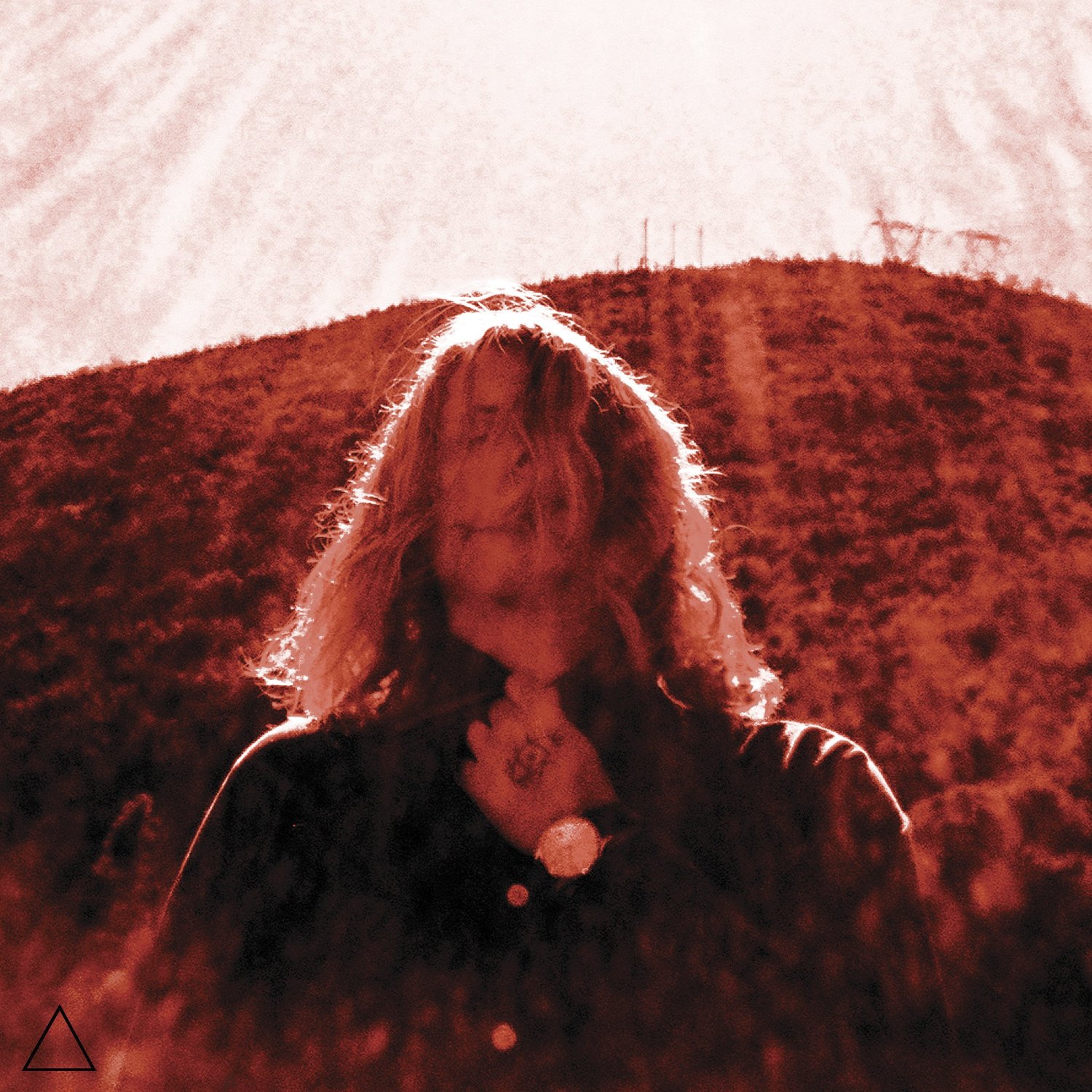
I am not listing labels, since you can copy and paste the titles into a browser and find ’em in a few seconds. I haven’t written about all of them: for example, Ty Segall’s Manipulator is growing on me day by day–surprisingly, since I thought he and I were through–but I don’t yet know what to say other than he’s gotten all of his predilections embraced securely and has put together a tour de force that might be the best thing he’s ever done. Maybe that’s enough. Anyway, here’s what’s been repeatedly ringing my bell:

Long Players:

mulatto-radio-front-coverty-segall-manipulator

1. Wussy: Attica!
2. Allen Lowe: Mulatto Radio–Field Recordings 1-4
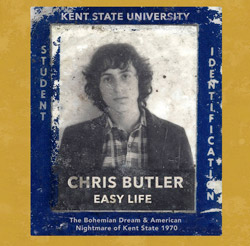
3. Chris Butler: Easy Life
4. Ty Segall: Manipulator
5. Bo Dollis, Jr. and The Wild Magnolias: A New Kind of Funk
6. Obnox: Louder Space
7. Latyryx: The Second Album
8. Ross Johnson and Monsieur Jeffrey Evans: Vanity Sessions
9. Neneh Cherry: The Blank Project
10. Phil and Dave Alvin: Common Ground–The Songs of Big Bill Broonzy
11. Marc Ribot Trio: Live at the Village Vanguard
12. Orlando Julius with The Heliocentrics: Jaiyede Afro
13. Natural Child: Dancin’ with Wolves
14. John Schooley: The Man Who Rode the Mule Around the World
15. Leo Welch: Sabougla Voices
16. Tinariwen: Emmaar
17. Big Freedia: Just Be Free
18. Billy Joe Shaver: Long in the Tooth
19. The Stooges Brass Band: Street Music
20. Mr. and The Mrs.: Radiation Street Blues

Singles:

1. Bobby Rush: Upstairs at United
2. Marc Ribot w/Deerhoof: Who Sleeps, Only Dreams
3. Heavy Lids: “Gravity Reverse” b/w “This Horse”

Old Stuff/Reissues:

1. John Coltrane: Offering—Live at Temple University
2. Various Artists: Haiti Direct!
3. John Schooley One-Man Band: Schooley’s Greatest Hits
4. Bob Wills & The Texas Playboys: Riding Your Way–The Lost Transcriptions for Tiffany Music 1946-7
5. Various Artists: Angola 2
6. Various Artists: The Rough Guide to the Music of Mali, Volume 2
7. D’Angelo: Live at the Jazz Café, London
8. Sid Selvidge: The Cold of the Morning
9. Gories: The Shaw Tapes—Live in Detroit 1988
10. Charlie Burton: Rock & Roll Behavior
11. Various Artists: Dylan’s Gospel—Brothers & Sisters
12. Various Artists: Go, Devil, Go—Raw, Rare, Otherwordly Gospel

Music Docs:

1. AKA Doc Pomus
2. The Case of the Three-Sided Dream

BUY IT NOW! ALERT

Schooley

John Schooley: The Man Who Rode the Mule Around the World (Voodoo Rhythm)

Niangua, Missouri, escapee Schooley continues to evolve. As the gee-tar and co-writin’ fulcrum driving The Revelators (of Columbia, Missouri–find their Crypt releases), he helped coin a kind of style: rockabilly oi–it seemed to me at the time–or farmboy boogie, as he might call it now. As the whip across the shoulders of Austin’s Hard Feelings, he found a place of no disgrace in the rockaroll world during a time when that wasn’t easy. As the hardest-working, hardest-thinking one-man-band (there are a few) in the Yew-(be)Nighted-States, he has preached and played across this turf and yon til his knuckles and tonsils have bled. This is a man who doesn’t settle, who is as Show-Me-State-stubborn as the mule Charlie Poole rode ’round the world, and his new release is his best. Augmenting his barnstorming six-string and bigfoot beat with banjo, fiddle, piano, handclaps, and harmonica (courtesy of the great Walter Daniels), barreling through old weird American traditionals (a plangent but lively “Cluck Old Hen”!), golden-age nuggets from Marvin Rainwater and G. l. Crockett, and some snazzy originals, he achieves something akin to what Greil Marcus once wrote about Jerry Lee Lewis’ Sun auditions: “…[O]ne long roadhouse stomp.” And on “Doubleneck Stomp,” he catches up to his long-time ambition of mating Roy Buchanan and Link Wray. His vocals still need some oomph, but if you turn the record up as you are instructed to on the album cover, it just doesn’t matter.

Good to My Earhole: September Songs

It may seem that I have been neglecting my responsibilities here (such as they are), but, though I am retired, I am actually working two part-time jobs and they have been keeping me preoccupied. But, as always, music has provided much-needed fuel. What follow are some highlights of the past month:

John Coltrane: Offering–Live at Temple University (November 11, 1966) (Resonance Records)

As a devoted though sometimes fatigued fan of Trane, I greeted the news of this excavation/restoration with some skepticism. One must admit that a goodly portion of the jazz audience has gotten–and will continue to get–off the bus after A Love Supreme, and, having listened to the man’s entire output after that record, I know they have good reason. I love the churning, searching, two-men-becoming of Interstellar Space, the roiling, blistering, crying record-long prayer of Meditations, the daring transformations of Live at the Village Vanguard Again; on the other hand, I am not sure I will ever put on the hammering, hectoring live records from Japan and Seattle again. I like Ascension better in theory than reality (though it’s a better realized experiment in freedom than Free Jazz, for sure); I’m likely to keep Om shelved. Of course I am leaving a few records out, but, to get to the heart of it, I wasn’t sure I or anyone else needed an imperfectly recorded concert record that might well be more painful than enjoyable. If you have the same misgivings, set them aside. This is a document worthy of your time. Coltrane is in great form, though he was nine months from passing–in fact, some of his most focused and coherent free playing ever is here, in very good fidelity, and the legendary singing and chest-beating he did at this gig are not freakish. It works; it’s even moving. Some Philly locals (on saxes, the very brave Arnold Joyner and Steve Knoblauch) showed up to pitch in, and they prove equal to the ’66 group’s concept. I would go so far as to say that they at least equal Pharoah Sanders, who on first appearance sounds like he’s taking a box cutter to the sheets of the night. Actually, the fidelity issues–you can’t really hear the bass other than one solo (and it’s a shaky one–Jimmy Garrison is not on hand), and the drums, when not in solo mode, are very quiet in the mix–enhanced the listening experience for me, even if they break the democratic contract. Honestly, I like hearing Trane when he’s not fighting for space, and, even if he was at the actual event, he is the show here. Highly recommended.

harmonium2

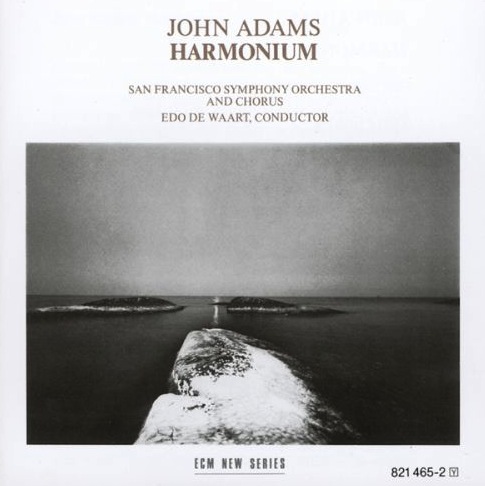
Classical ain’t my usual bag, but reading David Toop‘s Ocean of Sound loosened me up for this, which a good friend foisted upon me on a lazy, cool Sunday. Rolling off a throbbing, multiply-manifested minimalist pulse like waves, the voices of more than 100 join to sing John Donne’s “Negative Love” and two Emily Dickinson poems, the well-known “Because I could not stop for Death” and the more obscure (and uncharacteristic) “Wild Nights,” texts that, as passionately interpreted here, seem to trail off the final line of Andrew Marvell’s “To His Coy Mistress.” The massed voices blur the words, producing a roar that, paradoxically, sounds heard from afar, or in a dream–but which is true to the lines of the poems. Hard to write about this stuff when you’re a sub-neophyte, but I think I am right about this one.

Leo Welch: Sabougla Voices (Fat Possum)

One by one, the giants of North Mississippi Hill Country blues have fallen: Junior Kimbrough, R.L. Burnside, T-Model Ford. Others, like Robert Belfour and Paul Wine Jones, have quieted. All the more welcome, then, is this document of the non-secular side of the tradition that does not sound all that much like Fred McDowell, its aesthetic fountainhead. Raw, hypnotic, crying Holy unto the Lord, and together, Welch’s music is the gem you’re looking for in this blues world of…well, it ain’t even fiberglass anymore, is it? As Digital Underground once advised us: “Heartbeat props/Don’t wait ’til the heartbeat stops/Give the man props while he’s livin’….”

the-fugs-b&w-promo

The Fugs: “Refuse to Be Burnt Out” (from Refuse to Be Burnt Out, New Rose, 1985)

I wish I had the audio track for this song–see: everything isn’t on YouTube, children!–which I have listened at least 50 times through many travails over the last 18 months. You need to hear it, and, like us, print the core of the lyrics out and slap them on your fridge. Here they are:

Refuse to be burnt out:
The answer is–
Not to be laid back
Not to be cynical
Not to be hesitant
Not to be shy
Not to be uninformed
Not to be beaten down
Not to be isolated
Not to be frightened
Not to be threatened
Not to be co-opted
AND
Not to be lied to….”

(Edward Sanders)

If you do get a chance to hear the track, you will enjoy the ageless Mr. Sanders’ razor-sharp delivery of this line: “Bitterly bickering bitter-shitters/Cursing fate when lunch is late….” My wife and I recite that one every time we are frustrated because we can’t find a parking spot.

The Minutemen: Three-Way Tie for Last (SST)

I wish two things:

1) That this album was not still utterly relevant.

2) That I would have seen this band in person before its life was snuffed out by a stupid broken axle.

If you are, say, a young fan who’s just begun to explore this group and headed straight for Double Nickels on the Dime or Buzz or Howl or What Makes a Man Start Fires? (or all three, and good for you!), it is time to catch up. It grows on you–hard–and absorbing it fully only makes their tragedy deeper, because, like all truly great bands, they were growing so quickly, both musically and mentally, and the results don’t sound like growing pains.

When The Pierced Arrows Brought It to The Kids

7012

“…they won’t wear your t-shirts now….”

Local H, “All the Kids Are Right”

Through a good friend, I had heard of Dead Moon in the mid-’90s: “They’re garage rockers, but their lead singer’s about 50 and has been playing since the ’60s.” I had checked out their album Trash and Burn, which was lean, mean, raw, and wiry, with vocals that reminded me of Bon Scott’s, but, at the time, I was being deluged by so much music and stuff-o’-life that the rekkid got lost in the shuffle, even though it spoke directly to things that matter most to me about rock and roll. When they played a club here around the same time, I knew about it–but it was on a weeknight and, being a good-boy teacher for the moment (I was erratic in that area, at best), I skipped it. To what will be, I am sure, my eternal regret.

Fast forward to the mid-‘Oughts. I am sure most owners of record collections numbering 5,000-plus will relate, but, one weekend, sniffing around for something to listen to, I fetched Trash and Burn from where it had been hiding for a decade, slid it into the player, and stood back as it lit our house aflame. Both my wife Nicole and I exclaimed, in spontaneous chorus as old marrieds often do, “Where has this band been all our lives?” With the Internet now at our fingertips, we delved deeper, and found out about a documentary about the group called Unknown Passage: The Dead Moon Story, and immediately ordered a copy.

As will happen, I swear, to anyone who watches this film, we were stunned, then joined in lifetime loyalty to Fred and Toody, “The Coles,” as they are known to cognoscenti. Married for almost 50 years at this writing, successfully applying the DIY ethic years way before it was hip in the rock biz to everything from home improvement to instrument repair to music production and distribution to child-rearing, functioning as pretty-damned-equal partners in singing, playing and writing, these two dyed-in-the-wool rockers not only defined the rock and roll life in a way that didn’t get you looking at your shoes, but also served as a textbook case of true family values. I am not going to describe it; you just order the film, podnah. We have been pushing it on every vulnerable soul for seven years.

Concurrent to this discovery, at the Columbia, Missouri, teaching gig that was subsidizing my record collection, I was experiencing some surprising turns of event with an extracurricular club called The Academy of Rock, which a student of mine and I had founded in 2004. A couple of enterprising students had suggested that we try to convince bands who came through Columbia for shows to stop by our meetings and chat about songwriting, the rock life, and anything else fun. The worst that could happen was being told “No,” so onward we went, and, literally before we knew it, Amsterband (the future Ha Ha Tonka), Cary Hudson (former Blue Mountain and Neckbones), The F-Bombs (a local punk band), and–I had marks all over from pinching myself–eventually, The Drive-By Truckers and The Hold Steady had played–played, not stopped by to chat–in our school’s Little Theater, for free, with deep-ass Q&A, friendly autographing sessions, and invitations to come to their shows with guest-list privileges. So, when Nicole and I discovered that The Pierced Arrows, the Cole project that rose from the ashes of Dead Moon, were playing The Record Bar in Kansas City, we decided to go and maybe strike up enough of an acquaintance to ask them to swing by Hickman.

True to everything we had heard about them, Fred and Toody sat with the rabble through both of their opening bands’ sets, drinking beer, smoking, and obviously engaging with the groups’ music. Between sets, I tip-toed over to Toody, and begin shooting the shit. When I told her about our club and our (by now) tradition of bringing in bands, she enthused, but said, “Well, we’re heading for Europe next week, and we’ll be there for a few months, but, if you give me your phone number, I’ll get in touch with you when we’re back in the States.” Returning to terra firma after a shattering Pierced Arrows set (for the uninitiated, the only real difference between Dead Moon and The Pierced Arrows is slightly heavier guitar and slightly steadier drums) and hitting the prairie pavement back to Columbia, I turned to Nicole and said, “Well, we did get to meet them, we do have Toody’s phone number, and the show kicked ass–but surely after two-three months they’ll forget about us.”

Wrongo. Almost three months to the day of that show, Toody called me out of the clear blue sky and asked, “Hey, we have a day off coming up between Columbus and Kansas City, could we [YES–“could we?”–I shit you not] play at your school then?” I was so gobsmacked that about 10 seconds of silence followed before I Marv-Alberted a “YES!” into the receiver. We quickly agreed on details–we’d pay for their hotel room and food after the appearance, since they’d have to hit the road immediately following for the Kansas City gig–and I proceeded to pinch another red mark onto my arm.

The day before the band was due to play, I was moderating a Socratic seminar for my British literature students in our school’s office conference room when my cellphone began buzzing. I don’t get phone calls much, especially during the day, so I sneaked a look, and saw it was Toody. I put the temporary kibosh on the seminar–do you blame me?–stepped outside, and took the call.

“Phil, we are so, so, so sorry we are late! I think we can set up in ten minutes once we get there [they were 30 minutes outside of town] if you can still make it happen!”

“Toody–it’s not until tomorrow.”

“You’re shitting me! [Turns away from phone, shouts “It’s not ’til tomorrow,” is met by jubilant screams from the rest of the van’s occupants….] Fantastic! We are tired and hungry and need to decompress…but, hey, come by the hotel room and say hi!”

I am not making this up.

Nicole and I swung by to see them, but they were obviously beat, so we just gave ’em some dining recommendations and double-checked the details. We were particularly careful about the latter; when The Hold Steady visited, they arrived an hour after they were supposed to, and at the very moment that, in front of a packed theater, I was running out of steam stalling the crowd with their biographical details–sans soundcheck and sans anxiety, since they drifted in on a cloud of cannabis cologne. Fred assured us they’d be on time for a soundcheck, so we left them to get their rest.

I had arranged to have a substitute take my afternoon classes the next day, and, late that morning, as some Academy of Rock club members and I were setting up the PA in the theater, my phone began buzzing again.

“Hey, Phil, we’re here.”

“But Toody, you didn’t need to be here for another hour-and-a-half!”

“Oh, that’s OK! We want to meet some of the kids and hang out if it’s OK […if it’s OK????].”

“Well, hell, I’ll send a couple of ’em to come get you.”

We spent the next 90 minutes not just sound-checking but actually hanging out and talking about everything under the sun, with Fred giving some of the school’s theater tech kids, who were helping us, tips about rock and roll sound. For example, since he had lost 70% of his hearing by that point [no big deal!], he preferred to have two monitors on each side of him, facing each of his ears. That was just one of the many things the kids learned from him in that very information-rich hour-and-a-half.

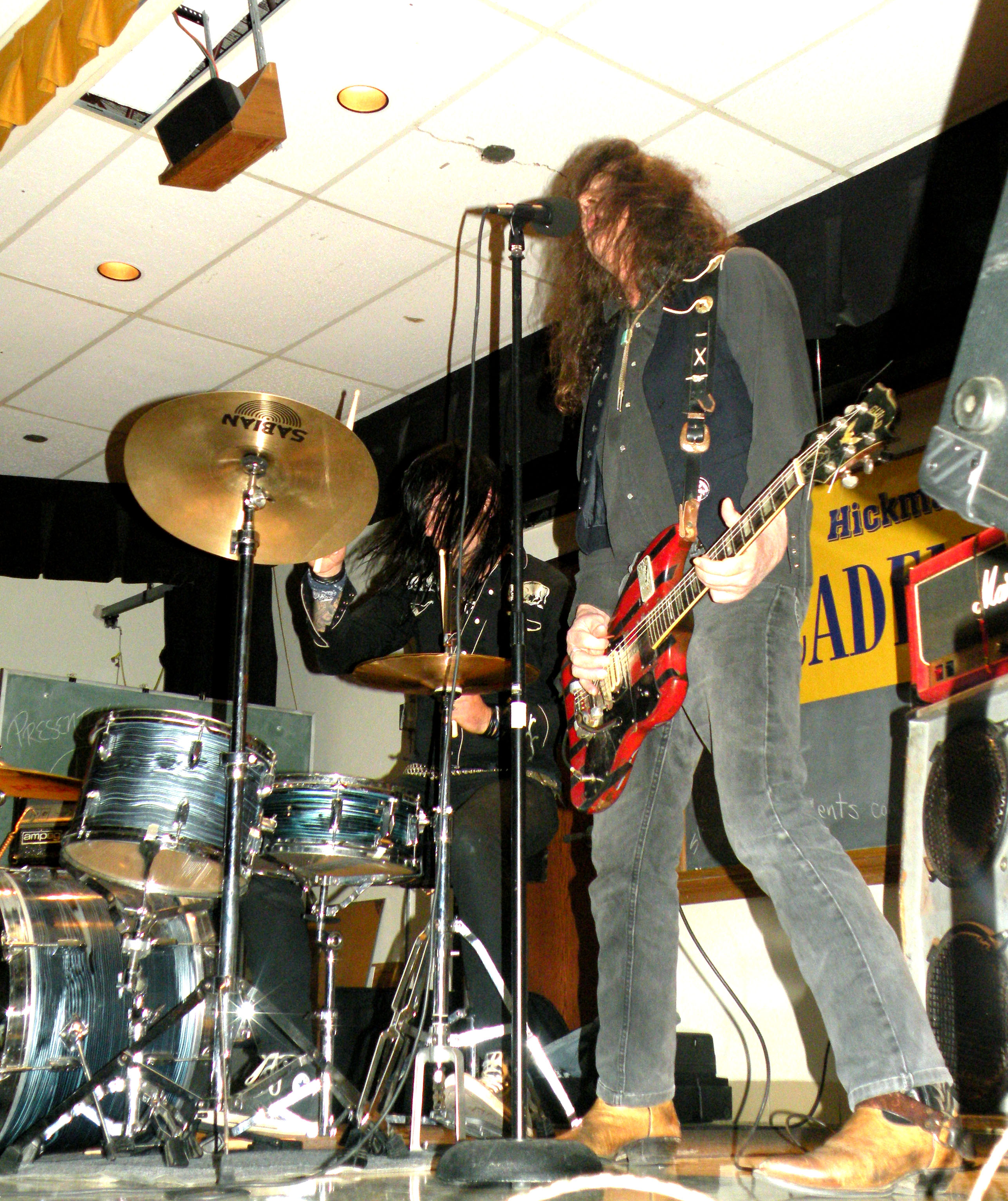
The performance? Titanic. Also, easily the loudest in Hickman’s history (the DBTs and Hold Steady had played unplugged–but you don’t unplug Fred Cole). We recorded it, but, unfortunately, we screwed up Fred’s vocal levels; it’s still power-packed and worth a listen, though (see below). The band played all of their then-new album Descending Shadows, plus the best of their previous record, Straight to the Heart.

After the sixty-minute show, they then took student questions, which–if they weren’t already excellent, which most were–they would cannily reconfigure for the best possible responses. I would recap it, but, here, read this Columbia Tribune story about it. The amount of wisdom shared in the nearly three hours they were in the theater was mind-boggling, and, even when the bell rang to dismiss students for the day, they were not yet done.

DSCN7079

I sidled over to Fred, Toody, and their awesome drummer Kelly Halliburton, who matched them word for word, note for note, gesture for gesture in sheer rock-band fan-care, and said, “Well, district rules forbid us from getting gift certificates for visiting ‘educators,’ but here’s $40 to go eat some pizza and drink some beer at the local-favorite pizza joint. Let me draw you up some direct—-“

Fred: “Hey, just bring some of the real big fans and come eat with us.”

“You’re serious?”

“As a heartattack! Just let us have one of the kids to navigate!”

As it happened, one of the kids was already thoroughly inured to the ways of The Coles through our having forced Unknown Passage: The Dead Moon Story on him and his having avidly explored their discography. (Oh yeah: we also took him to the aforementioned Pierced Arrows shows in the guise of our nephew, since it wasn’t all ages and the manager had given us permission–don’t try that one at home, fellow teachers!)  So we sent him along, and, people, I have never seen a student happier. He even got to bum a cig off of Fred!

At the pizza joint, we bought several pizzas, the band knocked back a few pitchers, and we had a total blast. To the end, though, the Coles and Mr. Halliburton were fan-centered. I had expected dinner to be a barrage of questions from the kids about rock and roll history (Fred goes back to the mid-Sixties through his involvement in The Weeds and The Lollipop Shoppe, and knew Janis Joplin well), but, instead, the trio queried the kids about their lives, their tastes in music, their experiences in bands, and…just life.

PizzaPizzaPizza

That kid on my right was a ninth-grader. As I drove him out to his folks’ house, neither of us could keep from shaking our heads in amazement that, along with rocking our asses off, they lived up to their advance notice and more. And as he told me,”I can’t believe they came to my school!”–it wasn’t his yet, but it would be the following year–I realized that it was probably the finest moment I’d ever experienced (could probably hope to experience–and, no, it ain’t been topped yet) as a public school educator. Beyond the educational impact, the encouragement the Coles’ chemistry and commitment gave Nicole and me, who have approached marriage unconventionally in more than a few ways, continues to resonate.

Fred had successful heart surgery earlier this year, and just turned 66 last week. I am sure, however, that he will be back on the road with The Pierced Arrows soon, and, if they come to your town–go. They are about rock and roll, but so much more. Be sure to bring t-shirt money, whether you are a kid or not.

Below: The Pierced Arrows’ performance at Hickman. We used a multiple-mic set up in the room, rather than recording straight from the PA (don’t ask…), and, since our kid at the PA botched the vocal mix and it was so crowded I couldn’t get to him to help, Fred’s vocals are somewhat buried. But you will hear why I got called into the office the next day:

On Listening to BEGGARS BANQUET for the First Time in a Long While (no, a poem does not follow….)

Listening to The Rolling Stones’ Beggars’ Banquet for the first time in awhile, cranked up to the max in my truck on a hot Sunday at the end of a bad week for the country and world, it occurred to me that “Jigsaw Puzzle” is the prequel, if you will, to “Gimme Shelter.” The rain’s turned torrential, the persona’s up off the floor and out in the streets, the puzzle unfinished. And, thinking about how Dylanesque “Jigsaw Puzzle” is, it made me realize that, for all the Stones’ defects (in my mind, not too many at this point), unlike Dylan they did throw themselves into the storm, as artists and performers. Dylan: always a hustler, ankle a quarter of an inch out of the bear trap. But in this intense, world-historic pop scenario, not a thing for one’s CV. So, you be the judge:

“Jigsaw Puzzle”:

“Gimme Shelter”:

“I Threw It All Away” (in more ways than one? I do love this song, but Johnny Cash be damned….)

Top 10 Great Music-Related Things That Happened to Me This Week

I. My wife Nicole became fully converted to Wussyphilia, via repeat listenings to a folder I put on her iPod including their very lively 2014 release Attica! plus some of their earlier great tracks. Her fave rave–and who can blame her?

2. After all of these years, Greil Marcus’ writing, as knotty, theoretical, and deeply referenced as it can be, is as easy and pleasurable for me to read as drinking a glass of water after mowing the lawn (Hannah Arendt and C.L.R. James, on the other hand, are wonderful, but not easy). While not perfect, his new book, The History of Rock ‘N’ Roll in Ten Songs, intriguingly explores many of his (and my) favorite themes, particularly that our musical and cultural past is always, through the magic of rock and roll, in conversation with our present. He brought about many revelations in my musical thinking, one I am somewhat ashamed to admit. While actively liking “Rehab,” I mostly rolled my eyes at the output and antics of the doomed Amy Winehouse; however, in a chapter focusing on “To Know Him Is to Love Him,” as he glanced off into Shadow Morton and the Shangri-Las, he described a Grammy performance of Winehouse’s that made it impossible for me not to YouTube it. I don’t Grammy, so it was new, shocking, and wonderful to me, and I take back my eye-rolling (I am a huge Shangri-Las fan, and should have recognized her lineage instantly):

3. I started practicing ukelele again. My wife bought me one almost ten years ago for our anniversary, I practiced hard for awhile, but I don’t have a great physical affinity for stringed instruments. I hadn’t gotten it out in awhile, but I muscle-remembered several things. That damned “B” chord formation, though.

4. Some very cool Swedes released a compilation of the great Midwestern rock and roller Charlie Burton‘s awesome, comedic songs. And…it is authorized. And…it has the greatest song ever written about Elvis:

5. It was a long week. Nicole and I ended it with a trip to the amazing, enduring Tony’s Pizza Palace (in Columbia, Missouri) for a pizza, a Greek salad, and a pitcher. We got in the car, relaxed and satisfied, and as we pulled away, Nicole realized she had the car iPod turned down. She turned it up, and I discovered she’d segued from one of my favorite bands to another: Nashville’s Natural Child. As we cruised around a little that night (and the next morning), we were treated to many of their early singles on Infinity Cat, which, though not hallowed by the indie press, were extremely strong in the areas of wit, riffage, cameraderie, and persona (“trio of weed bandits bemusedly working through the obstacles of modern USA”). They have evolved a bit: they’re better players, more relaxed performers, far more well-known on the circuit, and still fun to see live. But there is something about their early drive, humor, and bleary desperation I miss. Here’s one we really loved this morning, a bit of a landmark, really, in the gender politics and sexual documentation of rock and roll:

6. I have recently joined a Facebook group called Expert Witness that is made up of 200+ devoted followers/readers/proteges of the great rockwriter Robert Christgau. Facebook is supposed to be really bad for you in nine different ways, but–it feels like home to me. The conversation is intelligent, useful (since Christgau’s various review columns are defunct–he’s now at Billboard, but I am not sure what he’s really gonna do there), witty, and civil without everyone behaving as if he has a napkin folded in his lap, in Allen Lowe’s great phrase. Case in point: this week, I finally found a cheap copy of sound-bard David Toop’s infamous Sugar & Poison comp, a two-disc modern R&B mix that ambitiously tries to replicate the various hills and valleys in a real-life roll in the hay (for example, in the middle of the groove, the listener might be confronted with financial anxiety (see Dennis Edwards’ track embedded below, my favorite on the collection)). That’s not all it does, and it is fascinating, particularly because no megahits are used (the tracks are mostly excavations!), but, initially, I wasn’t impressed as much as I was expecting to be. I’d read about it almost twenty years ago and my imagination had exponentially swelled. When I posted on the forum about having gotten the CD and been a little underwhelmed, Chicago’s Kevin Bozelka, one of my favorite participants, and I engaged in a Beavis and Butthead-cum-Siskel and Ebert thread-scrum that, despite the multiple double-entendres (and double-nonentendres) led me to a better understanding of the record. Verdict: you must have it. I can’t wait for Nicole to hear it.

7. These reggae greats, blasting from Saturday speakers, motivated me to get school-prep work done and post here: Lee “Scratch” Perry (Who Put the Voodoo ‘Pon Reggae?), Desmond Dekker, Toots and the Maytals, Junior Byles, pre-Marcus Garvey Burning Spear, and ’60s solo Peter Tosh. Thank you, gentlemen. Smoke and see on.

8. I have thoroughly enjoyed two other music tomes this week other than Marcus’: Allen Lowe’s epic, insightful, deeply-researched, contentious, mischievous American Pop: From Minstrels to Mojos and Thomas Brothers’ second volume of his Louis Armstrong critical biography trilogy, Louis Armstrong: Master of Modernism. I like books that indicate hard work and deep love. I highly recommend both, and you should get the nine-disc companion box to Lowe’s history.

9. By simply displaying a photograph of the long-forgotten Indianapolis punk band Panics’ compilation I Wanna Kill My Mom on the above-mentioned Expert Witness Facebook group page and expressing my enthusiasm–how can you not love a band whose goal it must have been (and they did not reach it, part of the charm) to sound exactly like the Sex Pistols trying to learn “Roadrunner” on The Great Rock and Roll Swindle soundtrack?–I got to have a cyberconversation with Chuck Eddy, one of the more eccentric and provocative rockwriters out there. I don’t often agree with him, but he’s fun to read, and he…approved of my purchase. I am unaccountably needy, and so easily made happy.

10. I want to know about Lee Wiley. Always thankful to have a new musical grail after which to quest. Expert Witness eminence grise Cliff Ocheltree, I hope you can help.