Compact music commentary about artifacts new and old: I enthuse, I don't accuse, but I do refuse–to review anything lukewarm or colder!
Author: philovereem
Music monomaniac, retired English teacher, resident of Columbia, Missouri, former correspondent for ANOREXIC TEENAGE SEX GODS, READY TO SNAP, HITLIST, SUGARBUZZ, THE WAYBACK MACHINE, ROCK THERAPY, and THE FIRST CHURCH OF HOLY ROCK AND ROLL, co-lead singer of the non-legendary Wayne Coomers and the Original Sins of Fayetteville, Arkansas.
John Schooley: The Man Who Rode the Mule Around the World (Voodoo Rhythm)
Niangua, Missouri, escapee Schooley continues to evolve. As the gee-tar and co-writin’ fulcrum driving The Revelators (of Columbia, Missouri–find their Crypt releases), he helped coin a kind of style: rockabilly oi–it seemed to me at the time–or farmboy boogie, as he might call it now. As the whip across the shoulders of Austin’s Hard Feelings, he found a place of no disgrace in the rockaroll world during a time when that wasn’t easy. As the hardest-working, hardest-thinking one-man-band (there are a few) in the Yew-(be)Nighted-States, he has preached and played across this turf and yon til his knuckles and tonsils have bled. This is a man who doesn’t settle, who is as Show-Me-State-stubborn as the mule Charlie Poole rode ’round the world, and his new release is his best. Augmenting his barnstorming six-string and bigfoot beat with banjo, fiddle, piano, handclaps, and harmonica (courtesy of the great Walter Daniels), barreling through old weird American traditionals (a plangent but lively “Cluck Old Hen”!), golden-age nuggets from Marvin Rainwater and G. l. Crockett, and some snazzy originals, he achieves something akin to what Greil Marcus once wrote about Jerry Lee Lewis’ Sun auditions: “…[O]ne long roadhouse stomp.” And on “Doubleneck Stomp,” he catches up to his long-time ambition of mating Roy Buchanan and Link Wray. His vocals still need some oomph, but if you turn the record up as you are instructed to on the album cover, it just doesn’t matter.
It may seem that I have been neglecting my responsibilities here (such as they are), but, though I am retired, I am actually working two part-time jobs and they have been keeping me preoccupied. But, as always, music has provided much-needed fuel. What follow are some highlights of the past month:
John Coltrane: Offering–Live at Temple University (November 11, 1966) (Resonance Records)
As a devoted though sometimes fatigued fan of Trane, I greeted the news of this excavation/restoration with some skepticism. One must admit that a goodly portion of the jazz audience has gotten–and will continue to get–off the bus after A Love Supreme, and, having listened to the man’s entire output after that record, I know they have good reason. I love the churning, searching, two-men-becoming of InterstellarSpace, the roiling, blistering, crying record-long prayer of Meditations, the daring transformations of Live at the Village VanguardAgain; on the other hand, I am not sure I will ever put on the hammering, hectoring live records from Japan and Seattle again. I like Ascension better in theory than reality (though it’s a better realized experiment in freedom than Free Jazz, for sure); I’m likely to keep Om shelved. Of course I am leaving a few records out, but, to get to the heart of it, I wasn’t sure I or anyone else needed an imperfectly recorded concert record that might well be more painful than enjoyable. If you have the same misgivings, set them aside. This is a document worthy of your time. Coltrane is in great form, though he was nine months from passing–in fact, some of his most focused and coherent free playing ever is here, in very good fidelity, and the legendary singing and chest-beating he did at this gig are not freakish. It works; it’s even moving. Some Philly locals (on saxes, the very brave Arnold Joyner and Steve Knoblauch) showed up to pitch in, and they prove equal to the ’66 group’s concept. I would go so far as to say that they at least equal Pharoah Sanders, who on first appearance sounds like he’s taking a box cutter to the sheets of the night. Actually, the fidelity issues–you can’t really hear the bass other than one solo (and it’s a shaky one–Jimmy Garrison is not on hand), and the drums, when not in solo mode, are very quiet in the mix–enhanced the listening experience for me, even if they break the democratic contract. Honestly, I like hearing Trane when he’s not fighting for space, and, even if he was at the actual event, he is the show here. Highly recommended.
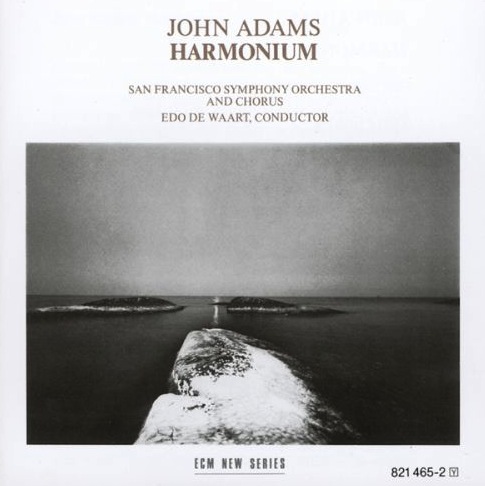
Classical ain’t my usual bag, but reading David Toop‘s Ocean of Sound loosened me up for this, which a good friend foisted upon me on a lazy, cool Sunday. Rolling off a throbbing, multiply-manifested minimalist pulse like waves, the voices of more than 100 join to sing John Donne’s “Negative Love” and two Emily Dickinson poems, the well-known “Because I could not stop for Death” and the more obscure (and uncharacteristic) “Wild Nights,” texts that, as passionately interpreted here, seem to trail off the final line of Andrew Marvell’s “To His Coy Mistress.” The massed voices blur the words, producing a roar that, paradoxically, sounds heard from afar, or in a dream–but which is true to the lines of the poems. Hard to write about this stuff when you’re a sub-neophyte, but I think I am right about this one.
Leo Welch: Sabougla Voices (Fat Possum)
One by one, the giants of North Mississippi Hill Country blues have fallen: Junior Kimbrough, R.L. Burnside, T-Model Ford. Others, like Robert Belfour and Paul Wine Jones, have quieted. All the more welcome, then, is this document of the non-secular side of the tradition that does not sound all that much like Fred McDowell, its aesthetic fountainhead. Raw, hypnotic, crying Holy unto the Lord, and together, Welch’s music is the gem you’re looking for in this blues world of…well, it ain’t even fiberglass anymore, is it? As Digital Underground once advised us: “Heartbeat props/Don’t wait ’til the heartbeat stops/Give the man props while he’s livin’….”
The Fugs: “Refuse to Be Burnt Out” (from Refuse to Be Burnt Out, New Rose, 1985)
I wish I had the audio track for this song–see: everything isn’t on YouTube, children!–which I have listened at least 50 times through many travails over the last 18 months. You need to hear it, and, like us, print the core of the lyrics out and slap them on your fridge. Here they are:
Refuse to be burnt out:
The answer is–
Not to be laid back
Not to be cynical
Not to be hesitant
Not to be shy
Not to be uninformed
Not to be beaten down
Not to be isolated
Not to be frightened
Not to be threatened
Not to be co-opted
AND
Not to be lied to….”
(Edward Sanders)
If you do get a chance to hear the track, you will enjoy the ageless Mr. Sanders’ razor-sharp delivery of this line: “Bitterly bickering bitter-shitters/Cursing fate when lunch is late….” My wife and I recite that one every time we are frustrated because we can’t find a parking spot.
The Minutemen: Three-Way Tie for Last (SST)
I wish two things:
1) That this album was not still utterly relevant.
2) That I would have seen this band in person before its life was snuffed out by a stupid broken axle.
If you are, say, a young fan who’s just begun to explore this group and headed straight for Double Nickels on the Dime or Buzz or Howl or What Makes a Man Start Fires? (or all three, and good for you!), it is time to catch up. It grows on you–hard–and absorbing it fully only makes their tragedy deeper, because, like all truly great bands, they were growing so quickly, both musically and mentally, and the results don’t sound like growing pains.
Through a good friend, I had heard of Dead Moon in the mid-’90s: “They’re garage rockers, but their lead singer’s about 50 and has been playing since the ’60s.” I had checked out their album Trash and Burn, which was lean, mean, raw, and wiry, with vocals that reminded me of Bon Scott’s, but, at the time, I was being deluged by so much music and stuff-o’-life that the rekkid got lost in the shuffle, even though it spoke directly to things that matter most to me about rock and roll. When they played a club here around the same time, I knew about it–but it was on a weeknight and, being a good-boy teacher for the moment (I was erratic in that area, at best), I skipped it. To what will be, I am sure, my eternal regret.
Fast forward to the mid-‘Oughts. I am sure most owners of record collections numbering 5,000-plus will relate, but, one weekend, sniffing around for something to listen to, I fetched Trash and Burn from where it had been hiding for a decade, slid it into the player, and stood back as it lit our house aflame. Both my wife Nicole and I exclaimed, in spontaneous chorus as old marrieds often do, “Where has this band been all our lives?” With the Internet now at our fingertips, we delved deeper, and found out about a documentary about the group called Unknown Passage: The Dead Moon Story, and immediately ordered a copy.
As will happen, I swear, to anyone who watches this film, we were stunned, then joined in lifetime loyalty to Fred and Toody, “The Coles,” as they are known to cognoscenti. Married for almost 50 years at this writing, successfully applying the DIY ethic years way before it was hip in the rock biz to everything from home improvement to instrument repair to music production and distribution to child-rearing, functioning as pretty-damned-equal partners in singing, playing and writing, these two dyed-in-the-wool rockers not only defined the rock and roll life in a way that didn’t get you looking at your shoes, but also served as a textbook case of true family values. I am not going to describe it; you just order the film, podnah. We have been pushing it on every vulnerable soul for seven years.
Concurrent to this discovery, at the Columbia, Missouri, teaching gig that was subsidizing my record collection, I was experiencing some surprising turns of event with an extracurricular club called The Academy of Rock, which a student of mine and I had founded in 2004. A couple of enterprising students had suggested that we try to convince bands who came through Columbia for shows to stop by our meetings and chat about songwriting, the rock life, and anything else fun. The worst that could happen was being told “No,” so onward we went, and, literally before we knew it, Amsterband (the future Ha Ha Tonka), Cary Hudson (former Blue Mountain and Neckbones), The F-Bombs (a local punk band), and–I had marks all over from pinching myself–eventually, The Drive-By Truckers and The Hold Steady had played–played, not stopped by to chat–in our school’s Little Theater, for free, with deep-ass Q&A, friendly autographing sessions, and invitations to come to their shows with guest-list privileges. So, when Nicole and I discovered that The Pierced Arrows, the Cole project that rose from the ashes of Dead Moon, were playing The Record Bar in Kansas City, we decided to go and maybe strike up enough of an acquaintance to ask them to swing by Hickman.
True to everything we had heard about them, Fred and Toody sat with the rabble through both of their opening bands’ sets, drinking beer, smoking, and obviously engaging with the groups’ music. Between sets, I tip-toed over to Toody, and begin shooting the shit. When I told her about our club and our (by now) tradition of bringing in bands, she enthused, but said, “Well, we’re heading for Europe next week, and we’ll be there for a few months, but, if you give me your phone number, I’ll get in touch with you when we’re back in the States.” Returning to terra firma after a shattering Pierced Arrows set (for the uninitiated, the only real difference between Dead Moon and The Pierced Arrows is slightly heavier guitar and slightly steadier drums) and hitting the prairie pavement back to Columbia, I turned to Nicole and said, “Well, we did get to meet them, we do have Toody’s phone number, and the show kicked ass–but surely after two-three months they’ll forget about us.”
Wrongo. Almost three months to the day of that show, Toody called me out of the clear blue sky and asked, “Hey, we have a day off coming up between Columbus and Kansas City, could we [YES–“could we?”–I shit you not] play at your school then?” I was so gobsmacked that about 10 seconds of silence followed before I Marv-Alberted a “YES!” into the receiver. We quickly agreed on details–we’d pay for their hotel room and food after the appearance, since they’d have to hit the road immediately following for the Kansas City gig–and I proceeded to pinch another red mark onto my arm.
The day before the band was due to play, I was moderating a Socratic seminar for my British literature students in our school’s office conference room when my cellphone began buzzing. I don’t get phone calls much, especially during the day, so I sneaked a look, and saw it was Toody. I put the temporary kibosh on the seminar–do you blame me?–stepped outside, and took the call.
“Phil, we are so, so, so sorry we are late! I think we can set up in ten minutes once we get there [they were 30 minutes outside of town] if you can still make it happen!”
“Toody–it’s not until tomorrow.”
“You’re shitting me! [Turns away from phone, shouts “It’s not ’til tomorrow,” is met by jubilant screams from the rest of the van’s occupants….] Fantastic! We are tired and hungry and need to decompress…but, hey, come by the hotel room and say hi!”
I am not making this up.
Nicole and I swung by to see them, but they were obviously beat, so we just gave ’em some dining recommendations and double-checked the details. We were particularly careful about the latter; when The Hold Steady visited, they arrived an hour after they were supposed to, and at the very moment that, in front of a packed theater, I was running out of steam stalling the crowd with their biographical details–sans soundcheck and sans anxiety, since they drifted in on a cloud of cannabis cologne. Fred assured us they’d be on time for a soundcheck, so we left them to get their rest.
I had arranged to have a substitute take my afternoon classes the next day, and, late that morning, as some Academy of Rock club members and I were setting up the PA in the theater, my phone began buzzing again.
“Hey, Phil, we’re here.”
“But Toody, you didn’t need to be here for another hour-and-a-half!”
“Oh, that’s OK! We want to meet some of the kids and hang out if it’s OK […if it’s OK????].”
“Well, hell, I’ll send a couple of ’em to come get you.”
We spent the next 90 minutes not just sound-checking but actually hanging out and talking about everything under the sun, with Fred giving some of the school’s theater tech kids, who were helping us, tips about rock and roll sound. For example, since he had lost 70% of his hearing by that point [no big deal!], he preferred to have two monitors on each side of him, facing each of his ears. That was just one of the many things the kids learned from him in that very information-rich hour-and-a-half.
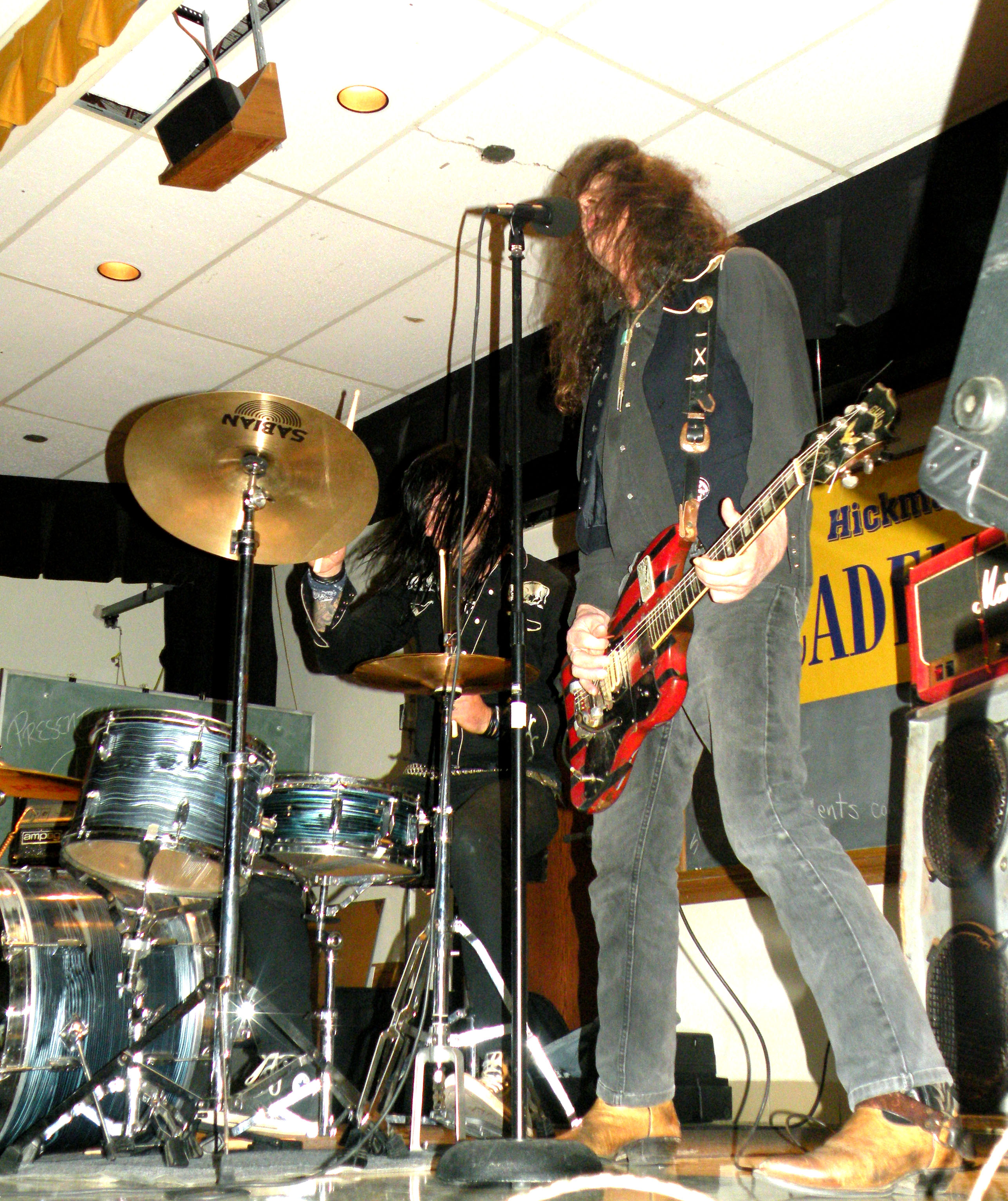
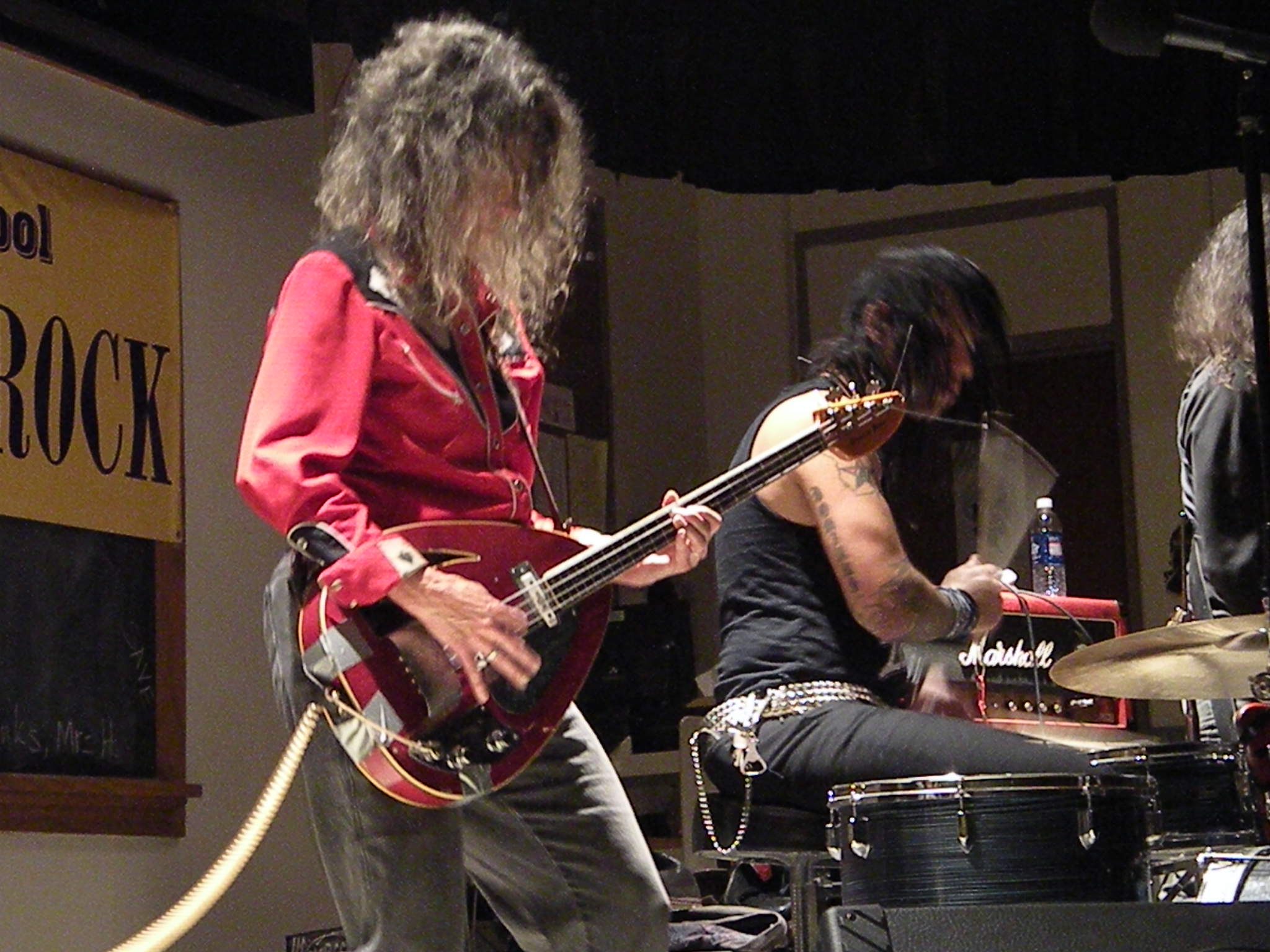
The performance? Titanic. Also, easily the loudest in Hickman’s history (the DBTs and Hold Steady had played unplugged–but you don’t unplug Fred Cole). We recorded it, but, unfortunately, we screwed up Fred’s vocal levels; it’s still power-packed and worth a listen, though (see below). The band played all of their then-new album Descending Shadows, plus the best of their previous record, Straight to the Heart.
After the sixty-minute show, they then took student questions, which–if they weren’t already excellent, which most were–they would cannily reconfigure for the best possible responses. I would recap it, but, here, read this Columbia Tribune story about it. The amount of wisdom shared in the nearly three hours they were in the theater was mind-boggling, and, even when the bell rang to dismiss students for the day, they were not yet done.
I sidled over to Fred, Toody, and their awesome drummer Kelly Halliburton, who matched them word for word, note for note, gesture for gesture in sheer rock-band fan-care, and said, “Well, district rules forbid us from getting gift certificates for visiting ‘educators,’ but here’s $40 to go eat some pizza and drink some beer at the local-favorite pizza joint. Let me draw you up some direct—-“
Fred: “Hey, just bring some of the real big fans and come eat with us.”
“You’re serious?”
“As a heartattack! Just let us have one of the kids to navigate!”
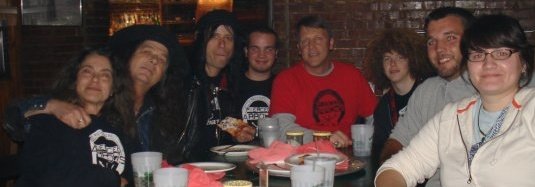
As it happened, one of the kids was already thoroughly inured to the ways of The Coles through our having forced Unknown Passage: The Dead Moon Story on him and his having avidly explored their discography. (Oh yeah: we also took him to the aforementioned Pierced Arrows shows in the guise of our nephew, since it wasn’t all ages and the manager had given us permission–don’t try that one at home, fellow teachers!) So we sent him along, and, people, I have never seen a student happier. He even got to bum a cig off of Fred!
At the pizza joint, we bought several pizzas, the band knocked back a few pitchers, and we had a total blast. To the end, though, the Coles and Mr. Halliburton were fan-centered. I had expected dinner to be a barrage of questions from the kids about rock and roll history (Fred goes back to the mid-Sixties through his involvement in The Weeds and The Lollipop Shoppe, and knew Janis Joplin well), but, instead, the trio queried the kids about their lives, their tastes in music, their experiences in bands, and…just life.
That kid on my right was a ninth-grader. As I drove him out to his folks’ house, neither of us could keep from shaking our heads in amazement that, along with rocking our asses off, they lived up to their advance notice and more. And as he told me,”I can’t believe they came to my school!”–it wasn’t his yet, but it would be the following year–I realized that it was probably the finest moment I’d ever experienced (could probably hope to experience–and, no, it ain’t been topped yet) as a public school educator. Beyond the educational impact, the encouragement the Coles’ chemistry and commitment gave Nicole and me, who have approached marriage unconventionally in more than a few ways, continues to resonate.
Fred had successful heart surgery earlier this year, and just turned 66 last week. I am sure, however, that he will be back on the road with The Pierced Arrows soon, and, if they come to your town–go. They are about rock and roll, but so much more. Be sure to bring t-shirt money, whether you are a kid or not.
Below: The Pierced Arrows’ performance at Hickman. We used a multiple-mic set up in the room, rather than recording straight from the PA (don’t ask…), and, since our kid at the PA botched the vocal mix and it was so crowded I couldn’t get to him to help, Fred’s vocals are somewhat buried. But you will hear why I got called into the office the next day:
Listening to The Rolling Stones’ Beggars’ Banquet for the first time in awhile, cranked up to the max in my truck on a hot Sunday at the end of a bad week for the country and world, it occurred to me that “Jigsaw Puzzle” is the prequel, if you will, to “Gimme Shelter.” The rain’s turned torrential, the persona’s up off the floor and out in the streets, the puzzle unfinished. And, thinking about how Dylanesque “Jigsaw Puzzle” is, it made me realize that, for all the Stones’ defects (in my mind, not too many at this point), unlike Dylan they did throw themselves into the storm, as artists and performers. Dylan: always a hustler, ankle a quarter of an inch out of the bear trap. But in this intense, world-historic pop scenario, not a thing for one’s CV. So, you be the judge:
“Jigsaw Puzzle”:
“Gimme Shelter”:
“I Threw It All Away” (in more ways than one? I do love this song, but Johnny Cash be damned….)
I. My wife Nicole became fully converted to Wussyphilia, via repeat listenings to a folder I put on her iPod including their very lively 2014 release Attica! plus some of their earlier great tracks. Her fave rave–and who can blame her?
2. After all of these years, Greil Marcus’ writing, as knotty, theoretical, and deeply referenced as it can be, is as easy and pleasurable for me to read as drinking a glass of water after mowing the lawn (Hannah Arendt and C.L.R. James, on the other hand, are wonderful, but not easy). While not perfect, his new book, The History of Rock ‘N’ Roll in Ten Songs, intriguingly explores many of his (and my) favorite themes, particularly that our musical and cultural past is always, through the magic of rock and roll, in conversation with our present. He brought about many revelations in my musical thinking, one I am somewhat ashamed to admit. While actively liking “Rehab,” I mostly rolled my eyes at the output and antics of the doomed Amy Winehouse; however, in a chapter focusing on “To Know Him Is to Love Him,” as he glanced off into Shadow Morton and the Shangri-Las, he described a Grammy performance of Winehouse’s that made it impossible for me not to YouTube it. I don’t Grammy, so it was new, shocking, and wonderful to me, and I take back my eye-rolling (I am a huge Shangri-Las fan, and should have recognized her lineage instantly):
3. I started practicing ukelele again. My wife bought me one almost ten years ago for our anniversary, I practiced hard for awhile, but I don’t have a great physical affinity for stringed instruments. I hadn’t gotten it out in awhile, but I muscle-remembered several things. That damned “B” chord formation, though.
4. Some very cool Swedes released a compilation of the great Midwestern rock and roller Charlie Burton‘s awesome, comedic songs. And…it is authorized. And…it has the greatest song ever written about Elvis:
5. It was a long week. Nicole and I ended it with a trip to the amazing, enduring Tony’s Pizza Palace (in Columbia, Missouri) for a pizza, a Greek salad, and a pitcher. We got in the car, relaxed and satisfied, and as we pulled away, Nicole realized she had the car iPod turned down. She turned it up, and I discovered she’d segued from one of my favorite bands to another: Nashville’s Natural Child. As we cruised around a little that night (and the next morning), we were treated to many of their early singles on Infinity Cat, which, though not hallowed by the indie press, were extremely strong in the areas of wit, riffage, cameraderie, and persona (“trio of weed bandits bemusedly working through the obstacles of modern USA”). They have evolved a bit: they’re better players, more relaxed performers, far more well-known on the circuit, and still fun to see live. But there is something about their early drive, humor, and bleary desperation I miss. Here’s one we really loved this morning, a bit of a landmark, really, in the gender politics and sexual documentation of rock and roll:
6. I have recently joined a Facebook group called Expert Witness that is made up of 200+ devoted followers/readers/proteges of the great rockwriter Robert Christgau. Facebook is supposed to be really bad for you in nine different ways, but–it feels like home to me. The conversation is intelligent, useful (since Christgau’s various review columns are defunct–he’s now at Billboard, but I am not sure what he’s really gonna do there), witty, and civil without everyone behaving as if he has a napkin folded in his lap, in Allen Lowe’s great phrase. Case in point: this week, I finally found a cheap copy of sound-bard David Toop’s infamous Sugar & Poison comp, a two-disc modern R&B mix that ambitiously tries to replicate the various hills and valleys in a real-life roll in the hay (for example, in the middle of the groove, the listener might be confronted with financial anxiety (see Dennis Edwards’ track embedded below, my favorite on the collection)). That’s not all it does, and it is fascinating, particularly because no megahits are used (the tracks are mostly excavations!), but, initially, I wasn’t impressed as much as I was expecting to be. I’d read about it almost twenty years ago and my imagination had exponentially swelled. When I posted on the forum about having gotten the CD and been a little underwhelmed, Chicago’s Kevin Bozelka, one of my favorite participants, and I engaged in a Beavis and Butthead-cum-Siskel and Ebert thread-scrum that, despite the multiple double-entendres (and double-nonentendres) led me to a better understanding of the record. Verdict: you must have it. I can’t wait for Nicole to hear it.
7. These reggae greats, blasting from Saturday speakers, motivated me to get school-prep work done and post here: Lee “Scratch” Perry (Who Put the Voodoo ‘Pon Reggae?), Desmond Dekker, Toots and the Maytals, Junior Byles, pre-Marcus Garvey Burning Spear, and ’60s solo Peter Tosh. Thank you, gentlemen. Smoke and see on.
8. I have thoroughly enjoyed two other music tomes this week other than Marcus’: Allen Lowe’s epic, insightful, deeply-researched, contentious, mischievous American Pop: From Minstrels to Mojos and Thomas Brothers’ second volume of his Louis Armstrong critical biography trilogy, Louis Armstrong: Master of Modernism. I like books that indicate hard work and deep love. I highly recommend both, and you should get the nine-disc companion box to Lowe’s history.
9. By simply displaying a photograph of the long-forgotten Indianapolis punk band Panics’ compilation I Wanna Kill My Mom on the above-mentioned Expert Witness Facebook group page and expressing my enthusiasm–how can you not love a band whose goal it must have been (and they did not reach it, part of the charm) to sound exactly like the Sex Pistols trying to learn “Roadrunner” on The Great Rock and Roll Swindle soundtrack?–I got to have a cyberconversation with Chuck Eddy, one of the more eccentric and provocative rockwriters out there. I don’t often agree with him, but he’s fun to read, and he…approved of my purchase. I am unaccountably needy, and so easily made happy.
10. I want to know about Lee Wiley. Always thankful to have a new musical grail after which to quest. Expert Witness eminence grise Cliff Ocheltree, I hope you can help.
If jazz is dead, then why are the would-be hipsters trying so hard to kill it?
Last week, the New Yorker ran an unfunny and rather mean-spirited “satire” of Sonny Rollins, titled “In His Own Words.” Rather than offering a genuine interview with the 84-year-old jazz legend, the publication wasted space on a humor piece that didn’t even touch on several of the key episodes in the saxophonist’s career.
And now, another major publication, the Washington Post, hammers on jazz with a piece that reads like satire but, sadly, is not.
“Jazz has run out of ideas, and yet it’s still getting applause,” someone named Justin Moyer writes, in a column titled “All that jazz isn’t all that great.”
Right up front, Moyer admits that, while he studied with the likes of Anthony Braxton, Pheeroan akLaff and Jay Hoggard at Wesleyan, he found jazz “hard to grasp.” In…
For those few of you who may have wondered where I’ve been, it’s been to the Land of the Uninspired as well as to the opposite–the American South, specifically New Orleans (again!). I am trying to get the hang of regular blogging; my life-energy is too variously diffused, I think, to write every day, but I am a creature of routine. If I am IN a routine–I mean IN–you can count on me like the sunrise. But if what I am involved in has an irregular pulse, I am likely to fade. So I am fighting this. I would also like to clarify that this is a music blog that, really, is aimed at people like me (life-energy variously diffused) who don’t have time to be music-obsessed (though I find time because I am helpless). So, for example, if I mention Mr. Quintron, to whom many would now react with a gargantu-yawn…well, I am not writing at you. OK, enough. My life does revolve around music, so here’s what has happened since I last made contact.
1. I saw Johnny Winter with a colleague whose mother taught him English in high school in Beaumont, Texas, and who had Johnny’s brother Edgar (I am sure you have heard of him) as a–wait for it!–but it should not be a surprise!–Sunday school teacher. My buddy got to say hi at an otherwise depressing meet-and-greet (where to hold one these days? in a store specializing in video games!), then we went to the show, where either the sound guys at the venue-that-shall-not-be-named fucked up the mix, or the mix was designed to disguise Johnny’s age-and-illness-related struggles. It was not a bad show, but you couldn’t tell what Johnny was singing (“Bill Haley preaching Armageddon,” Lester Bangs once wrote of his performance on 1969’s Second Winter), and you had to watch his fingers (we were in the balcony) to tell if he was soloing. Barely a week later, he was a gone dead (silver) train. Did he matter? Listen to this:
Also, below, is a great picture of my friend, looking perfectly Sunday-school-defiant, standing in front of the teenaged Edgar “Frankenstein” Winter:
2. I adore Western Swing–Bob Wills’ 1946-7 version of the Texas Playboys is as close as I think that products of Western civilization have ever gotten to fully realized–and, if you don’t count the late, ineffably great Canuck Ray Condo and his Ricochets, I had never seen or danced to such a band live. It materialized that I got a chance to see Asleep at the Wheel, to my mind the world’s best and maybe last Western Swing band. Well, they only had one fiddle, they didn’t play a song from their great early records The Wheel and Comin’ At Ya, and they didn’t play either of their classic Kinky Friedman covers, which are important since a) Kinky cannot sing, and b) he is a cowboy-hatted Jewish Texas country-singer, crime fictionalist, animal-lover and channeler of Mark Twain. ASSIGNMENT: look up Asleep at the Wheel’s beautiful run at “Before All Hell Breaks Loose,” in which Kinky advises resigning from the human race, and “Homo Erectus,” in which Kinky gets wood for a teacher. They played OK, but we didn’t dance. That’s the measure.
3. We did not make a second visit to Fred and Annie Mae McDowell’s grave on Tate-Panola County Road between Senatobia and Como in Mississippi. We had hoped to make a practice of keeping them clean–on our first visit, Annie Mae’s grave was littered with butts and other detritus–but we realized only three months had transpired since our first visit. We are going to make it practice, but instead we went to the Como, Mississippi, library and saw some great North Mississippi Hill Country photos on the wall. If you’re ever in Como, stay in the Como Inn and go to their library.
4. Nicole, my wife, who is gamely, heroically, and intelligently struggling with the recent passing of her mother (and, really, she has no other) from brain cancer, loves New Orleans even more than I do–and people, I was born to love it–so we booked about a week at the highly recommended Frenchmen Hotel in the heart of the Marigny on Frenchmen Street, which, if you don’t know, is where you end up if you keep walking east past the French Market and out of the Quarter. I had a nice conversation with Jan Ramsey, the editor of Off Beat!, the guide to avoiding tourist shit and having fun local-style (it’s free in NOLA, but we pay to subscribe here in Misery), whose office is above the great Louisiana Music Factory, which was right next door to our hotel, and she was concerned with our experience on Frenchmen Street: “Was it just a touristy extension of the Quarter?” is what her concern was. Yeah, tourists find their way there, BUT, first, Frenchmen Street and the Marigny is the bohemian version of the Quarter (think about that), and it is virtually all music venues that are devoted to local acts, which, in New Orleans, deliver.
5. When in New Orleans, you must see and hearmusic. Every genre is represented, and not as a passing-through thing. We had a series of literally (in other words, I am not writing figuratively) mesmerizing live experiences:
Ellis Marsalis, one of the city’s first modernists, slyly guiding us through a mixture of Tin Pan Alley, bebop, post-bop, and modernistic pieces at Snug Harbor (go! go!), with his youngest Jason drumming and exchanging wry looks and strangely autistic rhythmic responses throughout.
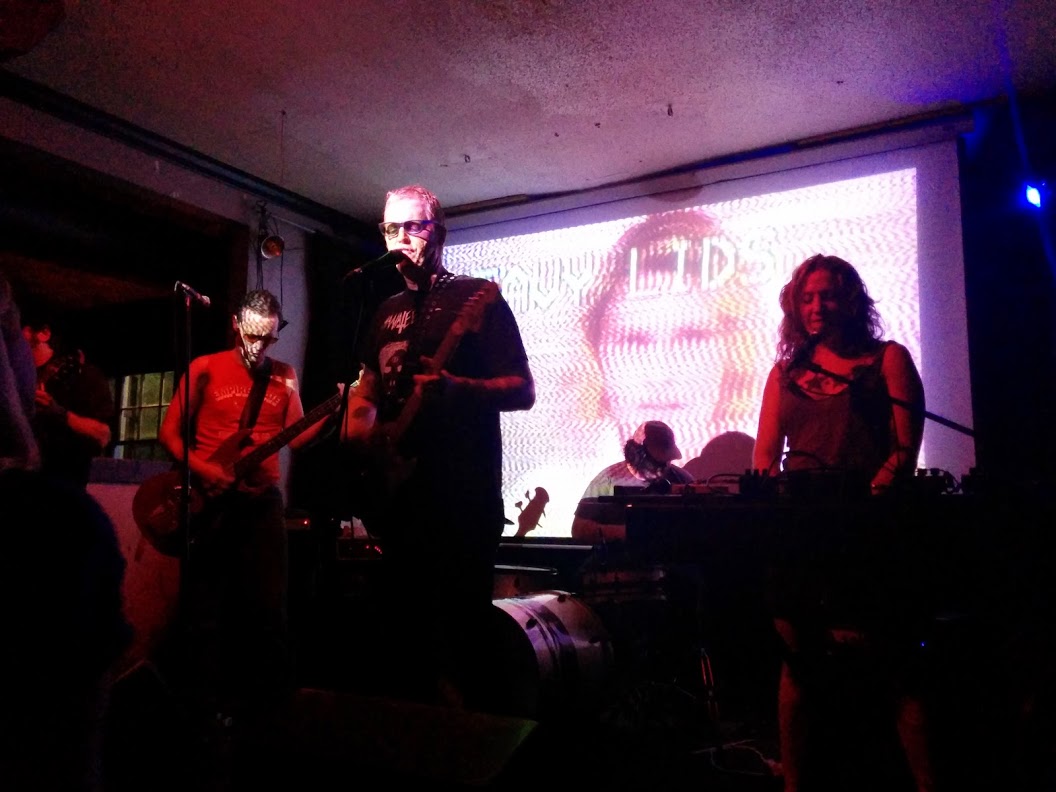
Heavy Lids (above)
Siberia, an old-school punk dive that we revelled in–no summer scarves, no beards, no preciousness, lots of smoking!–featured an amazing four-band bill: Planchettes and Heavy Lids, who must be among the best punk bands in New Orleans, the former anorexic teenage sex-god trash, the latter a casually fierce, “I don’t give a shit” unit with a great Mr. Quintron-produced 45 which we found at the stern but awesome Domino Sound, supporting the Nashville duo of Pujol, who must be the shortest band in rock and roll history but whose guitar tone drilled a hole through my brain, and–honestly, we didn’t know they were going to be in NOLA–Natural Child, whose new album Dancin’ with Wolves is their worst (they’re tryin’ to go country–why?) but who remain totally unpretentious, fun, and offer the best t-shirts in indie-dom. I count myself as easily in their Top 10 biggest fans, but they don’t give a shit–as it should be! We went in dreading enduring the huge bill, and left elated at how consistently exciting and fun the band–and, largely, the crowd–was. Props to a dude I met there named Ronin, who immediately made us feel welcome (my ancient Husker Du shirt helped).
John Boutte plays almost every Saturday night at dba’s on Frenchmen. The lay(wo)men would know him as the singer of the theme to HBO’s Treme. While not quite Sam Cooke risen to walk amongst us (as some claim), the little sprite has a very similar, though drier, delivery, and–honestly–better taste. We had suffered through douchebags standing directly behind us talking about their BMWs and cocktails when we’d seen him at Tipitina’s in NOLA in March, but dba’s insists on decorum during Boutte’s sets, and it made all the difference. He swung smoothly from anti-war song to Tin Pan Alley standard to trad-jazz NOLA to Iris DeMent’s “My Life” and Paul Simon’s “American Tune,” backed by acoustic guitar, piano, trombone, sax, and his own tambos. The man really would be a star if he chose to step out of the Crescent City, which he has no plans of doing. Respek.
We were, unaccountably, on a Marsalis kick. I find Wynton’s musical politics a sad and misguided distraction, but the family can play, and we bought tickets to see the trumpeter lead the Lincoln Center jazz orchestra at the beautiful Saenger Theater in a benefit for the Tipitina’s Foundation, which gets instruments in the hands of NOLA youth. I expected a dry performance, but the set list was inspired (nice onscure Brubeck and Silver, plus some Marsalis originals), and Wynton, really getting off on his mute and vocalizations, came off as a true and proud and funky son of the city. Two nights later, we found ourselves at the Royal Sonesta, watching Jason Marsalis’ vibes group nail a bunch of Monk tunes and being blown away by Justin Faulkner, one of the best young jazz drummers (along with New Orleans’ own Joe Dyson) that I’ve seen–look for him in the upcoming film about Buddy Bolden. He is the son of Art Blakey and Roy Haynes, if that means anything to you.
Records: four blew me away. Two 45s: a limited edition split-single where local boho-community booster-weirdo-organist Quintron does nouveaux-zydeco Keith Frank’s awesome and inspirational “Haterz” on the “B,” and Cajun heroes Steve Riley and the Mamou Playboys do Quintron’s addictive “Chatterbox” on the “A”; and a great 1971 single by eccentric Lousiana bluesman/ex-con Robert Pete Williams, where, on the “A,” he says goodbye to Slim Harpo with stinging and unusual slide-playing, and, on the “B,” addresses our involvement in “Viet Nam.” I casually snapped it up for $10, only to find it was going for $30-40 in the collectors’ market. That shit makes no difference unless the music wails–which, here, it does. One LP I scarfed up collected the great NOLA trumpeter Henry “Red” Allen’s accompaniments of ’30s blues singers. Allen wasn’t Satchmo, but he had plenty of subtle and ecstatic moves. Finally, I got a 300-copies-only cassette comp of the best of the aforementioned Mr. Quintron, which, to my ears, is a) perfectly selected, and b) perfectly timed, since I just bought a new Denon dual cassette deck for $25 on eBay.
Finally, I met a small passel of locals at the Envie Cafe on Decatur–one of which had previosuly just been a cyberfriend, but who, in physical space, was even more interesting: a former stud wrestler, a master geneologist, and stellar record collector (I suspect him of being former CIA). He introduced me to his morning band of caffeinated reprobates, and I learned very, very much–about James Booker, Wynton Marsalis, Algiers Point, 504 Records, much, much more.
If you ain’t been, you really ought to go.
6. There are only two records that matter this year: Wussy’s Attica!, which is passionate and mysterious as rock and roll has not been for a long time, and Allen Lowe’s Mulatto Radio: Field Recordings 1-4. I’d like to say one thing about the latter (well, maybe more than one): read Lowe’s great book American Pop: From Minstrels to Mojos, which explains better than anything our tangled musical legacy, listen to the nine-disc audio companion, then load up his new four-disc set, lean forward, and revel in how he and his mutating jazz units (featuring players like Matthew Shipp, J. D. Allen, Lewis Porter, and the raw, ebullient-toned Lowe himself, on alto sax) try with all their might to live up to that legacy. All that’s missing, Allen, is a fiddle. Props are also extended to Bo Dollis, Jr’s A New Kind of Funk and the Jenny Lewis single “Just One of the Guys,” which transcends the too-polished album it’s attached to with real live commentary about being a rock and roll woman.



 Living To Listen