It’s hard to hold down a blog when you have two real jobs. But the need to separate the wheat from the chaff, and to tug underrecognized music out of the clutches of time’s dustbin, never wanes.

Khaira Arby: Timbuktu Tarab (Clermont Music) Arby jumps out of the otherwise simply excellent Festival Au Desert concert recording with a possessed vocal that, though I do not know the Tamashek language, sounds like freedom to me. After two months of fruitlessly searching for more of her recordings–she’s a match for Mariem Hassan , if that name means anything to you, which it should–I stumbled upon this, apparently her only other available recording. Not only is she consistently in the same powerful form that she demonstrates on the the concert track, but her band is stellar, more shifty and demonstrative and less trancelike than Tinariwen and other “desert blues” stalwarts. Especially the guitar. Yeah: driving guitar and heart-stopping female singing–where you gonna go to get that these days?
Serengeti/Kenny Dennis: “Rib Tips” (video, produced by Jel and Odd Nosdam) Chicago’s favorite recovering alcoholic/lost ’90s MC/Ditka-head/hip hop alter-ego returns with another contagious, oddball video from last year’s Kenny Dennis EP. Possibly, he’s too quirky or silly or ramshackle for you; me, I find him an addictive antidote to the heavily constructed, brightly polished, vulgarly materialistic run of mainstream rap. Oscar Wilde: “Life is too important to be taken seriously.”

Johnny Adams: The Soul of New Orleans (Fuel) This compilation catches the legendary Tan Canary, possessed of a rich vibrato redolent of Billy Eckstine but, more scintillatingly, a dry falsetto that lends his every recording an aspect of suspense, between his early years as a New Orleans r&b hitmaker (the stone-classic “I Won’t Cry,” “A Losing Battle,” “Please Release Me”) and his valedictory Sinatra-goes-soul sessions with Rounder. The time? The Seventies. The label? Hep’ Me. The producer? The legendary Senator Jones, who threw everything at Adams that might be a hit, in many cases country, which he handles with depth, care, and passion, and occasional disco and milder dance music, which he attacks like a pro (he gets away a strobe-lit “Spanish Harlem”). Couched among many strong performances are two more stone classics, “After All the Good is Gone” and “Hell Yes, I Cheated” (though this version substitutes “Oh” for the unmentionable hot place). The powers that be need to put together a cross-label best-of to cement Adams’ reputation in Soul Valhalla.

Fats Domino: In Concert (Mercury German import) I know what you’re thinking: Wouldn’t a live Fats album sound pretty much like a Fats studio album? True, he had a sound and a method and he stuck to it like glue. The further truth is, on this mid-Sixties performance, you get some bonuses: his charming patter, some relatively wild piano solos, and–here’s the kicker–covers of fellow Crescent City legends Professor Longhair (who’d pay him back later on “Whole Lotta Lovin'”–see below) and Guitar Slim–as well as Tony Bennett! If you’re a fan, and if you’re persnickety about live albums, it’s worth your time and money.

Professor Longhair: The Last Mardi Gras (Real Gone Records) It may be tainted by the guiding hand of Albert Goldman, but I believe he has degraded to atoms, so, if you’re new to Fess, this is a great place to start: he’s heated up in front of a live audience, Uganda Roberts is on congas–they are one of the great R&B instrumental pairings!–the horn section sounds like it’s just hit the sweet spot of a Friday night buzz, and the song selection is Longhair’s hits sprinkled with bawdy house classics. AND the audio is splendid. Learn why he earned that title.
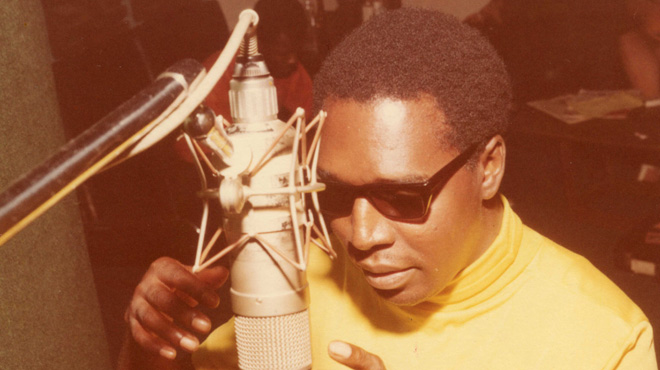
Muscle Shoals (PBS Documentary, directed by Greg “Freddy” Camalier) I was disappointed when the first three voices we hear in a documentary about one of the great studios of the American South are those of Brits (!?), including that insufferable horner-in, Bono, but the film recovers to lift the veil on the fascinating and turbulent career of founder Rick Hall, the kinship and acumen of the Swampers (like the Funk Brothers and the Wrecking Crew, with mountains of hits to their quiet credit), and the sessions that produced such hits as “I’ve Never Loved Man (The Way That I Love You”),”I’d Rather Go Blind,” “Patches,” and “In the Midnight Hour.” Even music obsessives already familiar with the Fame/Muscle Shoals studio story may not know about the precise moment “Southern Rock” was invented; that anecdote alone is worth the two hours’ time of the movie.

Deerhoof (w/Marc Ribot)/Ceramic Dog: Who Sleeps, Only Dreams (Northern Spy Split Single) One of only two Record Store Day purchases I made this year–and I confess, I bought ’em on line Sunday morning because I didn’t really have a choice. I am a straight sucker for the havoc Ribot wreaks on guitar, on Side A here alongside Deerhoof and Side B with just the most recent of his many underrated projects, Ceramic Dog. No guitarist with a sound this beautifully ugly has moved so effortlessly across r&b, cabaret rock, lounge/avant garde/chamber/free jazz, strict accompaniment, and experimentalism. This single belongs. Try an earlier Ceramic Dog recording on for size to test the waters:
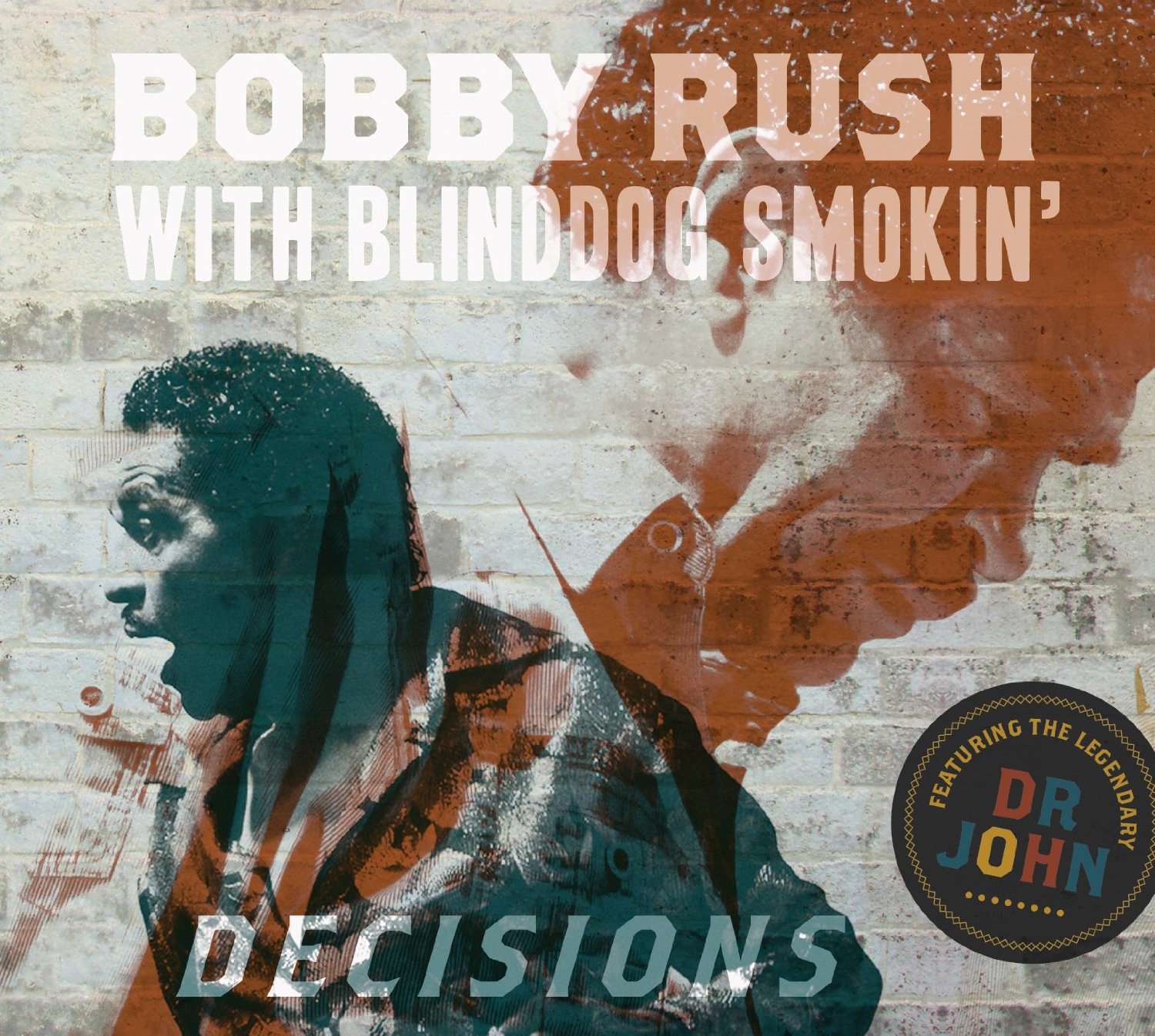

Bobby Rush: Decisions (with Blinddog Smokin’) (Silver Talon) and Upstairs at United (453 Recordings) Since he appeared at the high school I teach at and knocked a Tuesday evening crowd of students, their parents, and grandparents out cold with an old-school set of dirty-old-man blues–yep! in a public school!–Rush, the inventor of “folkfunk,” has been my hero. At 73, he shows no signs of slowing down, having just released a VERY solid full-length record featuring a dark Dr. John cameo as well as a 12″ four-song EP for Record Store Day, courtesy of the otherwise-pretty-indie “Upstairs at United Series” (on which he covers The Beatles and Eddie Floyd, writes a great new one, and reconfigures one of his own chestnuts). Never really mentioned in the same breath as his contemporaries, of which there are fewer with each passing month, Rush deserves our full attention–don’t wait ’til the heartbeat stops!–and, if you have a chance to see him live, you will see a 19-year-old in Grandpa’s body (along with, no doubt, a pair of women’s undies that belong in the Guiness Book of World Records).

Wussy: Attica! (Damnably) I wrote about this one a few weeks ago. After a third focused listen, I am convinced it is the most passionate new work of what is still called rock and roll–in fact, my favorite new record of the year so far in any genre. If you enjoy the thrill of witnessing a very good band taking the next step–to greatness, to record-making, to artistic unity–you’ll want to check it out when it’s released later this month. And you’ll want the other records just to fully appreciate that witnessing. I’m just sayin’.
 Living To Listen