Good to My Earhole (and Other Music-Related Phenomena): Last Half of July–and I got my month right!

Feet in Street

“I bet I know how many kids your dad had…”

For those few of you who may have wondered where I’ve been, it’s been to the Land of the Uninspired as well as to the opposite–the American South, specifically New Orleans (again!). I am trying to get the hang of regular blogging; my life-energy is too variously diffused, I think, to write every day, but I am a creature of routine. If I am IN a routine–I mean IN–you can count on me like the sunrise. But if what I am involved in has an irregular pulse, I am likely to fade. So I am fighting this. I would also like to clarify that this is a music blog that, really, is aimed at people like me (life-energy variously diffused) who don’t have time to be music-obsessed (though I find time because I am helpless). So, for example, if I mention Mr. Quintron, to whom many would now react with a gargantu-yawn…well, I am not writing at you. OK, enough. My life does revolve around music, so here’s what has happened since I last made contact.

1. I saw Johnny Winter with a colleague whose mother taught him English in high school in Beaumont, Texas, and who had Johnny’s brother Edgar (I am sure you have heard of him) as a–wait for it!–but it should not be a surprise!–Sunday school teacher. My buddy got to say hi at an otherwise depressing meet-and-greet (where to hold one these days? in a store specializing in video games!), then we went to the show, where either the sound guys at the venue-that-shall-not-be-named fucked up the mix, or the mix was designed to disguise Johnny’s age-and-illness-related struggles. It was not a bad show, but you couldn’t tell what Johnny was singing (“Bill Haley preaching Armageddon,” Lester Bangs once wrote of his performance on 1969’s Second Winter), and you had to watch his fingers (we were in the balcony) to tell if he was soloing. Barely a week later, he was a gone dead (silver) train. Did he matter? Listen to this:

Also, below, is a great picture of my friend, looking perfectly Sunday-school-defiant, standing in front of the teenaged Edgar “Frankenstein” Winter:

Sunday school

2. I adore Western Swing–Bob Wills’ 1946-7 version of the Texas Playboys is as close as I think that products of Western civilization have ever gotten to fully realized–and, if you don’t count the late, ineffably great Canuck Ray Condo and his Ricochets, I had never seen or danced to such a band live. It materialized that I got a chance to see Asleep at the Wheel, to my mind the world’s best and maybe last Western Swing band. Well, they only had one fiddle, they didn’t play a song from their great early records The Wheel and Comin’ At Ya, and they didn’t play either of their classic Kinky Friedman covers, which are important since a) Kinky cannot sing, and b) he is a cowboy-hatted Jewish Texas country-singer, crime fictionalist, animal-lover and channeler of Mark Twain. ASSIGNMENT: look up Asleep at the Wheel’s beautiful run at “Before All Hell Breaks Loose,” in which Kinky advises resigning from the human race, and “Homo Erectus,” in which Kinky gets wood for a teacher. They played OK, but we didn’t dance. That’s the measure.

3. We did not make a second visit to Fred and Annie Mae McDowell’s grave on Tate-Panola County Road between Senatobia and Como in Mississippi. We had hoped to make a practice of keeping them clean–on our first visit, Annie Mae’s grave was littered with butts and other detritus–but we realized only three months had transpired since our first visit. We are going to make it practice, but instead we went to the Como, Mississippi, library and saw some great North Mississippi Hill Country photos on the wall. If you’re ever in Como, stay in the Como Inn and go to their library.

4. Nicole, my wife, who is gamely, heroically, and intelligently struggling with the recent passing of her mother (and, really, she has no other) from brain cancer, loves New Orleans even more than I do–and people, I was born to love it–so we booked about a week at the highly recommended Frenchmen Hotel in the heart of the Marigny on Frenchmen Street, which, if you don’t know, is where you end up if you keep walking east past the French Market and out of the Quarter. I had a nice conversation with Jan Ramsey, the editor of Off Beat!, the guide to avoiding tourist shit and having fun local-style (it’s free in NOLA, but we pay to subscribe here in Misery), whose office is above the great Louisiana Music Factory, which was right next door to our hotel, and she was concerned with our experience on Frenchmen Street: “Was it just a touristy extension of the Quarter?” is what her concern was. Yeah, tourists find their way there, BUT, first, Frenchmen Street and the Marigny is the bohemian version of the Quarter (think about that), and it is virtually all music venues that are devoted to local acts, which, in New Orleans, deliver.

5. When in New Orleans, you must see and hear music. Every genre is represented, and not as a passing-through thing. We had a series of literally (in other words, I am not writing figuratively) mesmerizing live experiences:

Ellis Marsalis, one of the city’s first modernists, slyly guiding us through a mixture of Tin Pan Alley, bebop, post-bop, and modernistic pieces at Snug Harbor (go! go!), with his youngest Jason drumming and exchanging wry looks and strangely autistic rhythmic responses throughout.
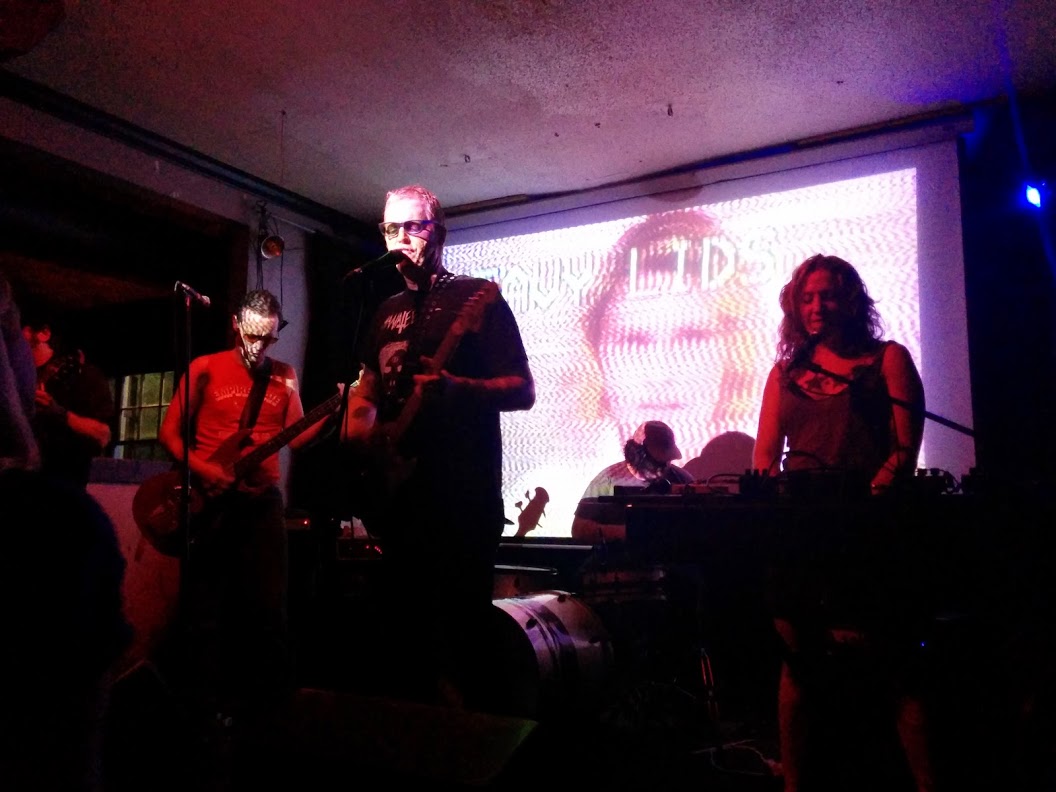
Heavy Lids

Heavy Lids (above)

Siberia, an old-school punk dive that we revelled in–no summer scarves, no beards, no preciousness, lots of smoking!–featured an amazing four-band bill: Planchettes and Heavy Lids, who must be among the best punk bands in New Orleans, the  former anorexic teenage sex-god trash, the latter a casually fierce, “I don’t give a shit” unit with a great Mr. Quintron-produced 45 which we found at the stern but awesome Domino Sound, supporting the Nashville duo of Pujol, who must be the shortest band in rock and roll history but whose guitar tone drilled a hole through my brain, and–honestly, we didn’t know they were going to be in NOLA–Natural Child, whose new album Dancin’ with Wolves is their worst (they’re tryin’ to go country–why?) but who remain totally unpretentious, fun, and offer the best t-shirts in indie-dom. I count myself as easily in their Top 10 biggest fans, but they don’t give a shit–as it should be! We went in dreading enduring the huge bill, and left elated at how consistently exciting and fun the band–and, largely, the crowd–was. Props to a dude I met there named Ronin, who immediately made us feel welcome (my ancient Husker Du shirt helped).

John Boutte plays almost every Saturday night at dba’s on Frenchmen. The lay(wo)men would know him as the singer of the theme to HBO’s Treme. While not quite Sam Cooke risen to walk amongst us (as some claim), the little sprite has a very similar, though drier, delivery, and–honestly–better taste. We had suffered through douchebags standing directly behind us talking about their BMWs and cocktails when we’d seen him at Tipitina’s in NOLA in March, but dba’s insists on decorum during Boutte’s sets, and it made all the difference. He swung smoothly from anti-war song to Tin Pan Alley standard to trad-jazz NOLA to Iris DeMent’s “My Life” and Paul Simon’s “American Tune,” backed by acoustic guitar, piano, trombone, sax, and his own tambos. The man really would be a star if he chose to step out of the Crescent City, which he has no plans of doing. Respek.

We were, unaccountably, on a Marsalis kick. I find Wynton’s musical politics a sad and misguided distraction, but the family can play, and we bought tickets to see the trumpeter lead the Lincoln Center jazz orchestra at the beautiful Saenger Theater in a benefit for the Tipitina’s Foundation, which gets instruments in the hands of NOLA youth. I expected a dry performance, but the set list was inspired (nice onscure Brubeck and Silver, plus some Marsalis originals), and Wynton, really getting off on his mute and vocalizations, came off as a true and proud and funky son of the city. Two nights later, we found ourselves at the Royal Sonesta, watching Jason Marsalis’ vibes group nail a bunch of Monk tunes and being blown away by Justin Faulkner, one of the best young jazz drummers (along with New Orleans’ own Joe Dyson) that I’ve seen–look for him in the upcoming film about Buddy Bolden. He is the son of Art Blakey and Roy Haynes, if that means anything to you.

Records: four blew me away. Two 45s: a limited edition split-single where local boho-community booster-weirdo-organist Quintron does nouveaux-zydeco Keith Frank’s awesome and inspirational “Haterz” on the “B,” and Cajun heroes Steve Riley and the Mamou Playboys do Quintron’s addictive “Chatterbox” on the “A”; and a great 1971 single by eccentric Lousiana bluesman/ex-con Robert Pete Williams, where, on the “A,” he says goodbye to Slim Harpo with stinging and unusual slide-playing, and, on the “B,” addresses our involvement in “Viet Nam.” I casually snapped it up for $10, only to find it was going for $30-40 in the collectors’ market. That shit makes no difference unless the music wails–which, here, it does. One LP I scarfed up collected the great NOLA trumpeter Henry “Red” Allen’s accompaniments of ’30s blues singers. Allen wasn’t Satchmo, but he had plenty of subtle and ecstatic moves. Finally, I got a 300-copies-only cassette comp of the best of the aforementioned Mr. Quintron, which, to my ears, is a) perfectly selected, and b) perfectly timed, since I just bought a new Denon dual cassette deck for $25 on eBay.

Finally, I met a small passel of locals at the Envie Cafe on Decatur–one of which had previosuly just been a cyberfriend, but who, in physical space, was even more interesting: a former stud wrestler, a master geneologist, and stellar record collector (I suspect him of being former CIA). He introduced me to his morning band of caffeinated reprobates, and I learned very, very much–about James Booker, Wynton Marsalis, Algiers Point, 504 Records, much, much more.

If you ain’t been, you really ought to go.

6. There are only two records that matter this year: Wussy’s Attica!, which is passionate and mysterious as rock and roll has not been for a long time, and Allen Lowe’s Mulatto Radio: Field Recordings 1-4. I’d like to say one thing about the latter (well, maybe more than one): read Lowe’s great book American Pop: From Minstrels to Mojos, which explains better than anything our tangled musical legacy, listen to the nine-disc audio companion, then load up his new four-disc set, lean forward, and revel in how he and his mutating jazz units (featuring players like Matthew Shipp, J. D. Allen, Lewis Porter, and the raw, ebullient-toned Lowe himself, on alto sax) try with all their might to live up to that legacy. All that’s missing, Allen, is a fiddle. Props are also extended to Bo Dollis, Jr’s A New Kind of Funk and the Jenny Lewis single “Just One of the Guys,” which transcends the too-polished album it’s attached to with real live commentary about being a rock and roll woman.

THE THREE-SIDED DREAM: A Must-See Film About Rahsaan Roland Kirk

Roland

Blinded as a newborn by hideously incompetent medical personnel, discovering sound possibilities as a youth by blowing through the cut-off end of a garden hose, dreaming of playing multiple horns simultaneously then soon after finding the perfect (and antique!) horns in a pawn shop basement, and, unaccountably, willing himself into one of the most unique and passionate players in jazz during a decade (the Sixties) of abundant uniqueness and passion, Rahsaan Roland Kirk should have been the subject of a feature-length documentary a long, long time ago. True, Dick Fontaine’s 25-minute 1967 documentary Sound??, featuring Kirk and John Cage making a compelling and wryly humorous case for sound as music, is a cult classic–the footage of Kirk serenading wolves at the London Zoo and rocking the hell out of his classic “Three For the Festival” at Ronnie Scott’s can make a benighted viewer a lifelong fan. Rhino’s issue of Kirk’s wonderful 1972 Montreaux concert is also a piece of essential viewing for any jazz freak. But the inspiring and tragically short life of Kirk is one of the most gobsmack-inducing tales in music, and director Alan Kahan has done it proper in The Three Sided Dream. See it as soon as you get the chance; my sources tell me Kahan’s having difficulty finding screenings for it, and that’s a completely unjust situation for him and his film.

Honestly, having been a Kirk fan for many years, seen, heard, and read everything about him I could get my hands on, and experienced a few more unimaginative music documentaries than I would have liked, I walked into the film with, well, meager expectations. That is, I figured I’d see footage I was already familiar with, hear a procession of talking heads retell Kirk’s life story, and miss some important information (likely, I thought, about his politics) that might have made the film and the artist’s portrait more complex. I’m happy to report that Kahan’s film is a major success. Mainly, he invests it with such emotional power, through his handling of Kirk’s struggles with critical misunderstanding, racism, and blindness (the latter, wonderfully, seems the least difficult challenge Kirk faced!) and his integration of Dorthaan Kirk’s home movies of her husband and children, that I–and other viewers–struggled with tears of inspiration throughout the movie. Also, the talking heads here almost always have something insightful and interesting to say, especially trombonist Steve Turre, who played in Kirk’s band after the hornman suffered a stroke that would have ended the career of 99.5% of other musicians but which failed to completely derail Rahsaan. Turre’s sense of humor and wonder, and his trove of concert stories, are a cut above the usual music-doc fare. Mrs. Kirk’s recalling of her life with Rahsaan–especially her reflections on his post-stroke struggles–are also major highlights of the film. Though I had seen roughly half of the footage Kahan unearths for The Three Sided Dream, what I hadn’t seen was often revelatory, especially a full, spectacular performance on The Ed Sullivan Show, the story behind which is worth the price of admission–and you will have to pay it to find out. Most important, Kahan lets the voice of Kirk–visionary, witty, angry, playful, the voice of a true old soul–tell most of the story.

I have few quibbles about the film. I initially felt the long, initially-uncredited reminicense/assessment of Kirk by a modern poet that opens the film unnecessarily hindered its momentum; upon reflection, it now seems equivalent to a good theme-setting introduction to a book. One sequence includes Kirk’s famous (and amazing!) combining of “Sentimental Journey” and a segment from Dvorak’s New World Symphony–he plays the melodies simultaneously on different horns and harmonizes them, with spectacular results–but the narration and animation run over the actual performance, so that when we are left alone to hear the music, Kirk’s moved on from his experiment to a new melodic expression. But, as I said, those are mere quibbles.

I cannot overstate how powerful this movie is. It hit me so hard I was still feeling sorrow (along with an overpowering desire to listen to Kirk all of this week, which I will) an hour after I walked after the theater–that Kirk died at 42 is just a cruel theft of (or by?) the cosmos. As well, I felt immense joy and inspiration in beholding a story of titanic artistic and personal accomplishment against towering odds. I cannot quite imagine the impact it will have on open-minded, open-eared music fans who know nothing of Kirk’s life and music. Do your best to seek this film out and see it; consider, as well, the possibility of helping the filmmaker get The Three Sided Dream to a wider audience.

Note: Upon having seen the film–or, perhaps, in preparation for it–read John Kruth’s engrossing Kirk biography Bright Moments, and try these classic Kirk recordings just to get started (there’s more):

We Free Kings  (Mercury)

Rip, Rig, and Panic (Mercury)

I Talk with the Spirits (Verve)

The Inflated Tear (Atlantic)

Volunteered Slavery (Atlantic)

10 Reasons to Read Amanda Petrusich’s DO NOT SELL AT ANY PRICE

donotsellatanypricecoverimage

I had been eagerly awaiting the release of this book. I am a man who has no resistance to enthusiasm–I prefer it, in fact, to appearing cool, by a long shot–and a serious, 35-year record-collecting habit that’s led to an 8,000-unit collection tentacling through my domicile. My only 78s are a little Ernest Tubb “book” from the early ’50s, but the collectors chronicled here have long been heroes of mine, having made it possible for me to hear Jim Jackson’s “Old Dog Blue,” Blind Willie Johnson’s “Dark Was the Night, Cold Was the Ground,” and countless other heart- and mind-piercing classics from before Hitler permanently darkened the world. In fact, my only worry about reading the book was that I’d go on auto-pilot, since I’d already read much by and about Harry Smith, Joe Bussard, John Fahey, and R. Crumb (who’s not profiled here, for good reason). That mild anxiety, joined with my tendency to self-start, my voracious and ominivorous regular reading habits, and my almost-hysterical imagination of the contents of a future book about which I’ve become interested–well, I was prepared to be disappointed. Ms. Petrusich, however, did a wonderful job on a difficult task. The proof of the pudding is I devoured it in two days, and I’m a busy guy.

As a bow to her chapter on the links between gender (and disabilities such as OCPD, Asperger’s and autism) and record collecting, being a man, I will present you a list of 10 reasons why you should read Amanda’s book:

1. She is very fair to a parade of (mostly) weird, old white guys who would alienate most people–even the mysterious and not particularly hygienic Don Wahle. As alienated as many of these collectors are, she imparts them with dignity.

2. She learns to scuba dive, braves foggy, twisty Appalachian roads, fends off lecherous truckers, suffers stomach viruses, seldom gets to draw on sisterly support, has to endure a thirty-year-old hipster with a bowler hat and pocket watch, and sits still under the imperious gaze of every collector who demands total silence while a record’s being played–just to bring us this book.

3. She very deftly blends thorough research, probing interviewing skill, bemused humor, both aesthetic and psychological analysis, skepticism, deep curiosity, and the time-honored quest narrative.

4. She will send you hurrying back to your own collection (or to your purchasing wish list) with her descriptions of piquant songs–and you will be surprised and enlightened, no matter how well-versed you are. For me, it was to learn the history of “Skokiaan,” a song I love in its current interpretation by The Pope of NOLA Kermit Ruffins, but didn’t know the history of. An iron law of music books: it must lighten your wallet and enrich your aural store.

5. This is a subject that could easily have been presented with great (and fatal) sobriety and convolution. Ms. Petrusich succeeds in navigating it with delight and clarity–the delight especially rubs off.

6. She can write a great chapter heading (and subtitle), then justify it.

7. She’s from Brooklyn, and you never feel hipped out to the margins.

8. These days, it seems like every non-fiction writer is required to incorporate brain research into her text, but, by the time Petrusich reaches that chapter, you feel it’s…necessary. In fact, you will probably have developed your own theories, which she will make it fun for you to test.

9. She is moved to buy 78s herself.

10. Regarding the matter of what makes a performance great, after a little wrestling, she seems to side with Dionysus as opposed to Apollo. This appears to be because, according to the research, she’s a woman, but Joe Bussard and I stand here to cry that you can make research say whatever you like. It won’t trump the joy that roars from ear to heart to extremities.

Follow Amanda on Twitter, and, until Amazon chills out, grab her book from one of the OTHER choices listed here.

Chris Butler’s EASY LIFE–This record has leapt into my 2014 Top Ten!

easycov

This is easily one of the most interesting, thoughtful, and unique rock and roll records of the year. If you like power pop, experimentation, albums where the artist reflects on his past (especially when that past includes–on a very personal level–the Kent State murders), that special brand of rocking that comes from Ohio–well, this is for you. I would write about it further, but Ken Shimamoto at The Stash Dauber, who drew my attention to it and is more astute than I, said it better right here.

Good to My Earhole: 2,119-Mile Texas Trip

As is my habit, I set up a 400-song folder of Texas songs on our car’s iPod. In addition, I packed the audiobook of John Waters’ CARSICK, knowing it would be riddled with the cracked songs that are like illicit delicacies to The Prince of Puke. Here were our standout musical moments:

Jimmie Dale Gilmore: “Reunion” (with Lucinda Williams), “Just a Wave,” “Bhagavan Decreed” (with The Flatlanders)

We have long been familiar with this one-of-a-kind Texan, who fuses Eastern religion with the honky tonk upstairs, and Marty Balin (!) with Hank Williams Sr. But as many of you surely know, in close quarters and on long drives, songs you thought you knew cold unfold in new ways, or simply splash cold water in your face to remind you how great they are. Respectively, Jimmie a) tells his departing lover (via death? break-up?) that the Cosmos does not allow for true parting; b) is told by a departing lover that, however strong his love is, it is only a few cubic feet of what she needs and wants from the other waves (I emphasize the plural) in the ocean; d) reminds the profligate apple of his eye that “the highest place is under ground.” Sui generis, baby, sui generis.

Lightnin’ Hopkins: “Needed Time”

Have heard it a million times, always figured it was the original “Kumbaya” before it got clumsily Africanized by uncomprehending Christian Caucasians, then got pulled up short by what I think has been a mishearing on my part: “Now is a needed time.” Always thought it was “Now that I’ve needed time.” Just a slight adjustment makes it more desperate, more humbly pleading, more communal–even more of a masterpiece, one among many created by ol’ Sam. I could be wrong, but, sorry, folks, from here on I will choose to be.

Various Artists: John Waters’ CARSICK (unofficial soundtrack not yet available, but buy the book directly from Atomic Books, please!)

Waters has a killer record collection–I have seen part of it–and it makes an impact on everything he films and writes. The tunes in Carsick mostly energize the “Good Ride” and “Bad Ride” fantasies that precede his true tale of Baltimore-to-Frisco hitchhiking, and, after dutifully listening carefully and tracking all the songs on YouTube (not all are available there, a tribute to Waters’ eye for the obscure), I was dismayed to find the entire track listing helpfully supplied by the author at the end of the hard copy. It ain’t Texas music, but it kept us sane driving through that endless state:

Soundtrack

Note: the book itself is excellent–among the many things it is (which includes severely aberrant), it is a warm testament to the decency and good cheer of the random citizen of the Yew Ess Ay! I shit you not!

Blind Willie Johnson: “God Moves On the Water,” “Take Your Stand”

The great intinerant country gospel singer whose “grain of voice” makes Howlin’ Wolf’s sound like Michael Buble (well, I am exaggerating a little) probably/maybe hailed from Marlin, Texas. I will let the scholars wrestle, but, upon traveling through Marlin, we could hear his wail whipping around the little town–and it’s 2014, not 1930.

Joe King Carrasco and the Crowns: “Let’s Get Pretty,” “Buena”

As Nicole and I forayed into Austin with fearsome one-man-band and fellow WordPress blogger John Schooley to dig in the local crates, I expressed enthusiasm about finding a particular vinyl copy of one of Joe’s early albums. Without missing a beat, John responded, “You can find it in any dumpster in Austin.” Ouch. Well, along with the B-52’s and maybe Quintron and Miss Pussycat, the Crowns were among the last of the great, great, great rock and roll party bands (just for example, their catalog of prime big-beat hedonism is a lot deeper than the Fleshtones–and they recorded with Michael Jackson!), they are eternally honored in my heart, and–NOPE, didn’t find what I was looking for in a dumpster OR at End of An Ear OR Antone’s (though I did find an autographed copy of their killer Hannibal label record at the latter, but then lapsed into a Lockhart BBQ hangover and forgot to grab it, buying instead a Johnny Bush-Willie Nelson duet album I already owned). Resist this:

Ornette Coleman Quartet: “Ramblin'”

Goodbye, RIP, Charlie. He, one of jazz’s greatest bassists, was from Missouri and Iowa, Ornette from Fort Worth. As a tribute to his life that just ended, listen carefully to these euphonious musical radicals play the honkin’ Texas blues as freely as the sky spreads, and listen to the late Mr. Haden insert a little Elmore James into the mix.

Rosie Flores: “Cryin’ Over You”

While in Austin, we also visited the teen-incey Ginny’s Little (I Mean Really Little) Longhorn Saloon, where we saw an old musical friend holding forth on The Fourth: Ms. Flores. As we entered, she was kind of slogging through a version of Dave Alvin’s “Fourth of July,” then she took a break. After we (and she, quite likely) tipped a few cold bottles of Lone Star, she returned to the stage invigorated. Just a tiny thing, with reading glasses on and a music stand in front of her, cute as a goddam bug, she ripped into this old song of hers, and raised even the jaundiced eyebrows of our host with a sizzling solo. As soon as I got home to Columbia (a week and a day later), I had her first record on the turntable. If you’re in Austin on a Friday night and she’s got the bill, proceed post haste to the above locale. The crowd will be there for a decent reason, the beer is cold and cheap, and you can dance to her! In the meantime, dig this corny but sweet official video for the above.

The Sir Douglas Quintet: “Texas Me”

For us at least, no trip to Texas could be complete without a goodly helping of the music of Doug Sahm’s deceptively talented fake-Brit-Invasion group. Sahm (the ur-Willie), abetted by his fellow South Texans and Tejanos, could do damn near anything classified as American music, such as here–blithely and cooly melding loud fiddle, horns, piano triplets, and soul singing. If you ain’t already, GET FAMILIAR with the ways of Sahm.

Rock In Real Life: Hot Day in Velma

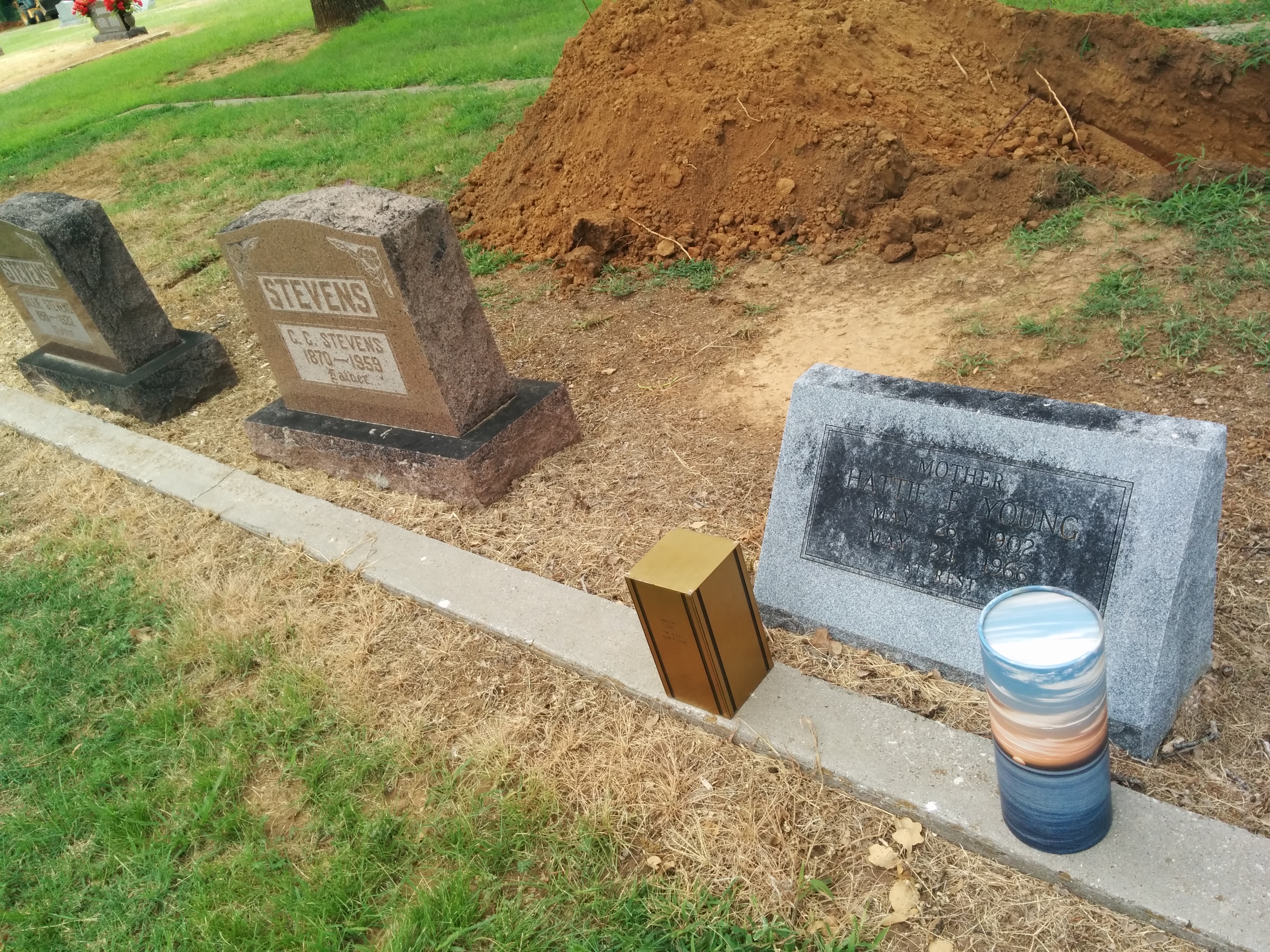
July 9th was a hot, dry day in the little Oklahoma town of Velma. My wife Nicole and I had come there to inter the ashes of her mother, Lynda Evers, who passed away from brain cancer last December, and of her grandmother, who died of leukemia in 1992, in the grave of her great-grandmother Hattie Young, which was located in the old Velma cemetery. Velma’s situated between Ada and Duncan in the southeastern portion of the state; no relatives were near, nor did we know anyone who could attend or assist with any service we might desire, so, as it so often was during Lynda’s battle, it was just us. To a great degree in our quarter century together, that’s how we have preferred it, but it had special meaning in this situation. At our hotel in Ada, we sketched out what we felt was a meaningful service.

After a local had dug out a spot in which we could lay the two urns, we drove to the old cemetery. Nicole read a poem by Emily Bronte, entitled “Encouragement.” It had come to her by an odd path, the kind of path we are used to in public education. I had assigned one of our mutual students Ms. Bronte as a British poet to research and study–particularly her poems. The student, needing help with the project, came to Nicole with one of the few Bronte poems she was comfortable with, as a starting point. Nicole wasn’t familiar with the poem, but, as she was battling through the grieving process at the time, it had powerful, beautiful and terrible resonance with her as she read it:

I do not weep; I would not weep;
Our mother needs no tears:
Dry thine eyes, too; ’tis vain to keep
This causeless grief for years.

What though her brow be changed and cold,
Her sweet eyes closed for ever?
What though the stone–the darksome mould
Our mortal bodies sever?

What though her hand smooth ne’er again
Those silken locks of thine?
Nor, through long hours of future pain,
Her kind face o’er thee shine?

Remember still, she is not dead;
She sees us, sister, now;
Laid, where her angel spirit fled,
‘Mid heath and frozen snow.

And from that world of heavenly light
Will she not always bend
To guide us in our lifetime’s night,
And guard us to the end?

Thou knowest she will; and thou mayst mourn
That WE are left below:
But not that she can ne’er return
To share our earthly woe. (1846)

After Nicole carefully recited the poem, I read a modified passage from The Book of Common Prayer, which an Episcopal pastor in Columbia had read from as Lynda passed. We carefully lowered the urns into the grave, then I walked over to the car (parked about ten yards from the site), started it, dialed the USBed iPad to the following song, turned up the volume, and left the passenger side door open so the music could flow across the otherwise isolated burial ground.

No doubt, there is something about Shaver’s hard-won (and hard-lost) worldview that fit not only the moment, but the sixteen months (from Lynda’s diagnosis) that led up to it. Neither Nicole and I are certain about what lies beyond earthly life, but the feeling Billy Joe bull’s-eyes in his song made it our near-unspoken choice for the ceremony’s last words. The version we played was not the one from the video above; it was a live version (from the classic Unshaven: Live At Smith’s Olde Bar) that ended with applause, which, given the solemnity of the occasion, may seem to have been inappropriate, but, considering the path of Lynda’s life out of this isolated Oklahoma geography to coast-to-coast nursing of the less fortunate for thirty-plus years, and to Ireland, it was perfect.

urns

Good to My Earhole: The Last Half of June, 2014

ObnoxLightnin'+Hopkins+-+1954+-+The+Herald+Recordings+-+Sealed+-+LP+RECORD-506533

I absolutely love storming guitars. That’s why I love these two rekkids.

Something old, something new. Sam “Lightnin'” Hopkins two-volume Herald Recordings (mine are on Collectables; I think they are available on other labels as well), recorded in that very significant year of 1954 (not ’55), make the Houston blueman’s claim to being a father of rock and roll–that’s how much steam he works up on classics like “Blues for My Cookie,” “My Little Kewpie Doll,” and “Lightnin’ Don’t Feel Well.” Though there are no late-night changes of paces, there are some rather amazing instrumentals, like “Hopkins’ Sky Hop.”  On Obnox’s Louder Space (on Austin’s perfectly named 12XU label), guitarist/drummer/vocalist Lamont Thomas (formerly of that unjustly obscure band of Ohioan ravers, This Moment in Black History) continues his assault on all things genteel–hey! it’s freaking taken over beyond neighborhoods, can’t you see?–with 12 hard-charging, fuzz-layered, no-let-up toons that conjure memories of prime Stooges, Big Black, and Dirtbombs. There’s a fonk-bomb called “How to Rob (The Punk Years)” (my personal favorite), there’s a redefinition of “Riding Dirty,” and the rekkid closes with a great dirge, titled, with perfect justification, “Feeling Real Black Today.” I just played the whole thing thing three times in a row. I think Lightnin’ would have loved it.

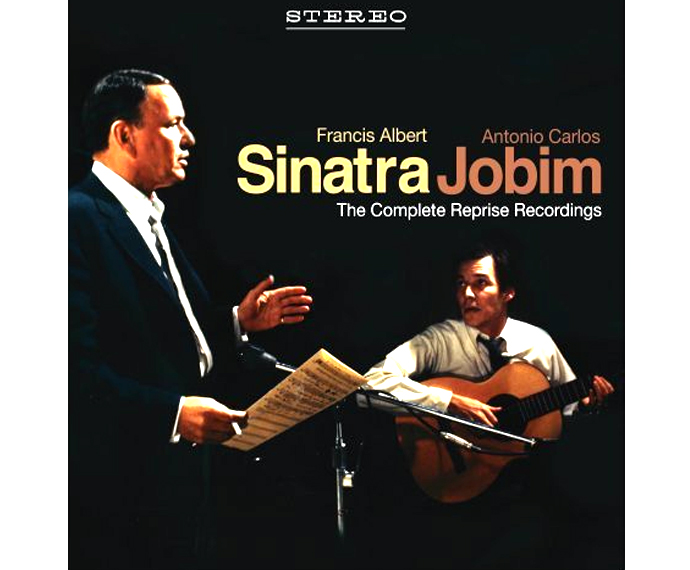
sinatra jobim the complete reprise

Frank Sinatra and Antonio Carlos Jobim: The Complete Reprise Recordings (Reprise)

I am half-deep in Will Friedwald’s Sinatra: The Song is You, which veers from near hagiography–I have never seen so many absolutes (“always,” “never”) from such an esteemed writer–to glowing, revelatory descriptions of classic sessions that argue that, in contrast to, say, Elvis, Ol’ Blue Eyes was in near-total control of his art, from modulating his justly-legendary voice to stopping sessions to make astute suggestions to producers, conductors, and musicians. When he got his own label, he went a little nuts, recording way too often with too few heads to butt against, resulting, with the help of the normal hell aging wreaks on a singer, in many records you could skip (can’t say that about his previous Capitol output). This one, though, is a real beauty. Sinatra comes to bossa nova a little late (1967–Getz got there in ’64), but I would argue this is the most fully realized statesize stab at the genre, and if you take umbrage with the claim Sinatra was a jazz singer–that his instrument was flexible to the degree of experimentation–well, gather yourself for this aural rebuttal. He’s close-miked, his every exhalation–no common matter with bossa nova!–sustained sibilance, and register-dives part of the music, and Jobim’s lighter vocal accompaniment and nimble guitar surround and respond to him just like those Nelson Riddle arrangements used to on Capitol. It’s a masterpiece. I am not sure I don’t like it better than In the Wee Small Hours of the Morning. On a vocal level alone, no self-respecting George Jones fan should be without it.

Wussy

Heartless Bastards: “Got Down Last Saturday Night” b/w Wussy: “Breakfast in Bed” (Shake It Records)

This is the third in a four-45 tribute to the Muscle Shoals guitarist Eddie Hinton. I am not a huge fan of the Heartless Bastards, but the only thing they do wrong here is wind up too early; right as you are loving it, it’s over. Actually, though, I bought this as a gamble: the original “Breakfast in Bed,” which Hinton played on but did not write, was one of the many highlights of Dusty Springfield’s Dusty in Memphis, and Springfield sings it so exquisitely, with such a lethal combination of compassion, soul, and delicate raunch, that no singer in his or her right mind should ever go near it. Lucinda Williams, the Americana Joan Baez, tried, and had her limitations ripped out and shown to her the second before she–figuratively, of course–fell dead on the studio floor. How would Wussy’s Lisa Walker, whose imprecise pitch strikes one as either extremely fetching (if you are me) or a deal-breaker (if you are just mean), fare against the memory of a singer so ethereal, hip, Southern, and, it’s true, geisha-like–at least on that one album–that many listeners didn’t realize she was white and British? Like her band (“our people,” as partner-singer/songwriter Chuck Cleaver calls them), up against similarly daunting and virtuosic predecessors in Memphis’ American Studios session men, she puts her head down and attacks the song like it’s happening to her. Ragged and passionate, she and the band do justice. An essential pickup for Wussy fans, and a victory against the insidious musical creep of technophilia and gentility.

The original, to hear what they were up against:

big Wood

The American Song-Poem Anthology (Bar/None Records)

Once upon a time, you could scribble down your song lyrics, send ’em off with a check, and professional musicians would create a song around them–even if, in your song, you thought tangerines were yellow (and your song was called “I Like Yellow Things”). I am late to the party on this strange, strange compilation, but it is oddly unsettling, and infernally catchy. Example: the title song, which at first struck me as surreal and unhinged, then earwormed me for a few days, then had its mystery revealed by my wife Nicole, who matter-of-factly stated what the difference was. I will leave it to you as an enducement to try this very American, very weird record. Do you know the difference between big wood and brush? And do you know musical geniuses killed themselves trying to make these records for people like you?

A Memory Stirred by Carl Wilson’s Celine Dion 33 1/3 Book

Image


Funny thing about this book. I was at the library picking up a hold (Song of the Shank–more on that next month, probably) and, as usual, couldn’t help looking at the new music nonfiction. Unfortunately, I’d forgotten my glasses, and my arms were only long enough for me to make out “Alex Ross,” “Brilliant,” and the title. Those sounded promising, so, I thought, why not add it to the stack? Upon arriving home and putting on my specs, I was initially dismayed to discover it was an expanded 33 1/3 entry about Celine Dion. Those things are so numerous, it’s hard to keep up with them–and, to my lights, they are seldom very good. I also noticed a Jonathan Lethem blurb, and, I’m sorry, but right now, “those guys” are not floating my boat much. Nonetheless, I chose to sample it. Not many hours later, I had finished it, and, truly, every music nut–and, especially, every music writer–should be required to read it. Wilson wasn’t a Dion fan when he took on the project (and still not much of one after); his idea was to use his distaste for Dion to examine what taste really is, and the results of his inquiry are sometimes rattling. Personally, as in Emerson’s old quote, I found many of my own past musings marched much more eloquently than I ever thought ’em back across my eyeline. The revelations Wilson makes are too numerous to go into fully here, but two fascinated me so much that, in the hours after I finished it, I began to reflect on some of the music “taste collisions” of my past. We all have bands that speak so directly to us that our responses are deeply emotional, that we can’t really think of them at a critical distance (right now, for me, that’s the Cincinnati, Ohio, band Wussy). Often, that speaking doesn’t necessarily relate to the benchmarks of high art, much less the simpler idea of good taste. Wilson, delving into both the significance of Dion’s Quebecois past to her Canadian fans and also the needs she might be fulfilling in her listeners in the wider world, writes wonderfully about how this phenomenon complicates critical assessment and discussion. Second, the author enters a long thought-tunnel concerning kitsch, and exits wondering, with great justification, whether there’s something troubling about cultural gatekeepers disparaging artists who traffic in, shall we say, broad emotions. Why, for example, should it be more critically valid to lionize artists who shine a light on the darker corners of living than to exalt those who choose to magnify the glow of the brighter ones? Now, honestly, how many of us have paused and thought that, caught short by a corny wedding song we’d never be caught dead housing in our media players?

These questions took me back to a moment in my late teens that I have often recalled. Having just finished my first year of college, where two new friends hipped me to many punk bands, notably The Ramones and Black Flag, I had returned home for the summer to work in a factory and save up some dough. Even though I had graduated from high school with “decent” taste–I was deeply obsessed with Bob Dylan, Jimi Hendrix, Neil Young, Bruce Springsteen, and Elvis Costello–I was ill-prepared (and completely, totally ready) for the worldviews of X, the Germs, Gang of Four, the Clash, and the Sex Pistols, the latter two to whom I’d listened but not “got” prior to my college exposure. I knew good and well that, returning to the small southwest Missouri town where my parents lived, I would be spending the social segment of my leisure time tolerating the music of others. Such snobs we can be when we are wet behind the ears.

One weekend night, a carload of fellow factory workers, city pool rats and I headed across the state line into Kansas, where we could legally drink 3.2 beer (main attraction), ogle and even dance with women (second by a slim margin), and bask in the glow of .38 Special, Loverboy, Head East–must I go on? This particular evening, the rest of my party had had an exhilarating time; I, on the other hand, had spent most of the evening playing the wall, grimacing during mega-Midwestern-blasts like “Hold On Loosely,” and thinking about the Minor Threat/Bad Brains mix tape I’d just gotten in the mail from one of my college buddies, who, lucky for him, went home to California and was seeing L.A. punk bands live. I was a mope, and couldn’t wait to get back home. No wonder no chick wanted to dance with me.

On the way back, we were all quiet, most in a bit of a “j mood.” The car stereo was loud. The music fed their fantasies; it discouraged mine. Journey. Escape. My head was right next to one of the back speakers, and, with each Steve Perry vocal skyscrape, I took a deep swig of piss water and gnashed my teeth. An hour’s ride full of this, equivalent roughly to having an old filling drilled out without anesthesia. Casually at first, I looked around at my comrades, most of whom were reclined almost fully, their eyes closed, grinning blissfully (the driver was not among these, to our immense good fortune) and occasionally nodding to key phrases. An unsettling thought hit me: against the backdrop of a hometown they didn’t have much refuge from–I was the only college student among them–which offered little career fulfillment beyond industrial work, little social fulfillment beyond the bars, bowling alleys, pool, and, well, forays across the state line, and precious little diversity of culture and opinion, the–yes–soaring, Utopian music of Journey was simply and powerfully beautiful. In a flash, I realized, “The subjects of Springsteen songs don’t listen to Springsteen songs; they’re Steve Perry and Neil Schon fans!” Thinking from a writing student’s perspective, I thought, for a minute, “But…it’s so generic!” Well, it’s that just-right generic quality that allows for projecting one’s reality, no matter how constrained, upon the song’s magnificent scene, right?

You have to understand, Journey was everywhere in ’81–especially on the municipal pool jukebox on our days off and even more especially on those weekend Kansas clubs’ sound systems. This wasn’t a decade or so later, when the band’s reputation underwent some overdue reconsideration, when “Don’t Stop Believin'” closed down The Sopranos. Journey could not be escaped, which made the aesthetically deft escapism in their music easy to miss. For me, at least, this uncomplicated band was very complicated. My mind finished its convolutions at the approximate moment that “Open Arms” drifted (if loud music can be said to drift) from the car stereo speakers, and by that time, I had made peace with Journey’s music–in fact, I felt a little shamefaced that I had to furrow my brow to appreciate it, that I had to condescend before I could appreciate the other guys’ appreciation, but at least I found myself enjoying “Open Arms” for the first time. Of course, I didn’t share this tableau with my buddies when I returned to school, but it did help me avoid being a jerk when I started teaching and got into music gab with my students. I still don’t own even a Journey greatest hits album, but I can hear their finest achievements with startling clarity in my memory, and the feeling is warm, and good.

If, like me, you’ve experienced such a moment, you really need to read Carl Wilson’s Let’s Talk About Love–or, then again, maybe you don’t. It’s all in really hearing the soaring.