Good to My Earhole: Bo Dollis, Jr., and The Wild Magnolias’ A NEW KIND OF FUNK

bodollisjrandthewildmagn

Technically, this record is a 2013 release (it came out last September), but, if’n I get a chance to vote in any record polls in 2014, it’s sure to be in my Top 10. My decision will be justified: it’s on a tiny New Orleans label (One More Time), it’s distributed by CDBaby, it features no mega-stars, it arrived with no hoopla (when I bought my copy at Louisiana Music Factory in New Orleans, the very well-seasoned owner couldn’t even get excited about it when I asked about it), and, well, it’s out of New Orleans, the still-fabulous music scene of which may be back in the public eye thanks to Treme but still gets very, very little critical love and mainstream coverage. So: we may as well call it a 2014 release.

Now that I’ve expended a paragraph on a barely-necessary justification…some background. Dollis is the son of one of the most legendary big chiefs in the Mardi Gras Indian tradition, the chief, in fact, who sang lead on the 1970 45 “Handa Wanda,” the first commercially released Indian chant. That single was the first of three significant such releases of the decade, the others being long-players released by two competing tribes, The Wild Magnolias (1974) and The Wild Tchoupitoulas (1976). If you’ve never heard ’em, they feature some of the straight-on greasiest funk of their time, with P-Funk, riot-era Sly, and JB its only equal. Each record features only traditional Indian chants, with only two overlaps, and those so differently arranged you might not notice; these chants deserve your attention, because their subtext is defiance, bravery, and endurance, themes that at this point in America’s racial history have gained deeper, more painful, and more inspiring resonance. Each record features a different famous force of funk: on Magnolias, the great guitarist Snooks Eaglin, who might pre-date JB in his history with the style; on Tchoupitoulas, the quirky and inventive Meters drummer Ziggy Modeliste. Each record features a local-legend producer: the ’74 record, Willie “Thank You, John” Turbington, the ’76 record Valhalla-bound songwriter/pianist/arranger Allen Toussaint. Each record, my friends, is a stone classic. Unfortunately, as far as your average music consumer is concerned, that would seem to be the end of Mardi Gras Indian music on record. However, there has been a steady stream of these records released across the last three decades, from further releases by Dollis, Sr., and his Wild Magnolias as well as the Golden Eagles tribe in the ’80s (they received a smidgen of roots-music ink) to the extremely obscure but excellent 1997 Flaming Arrows’ Here Come the Indians! and the vaguely 21st-century set of tracks laid down by the Hundred & One Runners on the tiny Mardi Gras Records’ 2012 Best of New Orleans Mardi Gras Indians. Like Western swing, this little subgenre seldom fails to deliver pleasure, delightful camaraderie, and the urge to get the hell up and dance.

Which finally brings us to the release in question. In view of both the general lack of consumer and critical attention given to Mardi Gras Indian music and the historical evolution of the subgenre, the record is a very significant one. Bo, Jr. and his producer Joe Gelini have achieved a rare trick: usually, when an artist or producer tries to “rock up” a non-rock genre, the result is a tasteless, unsubtle, desperate aural brew that disappoints everyone involved, specifically including listeners; here, the frequent dabs and splashes of guitar crunch, supplied by St. Louisan Mike Zito and Brothers’ son Devon Allman, are nicely accompanied by deftly mixed and soulfully played dobro, fiddle, piano, and horns (none familiar aspects of the subgenre), as well as the usual funky percussion and tambourine. The intelligence and touch behind the conception, playing, and production, best exemplified by the Dollis’ opening “We Come to Rumble,” makes A New Kind of Funk the best chance yet for Mardi Gras Indian music to jump off the island of esoterica onto the mainland of Americana. That is, if the project had more commercial and media support behind it–a guy can dream. Also, Dollis’ decision to weave in his own originals and Indian-style covers of classic New Orleans jazz (“Tootie Ma,” “Little Liza Jane”), r&b (“Hey Now, Baby” featuring fine Professor Longhair-style piano from Tom Worrell), and soul (a not-entirely-successful “Everything I Do Gonna Be Funky”) with traditional battle cries like “Fire Water Big Chief Got Plenty” and “Hell Out the Way” pays off big in two ways, appealing honestly to outside fans as well as expertly connecting four Crescent City musical traditions–and helping to keep the music in a state of evolution.

A New Kind of Funk is an exciting, spirited, and various set that deserves much more attention than it likely will get, and it comes at a time when the tribes are struggling to keep that ever-infernal “younger generation” interested in their rich history of exuberant and stylish resistance. If the kids followed that history back to mid-1800s Congo Square, where it started, they might just discover it is the wellspring of their music. And, oldsters, you might find it’s also the wellspring of yours. If you do buy this album, and like it, please please please go right on ahead (or back, I should say) to The Wild Magnolias and The Wild Tchoupitoulas. You will feel the fire of a sound that’s kept folks off their knees for a long, long time.
Good to My Earhole: May 17-30 (Hey! I Work for a Living!)

I have been quiet here for a while–but I have been listening diligently, and that diligence has been quite pleasurable. To wit, three aural adventures:

“Mr. O, What’s ‘The Golden Age’ of Rap?'” 

This was a question posed to me by a couple of my young Science Olympiad competitors after, as is my year-end ritual, I offered to custom-assemble an MP3 disk of music for each student on the team. Counting graduates who returned for our celebratory banquet, I knocked out 22 disks, but the one that was the most fun to put together was the one that answered that query. My definition of rap’s Golden Age is loose (1988-1994?) and arguable, and I stepped outside of it for a few selections, but I wanted them to taste some stuff that they might well have overlooked in the flood of possible Spotify/YouTube/iTunes choices, and here are my personal favorites of what I fed the kidz:

The Goats: “Typical American”

This Philly trio had one great album in them, and it’s still one of a kind. a) It’s a concept album about the traps of ’90s USA that works; b) the skits are as great as the songs; and c) it delivers an anthem–this song–that still, unfortunately, resonates.

Busta Rhymes with Old Dirty Bastard: “Woo-Hah” (Remix)

The original is just fine, but, to my ear, the remix is outta sight. One might argue that the two MCs’ styles are too close for a great team-up, but the Dirt Dog’s improvs, associations, and even-crazier-than-usual vocal stylizations mean there’s no mistaking who’s who. And ODB just steals the track.

Fu-Schnickens: “Sneakin’ Up On Ya”

Speaking of insane vocal stylizations, what the heck happened to Chip Fu, the only real reason to listen to this group? Yeah, he was fast, but that was far from all: on the Fu-Schnicks’ best tracks, he came closer than anyone to justifying the shaky claim that rap is simply verbal be-bop. That sells be-bop short, but Charlie Parker was grinning in jazz heaven when he heard Chip explode on his mind- and ear-bending verse here.

Ahmad, Ras Kass, and Saafir: “Come Widdit”

My man Alex Fleming from the Windy City tells me this trio was actually a short-lived GROUP called the Golden State Warriors; at the time, I only knew ’em from singles, and Ahmad’s killer debut. Listening to this now, it’s shocking that none of the three ever really blew up: their flows are fresh (especially Saafir’s, lingering just behind the beat), their rhymes and vocab are stunning, their personas as distinct as almost any rapper’s at the time you might want to name. This track’s from the great soundtrack of a horrible movie, Streetfighter. Lend a special ear to Ras Kass’ figurative language!

The Coup: “Dig It”

“Gunned us, gunned us/They raped us and they hung us/I’d like to take a moment to say/’Fuck Columbus!'” Thus The Coup and their mighty-mouthed MC Boots Riley ushered in their career, carried by a killer drums ‘n’ keys track that still sounds freshed. If you had bet on any of the writers featured in this list NOT to make it, you might have put your chips here, not because the skillz aren’t in play, but the confrontational style might have even scared off the hardcore. It’s a tribute to Riley’s commitment, brains, and talent that the best was yet to come, and that they are still in play almost two decades later. Note: if this track appeals to you, please read Ta-nehesi Coates’ recent related piece in The Atlantic.

Diamond D: “Best-Kept Secret”

For a moment, Diamond D was both a rising MC and an assassinatin’ producer. This track from the classic Stunts, Blunts, and Hip Hop demonstrates exactly why.

Showbiz and A.G.: “Fat Pockets”

Another shining Diamond D production moment, but the duo themselves showed every sign of stardom, and this tune was on almost every mix tape I made ’92.

Natural Resource: “Negro League Baseball”

Don’t be fooled by the video image; it’s the uploader’s way around a copyright dispute. However, the group did indeed feature a young woman, here not quite out of her teens, who’s long been my choice for “Queen of Hip Hop”: Ms. Jean Grae. Her verse is the standout, to my ears.

Heavy D and Friends: “Don’t Curse”

My all-time favorite posse cut, a hilarious idea that the gathered MCs actual pull off–barely!!!–and the best use ever of Booker T and the MGs’ classic “Hip Hug Her” outside of the original (and maybe the intro to Barfly). Heavy D, R.I.P.!

Ricky B: “Shake For Ya Hood”

The proof of the brilliance of this NOLA classic is, after a few plays, you’ll adopt it as your own anthem, no matter how pristine your own ‘hood is. And as raw as it is, it’s also innocent in its own special way (as many of the above tracks are): it’s hard to be outraged at a rap track that uses a zylophone (playing a cagey clip from The Staple Singers’ “I’ll Take You There”) for its hook, and, for once, an MC other than Chuck D really does live up to the “Black CNN” label. Ricky scans the scene, describes it in mournful detail, reveals his fear, but claims his turf anyway.

Oh, Anita!

On a recent trip to our old stomping grounds in Springfield, Missouri, my wife and I forced one of our favorite artists down the throats of two of our friends. You ever do that? I thought you had! If you see me on the street and you’re in a hurry to get somewhere, whatever you do, DON’T mention Anita O’Day, or you’ll have to drag me wherever you’re going. Graduate of the school of hard knocks, protofeminist in the manly world of jazz, fashion pioneer, author of an unapologetic memoir that earns it title (High Times, Hard Times), survivor of not only an accidental uvula-ectomy and nearly two decades of heroin abuse but also neglect during her senior years, but–most important–a vocal stylist on par with Billie, Sarah, and Ella, she’s a jazz legend and inspirational icon you’re very unlikely to know. In my mind and ear, she has no other peers. Since we’re not on the street, I’m writing, and I do have places to go, here’s my quick attempt to hook you:

From the superb jazz documentary, Jazz on a Summer’s Day:

From a Sixties appearance in Tokyo:

And the trailer for what we forced down Rex Harris’ and Heather Phipps’ throats (it went down smoothly, they would say–and they will be forcing it down others’ throats all too soon):

OK…you say you’re hooked? I knew you would be. Since YouTube so nicely offers COMPLETE ALBUMS (a development about which I am not sure), here’s my fave Anita album–bend a special ear to her album-long duel with accompanying pianist Oscar Peterson, and ask yourself what other vocalist could keep pace.

Appreciating the latter studio recordings of the Sinatra of Jazz, Sonny Rollins

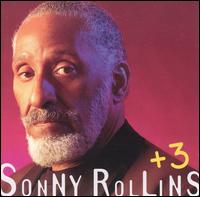
Sonny_Rollins_+_3albumcoverSonnyRollins-GlobalWarmingThis_Is_What_I_DoSonnyPlease

If you are reading this blog, you no doubt know that Sonny Rollins, one of the last living jazz titans and surely one of three greatest tenor saxophonists ever, has just released the third in a series of live albums, called Road Shows, that document the outstanding playing of his seventh and eighth decade swinging on this mortal coil (I will plug the first as so far the most mind-blowing, but they are all excellent). Also, if you have been reading this blog since its recent inception, you no doubt know it’s mostly dedicated to keeping rekkids that might be destined to be lost in the torrent in your eye- and ear-lines. Well, if you’ve heard or are simply very interested in the Road Shows volumes, I would also encourage you to sample Rollins’ last four studio albums. The proper albums of Rollins’ post-1970 career have often been maligned as 1) too stiff; 2) too clean; 3) too boring; 4) too generous to too-pedestrian sidemen and, perhaps that’s true (Gary Giddins’ Silver City compilation argues very effectively otherwise for 1970-1990), but Sonny Rollins +3 (1995), Global Warming (1998), This Is What I Do (2000), and Sonny, Please (2006), none of which are represented on the Giddins comp, have many, many things to recommend them. Primary is–big surprise!–Rollins’ playing. Though the man’s never been shy of experimenting, and though the complexity and abstration of some of his greatest solos are pretty danged challenging, on these records he lets loose his huge, confident, sly sound on the melodies and just rides them. In a recent NPR, Sonny claimed that it’s impossible for him to think and play at the same time, but you’ll doubt that claim as he bends, twists, savors, exclaims, questions, scolds, and dances with these numbers, many of which are calypsos, which he typically blasts into the upper deck. Another underappreciated aspect of these records are the number of outstanding compositions by Rollins himself. He does have a few pieces of jazz repertory to his credit (“St. Thomas,” “Oleo,” “Doxy,” to name a few), and it seems he’s best known for his miraculous interpretations (“I’m An Old Cowhand,” “There’s No Business Like Show Business,” “Isn’t She Lovely?”), but he has given future jazzmen and jazzwomen plenty to dig their teeth into with “Biji” (from +3), “Island Lady” (from Global), “Salvador” (from This), and “Nishi” (from Please). There’s a great compilation lurking in just the originals alone. Finally, the players? I am not sure Al Foster, Jack DeJohnette, Tommy Flanagan, Idris Muhammad, and Steve Jordan strike you as pedestrian, but I guarantee you they didn’t strike Sonny that way, and, though they mostly stay out of the way and let the man blow, that isn’t all that easy to do well, really. Here’s my main pitch: if you’re familiar with the best of Sinatra’s Capitol and Reprise recordings, what you’ll be getting out of Rollins’ horn is equal to what Ol’ Blue Eyes was intoning into the mic: warm, intelligent, intimate sound, created by a brain that knows its material inside and out. I do not proffer that comparison lightly.

Poor ol’ YouTube has very few tracks from these albums up; Spotify, however will help you out. But here’s a live track of Sonny blowing on “Salvador” that, if it speaks to you, should send you on to the rekkids I’ve rekkamended above.

Good to My Earhole: Listening Top 10, April 5 – April 11, 2014

I guess it is going to become regular…

destruck624

1) Holly George-Warren: A Man Called Destruction–The Life and Music of Alex Chilton from Box Tops to Big Star to Backdoor Man (Viking) I am a mass devourer of pop music tomes, but also a bit of a Chilton skeptic: even the brilliance of the best Big Star material is largely attributable to Chris Bell, and too much of the man’s notoreity is connected to things other than music. But George-Warren not only makes a great case here, taking the reader behind the scenes to bedroom rehearsals, bent late-night studio experiments, eccentric apprenticeships, and a long, disciplined, sober road to demonstrate Chilton’s hands were on the wheel more often than reported–even when he was barely conscious. More important, she shapes meticulous research (oh, to have grown up in the Chilton home!) into breezy and fascinating narrative, and balances that with insight into the making of the music. Plus, she passes my first test of good music books: her book sends you racing back to the music (the proof of which you will see in this week’s entry). In fact, my Brit Lit class enjoyed a Big Star block party today while they worked on their writing portfolios. Note: it does share something significant with a recent Zevon tome— this was a guy who, despite his charisma and multiple connections, was very, very lonely.

2) “Every night I tell myself, ‘I am the Cosmos, I am the wind’/But that won’t bring you back again….” Easily one of my favorite rock and roll couplets. Chilton didn’t write it; his partner Chris Bell did, though the sound of his post-Big Star productions (captured on the Rykodisc release I Am the Cosmos) revealed that band’s sonic architecture might well have sprung initially from Bell’s mind. I love the combination of metaphysics and heartbreak, and, really, the whole “record” (Bell died before he could complete a solo album) is fascinating:

3) Doris Duke: I’m a Loser–The Swamp Dogg Sessions (Kent) Jerry Williams, Jr., is one hell of a producer, songwriter, and bandleader, but seldom did he oversee someone else’s record that topped his own eccentric and piquant output. Working with luminaries like Irma Thomas and Gary U. S. Bonds, he wrote nice material and created solid settings, but somehow the artists didn’t catch fire. Not true on these 1969 recordings with one of soul’s great lost treasures, Miss Duke from Sandersville, Georgia. She rises to the occasion of great Dogg titles like “Ghost of Myself,” “Divorce Decree,” and “To the Other Woman (I’m the Other Woman,” selling them with a smoky, soulful, very country authenticity that’ll make you wonder why she didn’t become a star (I’d argue, a late start in the soul game).

4) Jessie Mae Hemphill: The George Mitchell Collection, Volume 45 (Fat Possum) I can’t get enough of one of Senatobia, Mississippi’s finest citizens. Hemphill, “The She-Wolf,” plays in the distinctive, trancy, north Mississippi style, and these are her first recordings (her mother and aunt often turn up accompanying Fred McDowell on his records). Along with two fetching cuts comes an interview with Miss Hemphill. Hear the whole thing right hyar:

5) Wussy: Attica! (Damnably) Sometimes I feel like arguing, “You either love Wussy or you don’t know they exist.” Living as we do in a world of fiberglass hoods, erotic teens, calendar cowboys/girls, and Mensa-folk conformists, it seems impossible not to support, encourage, and listen to (if not lionize) rockin’ and writin’ marrieds whose personae as well as music is as entrancingly homely and evocative of lived lives as Chuck Cleaver and Lisa Walker’s. On this brand-spankin’ new rekkid, the musical attack’s a little richer (helped by a member of Cleaver’s former band, The Ass Ponys) and the tart harmonies and wry words (the opener finds Walker lost in a corn maze) show absolutely no loss of concentration. Even their best records are a little uneven, but, on second listen, I feel safe dubbing this one their most consistent. Fans of George and Tammy (sorry), John and Exene (sorry), Thurston and Kim (sorry), Bruce and Patti (well, OK), Ira and Georgia (righteous), Fred and Toody (the MOST righteous), and Cecil and Linda (wait….) need to do the right thing and take this band for a ride. If I were in a band with my wife, I would want it to sound this honest and unique: “Attica, baby/Call it LOVE!” Also, I can relate to Chuck’s observation that, twenty years ago, he was more beautiful, but also more monstrous. For the benighted, an alternate version of a Wussy classic:

6) Guided By Voices: Bootlegged live, ’94. I don’t know much about this recording, though it seems to be made in Ohio from the apparent presence of Ron House in the audience; the recording was passed along to me by a long-time rock and roll compatriot. I’ve never been a fan, and I don’t know why, because in many ways they seem to have been made to hit my musical pleasure points: swift, concise, raw, literate, and tuneful. I think I thought Robert Pollard’s approach was too cute, that his writing and concept was, weirdly, too facile. Anyway, this changed all of that. Pollard and very likely the band are blasted (which was their rep, I guess), but as they rip through tunes from the just-issued Bee Thousand and before, they sound perfect to me, in all the previously enumerated ways. And it’s valuable to keep in mind that the Replacements, predecessors with much the same ethic, never left a live document this alive. Thanks to Mark Anthony of the much-missed website The Rawk. From the same time period:

7) Neneh Cherry: Blank Project (Smalltown Supersound) 20 years after she knocked the world on its ear as a young mother and avant garde progeny in a buffalo stance (that single STILL sounds marvelous), Ms. Cherry, fresh from fronting a free jazz record–not an easy VOCAL task–has issued this equally challenging project, where her still free-inflected vocals dart and linger in and around extremely crisp and deep trip-hop inflected tracks. It’s hard to judge it, because I haven’t heard much like it, but I have been encountering some age-ism lately, and Cherry’s work is argument against it.

8) Dry Wood (directed by Les Blank) and Bury the Hatchet (directed by Aaron Walker) One old, one new doc out of Louisiana, the former about Creole culture (specifically, music and food) in Mamou, the latter about NOLA Mardi Gras Indians (specifically, Big Chiefs Alfred Doucette, Victor Harris, and Monk Boudreaux). Both films are beautiful and do what they set out to do and more. But they are most striking in capturing Americans making and building (also, unfortunately, rebuilding) things themselves–they will strike you across the face with what you are missing out on. VERY, VERY highly recommended.

Dry Wood trailer:

Bury the Hatchet trailer:

9) Allen Toussaint: Life, Love, and Faith (Four Men with Beards Reissue) Toussaint’s mild, almost shy singing causes some listeners’ minds to wander, but here it’s backed by the original version of The Meters (notably including the drumming of Ziggy Modeliste, which is always interesting by itself) and some of the best tunes and arrangements Allen ever wrote for himself. Quietly and seductively funky, in the New Orleans way.

10) Fats Waller, 5:15 a.m. on a Saturday morning. Scrambling to get it together to meet my Science Olympiad crew at 6:30 at the local university, my stressors were vanquished when my wife Nicole got the right medicine out of the cabinet. If the world is too much with you, if you can’t pry your mind from lost planes, corporate control of your country, the frustrations of your job (if you even have one), or absent friends or family, let the mischievous Mr. Waller remind you that life is too important to be taken seriously. His deft command of the 88s, his phrasing-with-a-wink, his jaunty rhythm, his raffish charm–what more can you ask for to lift your tension?