Good to My Earhole: Listening Top 10, March 30 – April 4, 2014

Not that I expect this to become a regular feature–I hope it does, though my small band of followers must have noticed I am casting about a bit–but here are some brisk takes on the ten things that spun most euphoniously around my eardrums this week. Consider them strong recommendations for application to your own soul-ills, whatever they may be.

1) Tin Men: Avocodo Woo Woo (CD Baby). I was skeptical about this NOLA trio (featuring Washboard Chaz, the astonishingly ubiquitous songwriter and guitarist Alex McMurray, and sousaphonist–only in the Crescent City!–Matt Perrine) possibly being a dad-rock cum Parrothead act until I read a notably scrupulous and discerning NYC critic’s glowing notice of this, their new album. It is perfectly frothy and spirited fun, with interestingly dark (“Blood in My Eyes”) and dirty (the title song) turns. And, frankly, I love the sound they get from their three pieces.

2) Como Now: Voices of Panola County (Daptone). I am not sure how this brainstorm by “The Label Sharon Jones Built” came about, but in ’06 their agents found themselves in Como, Mississippi (home/former whereabouts) of Fred McDowell, Otha Turner, and Napolion Strickland), soliciting a capella gospel songs from black Christian locals and recording them in a local church. A moving listening experience, especially Irene Stephenson’s harrowing “If It Had Not Been for Jesus.” I am an atheist, and it transfixed me.

3) The Staples Singers: Freedom Train (Epic). Not to be confused with the relatively recent Columbia best-of of the same title, this live album was cut in a church in the group’s then-hometown of Chicago, and the location and the clarity of engineering make it one of the most powerful gospel records of the ’60s, methinks. It’s out of print; I thought I’d pulled a fast one and snagged a $4 copy on eBay, but it was pretty banged up–not so much so that I did not THOROUGHLY enjoy the almost otherworldly dynamics of the performance, particularly Pops’ always-venomous guitar and Mavis’ almost atavistic pleadings.

4) Jessie Mae Hemphill: Feelin’ Good (Shout Factory). Just a bit north of Como (also north of Winona, where Pops Staples was raised up–can you tell I’ve been to Mississippi recently?) is Senatobia, and the space between is one of the locations where North Mississippi Hill Country blues was born. It’s a different animal than Delta blues: structurally and lyrically, it’s more repetitive, but that’s not necessarily a deficit when it’s played with intensity. That’s when it becomes hypnotic–in some ways, it’s an extreme version of the John Lee Hooker sound. Hemphill was raised in this (and the related fife-and-drum) tradition; she’s not as loud nor does she project as well as R. L. Burnside or Junior Kimbrough, but her feminine perspective and toughness often make up for that. Try this:

5) Fu-Schnickens: “Sneakin’ Up On Ya” (from Nervous Breakdown, Jive Records). As Chicago rapper Serengeti’s Tha Grimm Teachaz project suggests, there’s one thing very special about the best rap rekkids of 1990-1995: they don’t date as badly as the prime cuts of other eras. Also, that period seemed stylistically wilder, with seemingly unforgettable (but now pretty much forgotten) MC Chip Fu providing a mind-boggling thrill every other song for this unique group. Other MCs may have been faster, but not more inventive at the same time. By the way, how many current rap GROUPS can you count?

6) D’Angelo: Live at the Jazz Cafe, London, 1996 (Virgin/Universal). This was a Japan-only release back in the day it was recorded, but, as I understand it, even then it wasn’t as expansive as this new reissue, which features ACE covers of The Ohio Players, Mandrill (“Fencewalk”!), Smokey Robinson, and Al Green along with classics from Brown Sugar–principally, a phenomenal performance of the tital track. Weirdly, the artiste often seems to recede into the performances, so he’s no more emphasized than the band or the backup ladies (led by Angie Stone), almost…a Billie Holiday thing. At first I was disappointed he didn’t project more, then I began to suspect it was part of the conception. The link below may be the whole dang thing. Keep your ladies inside the fence….

7) Duke Ellington Orchestra: “Snibor” (from the American Hustle soundtrack or, better advised, And His Mother Called Him Bill on RCA). I finally had a chance to see American Hustle this week, and Nicole and I were surprised and thrilled to hear Johnny Hodges’ alto oozing from this film-opening soundtrack cut. Also, having courted to rekkids ourselves, we were surprised and thrilled to see the protagonists (played by Christian Bale and Amy Adams) do the same thing, to Duke and Jeep’s “Jeep’s Blues.” If you are not familiar with Hodges’ sound, it is the definition of sensuous AND sensual; if you are not familiar with Billy Strayhorn’s compositions for Duke, they are usually designed to highlight that sound. Weirdly, I can’t find a YouTube clip for this tune, but here’s an equally seductive one from the same, HIGHLY RECOMMENDED album (a tribute to the recently-passed Strayhorn):

8) The criminally underrated music of Tyler Keith. As a long-time teacher, I am closely acquainted with the dangers of certainty; in fact, I make it a point to seldom if ever come at students from that angle. Music, as esoteric as our perceptions are, is even more problematic in that regard. But I am certain of this: in a world where the rock and roll impulse is dimming, quite seriously (I think that’s a result of the natural evolution of cultural history, of young musicians, for example, casting off the influence of the blues–although donning the robes of a hipster version of James Taylor, in my view, is a misstep–and not feeling the pressures and releases of a society obsessed with sin and salvation, which I think our society still is but youth circa 2014 may not necessarily be), Tyler Keith of Oxford, Mississippi, may well be the  last live-wire link to both the near-insane energy and rhythm of rockabilly and the bugged-eyed gaze into the void of Richard Hell’s strain of punk, which might really have never been fully exploited for its potential. Whew. That was a long one. But goddam I believe it, and the proof is in the best of Tyler’s work with the Neckbones, and three of his rapidly disappearing four “solo” albums (with the current Apostles and the former Preachers’ Kids), in chronologically descending order, Black HighwayWild Emotions (a fantastic rekkid that MIGHT AS WELL NOT EXIST ON THE INTERWEB!!!), and the perfectly-titled Romeo Hood. Keith’s vocals leap out of his larynx as if propelled by a blood-surge, the music is deeply embued with tough-ass-Stones, sprung-Chuck Berry flavor and Johnny Thunders-styled explosions that are quite unpredictable (!) but perfectly timed in nature, and lyrics that are as obsessed with sin and salvation as The Killer’s favorites, though one suspects with Tyler those are purely existential notions. He can even nail a ballad, even one called “Angora,” about a certain sweater. I have never seen him live, but the intensity of his best recordings cause me to suspect that if I do and he is on, it will be hard to stay in the same room with him. The thing is, I felt this strongly when there was a decent herd he was travelling in; now, he is the burning antithesis not only of the swarms of bearded strummers that play, in critic and musician Allen Lowe’s perfect phrase, as if they have napkins folded in their laps, but also of the depleted strain of rockers who, honestly, usually protest their rockitude too much. With Keith, one feels he’s communicating his wild emotions without artistic calculation, and that’s special. I’ve gone on too long, and I can’t do him justice, but I AM RIGHT: here’s a video of one of the best tunes on his recent rekkid, the BEST rock and roll album of 2013.

Chuck

9) Public Enemy: “Can’t Truss It” (live on Yo! MTV Raps). Nicole and I were fortunate enough to see the great rap orator Chuck D speak at Columbia’s Missouri Theater Tuesday night, for FREE (not nearly enough folks there, though). He is a hero of both of ours–I’ve even read his books–and we came with high expectations. He delivered grandly, though he talked mostly about critical thinking in the age of extreme technology and devolution of United States popular culture (remember when that two-word phrase was a joy? a reason to live?). I prepped for his appearance by watching this great raw video of one of PE’s greatest songs, one I used to teach in American lit, though I didn’t show it to kids this week (I was thinking about using it to promote the appearance) because I didn’t want to be met with slot mouths.

10) Tommy Boy All-Stars: “Malcolm X: No Sell Out” (Tommy Boy 12″). This, too, was part of my prep for seeing Chuck D, a man who, really, hasn’t sold out, either. I’ve read both the Haley/X “autobiography” and Manning Marable’s corrective bio, and I absolutely love the threading of perfectly chosen soundbites from Malcolm’s speeches (“I was in a house tonight that was bombed…my own. It’s not something the makes me lose confidence in what I’m doing.”) through an ace Keith LeBlanc track. In a perfect world, it woulda been a hit. Still inspiring: “I’m not the kind of person who would come here and say what you like.”

Early Recording by Unsung Memphis Master Demands Your Full Attention!

Selvidge-Cold-Of-The-Morning-CD-and-LP

Sid Selvidge: The Cold of the Morning (Omnivore Reissue)

Mississippi-raised, St. Louis-honed, and Memphis-tested, Selvidge was a true rarity: a white singer who could expertly interpret classic blues (here, “Judge Boushe”and “East St. Louis Blues” via Furry Lewis, the happily nasty “Keep It Clean” from Charley Jordan) without a hint of minstrelsy, a folkie with a great voice who could deliver material without sounding, in the words of Allen Lowe, like he had a napkin folded in his lap, and a catholic music-lover who could shift styles and genres without strain (from “Danny Boy” to “Po’ Laz’rus” to “The Great Atomic Power” is some mileage). Selvidge passed from cancer in 2013, and this recording, along with his Elektra Twice-Told Tales from the early ’90s, is a great way to get caught up. Bonuses: Selvidge’s stellar picking (learned at the foot of Lewis) and a batch of cuts where he’s backed by the eccentric rhythms of Mudboy and the Neutrons. How to explain Sid to the benighted? His baritone is as flexible as George Jones’, and, if you’d agree that Hank and Lefty were at the heart of The Possum’s vocal art, well, Tommy Johnson is the at the core of Selvidge’s. You may have to look that one up. Let’s hope Omnivore reissues the rest of Sid’s Peabody rekkids, which are very, very hard to come by.

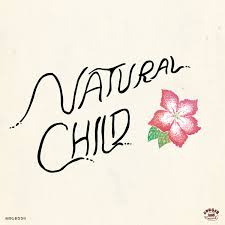
Natural Child: Dancin’ with Wolves

NattyC

I’ve been through this before. I’ve become enraptured with the energy, the charisma, the vulnerability, the direct connection with my own doings, the addictive amateurish spirit–which is where we ALL start–of young bands, namely, The Clash and The Replacements, then witnessed their growth as musicians and writers. Really, it’s a privilege, and maybe I perceive it differently because I’m an English teacher who’s always LOOKING for growth, but I have always found myself in conflict with other listeners who seem appalled with such bands simply because “they got good.” Read: they play better, they come to understand the studio, they mull over their lyrics a little, they–horrors!!!–discover more of the universal musical palate. At 52, I’m too experienced listening to music to scream “Sell Out!” just because a band GROWS.

Such is the case with Nashville’s Natural Child. In front, I must confess that I first encountered them in 2010 in Lawrence, Kansas, at the Scion Garagefest, simply because I didn’t know any of the bands on the first tier of shows and chose their venue randomly, and they charmed the shit out of me by presenting themselves as if they were dressed to go on a float trip, playing as if they’d just awakened and thought it was a good idea to rehearse, and communicating insights about white people and cougars and bad lays as if they were talking across the bar to you. In short, they were wonderfully unselfconscious, and just what I needed at the time. Vampire Weekend, sorry, is hard to take.

Since that show, I’ve been fanatically loyal, even harasssing them on Twitter for not being productive enough. Dating from the point of those tweets, they have been workaholics, but I am sure it’s coincidence. And they have proven worthy of my admiration: from their run of early singles (especially “Nobody Wants to party With Me,” “Crack Mountain,” and “Cougar”) through their first full-on albums–1971 and Hard in Heaven–they have hewed to the Doug Sahm Memorial Edict: “If it can’t be written on the back of a Taco Bell sack right after you done done it or thought it, what’s the point?” I am acutely aware of the arguments against this aesthetic, but I just don’t effin’ care, because it’s rock and roll.

Which brings us to the new Natural Child rekkid, Dancin’ with Wolves. For the first time, they sound clean. There’s a steel guitar weaving through the songs.  No longer are they pursuing an odd, bass-led, distinctly East Nashvillean yet punky, weed-informed answer to Johnny Thunders and The Heartbreakers’ LAMF; they are laying back, nodding to New Riders of the Purple Sage (if i were 30, that’d be a deal-breaker), Sir Doug himself, even Big Brother minus Janis (ever heard Be a Brother?). They think they’re going to get more frequently laid because they are country hippies–well, if they really are, well, probably NOT–they lament our temporal state, they nostalgize about drinking and driving, they stand by their surprisingly hip city (if you can block out the image of Jack White), they throw a lifeline back to ol’ Jimmie Rodgers (though one has a right to question whether they could survive an interaction with, say, an actual North Dakotan rounder), they argue their country legitimacy. I believe that litany’s a pretty good argument for the album’s piquancy, though I fear some folks may consider it bland. If you need more persuasion, I’ll proffer this: if you simply browse over to Pitchfork’s review page, skate your eyes across the album cover images, and randomly read a few reviews, you will discern a painful trend toward bending over backwards to establish a plot of musical and–unfortunately, more urgent–existential uniqueness. The cumulative effect is comical. You’ve probably seen websites snarkily cataloguing “The Worst Album Covers of All-Time”? Pitchfork tops those websites monthly with images of new albums! Considered together, it’s just proof of how lost folks can be, and I like Natural Child because they are NOT lost. They know who they are, they aren’t ashamed of getting better, but…OK, here’s the rub…they have no aspirations of ascending to some hip mantle. Remember in Cool Hand Luke when Strother Martin’s gang boss, upon questioning Paul Newman’s Luke, can’t believe “Lucas War Hero” was discharged as a mere private?  I love that moment in the movie, I’ve spent a lot of my professional life trying to apply its implications, and I’ve no doubt that Natural Child subscribe to the same day-by-day approach. Thus, they remain…my heroes.

I wish the lyrics had a few more surprises. I wish there were some dirty guitar. I wish the album were a shade funnier. But the boys have settled into an approach that makes them happy, and that’s contagious. Their lack of ambition is inspiring, considering the milieu they find themselves in, and, if their writing can grow as many moves as their musicianship has–something that, unfortunately, didn’t happen for the Replacements–maybe, someday, someway, they might get a notice in Rolling Stone or Pitchfork. I am confident they are the best band in America with the least notices and, if one considers Dancin’ With Wolves their Hootenanny or Give ’em Enough Rope (I want to be sure you understand that I understand they are operating on a far more casual level than those forerunners, which is the seductive element for me), their best moments lie ahead.

What Happened in Nashville Right After Dylan Dropped BLONDE ON BLONDE On It (Subtitle: I Wonder What Kristofferson Knows)

It’s pretty common knowledge that the studio aces of Columbia’s Nashville Studio A were not ready for Bob Dylan when he arrived there to finish BLONDE ON BLONDE. For one, he was famously not into rehearsing or multiple takes; for another, he did not observe the Golden Mean of the three-minute song; for YET another, he was composing IN the studio, unconcerned about the cost, while the musicians, used to knocking songs out like a stamping machine, sat around, smoke, drank, and played cards. Check this out, from Clinton Heylin’s BEHIND THE SHADES: “On February 15, the session began at 6 p.m., but Dylan simply sat in the studio working on his lyrics, while the musicians played cards, napped, and chatted. Finally, at 4 a.m., Dylan called the musicians in and outlined the structure of the song. Dylan counted off and the musicians fell in, as he attempted his epic composition, ‘Sad Eyed Lady of the Lowlands’. [Drummer] Kenny Buttrey recalled, ‘If you notice that record, that thing after like the second chorus starts building and building like crazy, and everybody’s just peaking it up ’cause we thought, Man, this is it…This is gonna be the last chorus and we’ve gotta put everything into it we can. And he played another harmonica solo and went back down to another verse and the dynamics had to drop back down to a verse kind of feel…After about ten minutes of this thing we’re cracking up at each other, at what we were doing. I mean, we peaked five minutes ago. Where do we go from here?'”

Well, after Dylan was gone, HERE is where producer Bob Johnston, Buttrey, and the rest of the studio cast went:

Four Sounds I Really Like

Roky Erickson’s rock and roll cry:

For all Roky has been through–undiagnosed mental issues, hallucinogens, Texas cops, unjust incarceration, whacky custodial care, unhealthy fan worship, self-rigged residential clamor, the sheer ravages of time and The Road (which he is still rollin’ down)–his voice has proven extremely durable. Even in full-throated rave, as in the above, close listeners can hear not only a fetching Texas curve or two but also a vulnerability that, when he’s doing a ballad, makes him seem like he’s channeling Buddy Holly.

Johnny Hodges’ seductive, fluid alto sax:

As one writer whose name I cannot recall once wrote (I am paraphrasing), his sound is like honey pouring out of a jar. Note: I wanted to find a clip of his intro on Ellington’s early-’40s version with Ivie Anderson on vocals, which is almost unbearably erotic, but no luck. The Jeep could jump, but he could really ease back and beckon.

Natural Child’s unselfconscious, appealingly homely…groove:

I just started this blog three-four days ago and I have already mentioned this happy-go-lucky band of Nashvillians three times (plus posted an old article about them in the archive), but, dammit, they have their hooks in me. Whether they’re rockin’, bluesin’, hoein’ down, shufflin’, they lock in like The Rolling Stones’ little brothers, and they can catch up short with their acumen. I was hooked from the first note I heard and saw ’em play in 2010 at The Scion Garage Rock Festival, and I think this was the song. The bass is weirdly in the lead, and they love to yell-along. Perfectly unfashionable.

Anita O’Day–in flight!

Easily one of the most–if not THE most–underrated jazz singers ever, at her absolute peak. She looks smashing (and by her own admission in HIGH TIMES, HARD TIMES she was smashed), the band swings, the crowd projects the best (and quirkiest) aspects of the coming New Frontier, but Ms. O’Day steals the show. The lightness and fetching quality of her timbre (sorry for the fancy word), her absolute mastery of rhythm, her humor and sexiness, her DEFTNESS–OK, I’ll stop, just play it over a few times, OK?

“Panther Burn” Take Over Memphis Public Access and the Cotton Carnival in 1979

Somehow, Tav Falco and his “art-damaged” rockabilly band finagled their way onto Memphis’ public access show “Straight Talk” (hosted by the perfectly-named Marge Thrasher) in 1979. On stage with them…the King and Queen of Cotton, looking bewildered. After slinking through a version of The Rock and Roll Trio’s “Train Kept A-Rollin’–an example of the “invisible Memphis” Falco talks about in the clip, the band is stopped in its tracks by the host as they attempt to barrel right into a “rock tango,” and the ensuing clash between Tav and Marge is one for the ages. A classic example of art busting up stale and ironic convention, and does Falco maintain his cool during the conversation. Keep an eye out for the still-loony, still-rockin’ Ross Johnson on drums, and the late, great “XL Chitlins” on guitar. And if you love this, seek out the band’s great BEHIND THE MAGNOLIA CURTAIN and Robert Gordon’s epic IT CAME FROM MEMPHIS. Exhilarating!

So Who the Hell is Swamp Dogg?

swamp-dogg-band

Well, if you clicked on the link in my previous post, you know something. He is soul singer–not to mention a songwriter–from outer space, though on close inspection his feet are planted more firmly on Earth than most of ours are. He is also a very funny man. Read Perfect Sound Forever’s excellent interview with Mr. Dogg, or sample this Spotify playlist, rather than reading me rattle: